-
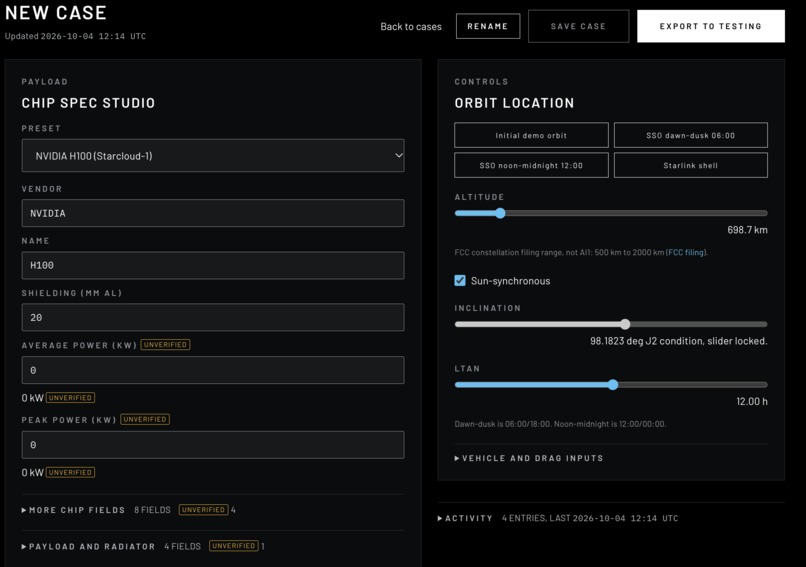
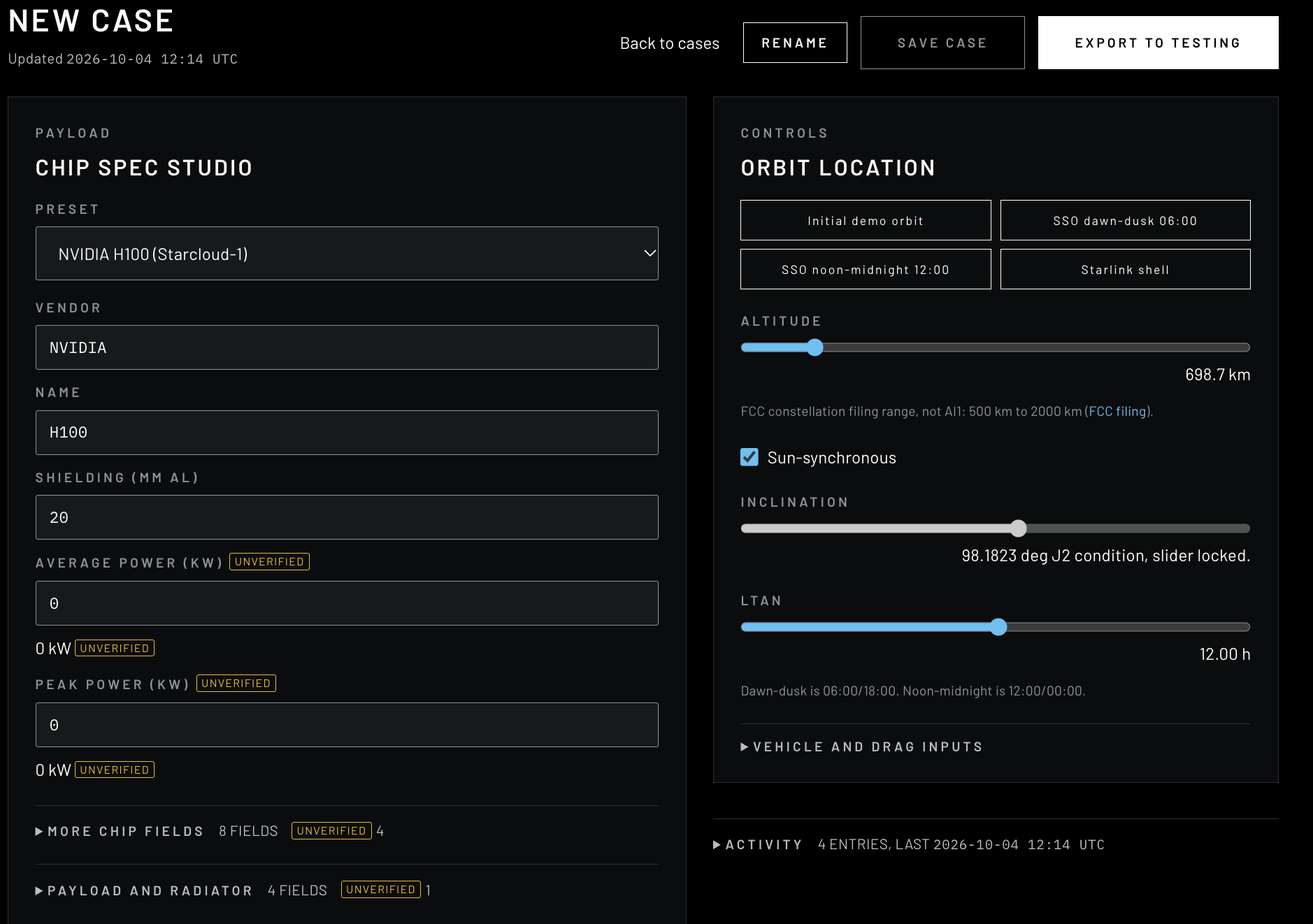
Chip testing case creation system
-
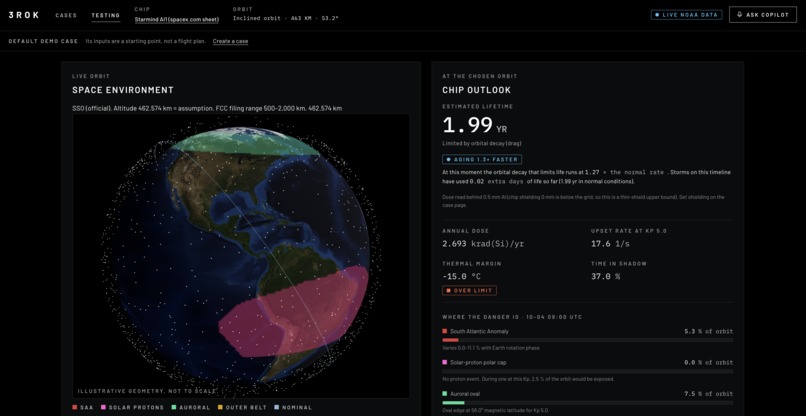
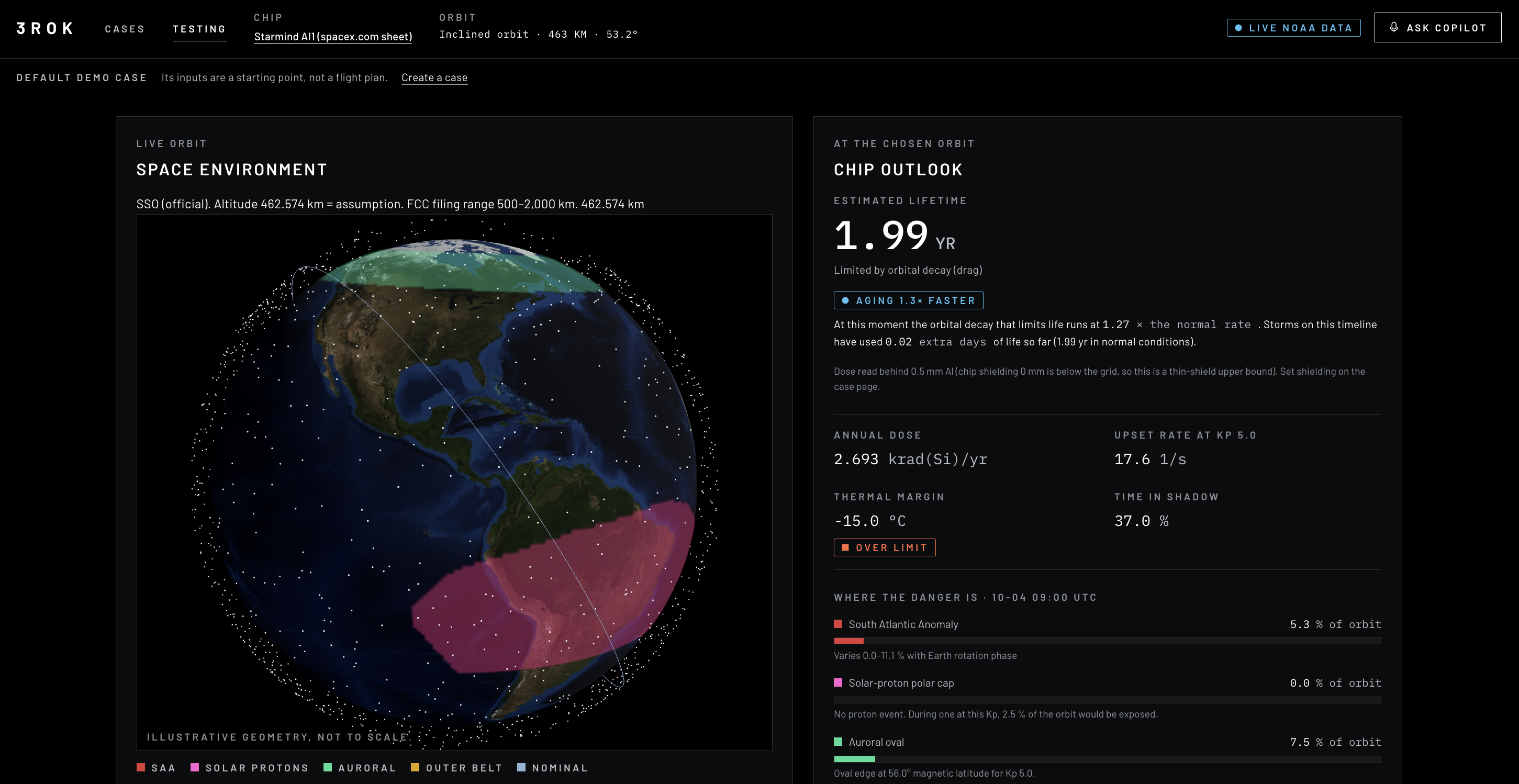
Physics engine for modeling orbits and chip health overview
-
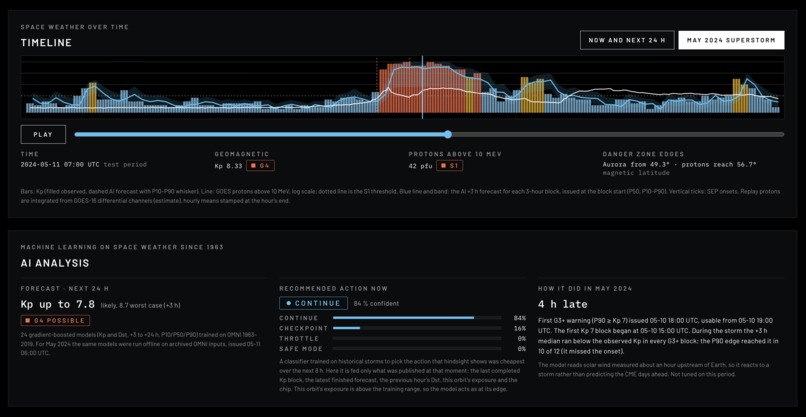
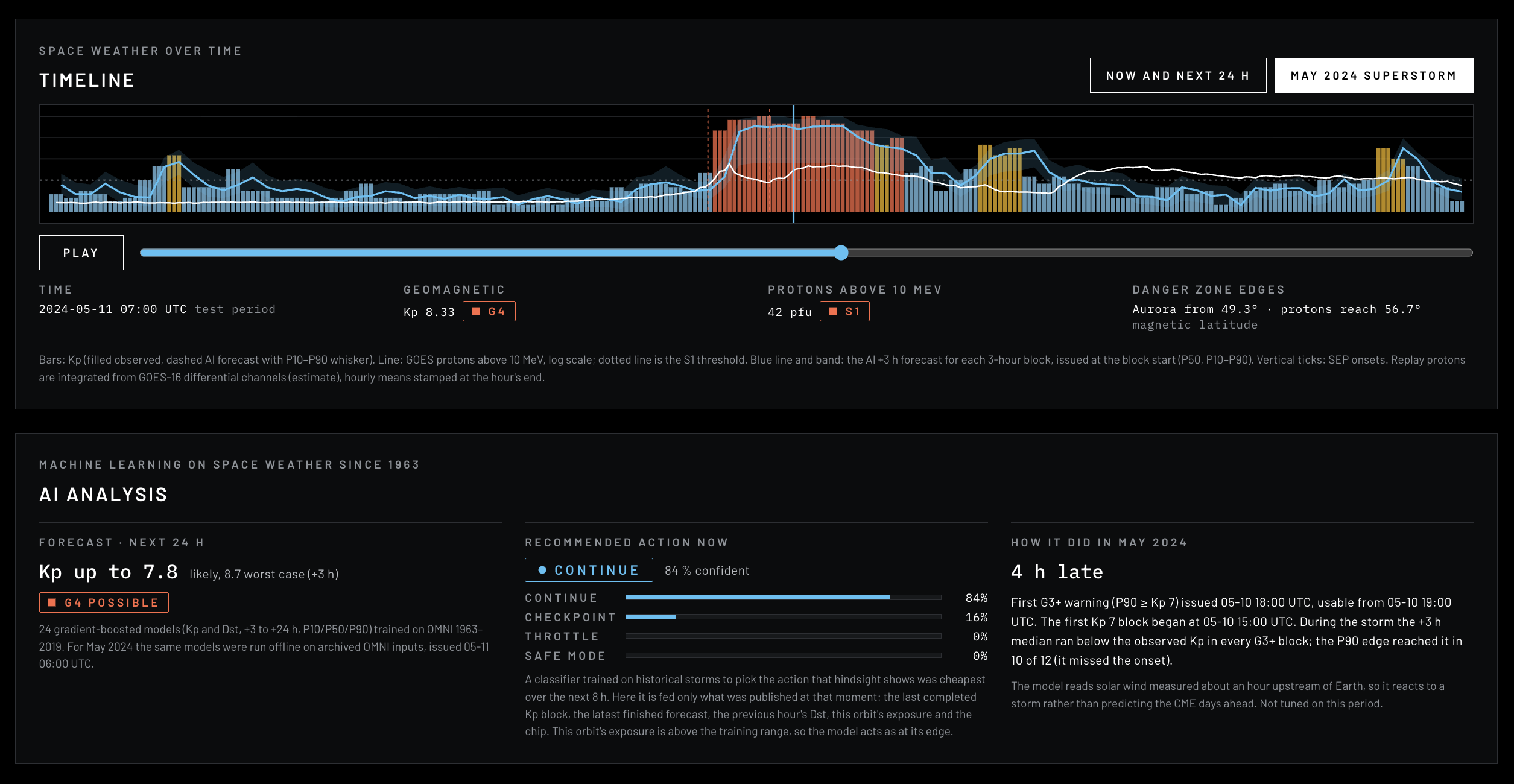
Recommended moves based on given conditions and 83 years of data (2024 solar flare is shown as example)
-
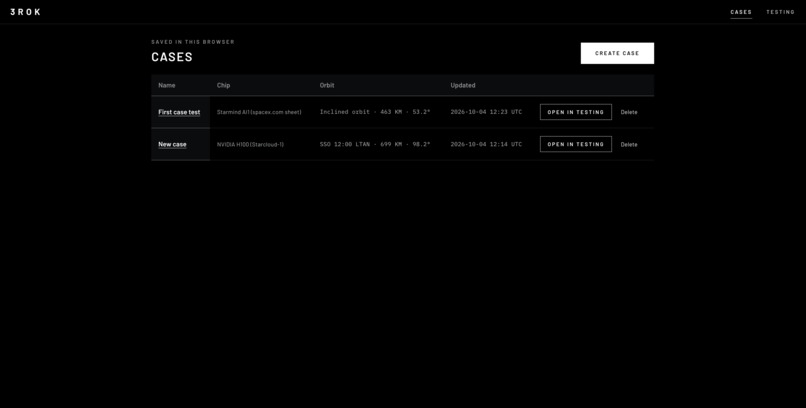
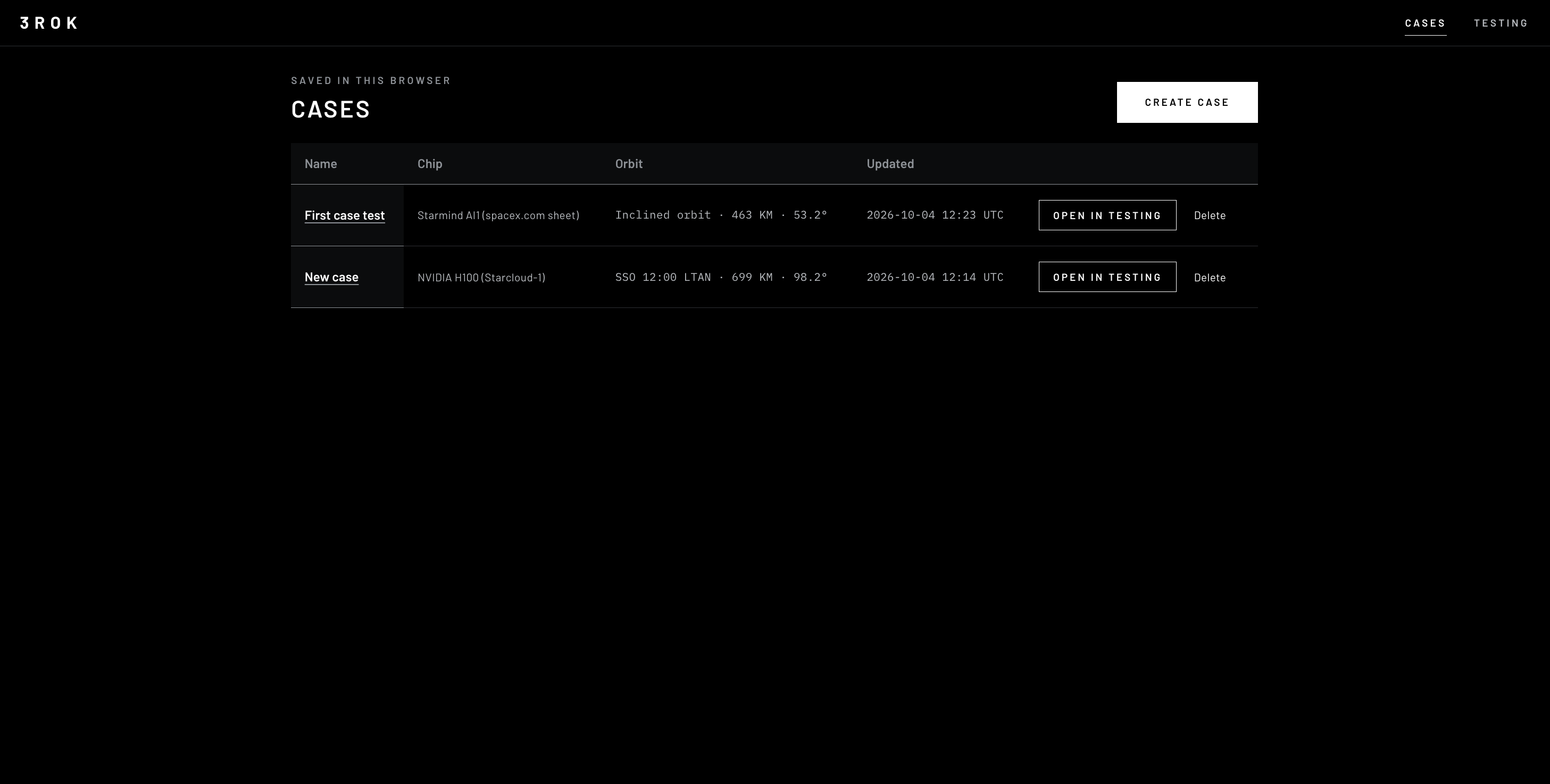
Overview of past test cases
-
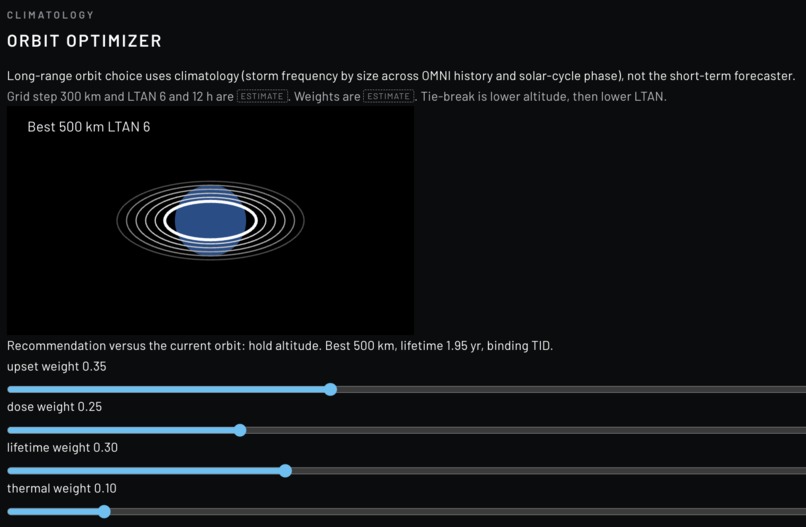
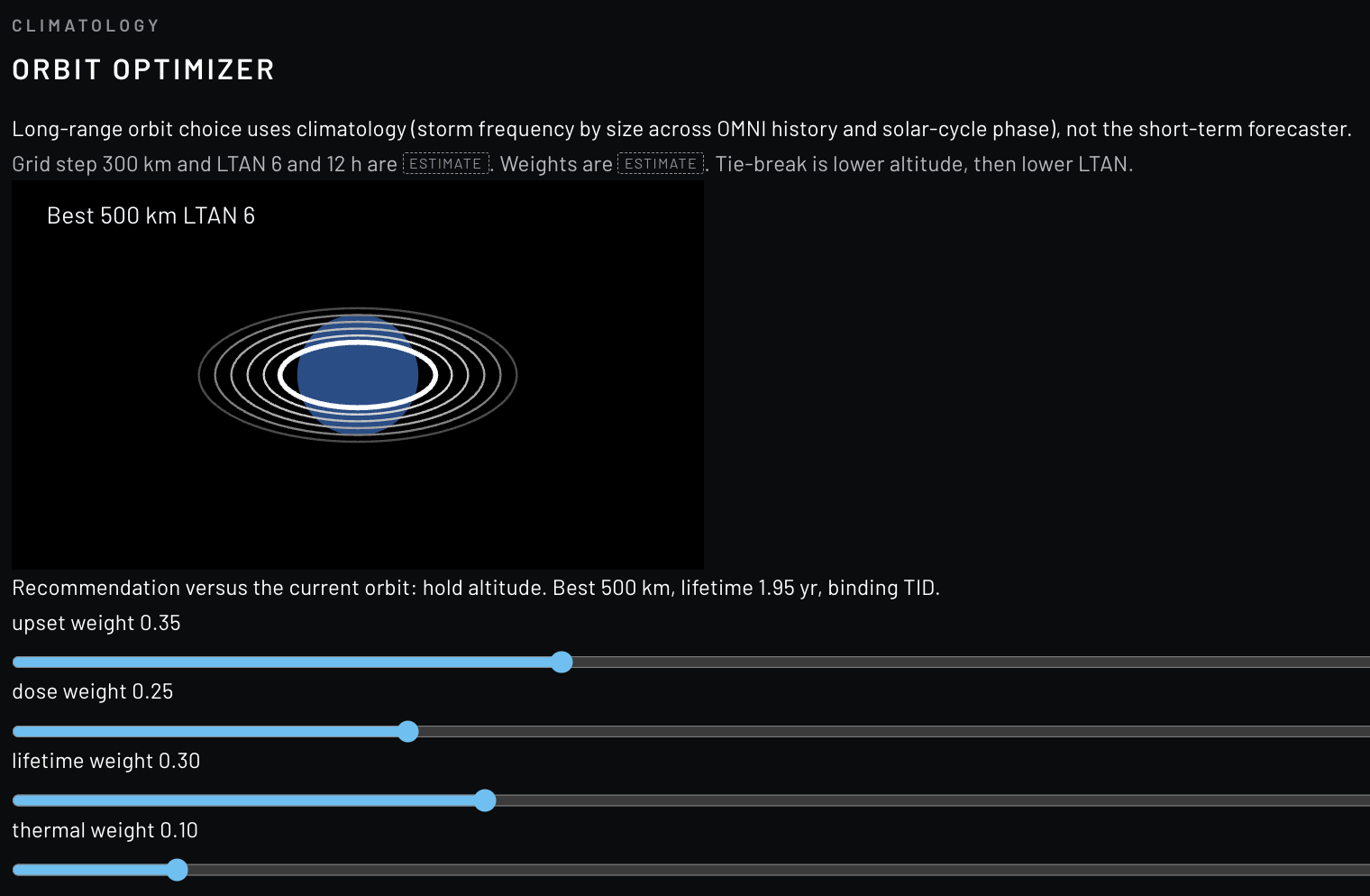
Orbit optimizer for determining best orbits based on given inputs
Inspiration
Chips in orbit age fast under radiation and storms, and most tools show a single unlabelled number. We created a platform where every data point is ran through an ML algorithm based on 80+ years of data, thus creating an optimal flight path for elongating the lifespan of a chips in space.
What it does
3rok takes a chip's test data and the orbit it will fly. It shows the radiation, lifetime and storm outlook, and proposes a flight file that is kept only if it scores better on outcomes it hasn't seen. You can fly the result on a globe that folds flat into a map.
How we built it
Next.js and React with TypeScript, using the 3rok design system. The globe is a raw WebGL2 renderer with no library: 40,000 particle dots that fold from sphere to map. Space-weather forecasts run in the browser, and Grok serves as a voice and text copilot.
Challenges we ran into
Merging two prototypes with different structures. The globe's fold also had to match exactly between the shader and the JavaScript that keeps the satellite centred. And no unlabelled number was allowed to slip through.
Accomplishments that we're proud of
A particle-to-map globe with tested fold maths. A clean split between creating a case and testing it. Long inputs that collapse without hiding anything unverified. 161 unit tests and a full browser test suite passing.
What we learned
A forecast only counts on data it hasn't seen. We hold out test data with a 48-hour gap, so the model can't peek. We apply the same rule to flight proposals: 3rok keeps one only if it beats the old one on held-out outcomes.
What's next for 3rok
Finish the hero landing page and put the particle globe on the testing page. After that, shareable cases with accounts, then more chips and orbits.


Log in or sign up for Devpost to join the conversation.