Inspiration
We're the generation that will live with the climate we inherit, and a lot of it comes down to small decisions made at home, in seconds, with no good information: which bin does this go in? Most of us were never taught why things go where they do, so we guess.
The climate problem we're solving
Wrong waste decisions at home. Only about 21% of the recyclables households put out actually get recycled (Recycling Partnership, 2024). Food and other items that belong in compost or special drop-off end up in landfills, where food waste releases methane. In EPA's WARM model, landfilling food waste is a net increase in emissions (+0.50 MTCO₂E per short ton) while composting is a net decrease (−0.15). Wishful recycling can also contaminate whole loads, and batteries and vapes in the trash are a fire risk.
Who's affected: every household that sorts waste, especially students, renters and families without clear local guidance, plus recycling facilities that pay to sort contaminated loads, and the communities living near landfills.
What current approaches miss: city flyers are generic, and quick "is it recyclable?" answers hide that grease, batteries and local rules change the result. Most tools give an answer but not the reason, so people can't apply it to the next item.
What it does
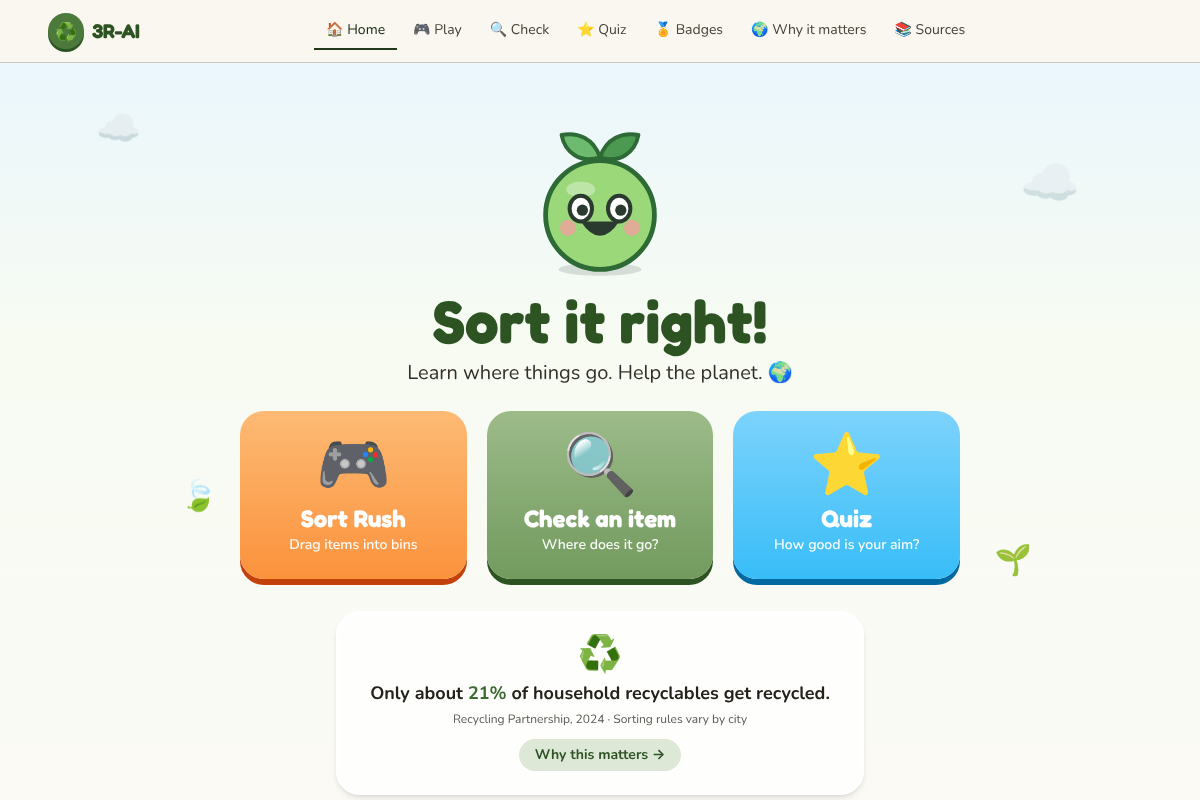
3R-AI teaches the rule behind each decision, so students can sort things they've never seen.
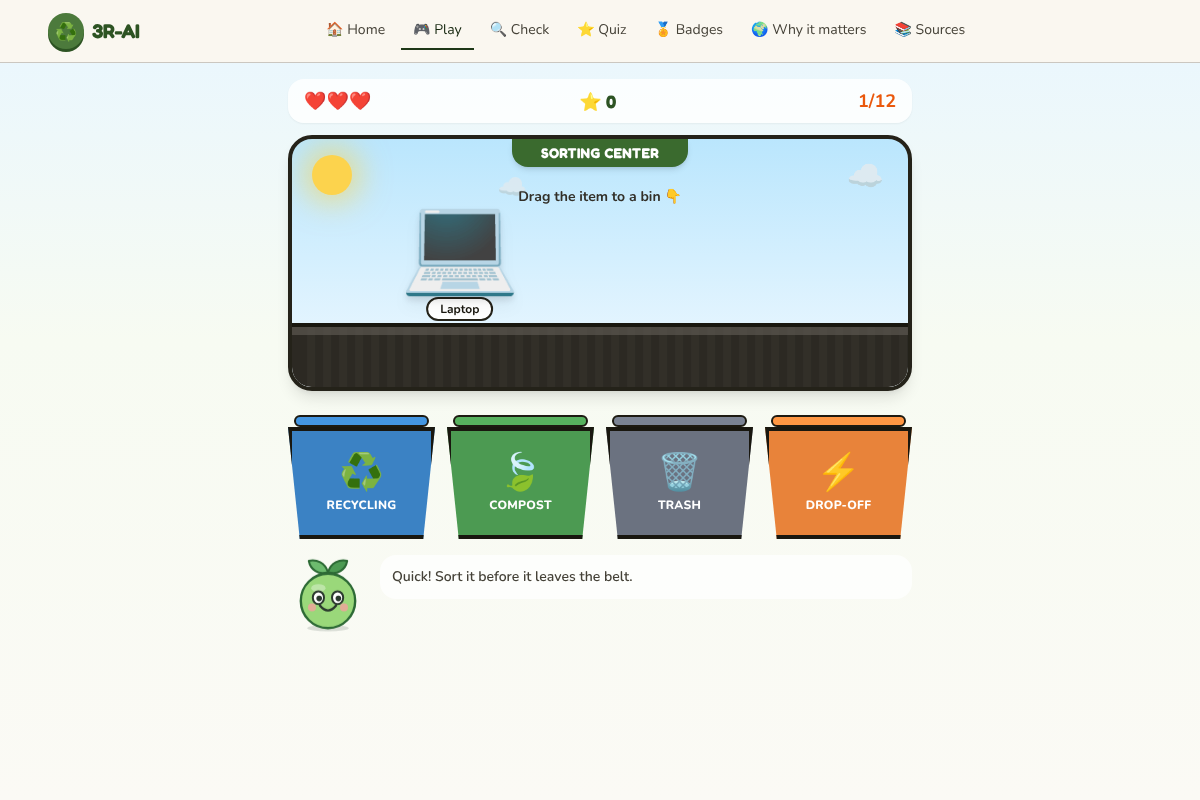
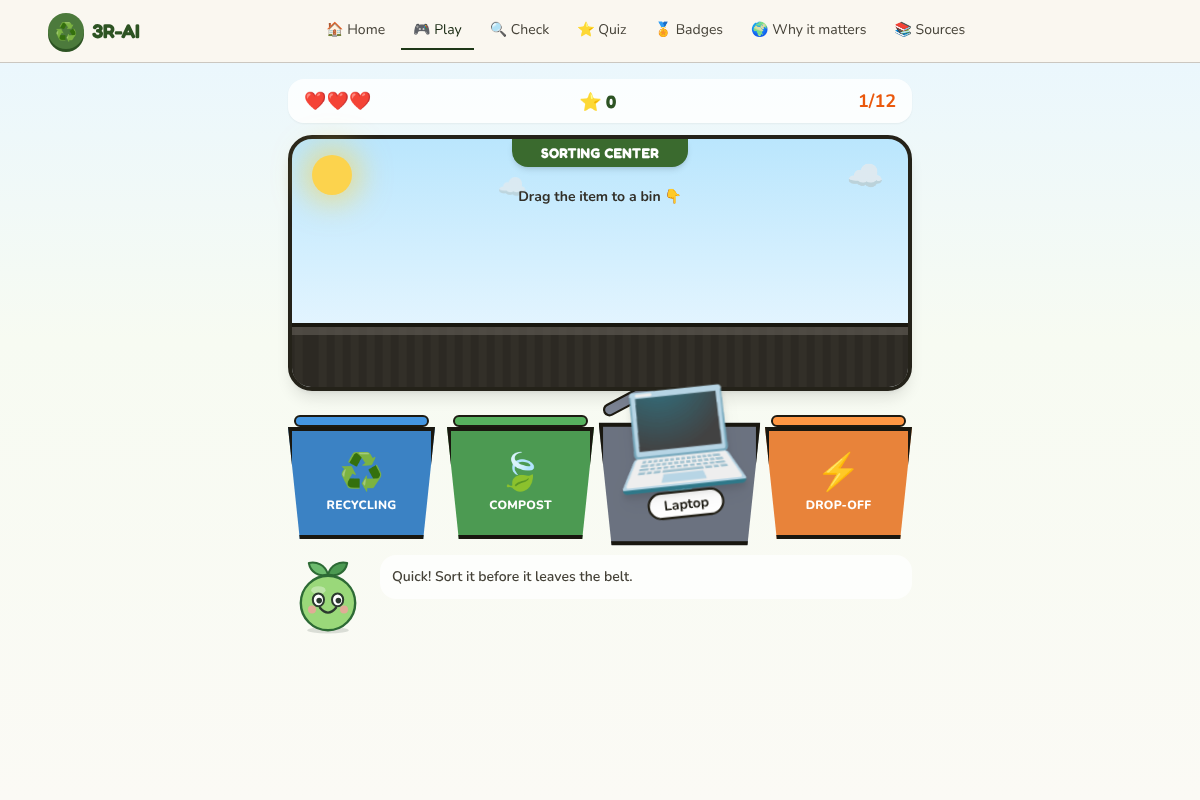
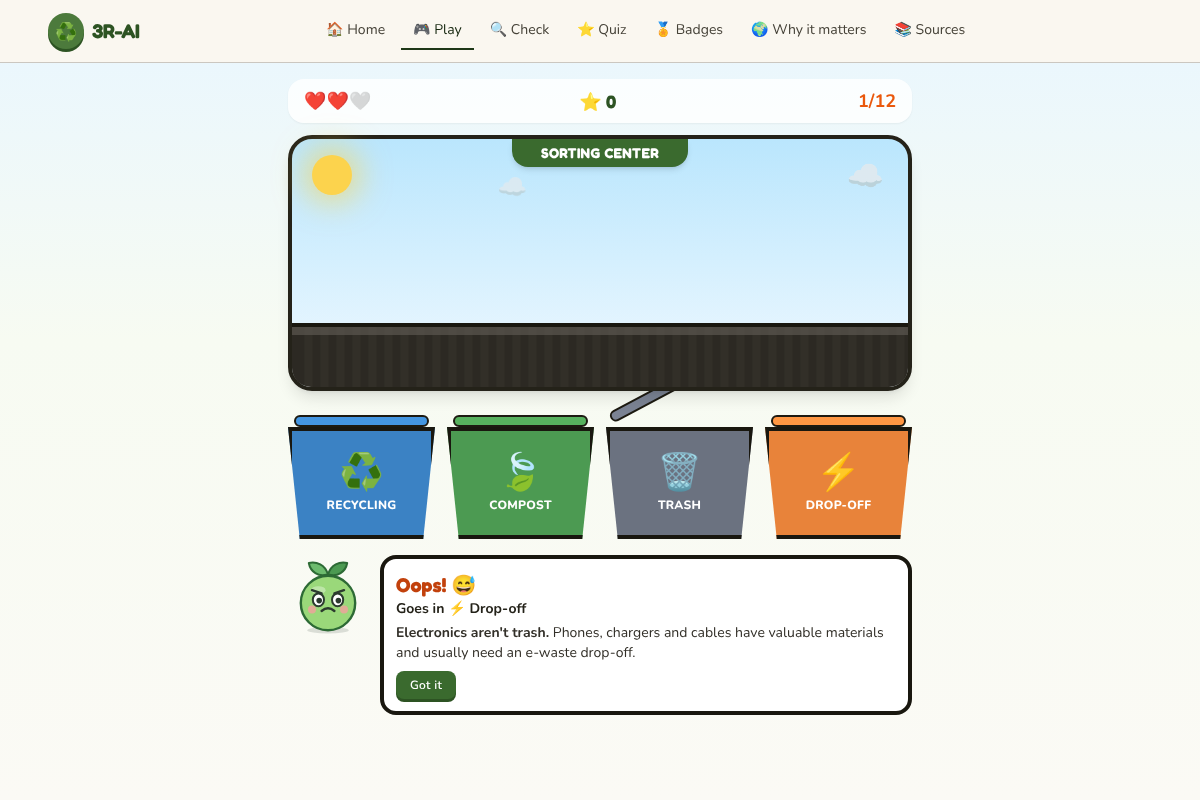
- Sort Rush: a conveyor-belt game. Drag items (boba cups, AirPods, vapes, pizza boxes) into bins. Each answer reveals the rule, like "grease ruins paper" or "anything with a battery needs a drop-off."
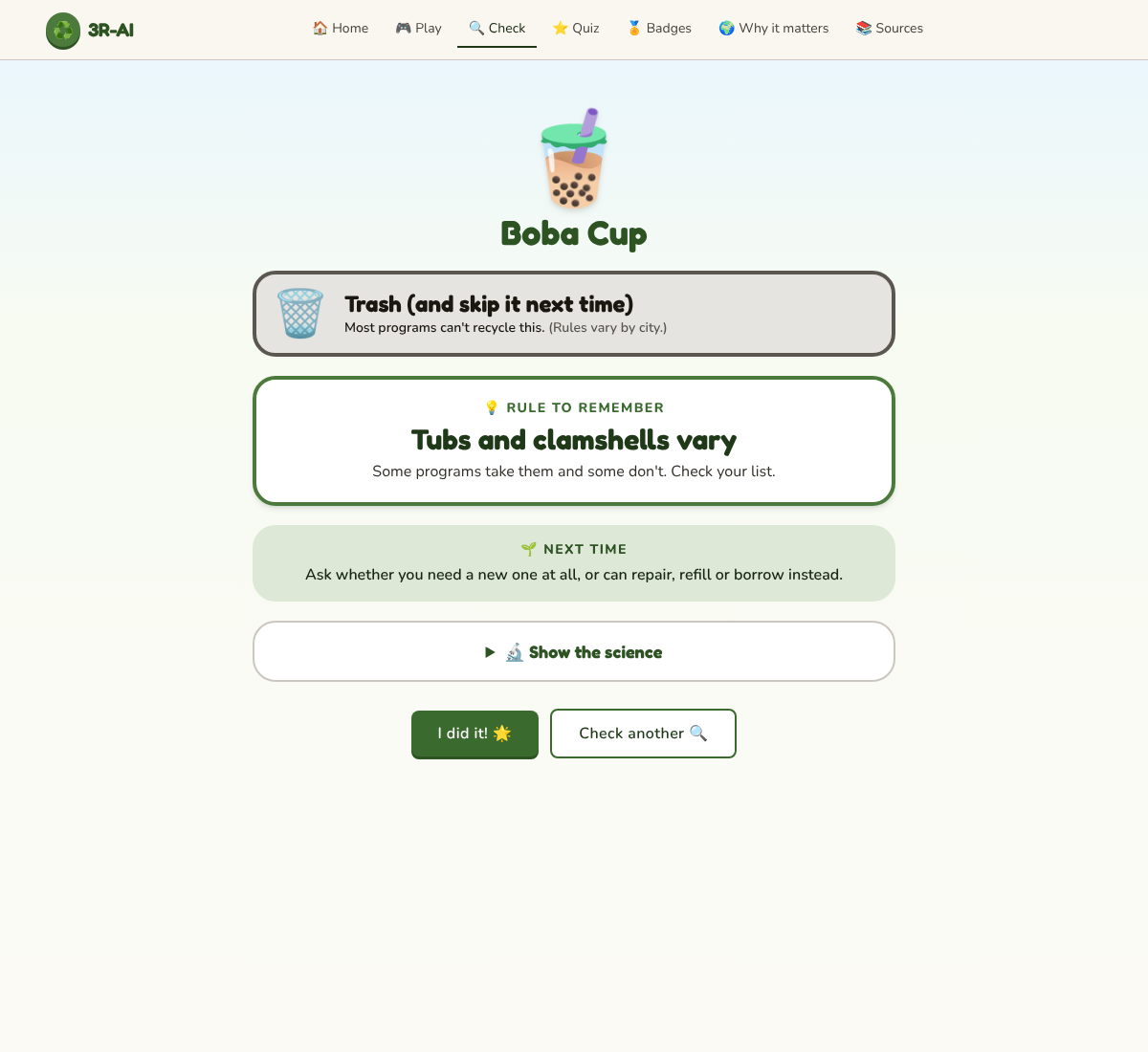
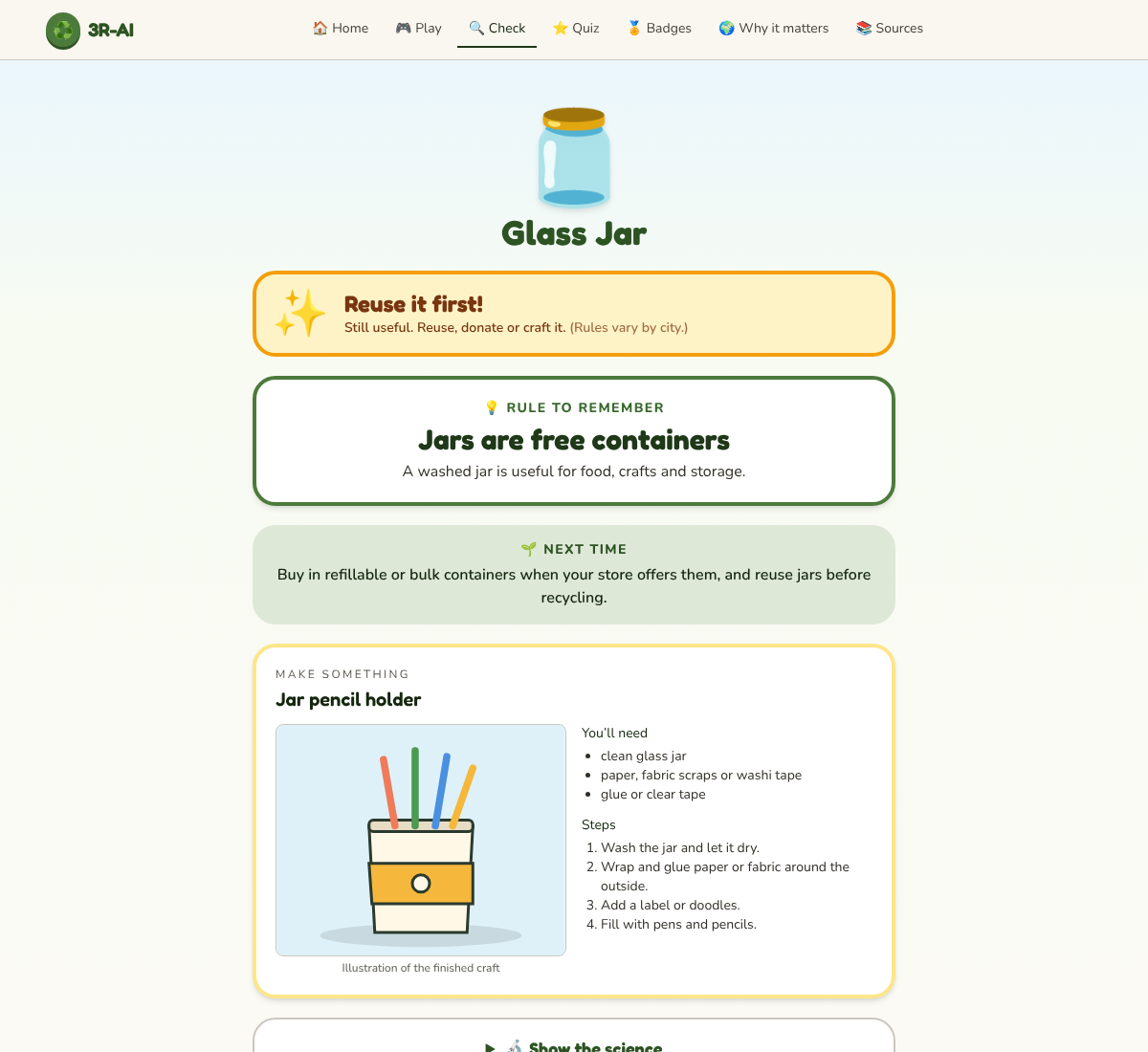
- Check an item: type any of 200+ student and household items. Get the right bin, the rule to remember, a "next time" tip, and a craft idea with an illustration.
- Show the science: sourced EPA WARM comparisons of reuse, recycle and dispose, with an estimate of the CO₂e difference versus landfill. Where EPA data doesn't exist, the app says so instead of guessing.
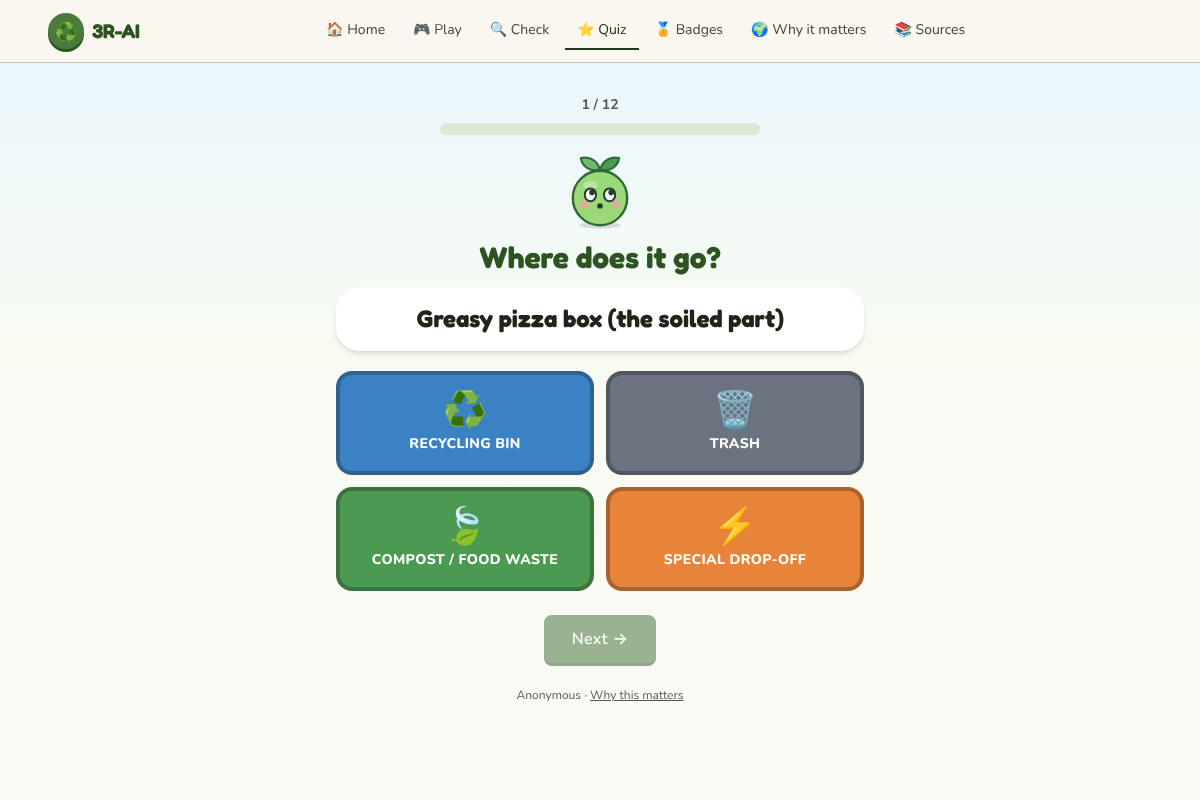
- Quiz and badges: a 12-item quiz measures what people actually know, and badges and a growing planet reward learning the rules.
How we built it
Next.js, React, TypeScript, Tailwind and Firebase, deployed on Vercel. There is no AI in the app: every recommendation comes from a hand-written rules engine and item library, so every answer is traceable and testable. We wrote 55 automated tests, and they caught real bugs (for example, a cardboard tube classified as corrugated board, and "carpet" matching PET plastic). The game and the craft illustrations are built with plain CSS animation and SVG.
Challenges
We started with an AI photo scanner, but it was unreliable and could be confidently wrong. We removed it and rebuilt the app around rules we can explain and sources we can cite. Being honest about recycling was the hard part: rules vary by city, so the app says "most programs" and links to a local lookup instead of claiming certainty.
Impact and feasibility
Each logged decision can estimate kg CO₂e avoided versus landfill, using EPA WARM category averages (not a measurement of any one item). We haven't measured real-world behavior change yet. It runs on a free-tier stack with no hardware, works on any phone, and needs no accounts. Our next step is a classroom pilot that measures quiz scores before and after playing.
What we learned
A one-off answer is forgettable, but a rule is reusable. Teaching why is what changes the next decision.
What's next
A classroom pilot, more items and rules, and plugging in verified city-specific data.
Sources: EPA WARM; Recycling Partnership, State of Curbside Recycling 2024. Recycling rules vary by city.
Built With
- animations
- authentication
- css
- epa
- firebase
- firestore
- next.js
- react
- svg
- tailwind
- typescript
- vercel
- vitest

Log in or sign up for Devpost to join the conversation.