Inspiration
A harbor can look calm above the surface while important events unfold underwater. Detecting an anomaly is only the beginning: operators still need to understand its location, assess the evidence, and decide how to respond.
We built HarborGuard to explore how a 3D digital twin and AI-assisted decision-making can bring those steps into one workflow. Our central question was: how can AI help operators make informed decisions while keeping people in control?
What it does
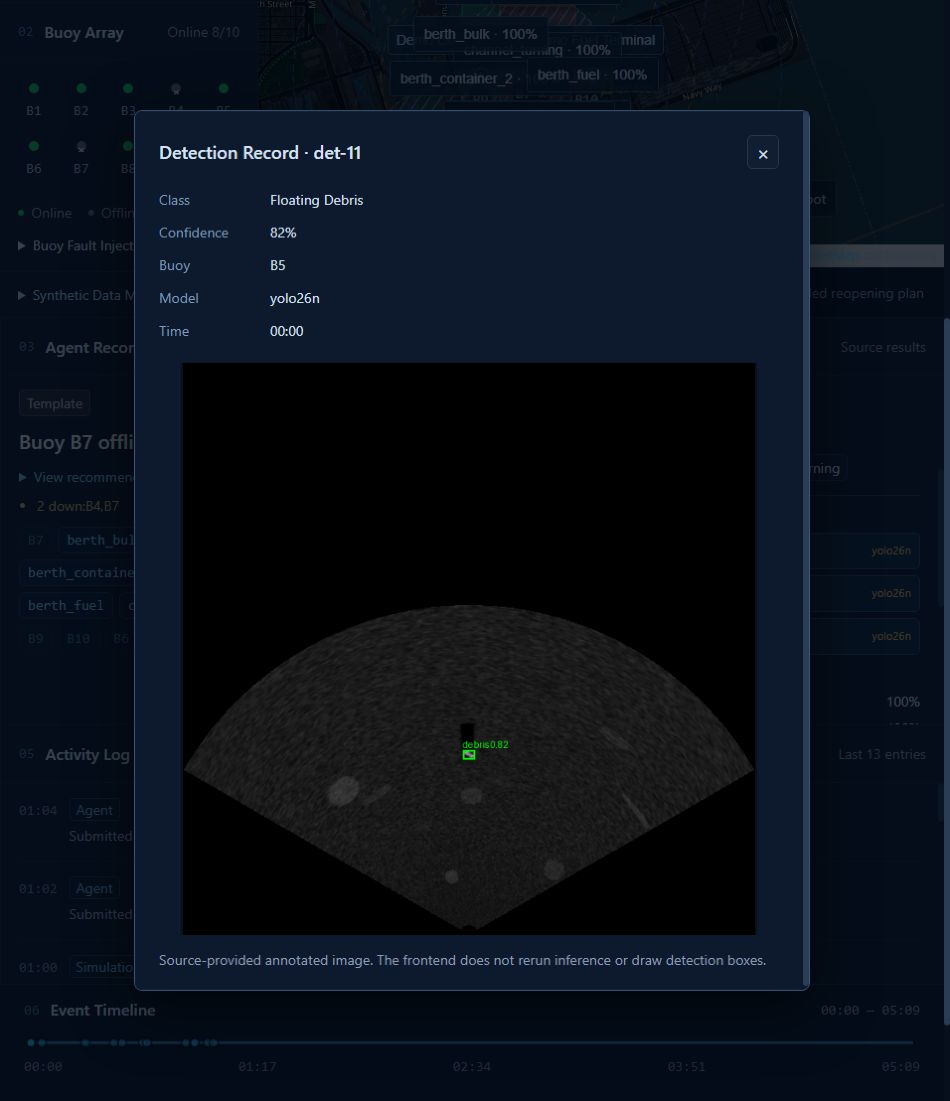
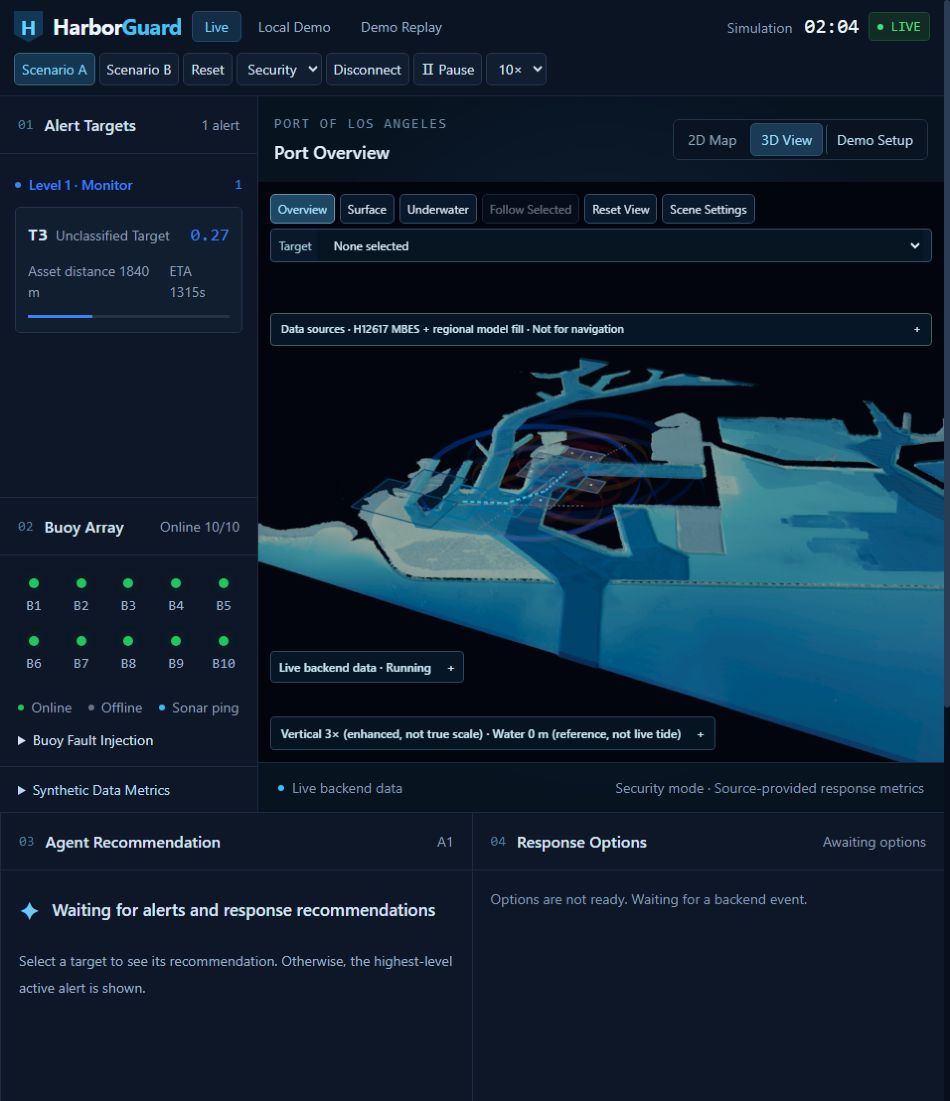
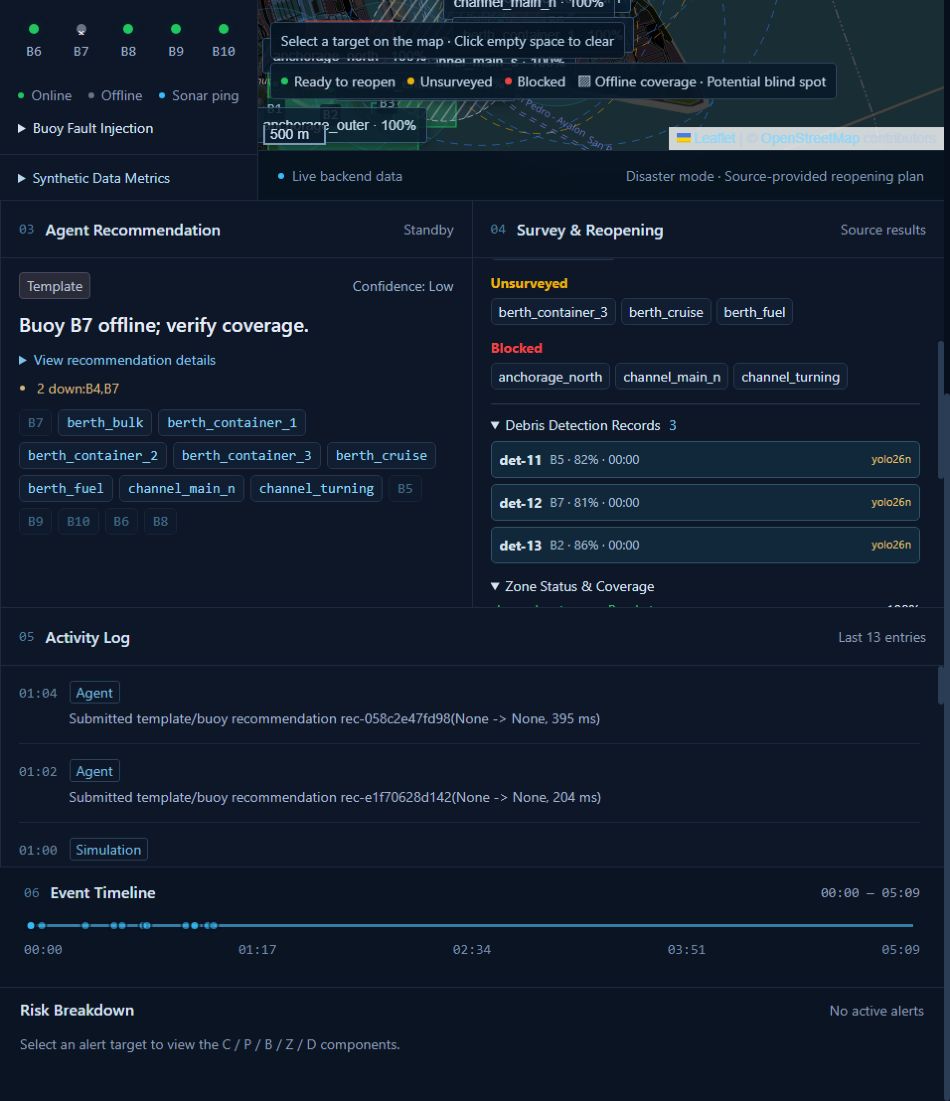
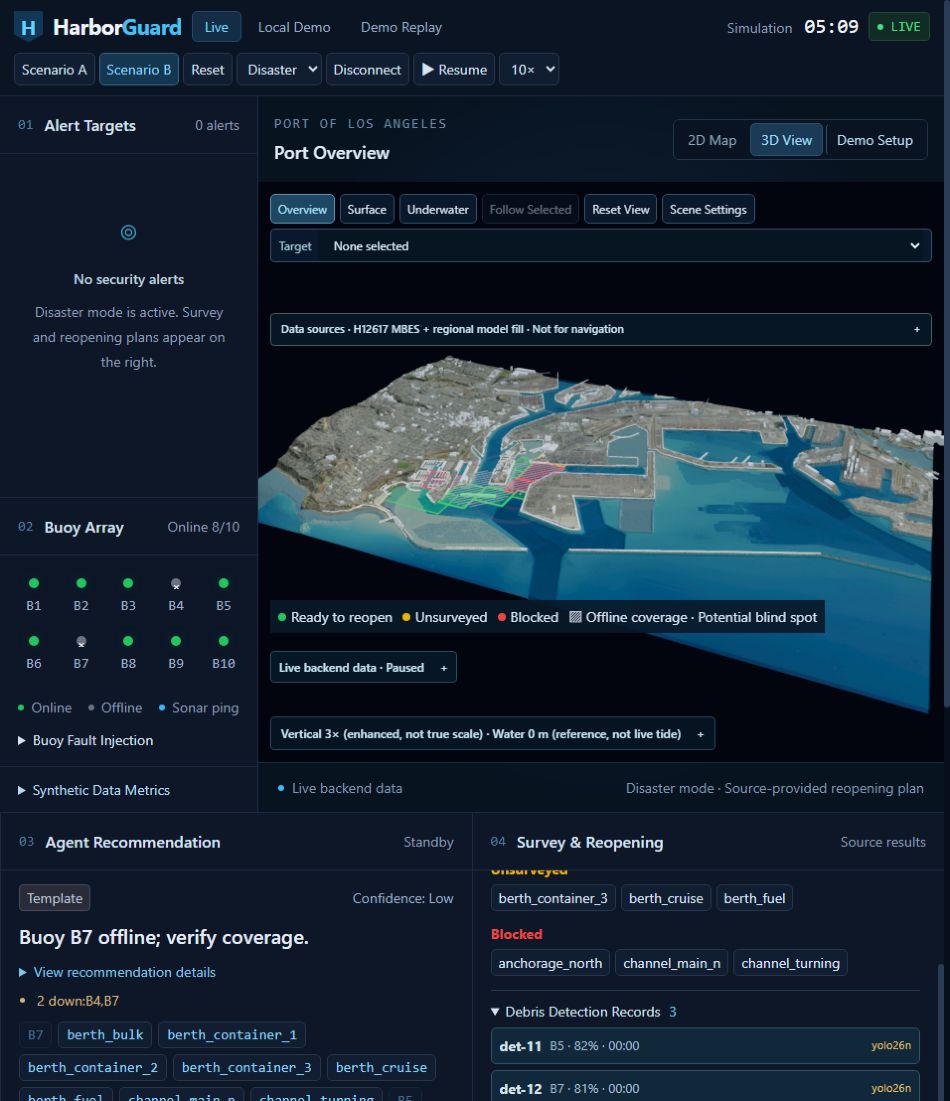
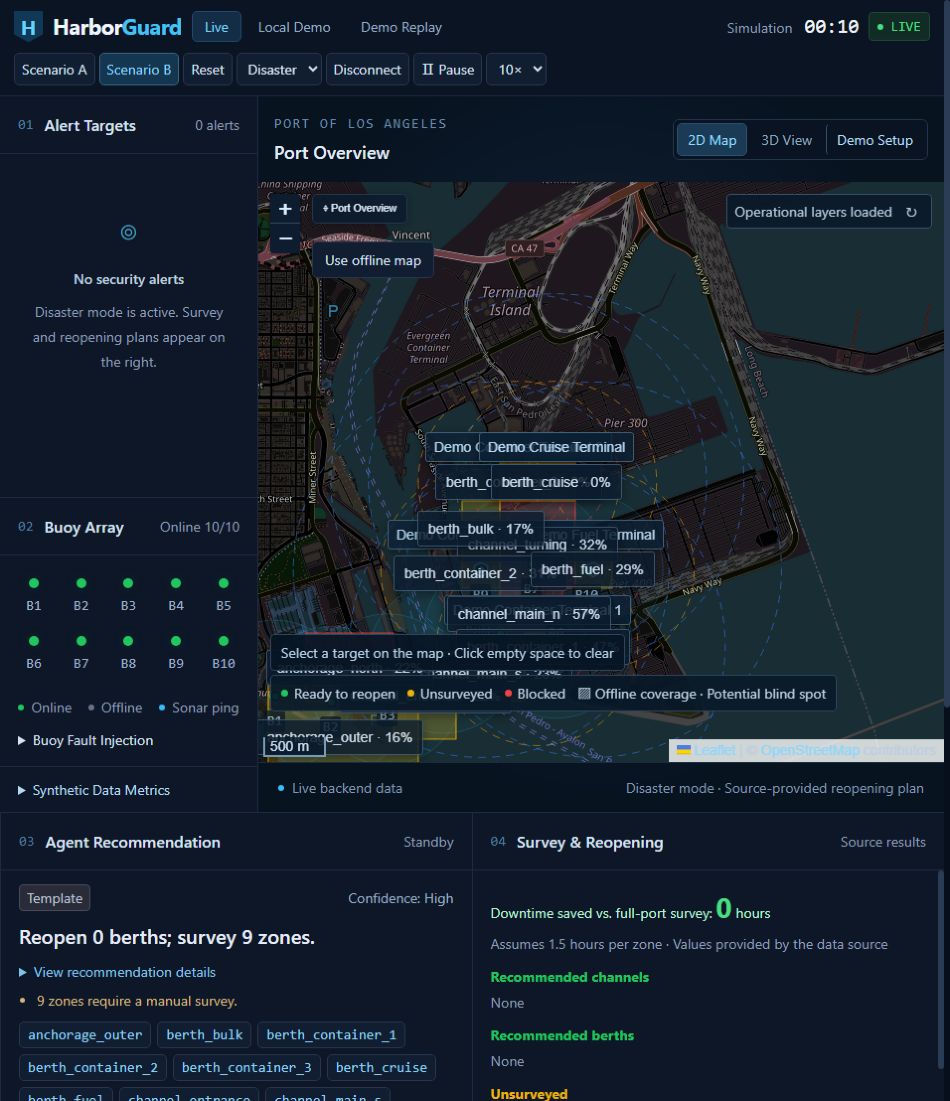
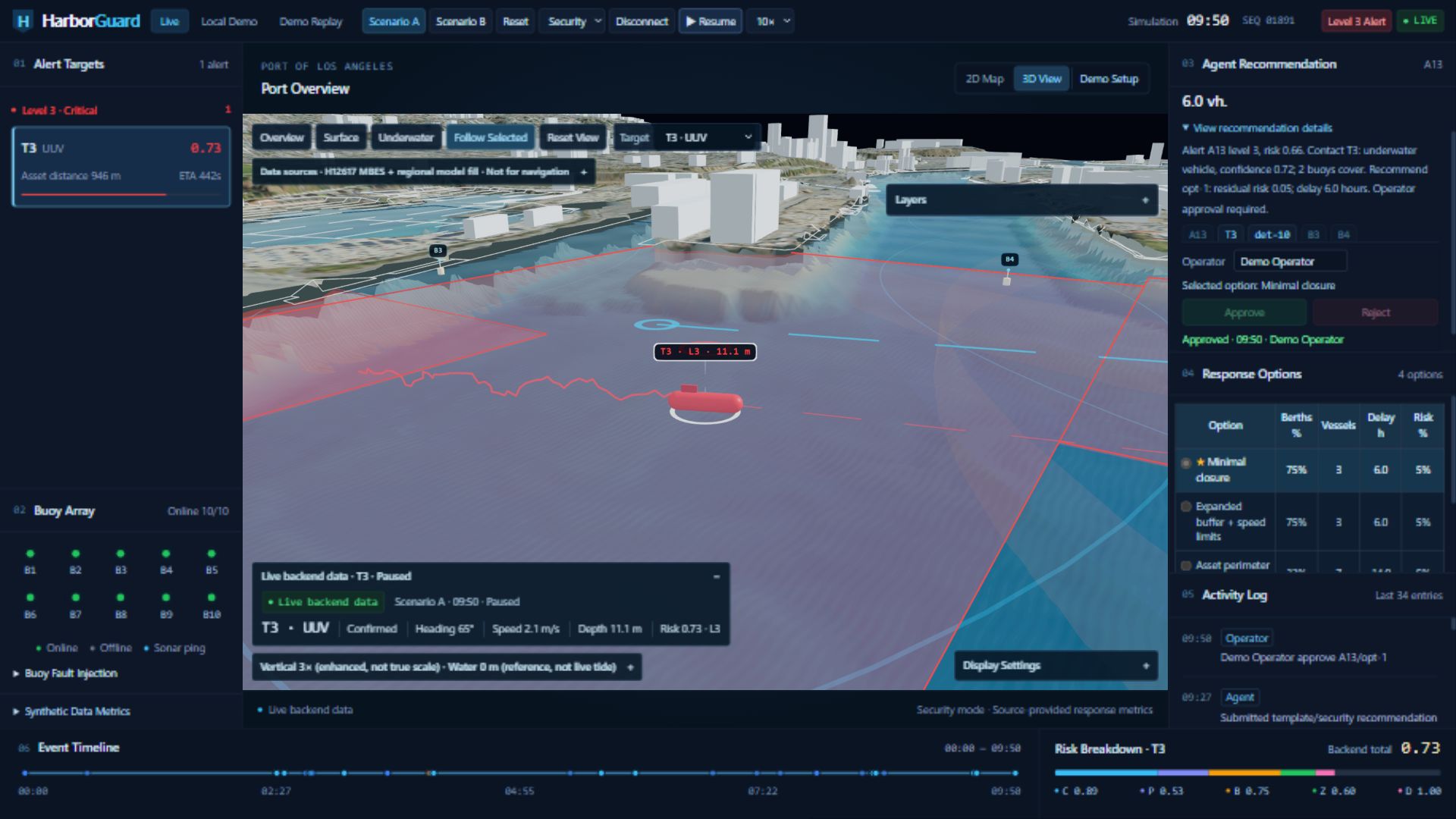
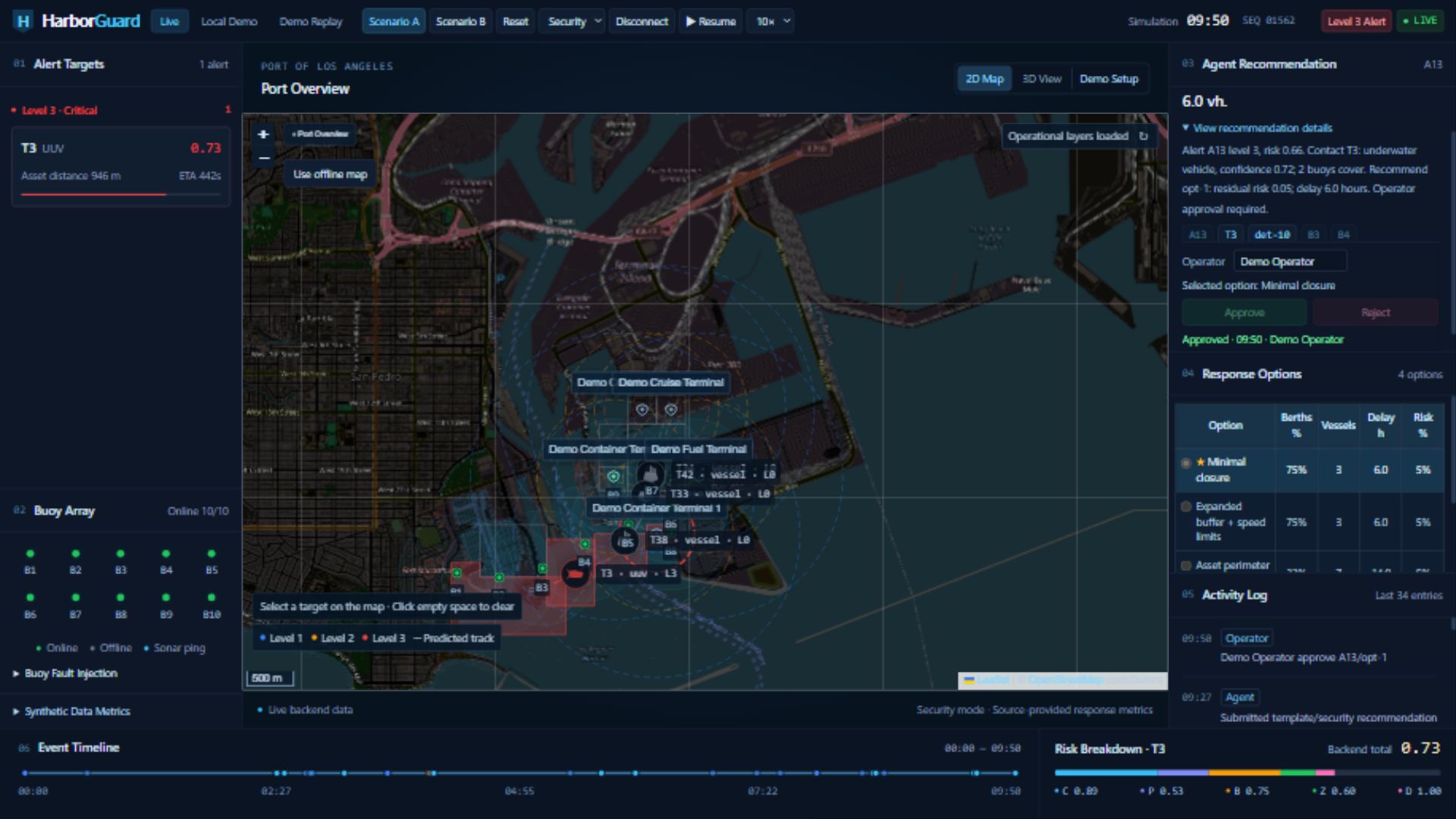
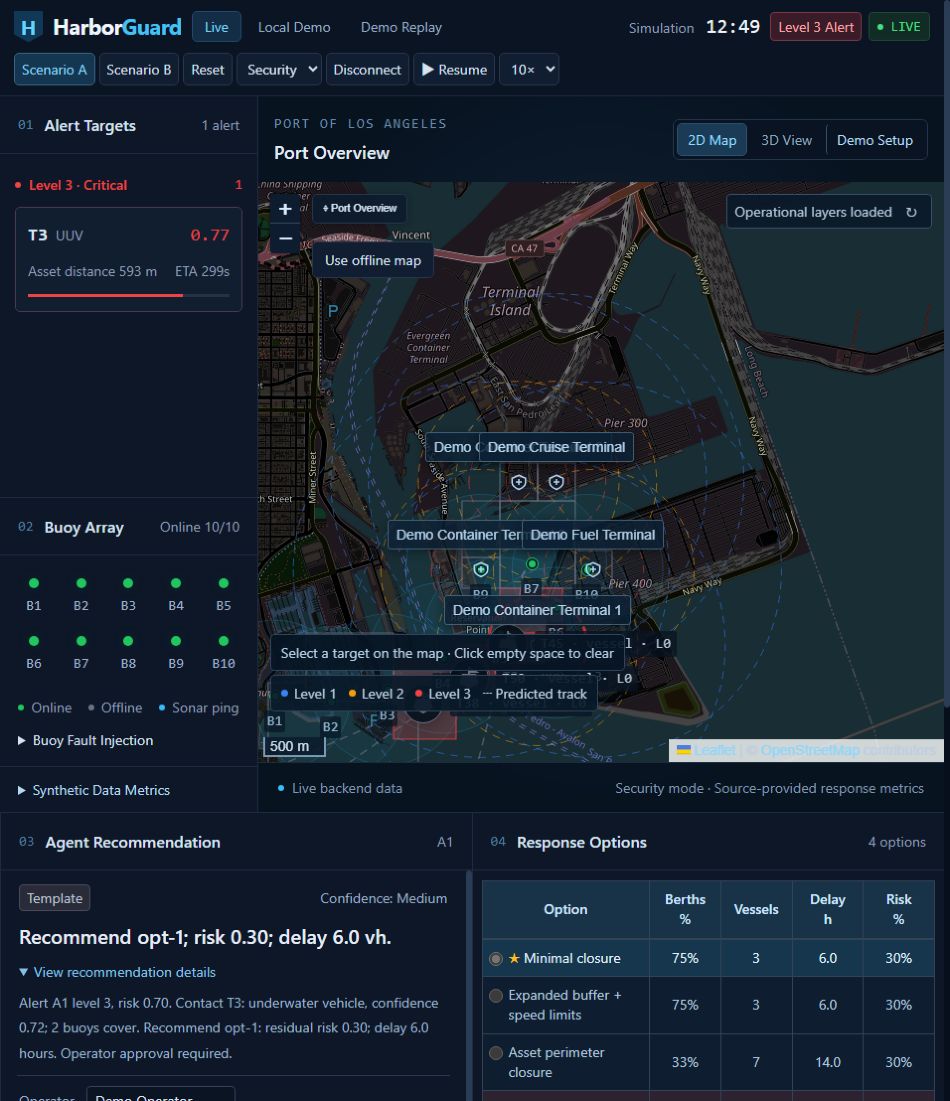
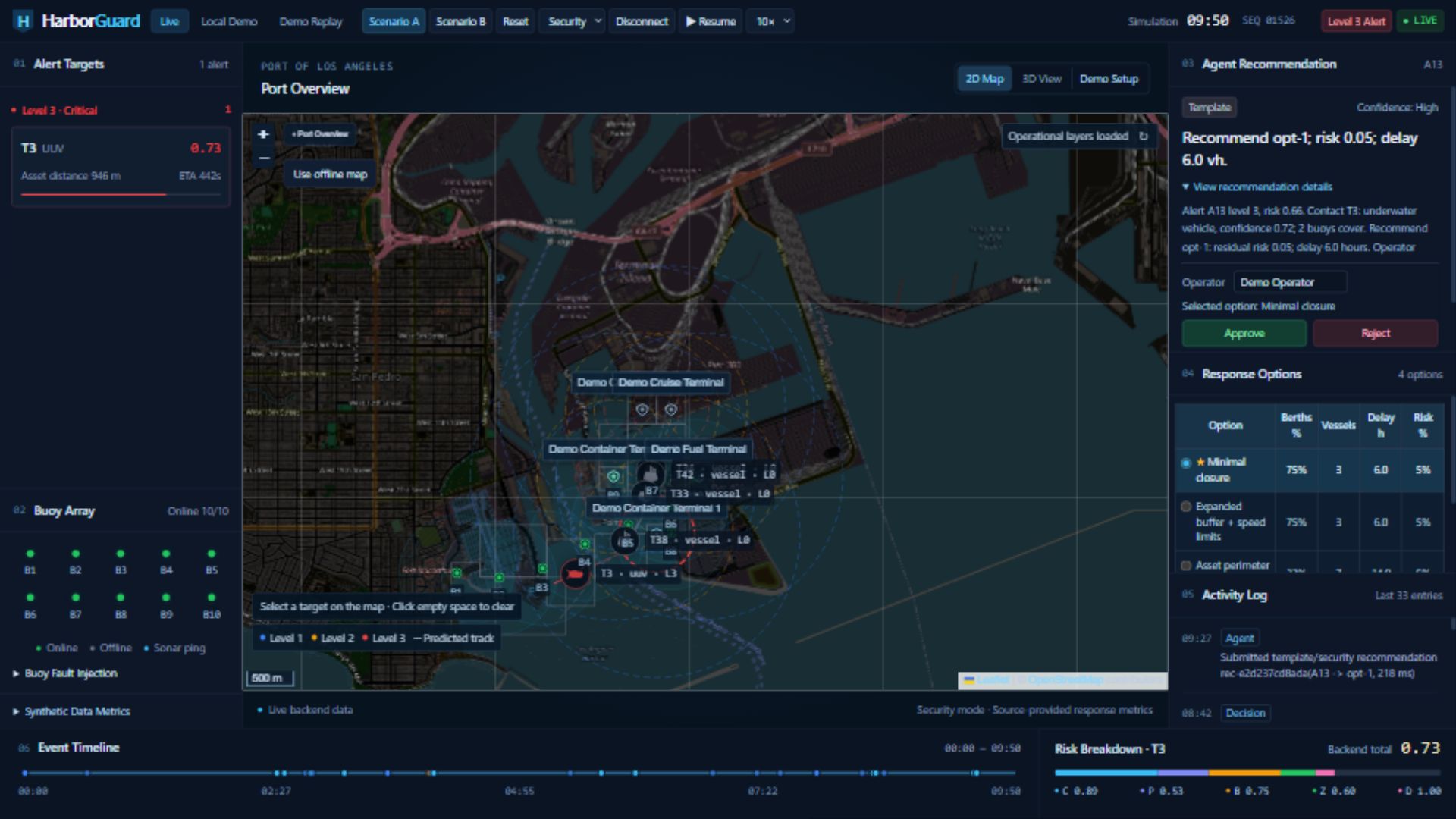
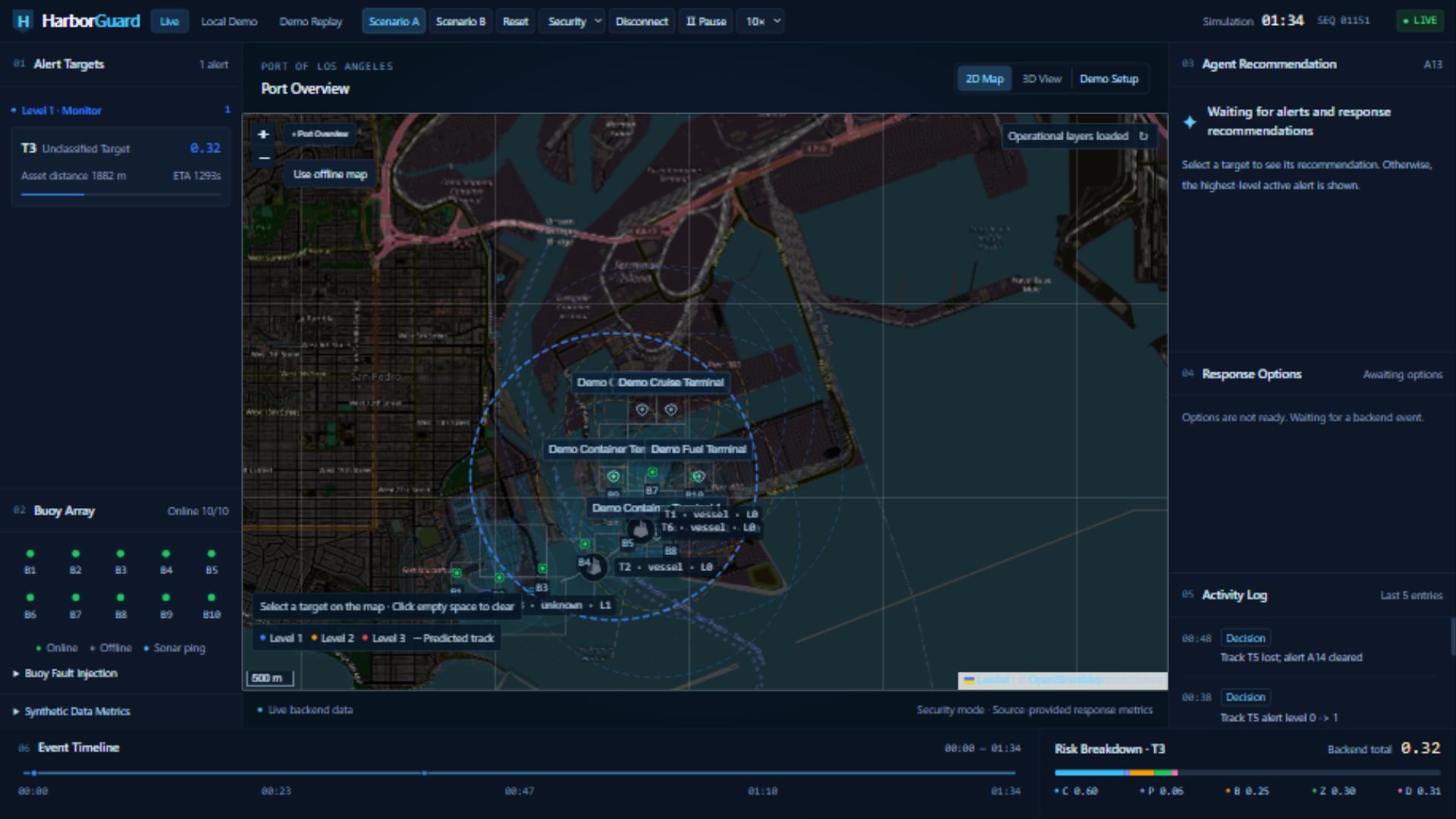
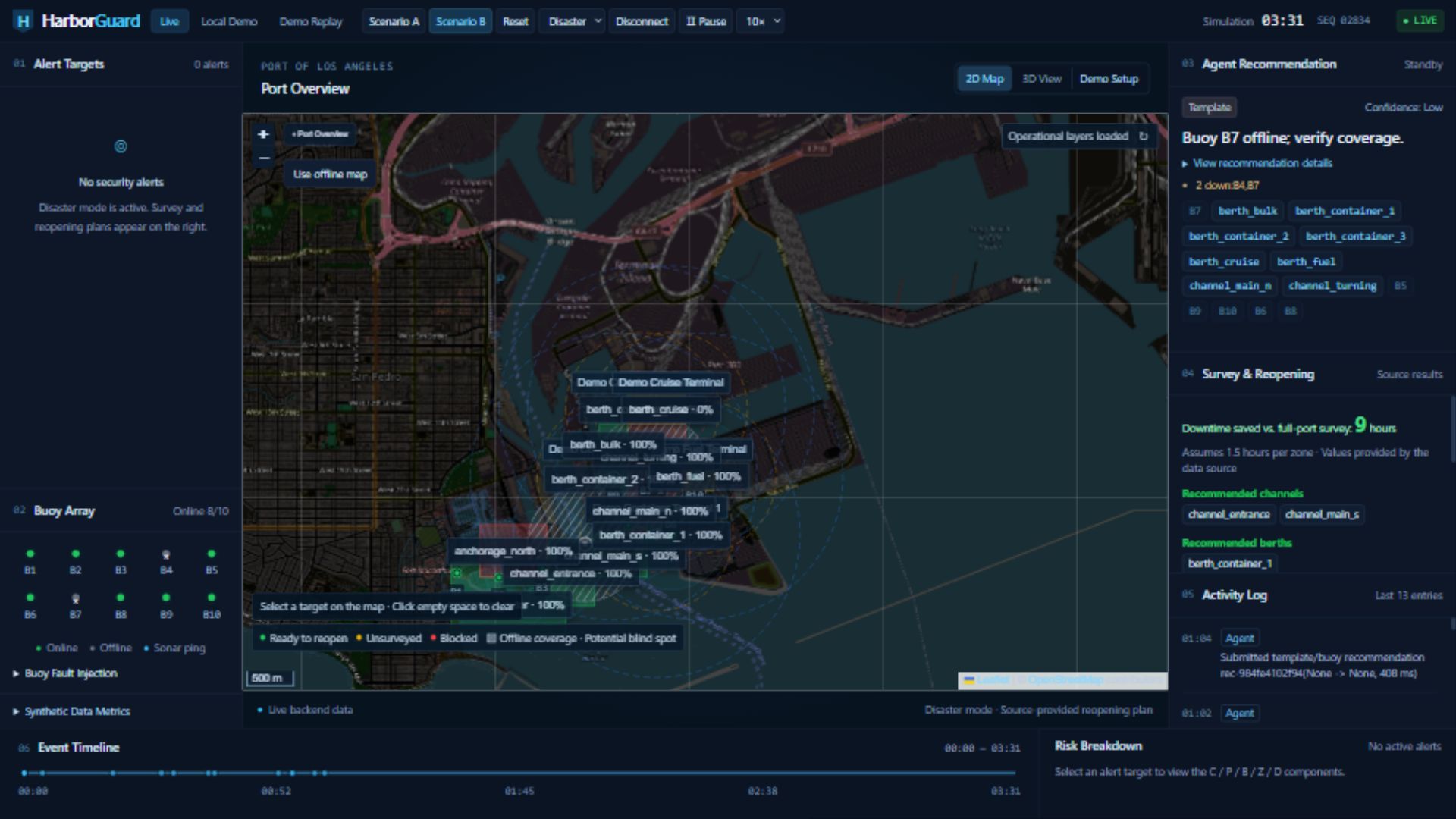
HarborGuard is a prototype for underwater situational awareness and response coordination. It combines a 3D harbor environment with an AI-assisted workflow connecting security events, recommendations, human approval, and recovery.
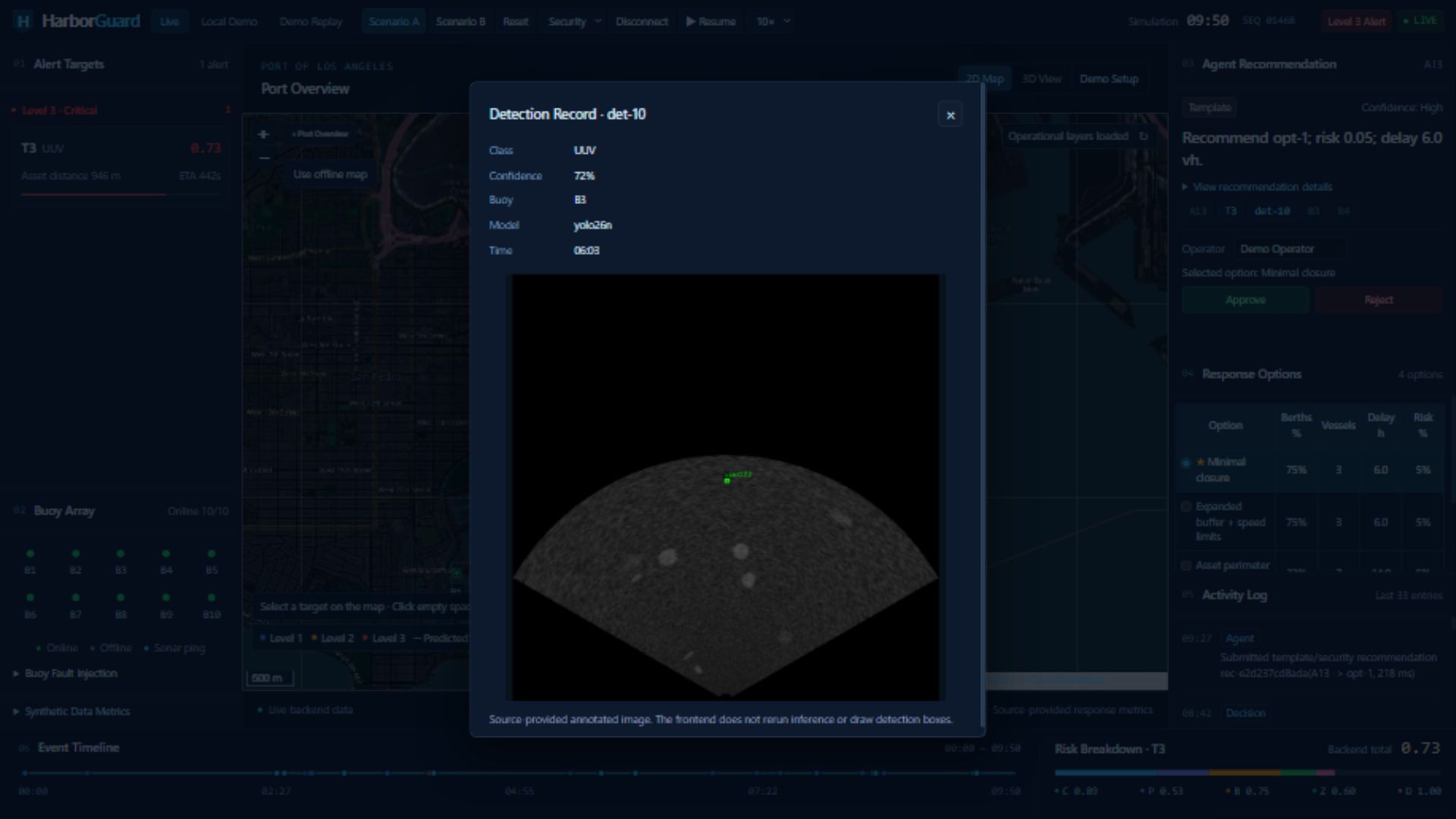
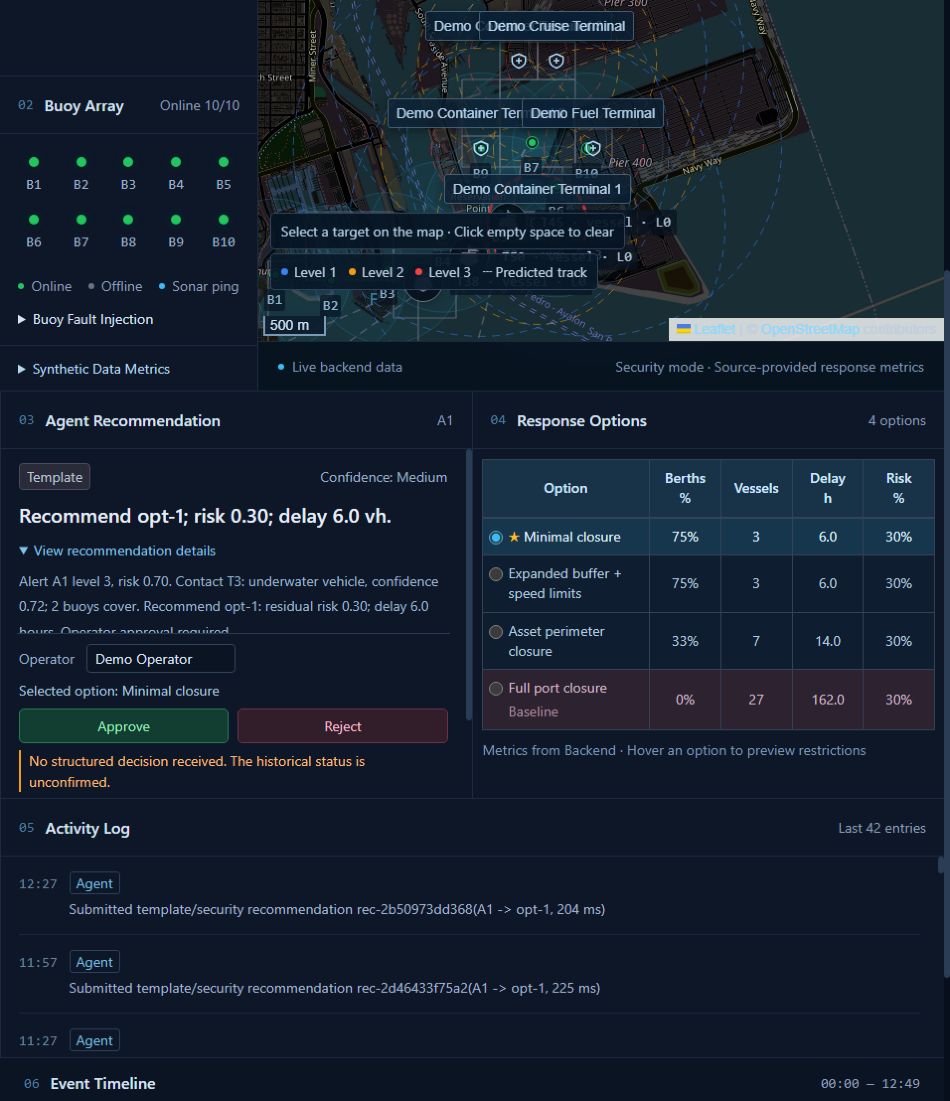
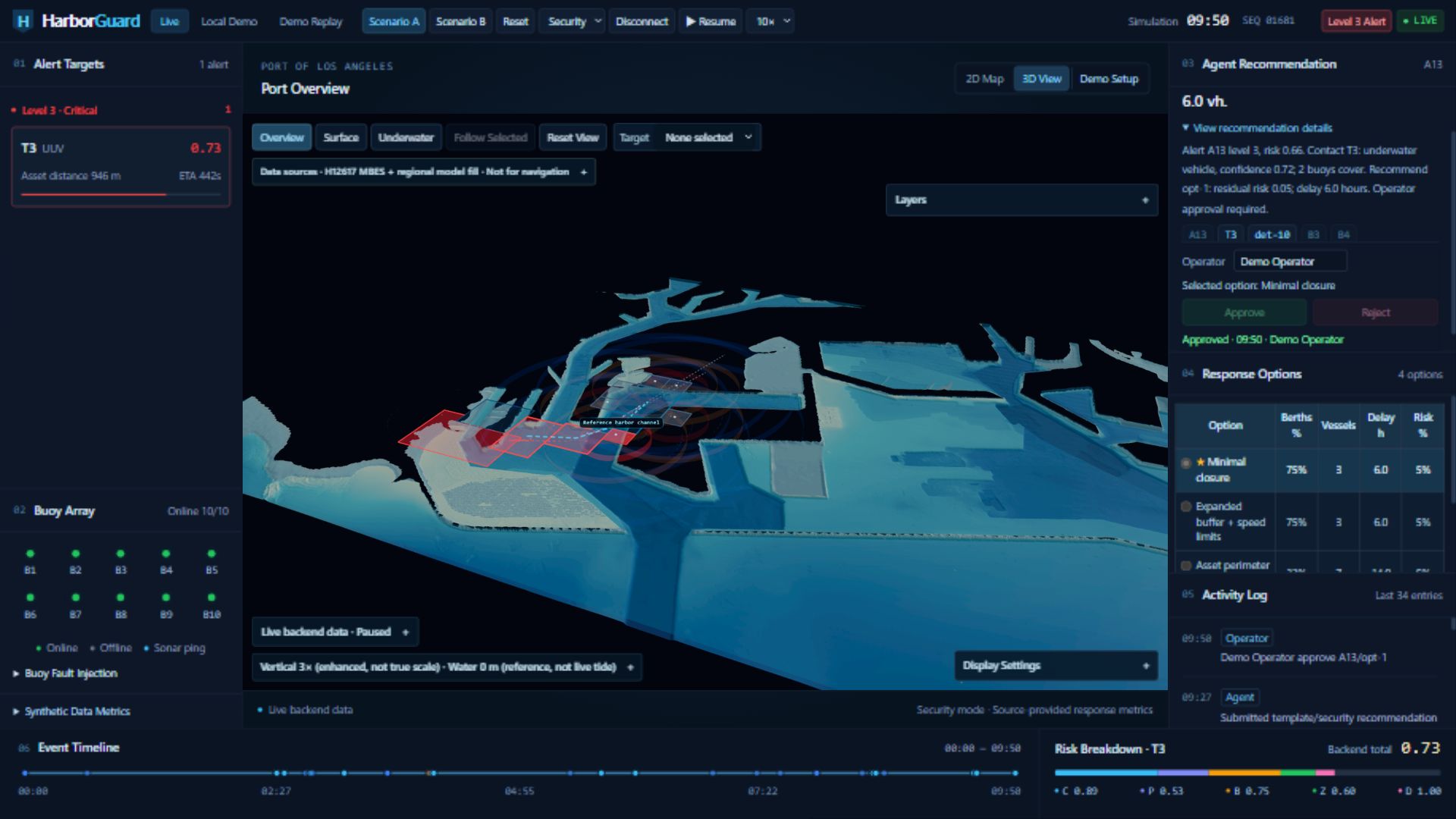
The digital twin provides spatial context for understanding an event. The AI participates in the decision process by helping interpret the available context and formulate a proposed response. The operator reviews the recommendation before approving the next step.
Our demonstration follows a complete sequence:
Security event → AI recommendation → Human approval → Recovery
This makes the relationship between observation, decision, and action visible within a single interface.
How we built it
We built the 3D interface with React, Three.js, and React Three Fiber. The seabed is represented as a triangular mesh generated from bathymetric data.
We organized the demonstration around scenarios that connect the spatial interface with the decision workflow. This lets us examine how an event becomes a recommendation, where human judgment enters the process, and how the resulting response is presented.
The current prototype demonstrates this workflow in controlled scenarios. It does not establish operational readiness for real-world harbor deployment.
Challenges we ran into
One challenge was making underwater terrain useful at different viewing scales. A visually detailed mesh cannot compensate for low-resolution bathymetric data, and missing coverage requires careful handling.
Another challenge was defining the AI’s role. A recommendation needs to remain connected to the event and available evidence. We also needed a clear boundary between proposing a response and authorizing it.
Bringing the 3D scene and the decision workflow together required us to think about both technical behavior and what an operator needs to understand at each step.
Accomplishments that we're proud of
We brought underwater visualization and AI-assisted decision-making into a shared prototype. We are particularly proud of making human approval an explicit part of the demonstration, alongside detection and response.
What we learned
We learned that a useful digital twin needs more than convincing graphics: it needs a clear relationship between spatial context, system state, and decisions.
We also learned that the value of an AI recommendation depends on how clearly a person can understand, evaluate, and act on it.
What's next for HarborGuard
Our next steps are to improve bathymetric coverage, integrate additional sensor inputs, and evaluate recommendations across more varied scenarios.
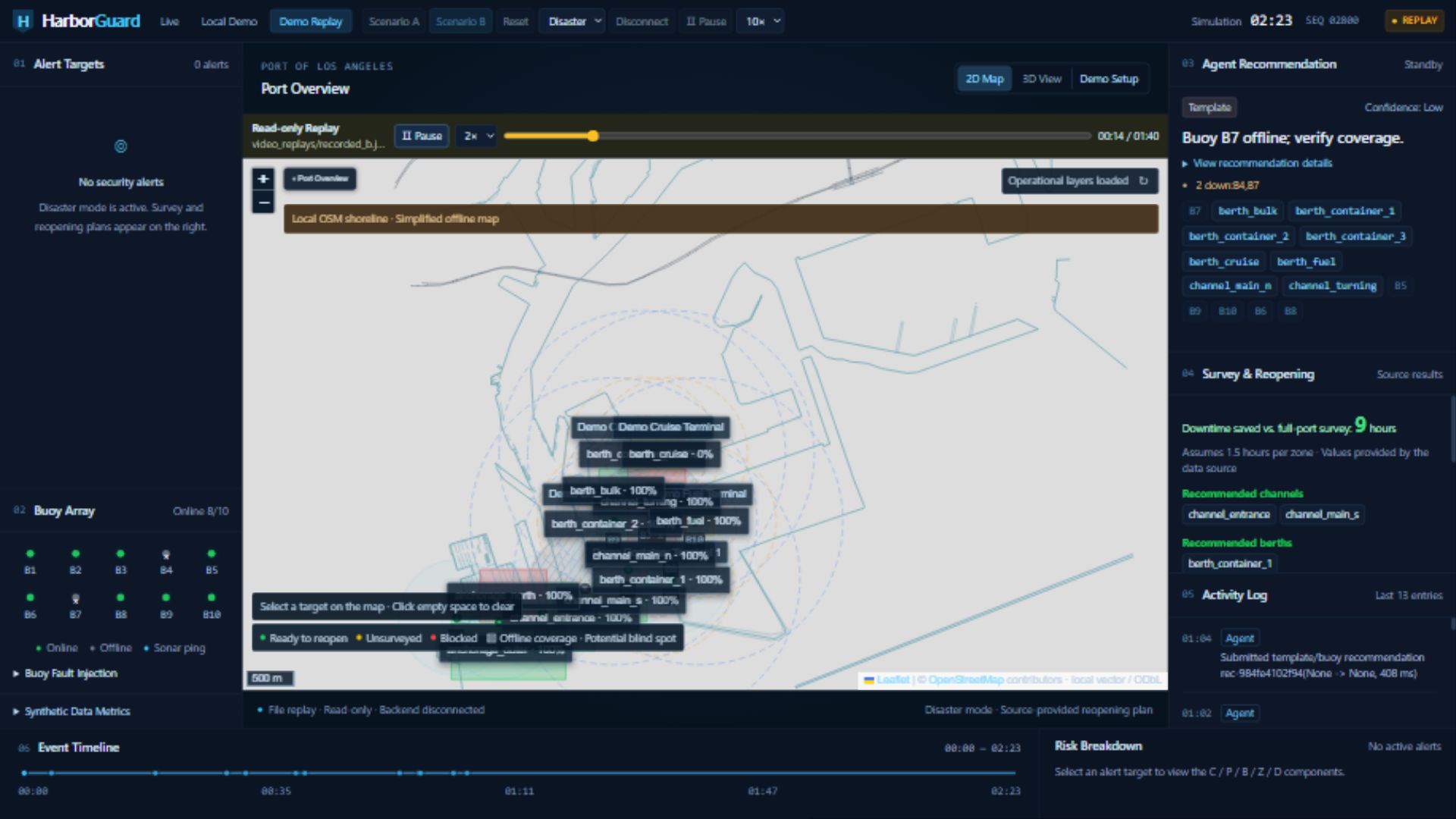
We also want to strengthen uncertainty communication and test the workflow with maritime professionals. The longer-term goal is to support both harbor security and civilian applications such as infrastructure inspection and disaster recovery.
Built With
- fastapi
- fiber
- lora
- python
- pytorch
- react
- three
- three.js
- websockets
- yolo


Log in or sign up for Devpost to join the conversation.