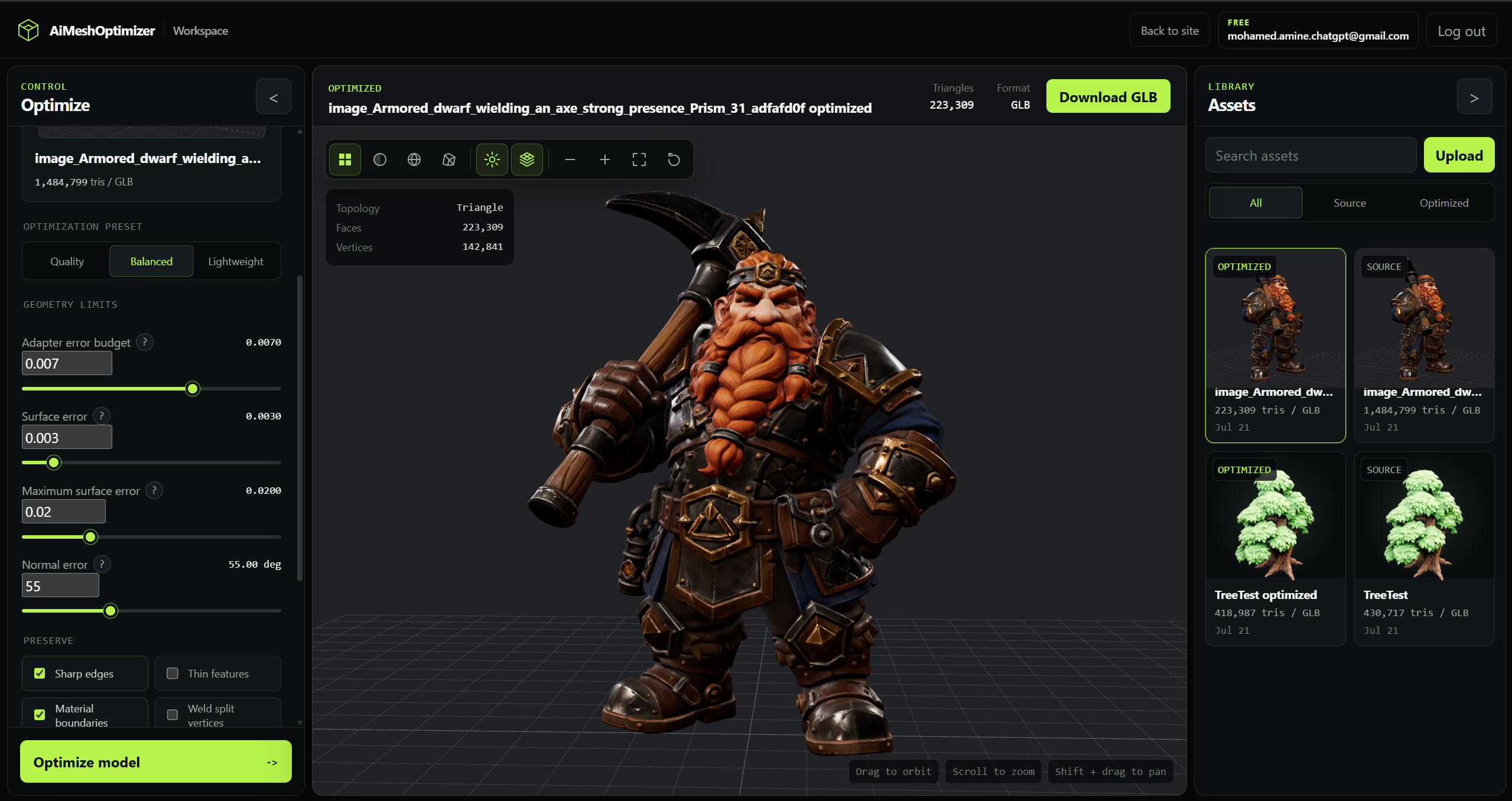
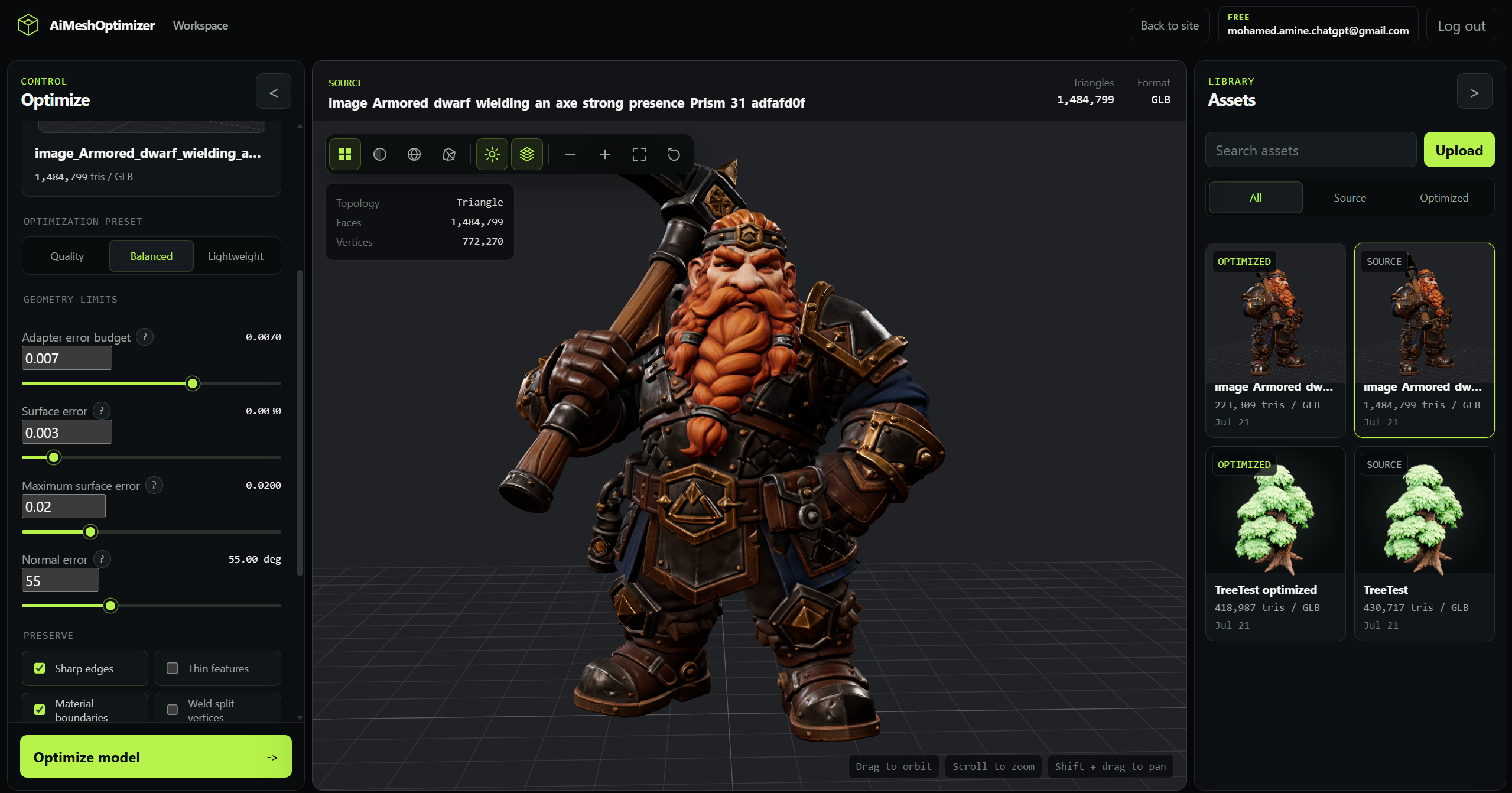
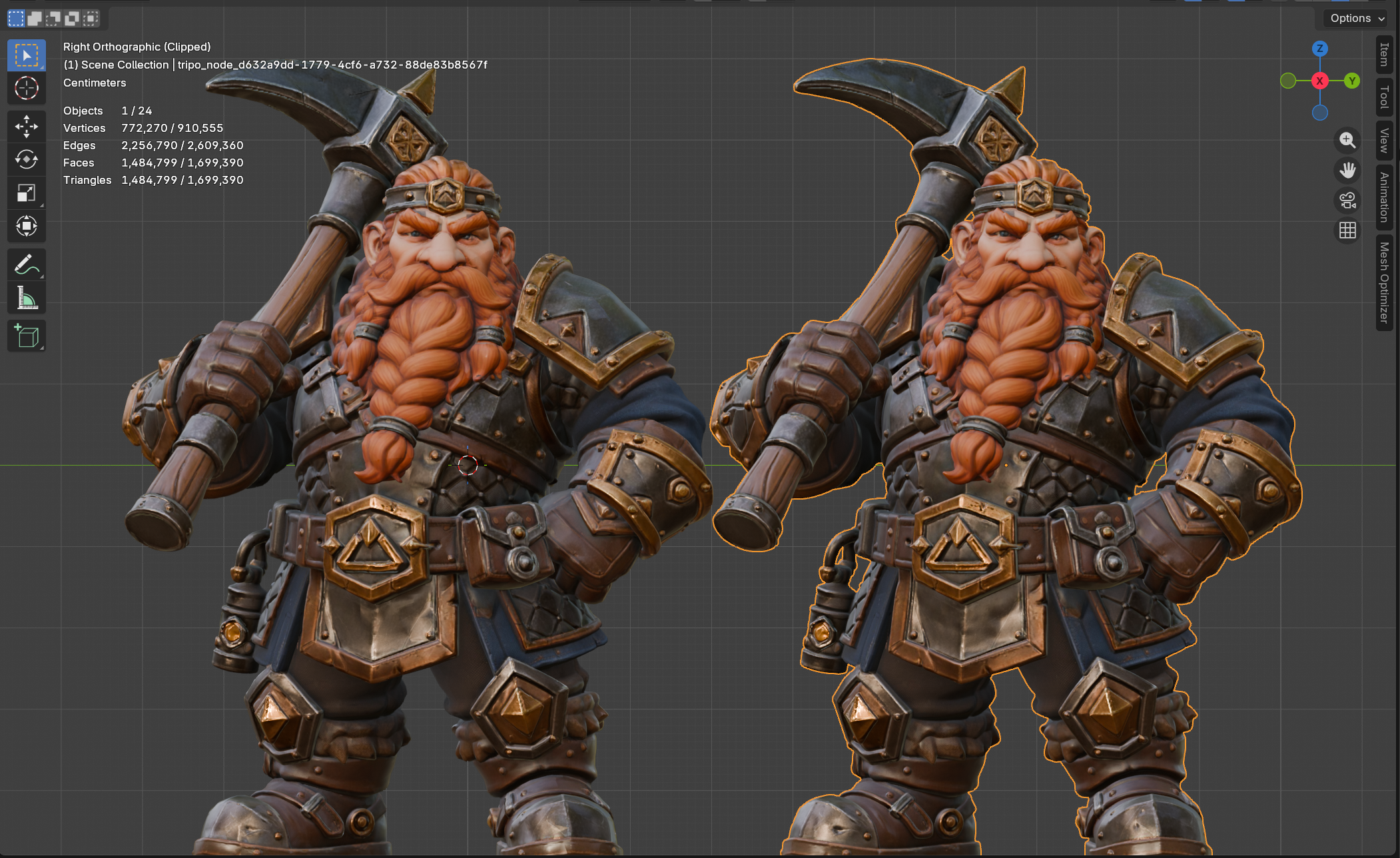
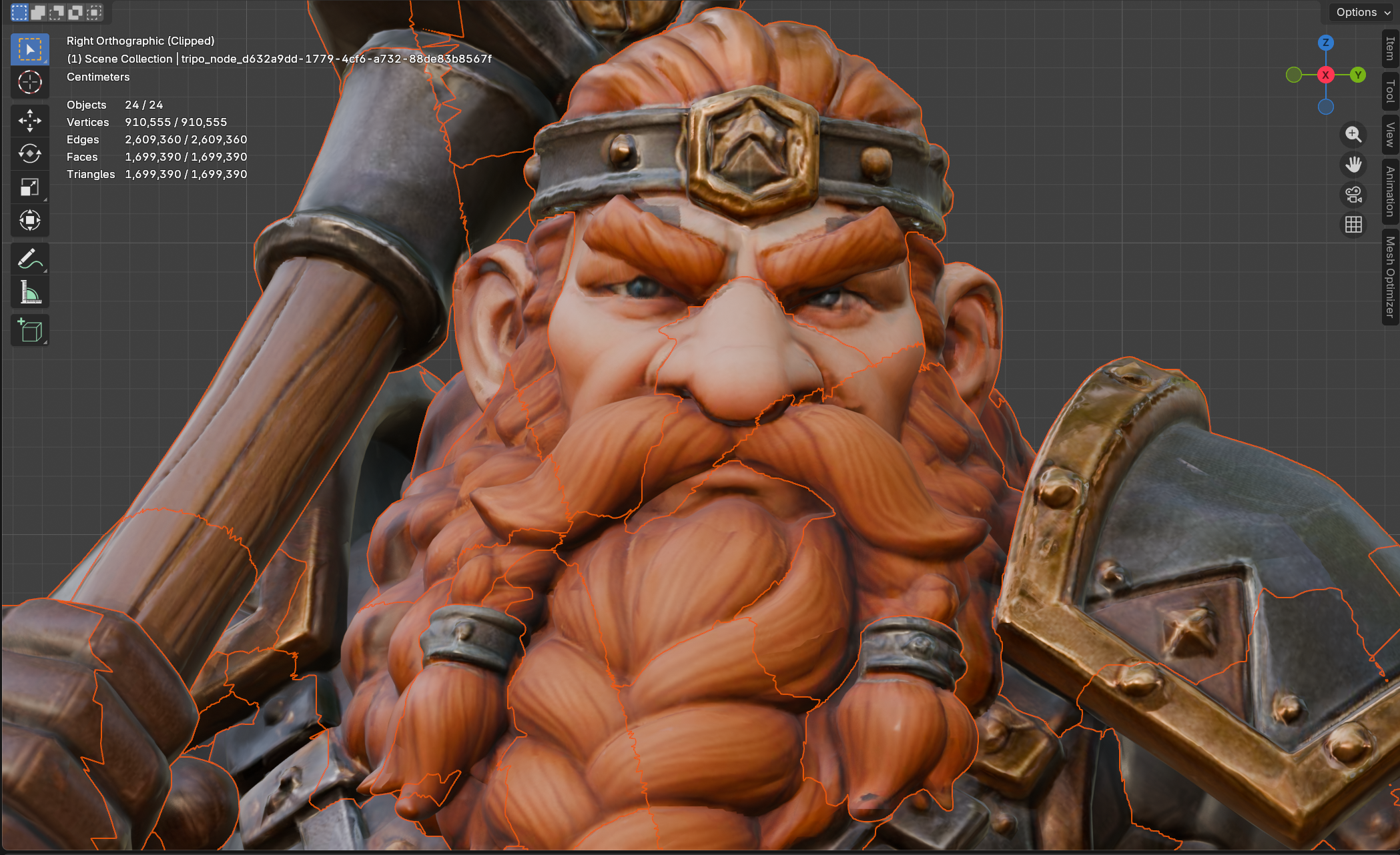
Inspiration
have always enjoyed creating games, but producing high-quality 3D models manually has been one of the biggest challenges for me. When AI-powered 3D generators started becoming more capable, they seemed like the perfect solution.
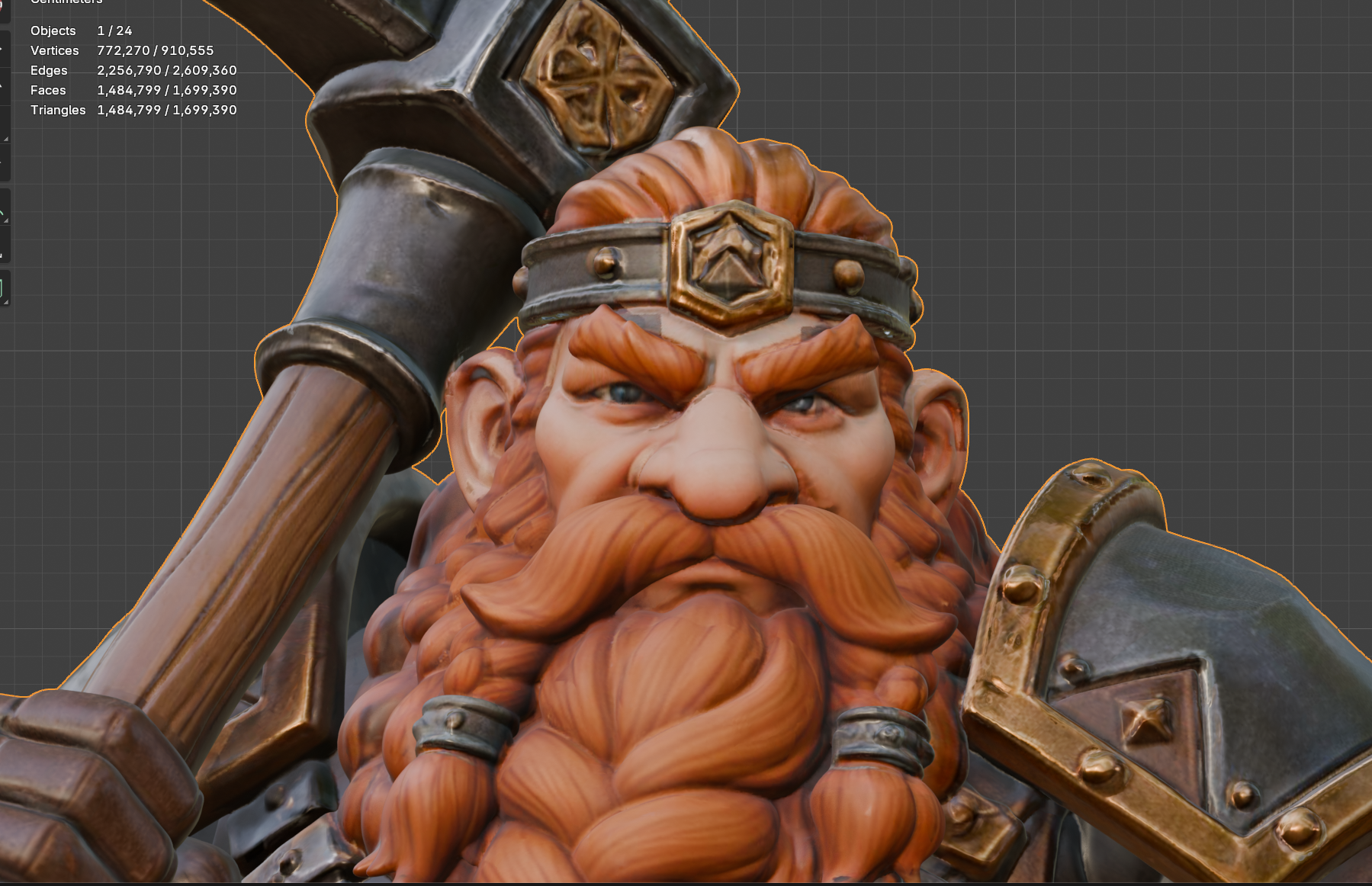
However, even after major improvements in visual quality, most AI-generated models are still difficult to use directly in games. They often contain hundreds of thousands—or even millions—of triangles, making them too heavy for real-time platforms and game engines.
Looking at these models, I kept wondering: what if we could significantly reduce their complexity while preserving nearly the same visual quality? That question became the inspiration behind 3DGenAI Optimizer.
What it does
I built the project with Codex involved throughout the development process. I used it to inspect the codebase, investigate slow or broken jobs, compare different simplification approaches, implement changes, and analyze results from real meshes.
The decisions still came from testing. I compared CPU and GPU output, checked how different shapes reacted to aggressive reduction, and used those results to decide which checks were useful and which ones were only adding time.
The pipeline developed around a simple idea: load the mesh, choose the appropriate processing path, simplify it, preserve the required attributes, and produce an output that can be used directly in Blender or a game workflow.
Challenges we ran into
The difficult part was not reducing triangle count. Most algorithms can do that. The difficult part was reducing a mesh without crushing thin structures, pipes, sharp parts, terrain details, or noisy AI-generated geometry.
Some models worked well with aggressive simplification, while others needed more protection around boundaries, normals, UVs, or small features. CPU and GPU processing also produced different results, so one method could not simply replace the other.
Performance created another problem. Some validation and repair steps looked useful in theory but added minutes to the process without improving the final mesh. Testing with Codex helped identify those bottlenecks and separate essential quality checks from optional repair behavior.
Accomplishments that we're proud of
I built a working optimizer around real AI-generated meshes instead of testing only on simple examples. I created separate CPU, GPU, and hybrid processing paths. I improved the workflow for large meshes and made the output easier to bring back into Blender and game pipelines. I made quality controls visible to the user instead of hiding every decision behind a single automatic setting. I reached results that preserve the overall identity of complex models while significantly reducing their triangle count.
What we learned
Triangle count is only one part of mesh optimization. A model can have fewer faces and still be unusable if it loses its pipes, sharp edges, silhouette, UV layout, or important small structures.
I also learned that validation needs to have a purpose. A check that takes several minutes but cannot repair or improve the result is not automatically useful. It may be better as an optional setting, or it may need to be removed entirely.
Working with Codex also made the development process more iterative. Instead of assuming that an algorithm was working because it passed a basic test, we could inspect the actual output, trace slow stages, compare methods, and adjust the design based on evidence.
What's next for 3DGenAI Optimizer
The next step is to make CPU, GPU, and hybrid processing more consistent while preserving the performance advantages of each method. GPU optimization especially needs to retain the same structures and fine details that the stronger CPU path already handles well.
I also want to use available CPU, GPU, and memory resources more efficiently, improve automatic method selection, create clearer presets, and strengthen texture and UV preservation.
Another priority is making mesh splitting more logical. Instead of cutting models into arbitrary chunks, the system should recognize natural boundaries, connected regions, materials, and important structural features so the final parts are easier to use and reassemble.
I also plan to introduce a more intelligent trial-and-error optimization process. The system would test different simplification strategies and parameter combinations, compare their results, and continue reducing the triangle count whenever it can do so without causing unacceptable quality loss.
My long-term goal is simple: make AI-generated 3D assets practical for games and real-time projects without forcing creators to manually optimize, split, or repair every model before it can be used.

Log in or sign up for Devpost to join the conversation.