-
-
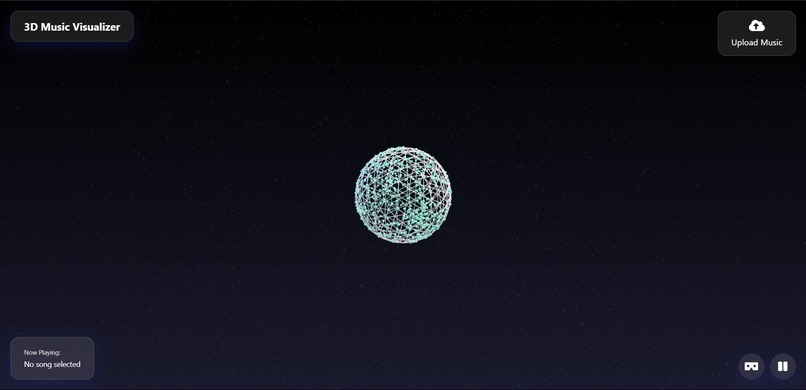
Before Adding the Music
-
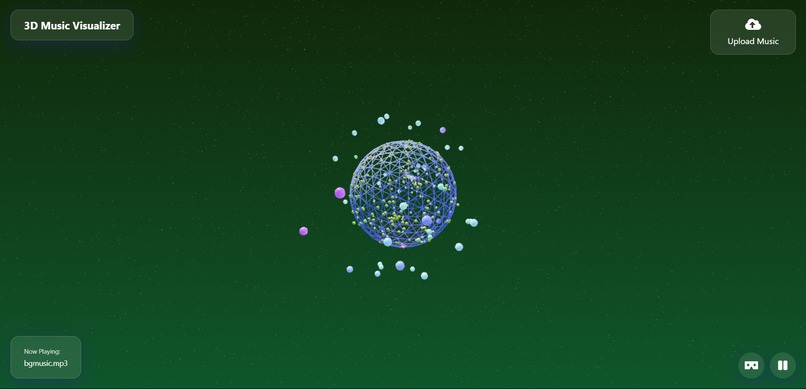
After Adding the Music
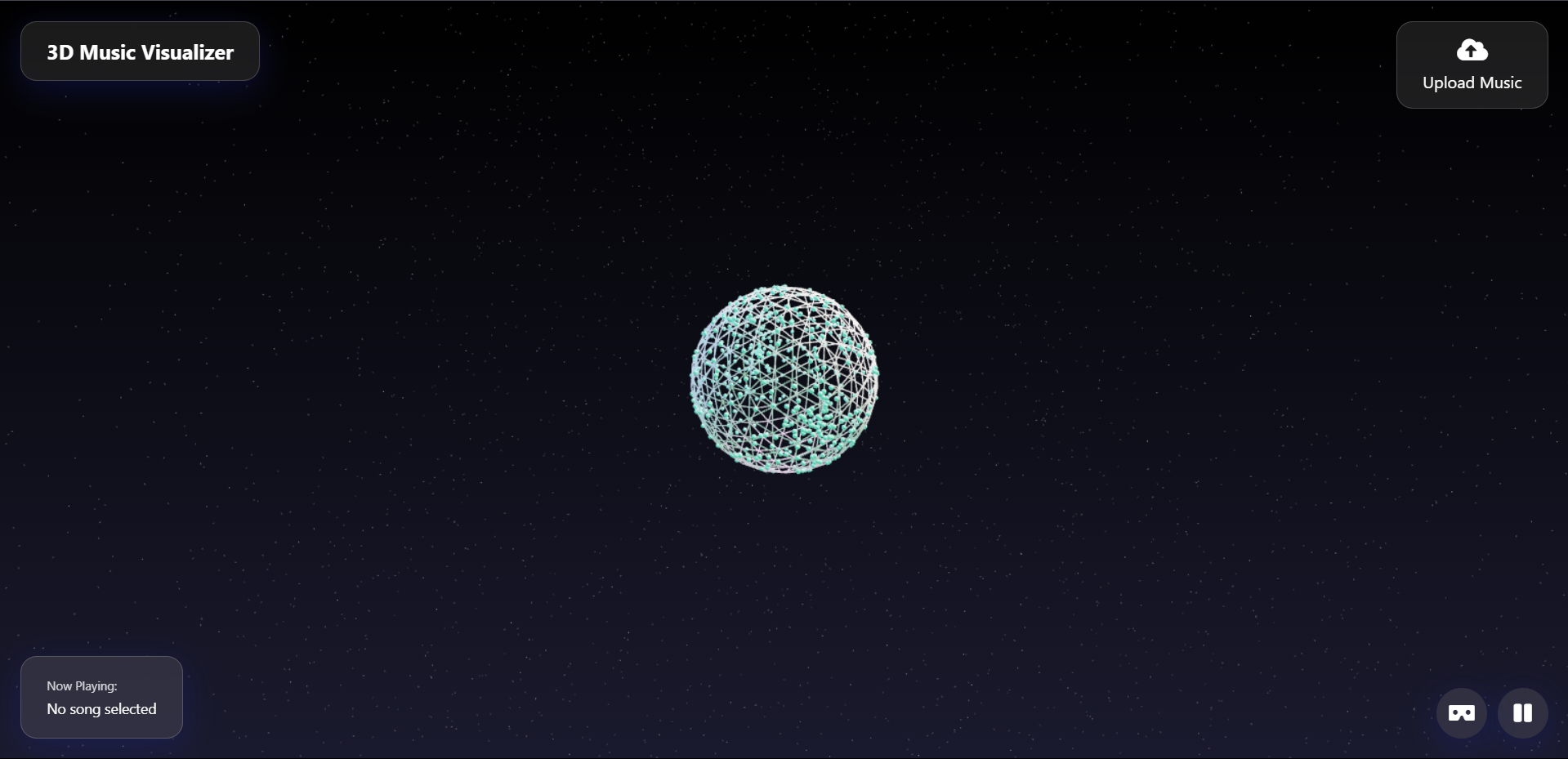
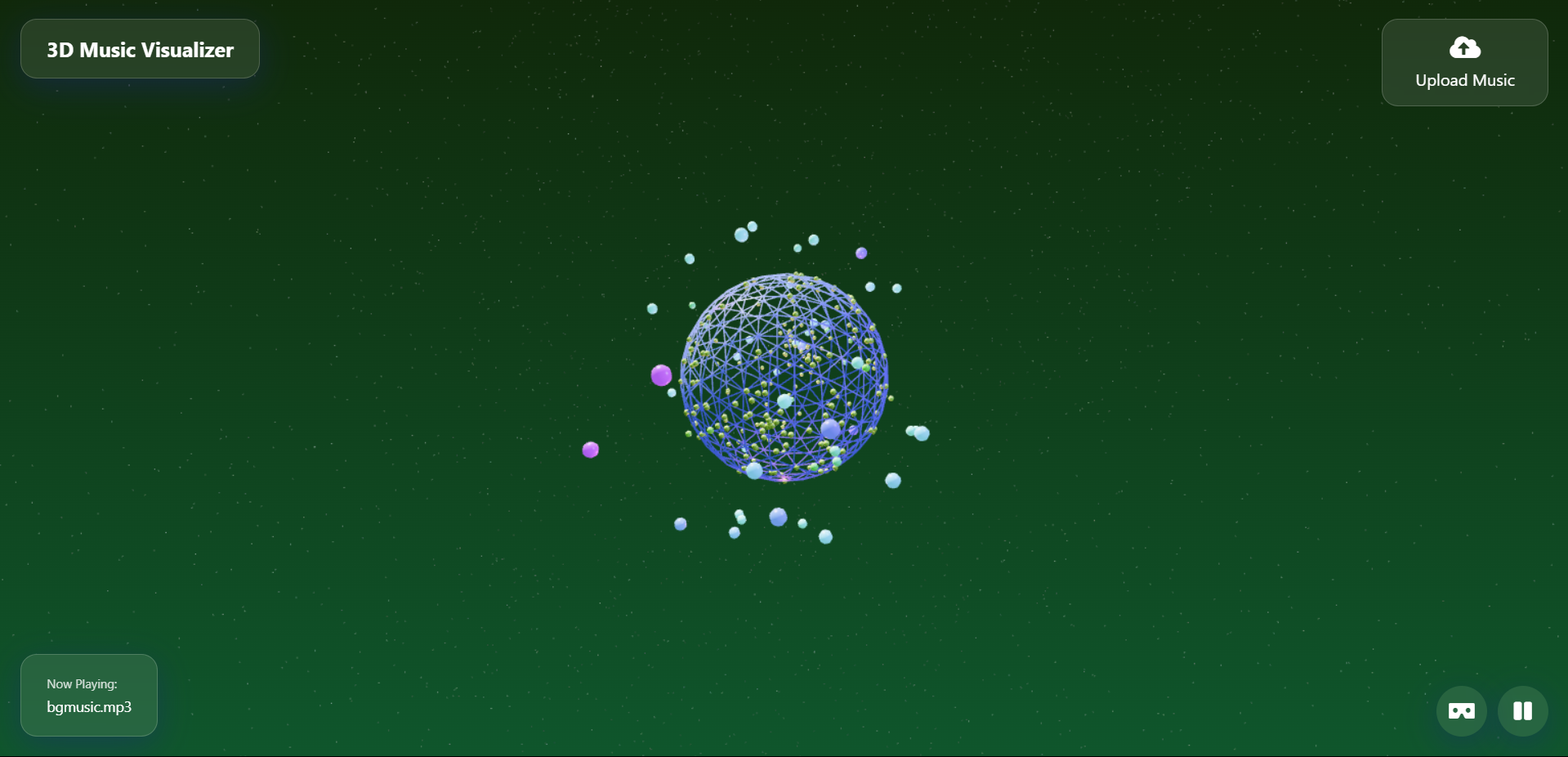
Inspiration Music has always had the power to evoke emotion, and visual art can elevate that experience by giving form to sound. We were inspired by iconic music visualizers from media players of the past, like Winamp and iTunes, and wanted to modernize that idea using 3D graphics and smooth animations. Our goal was to create an immersive, real-time 3D environment where users could "see" the music they were hearing, making every beat and frequency pulse with life.
What it does The 3D Music Visualizer takes in audio input and transforms it into a dynamic, animated 3D display. As the music plays, abstract 3D shapes move, scale, and rotate based on the beat, frequency, and amplitude of the audio. Using a combination of visual cues like waveforms, and background color changes, the visualizer provides an engaging audio-visual experience that reacts fluidly to the music.
How we built it We used Three.js as the core 3D engine to create and render geometry like spheres that respond to audio data. The Web Audio API was used to analyze the frequency spectrum in real time. For animation and transitions, we implemented GSAP (GreenSock Animation Platform) to handle smooth scaling, color transitions, and camera movements. The responsive design and UI logic were built in vanilla JavaScript with a focus on performance and browser compatibility. Everything is hosted and optimized for the web, so it runs directly in the browser with no additional installs.
Challenges we ran into Working with real-time audio analysis presented several timing and performance challenges. Ensuring the visual output remained in sync with the beat of the audio required fine-tuning FFT settings and animation update loops. Another challenge was maintaining high frame rates with complex 3D scenes across different devices and browsers. We also had to experiment with different easing functions and timing curves in GSAP to make the animations feel natural and rhythmically in tune with the music.
Accomplishments that we're proud of We're proud of how responsive and fluid the final visualizer turned out to be. Despite the challenges of synchronizing 3D graphics with live audio, we achieved a performance-friendly and visually engaging solution. We're also proud of how well Three.js and GSAP complemented each other—resulting in visuals that are not only technically impressive but emotionally resonant with the music. Plus, it works seamlessly on most modern browsers without requiring downloads.
What we learned We gained deep insight into how real-time audio processing works in the browser using the Web Audio API, and how to efficiently structure 3D scenes for performance. We also learned how powerful GSAP is for choreographing motion and creating transitions that feel organic. Perhaps most importantly, we learned how audio and visuals can be harmonized into a unified experience with the right tools and timing techniques.
What's next for 3D Music Visualizer We want to expand on this foundation by adding more user controls and preset visual themes, allowing people to choose different visualizer styles. We’re also looking into integrating support for streaming services like Spotify or SoundCloud so users can visualize their playlists directly. In the future, we hope to bring this experience to VR, enabling a truly immersive music-visualization journey. We’re also exploring ways to make this tool interactive for live DJ sets or virtual concerts.


Log in or sign up for Devpost to join the conversation.