Inspiration
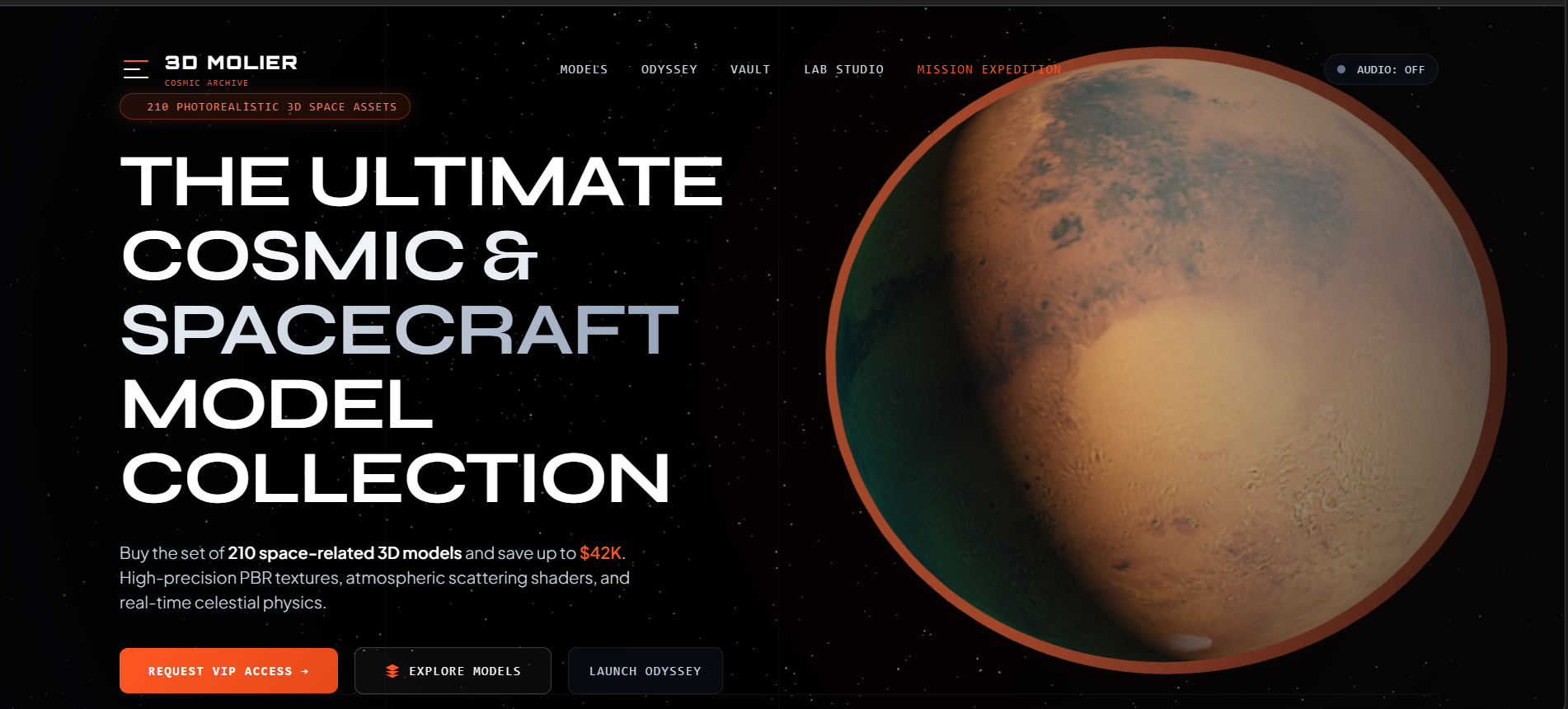
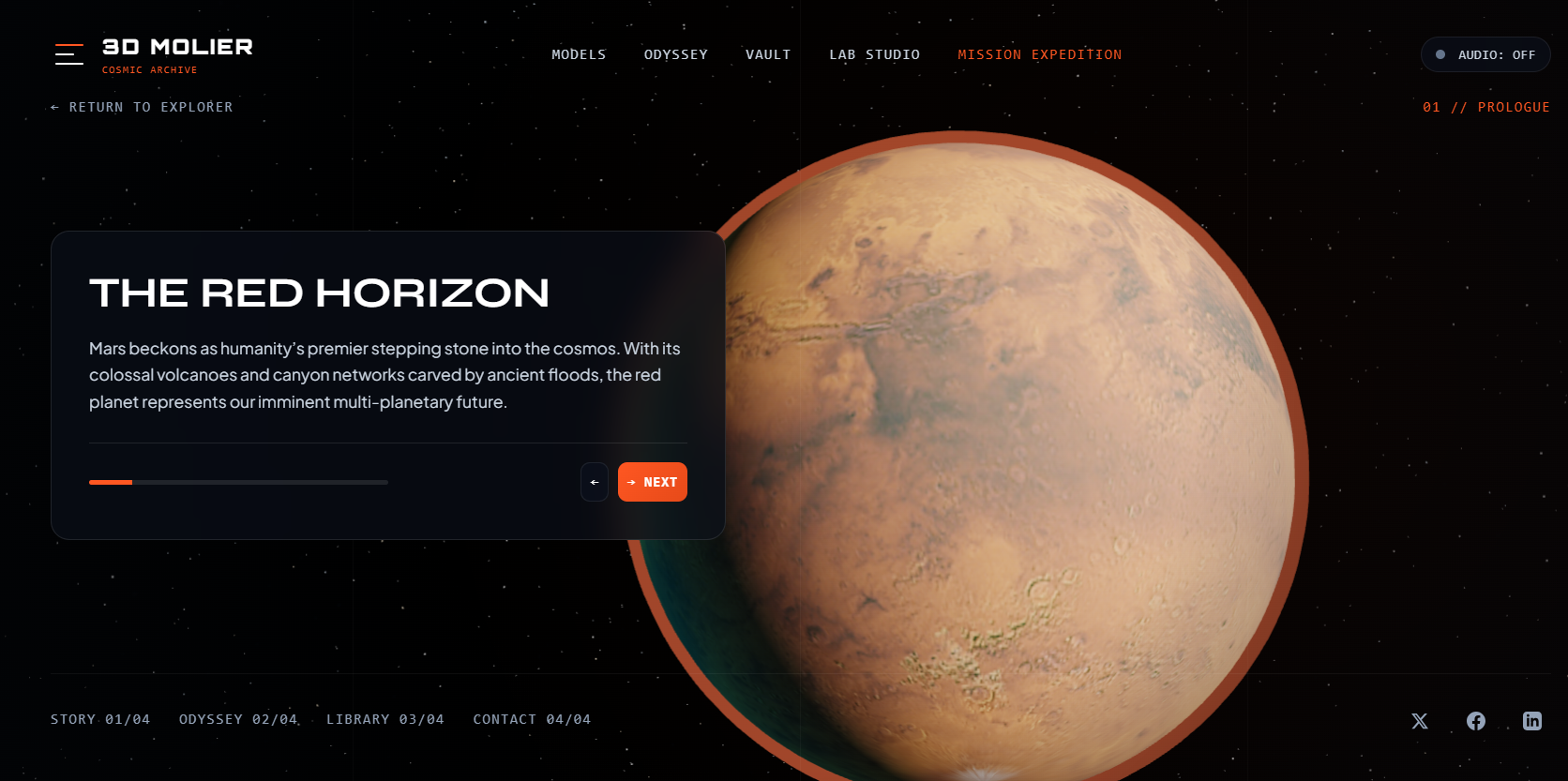
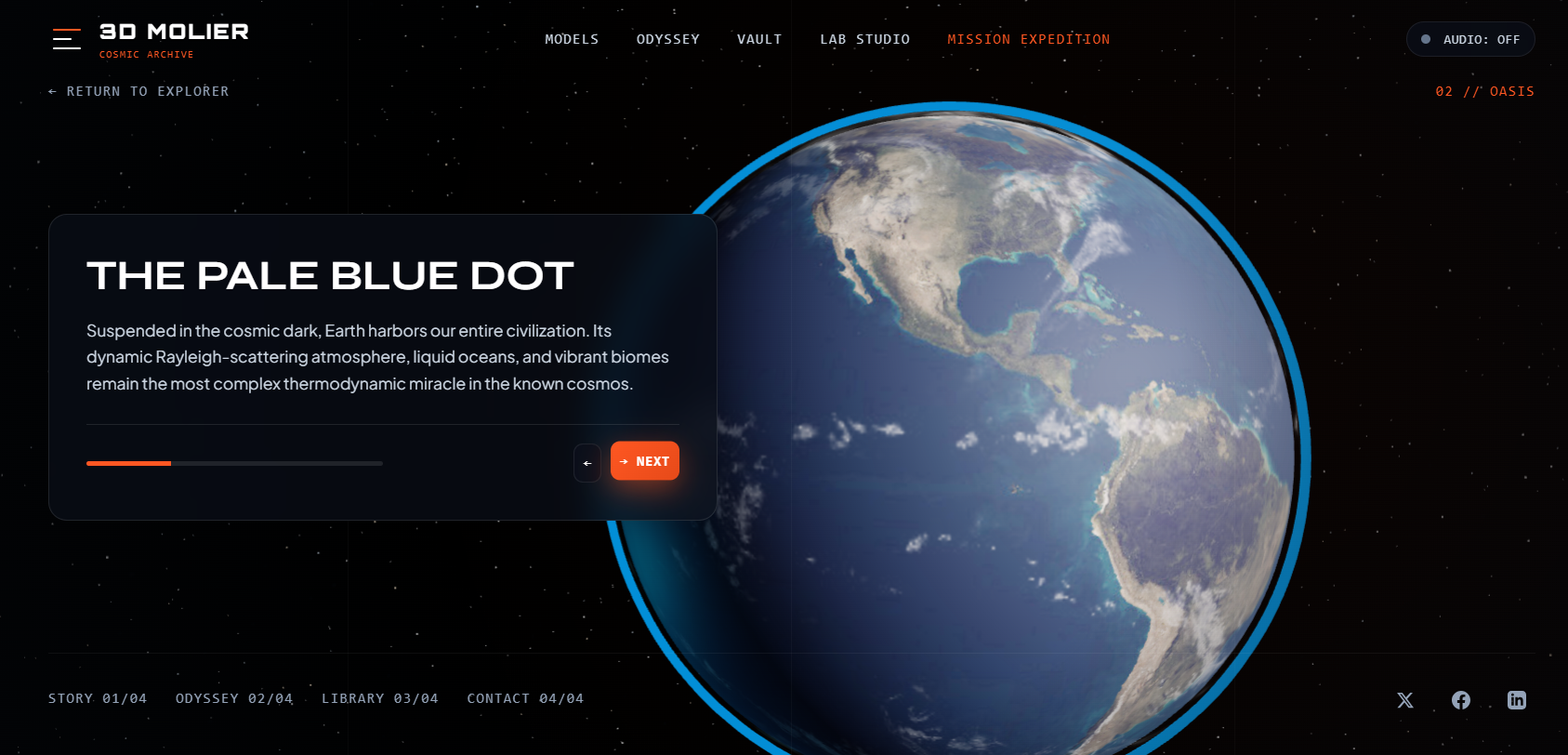
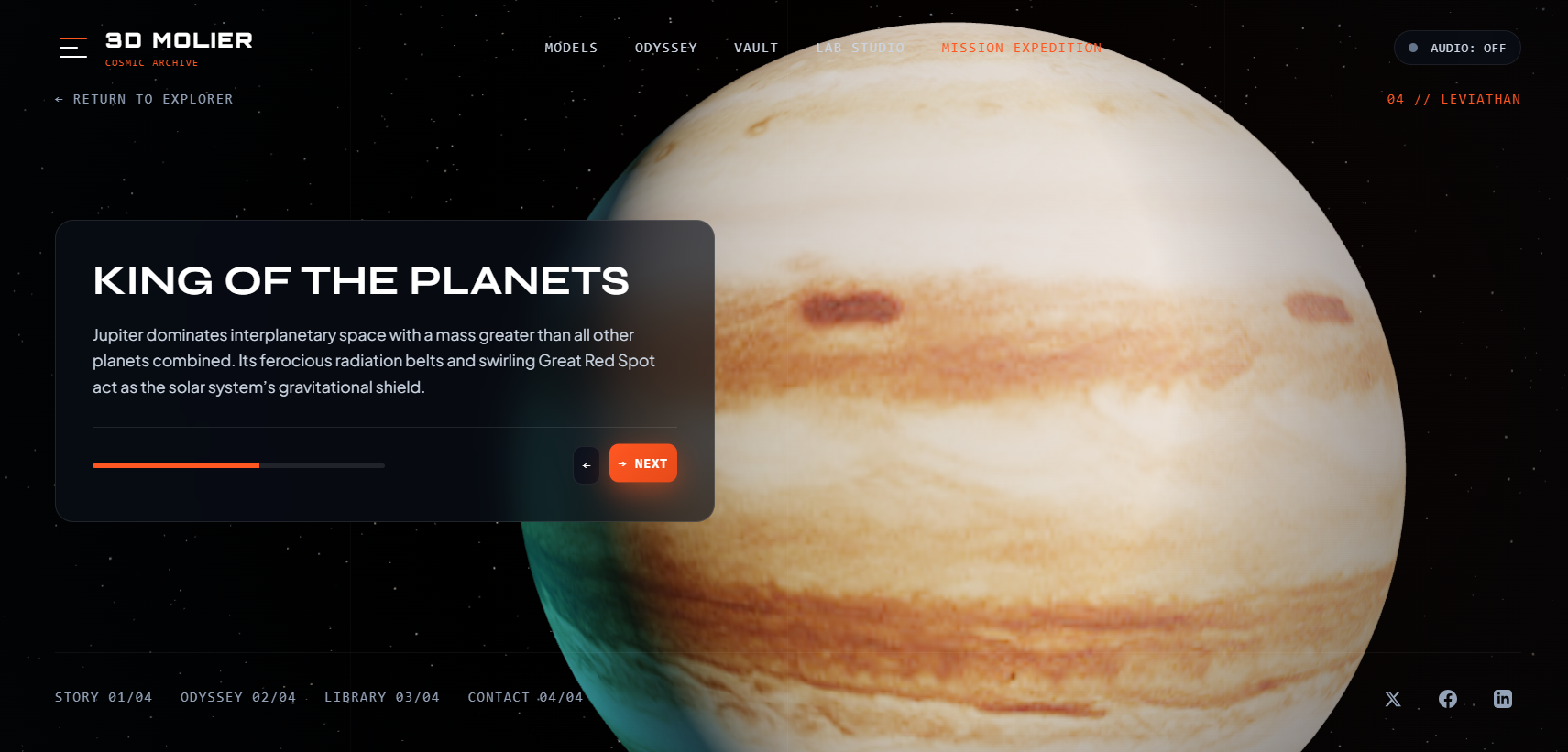
Space exploration and astronomical visualization often remain locked behind complex desktop software or static scientific imagery. With 3D MOLIER, our goal was to bring photorealistic celestial exploration directly to the browser.
Drawing inspiration from high-end aerospace editorial typography and interactive planetarium tools, we wanted to build a web application where users can interact with high-detail 3D models of celestial bodies and spacecraft, inspect their geological topology in real-time, and experience a cinematic space atmosphere without requiring heavy software installations.
What it does
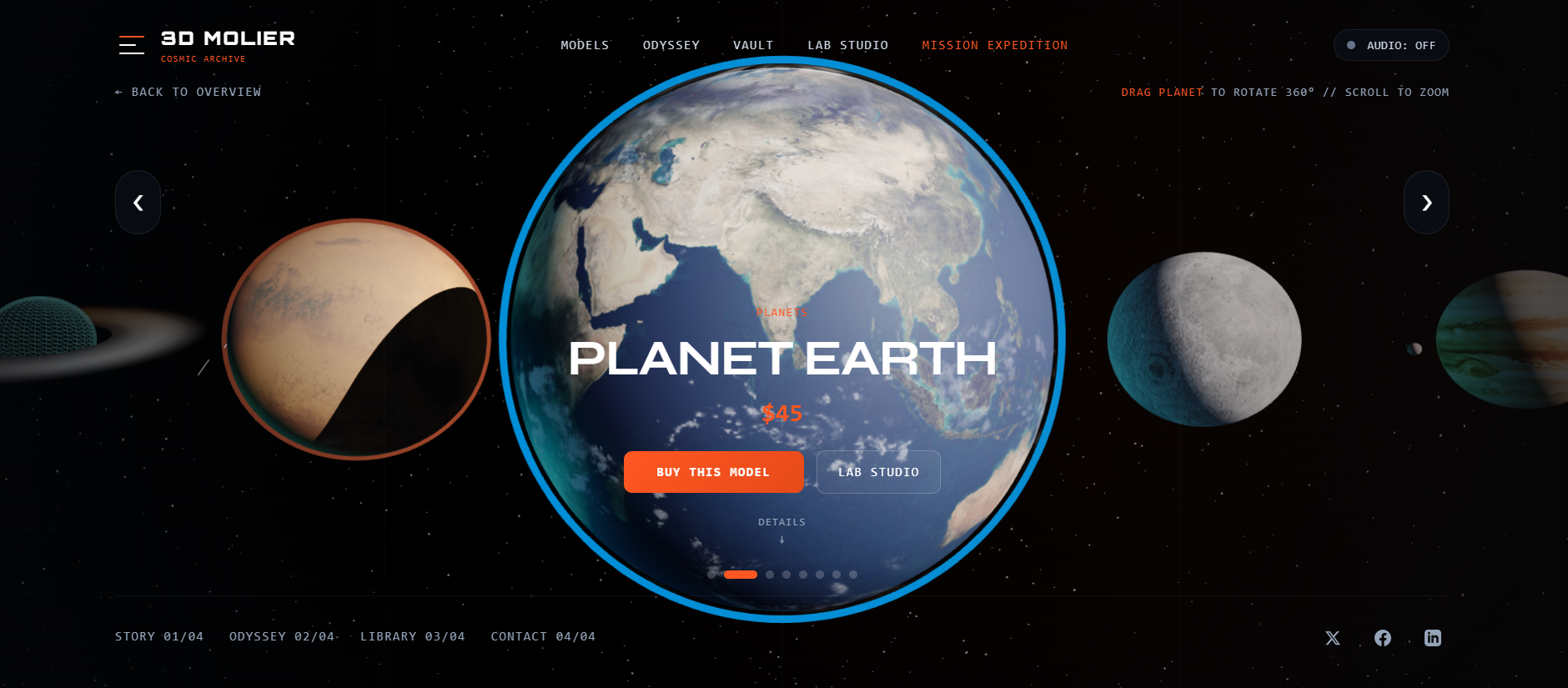
3D MOLIER is a 3D WebGL cosmic archive and interactive model marketplace featuring:
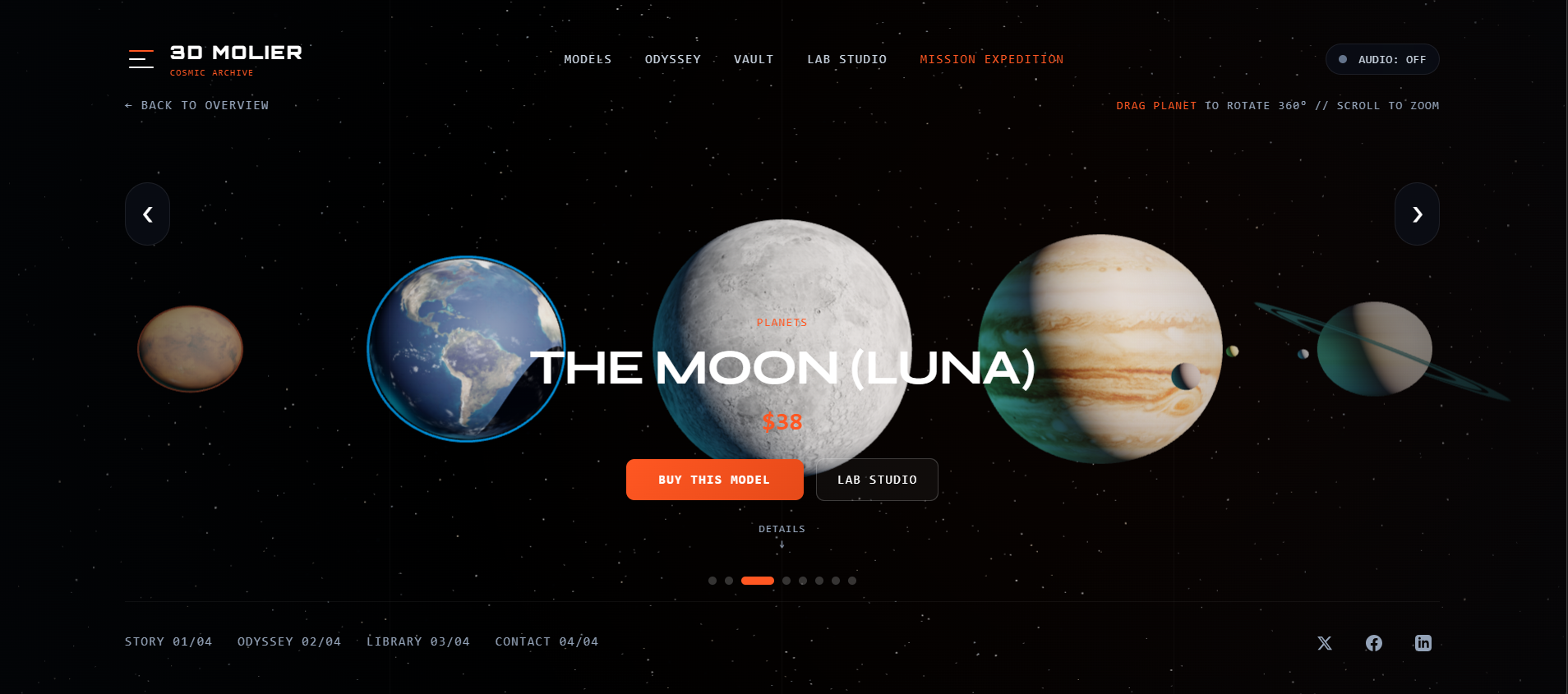
- Interactive 3D Carousel & Orbit Controls: Full 360° rotation and smooth zooming for celestial bodies (Mars, Earth, Moon, Jupiter, Saturn) and spacecraft (James Webb Space Telescope, interstellar singularities).
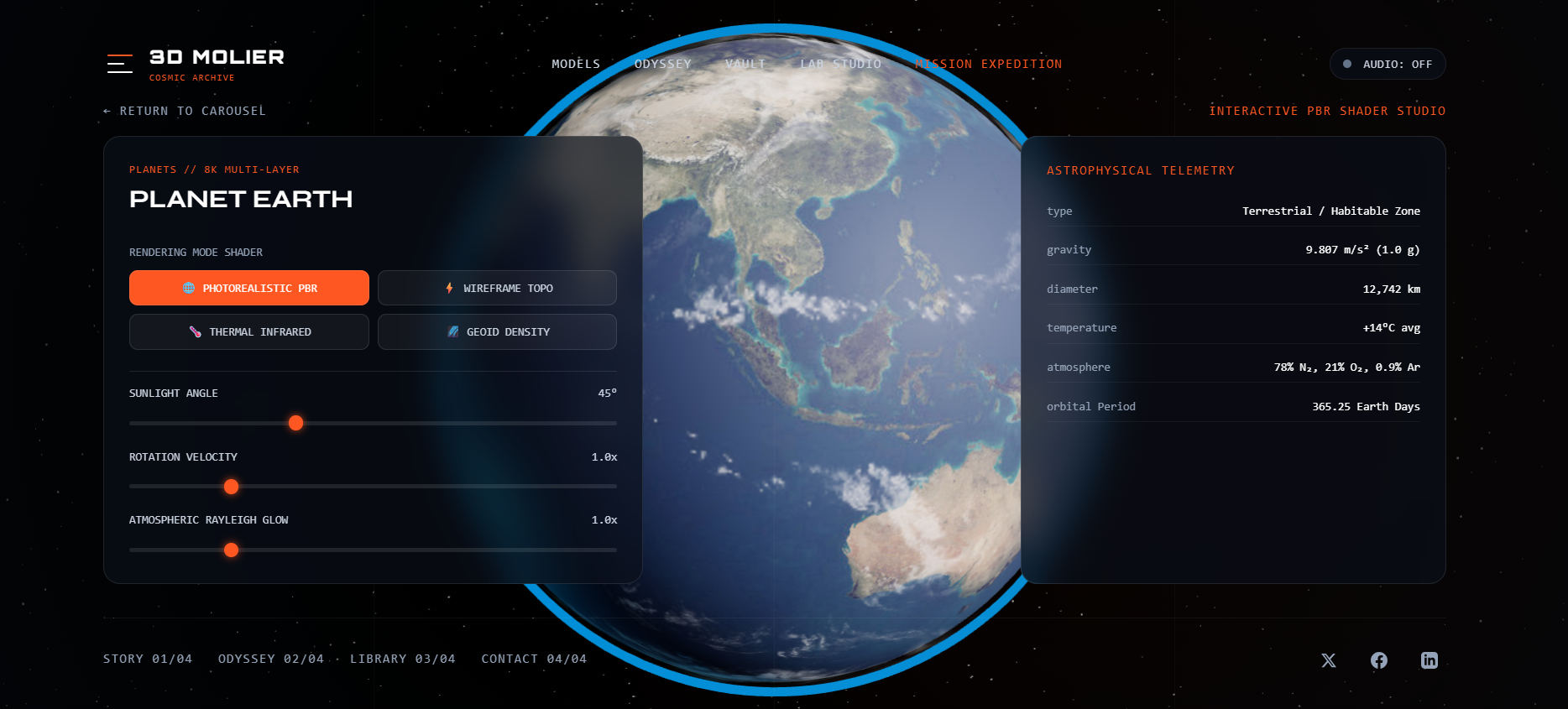
- Real-Time PBR Shader Studio: Dynamic switching between multiple rendering modes:
- Photorealistic PBR: Physically-based rendering with multi-layer cloud decks, ocean specular reflections, and normal elevation maps.
- Holographic Wireframe: Geometric mesh topology inspection.
- Thermal Infrared: Heat distribution visualization.
- Geoid Gravitational Density: False-color surface gravity gradients.
- Interactive Lighting & Atmosphere Controls: Live sliders for sunlight positioning, planetary rotation velocity, and atmospheric Rayleigh scattering.
- Generative Web Audio Soundscape: An embedded procedural audio engine built on the Web Audio API that synthesizes ambient sub-bass cosmic drones, thruster whooshes, and subtle UI interaction ticks without relying on external audio files.
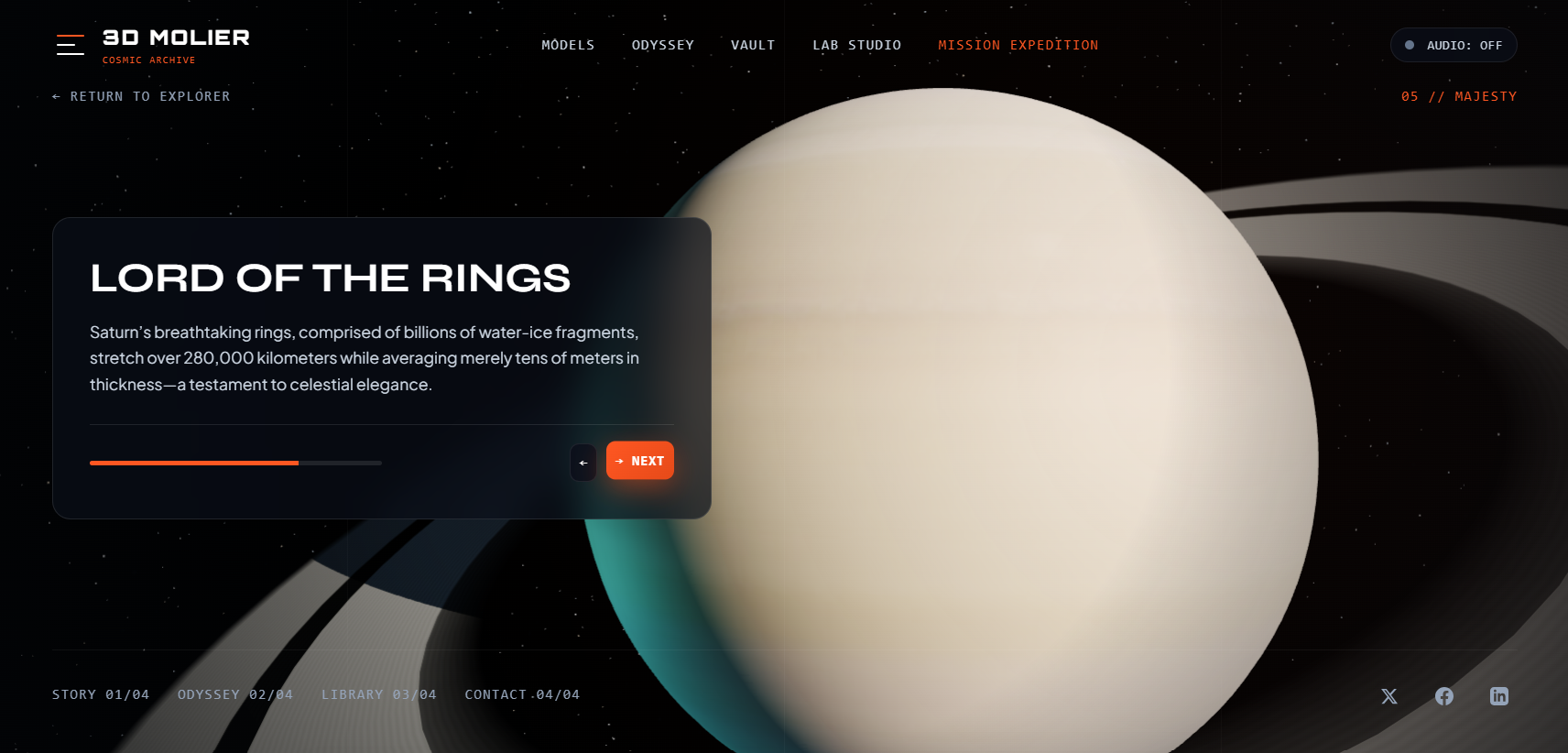
- Scrollytelling Space Odyssey: An 8-chapter narrative expedition navigating through the inner solar system, gas giants, and interstellar space.
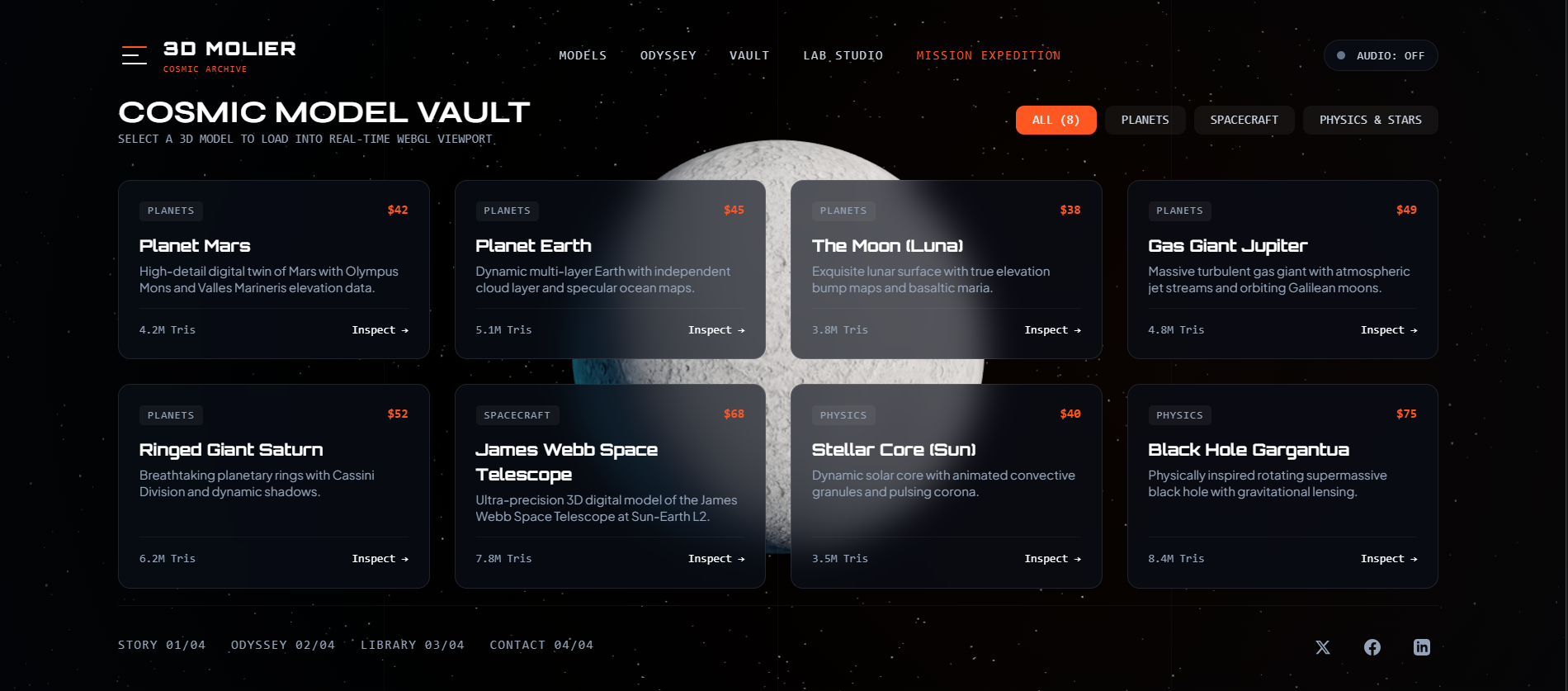
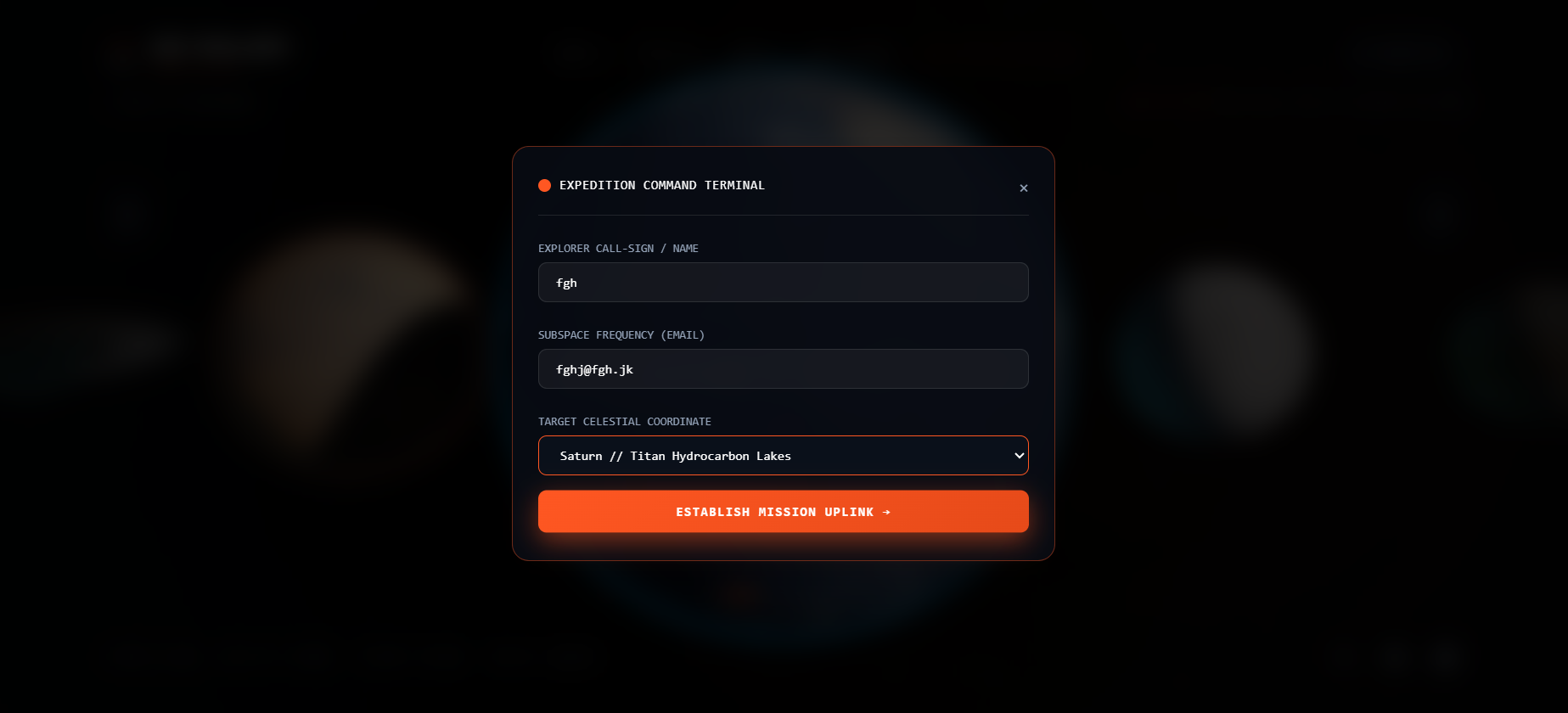
- Cosmic Model Vault & VIP Access Terminal: A filterable catalog showcasing technical specifications, polygon counts, and scientific data with an encrypted access interface.
How we built it
- 3D Rendering & Shaders: Built with Three.js (r128) and WebGL, incorporating custom GLSL fragment and vertex shaders for atmospheric glow, Fresnel limb darkening, and planetary ring transparency.
- Asset Pipeline & Fallbacks: Integrated high-resolution texture maps from NASA and USGS data with multi-CDN streaming and real-time procedural canvas texture generators as seamless offline fallbacks.
- Animation & State Management: Choreographed UI transitions and camera interpolation using GSAP 3 alongside custom JavaScript event dispatchers for fluid navigation between views.
- Styling & UI Architecture: Designed with Tailwind CSS and bespoke CSS glassmorphism, an architectural 4-column editorial grid, and aerospace typography (Syne, Orbitron, Cinzel, and JetBrains Mono).
- Audio Synthesis: Engineered procedural oscillators, biquad filters, and gain nodes using the native Web Audio API.
Challenges we ran into
- Cross-Origin Texture Streaming & Resilience: Loading high-resolution planetary texture maps across third-party CDNs can lead to CORS restrictions or network bottlenecks. We resolved this by building a multi-tier fallback architecture that dynamically generates procedural canvas textures whenever an external asset is unavailable.
- WebGL Performance on Diverse Hardware: Balancing multiple high-poly meshes, atmospheric scattering layers, and post-processing lighting without dropping frames required careful geometry optimization, memory disposal routines, and requestAnimationFrame throttling.
- Responsive Glassmorphism & UI Overlay Synchronization: Aligning complex DOM glassmorphism panels with 3D canvas coordinates across varying aspect ratios required building an adaptive viewport calculation system.
Accomplishments that we're proud of
- Engineered a fully self-contained WebGL experience that runs smoothly at 60 FPS directly inside the browser.
- Implemented a real-time GLSL shader switcher that lets users toggle between photorealistic, wireframe, and thermal modes seamlessly.
- Developed an audio synthesizer entirely in native Web Audio API code, delivering atmospheric soundscapes with zero external MP3/WAV assets.
- Faithfully captured the aesthetic of modern aerospace digital design, combining clean typography, glassmorphism, and responsive interactivity.
What we learned
- Techniques for managing WebGL resource lifecycles, texture disposal, and buffer geometries to prevent memory leaks during rapid model switching.
- How to construct custom shader uniforms to manipulate ambient lighting angles and Rayleigh scattering dynamically.
- Procedural audio generation principles, specifically how detuned sine and triangle oscillators with low-pass filters can simulate deep-space ambient acoustic environments.
What's next for 3D MOLIER - Deep Space & Cosmic 3D Model Archive
- WebXR / VR Support: Adding immersive VR headset support to allow users to walk around and inspect spacecraft and planets at true scale.
- GLTF/GLB Exporter: Enabling users to export customized models directly into Blender, Unreal Engine, or Unity.
- Live Orbital Telemetry Integration: Connecting real-time NASA JPL Horizons API feeds to render current planetary orbital positions and real-time spacecraft trajectories.
Built With
- glsl-shaders
- gsap-3
- html5/css3
- javascript-(es6+)
- tailwind-css
- three.js-(r128)
- web-audio-api
- webgl


Log in or sign up for Devpost to join the conversation.