Inspiration
What it does
How we built it
Challenges we ran into
Accomplishments that we're proud of
What we learned
What's next for 3D Forge
Inspiration
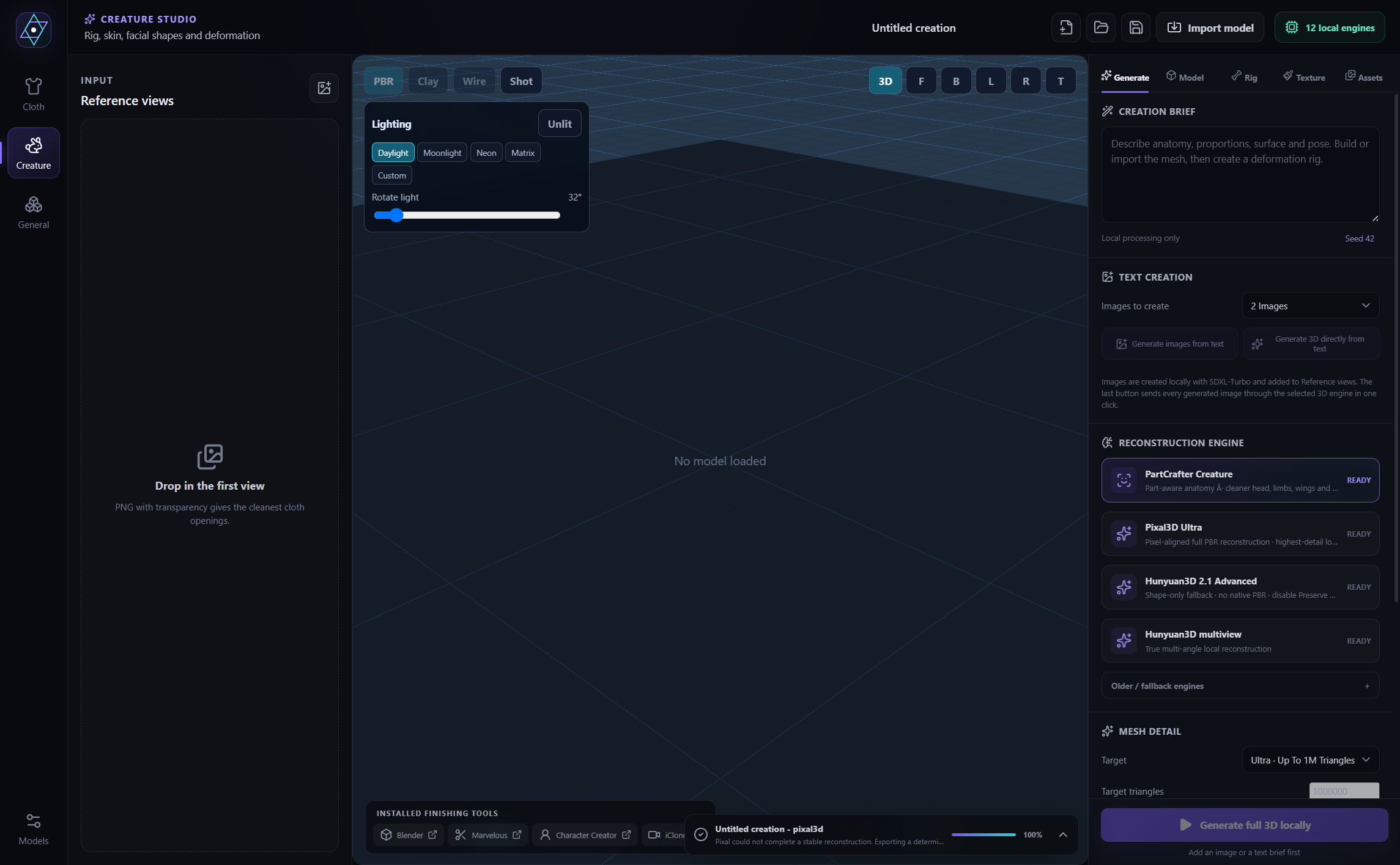
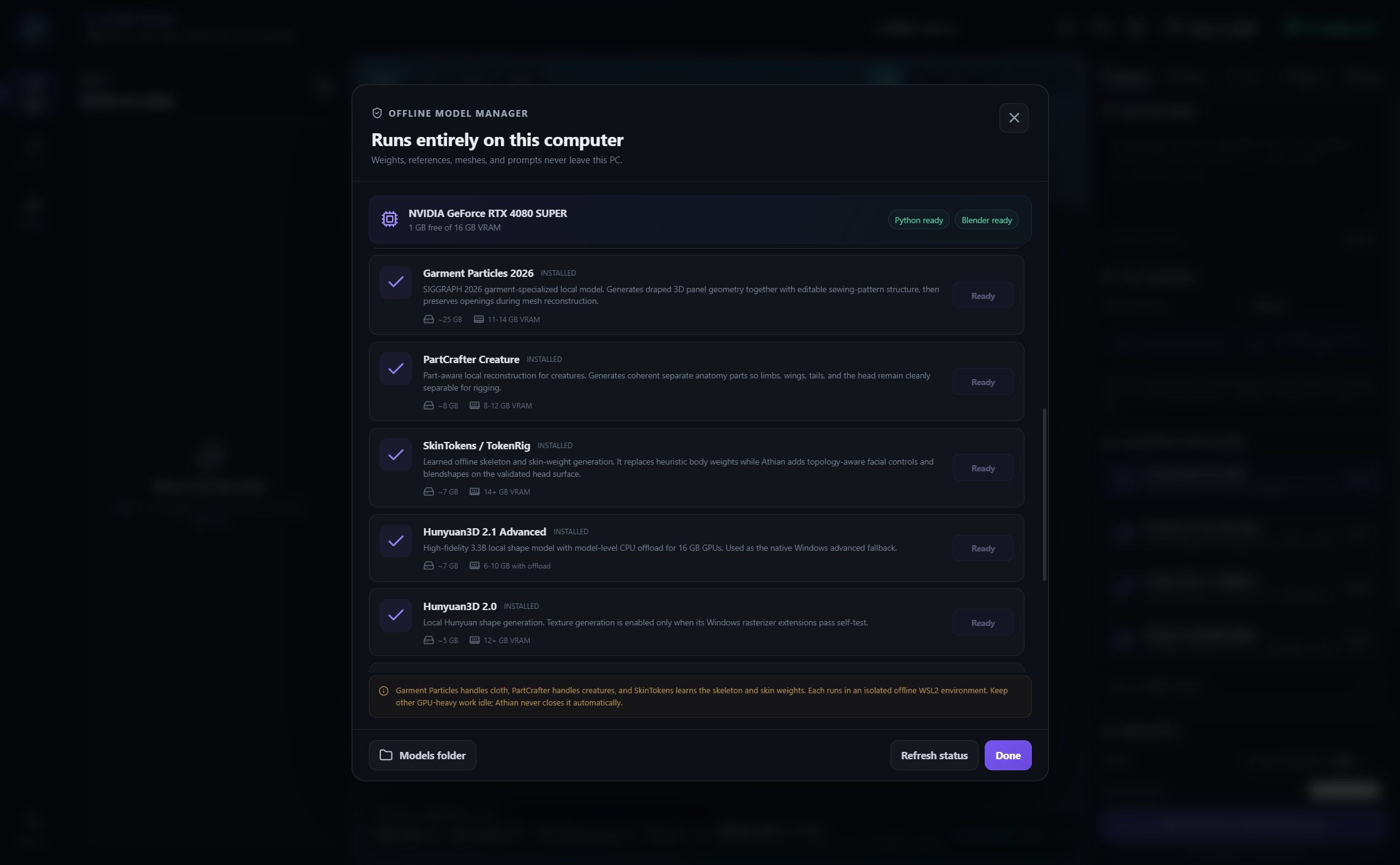
Image-to-3D tools often use one generic reconstruction path for everything. In practice, cloth openings get sealed, creature appendages merge, and automated facial rigging fails when topology is not prepared for deformation. Athian 3D Forge is a private, offline-first desktop workflow that routes each problem to a specialist model.
What it does
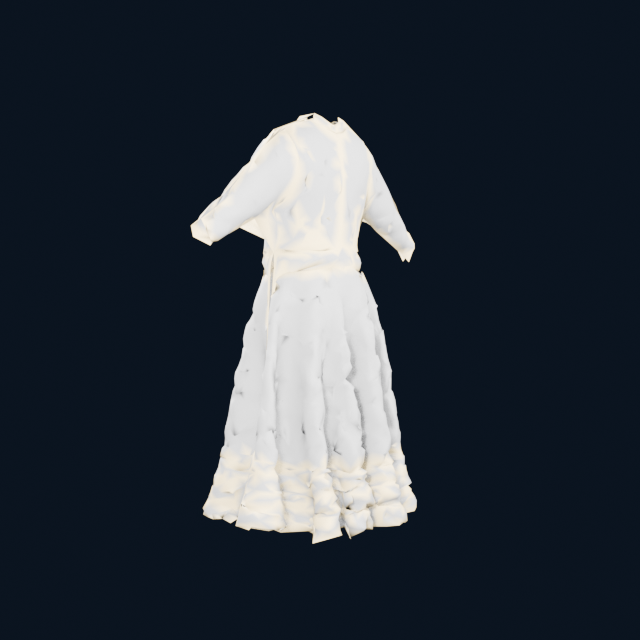
- Cloth: Garment Particles 2026 preserves separate panels, hems, sleeves, necks, and wearable openings, then applies boundary-preserving smoothing and production decimation.
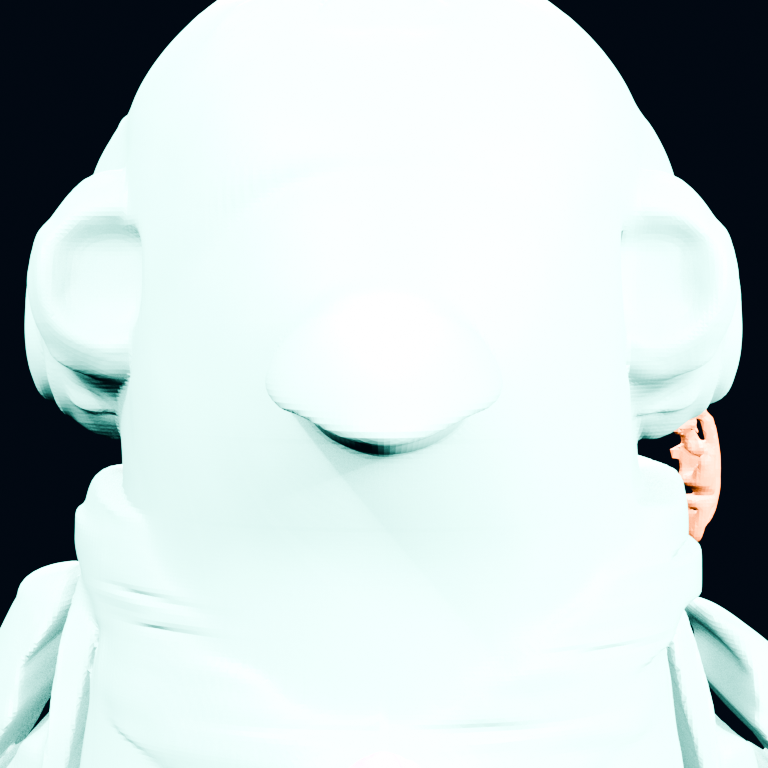
- Creatures: PartCrafter Creature reconstructs semantic parts and removes disconnected debris before export.
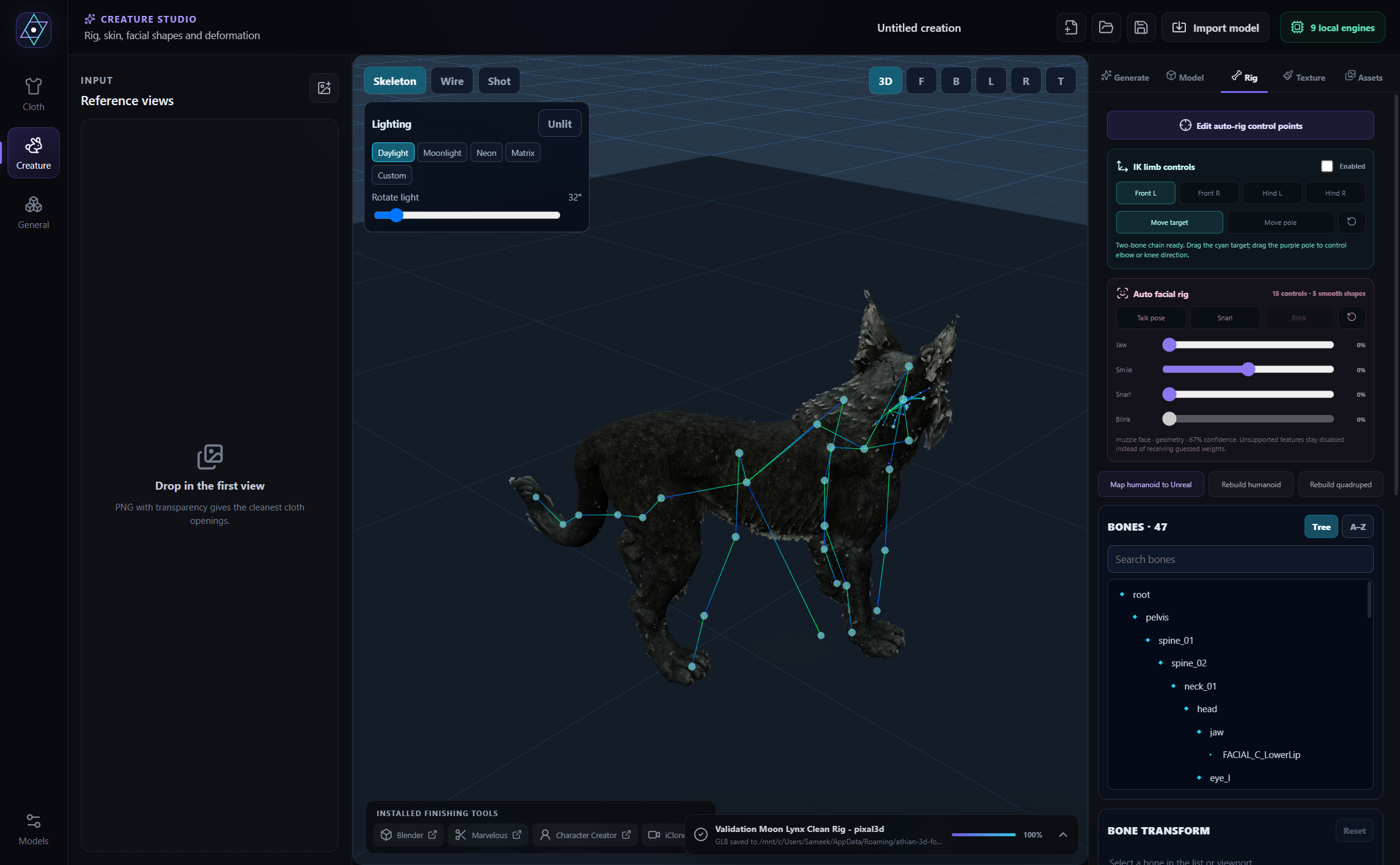
- Body and face rigging: SkinTokens / TokenRig predicts the body skeleton and skin weights. A containment gate rejects outside joints. The facial pass grafts controls onto the exact learned skeleton without rewriting learned weights.
The proof asset contains 27 body joints, 6/6 skinned creature parts, zero outside joints, 15 facial controls, 7 morph targets, and talk, blink, and snarl clips. Learned skin-index and skin-weight buffers are preserved byte-for-byte across 4,387,678 vertices.
How it was built
The app is an Electron + React + Three.js desktop tool with local Python/Blender workers. It uses explicit specialist routing, GPU-safe job scheduling, topology diagnostics, deterministic fallback exports, and tests for cloth boundaries, semantic creature cleanup, rig health, facial grafting, and deformation. All references and meshes stay on the workstation; the UI shows the selected engine and offline-ready state.
Codex contribution
I used Codex with GPT-5.6 inside the real repository to implement the specialist workers, routing, learned-weight safety gate, facial topology repair, proof renderers, tests, demo assets, and this submission package. The repository README includes setup, sample inputs, model locations, and reproducible proof commands.
Challenges and lessons
The hardest issue was facial rigging: a visually plausible mesh can still have unusable topology or joints outside the surface. The solution was to validate containment and buffer preservation as hard gates, then fall back to a deterministic procedural rig when a learned result is unsafe. Cloth needed a separate route because preserving openings is the opposite of watertight reconstruction.

Log in or sign up for Devpost to join the conversation.