
.
CSYA Hackathon : Ideathon Track
Inspiration
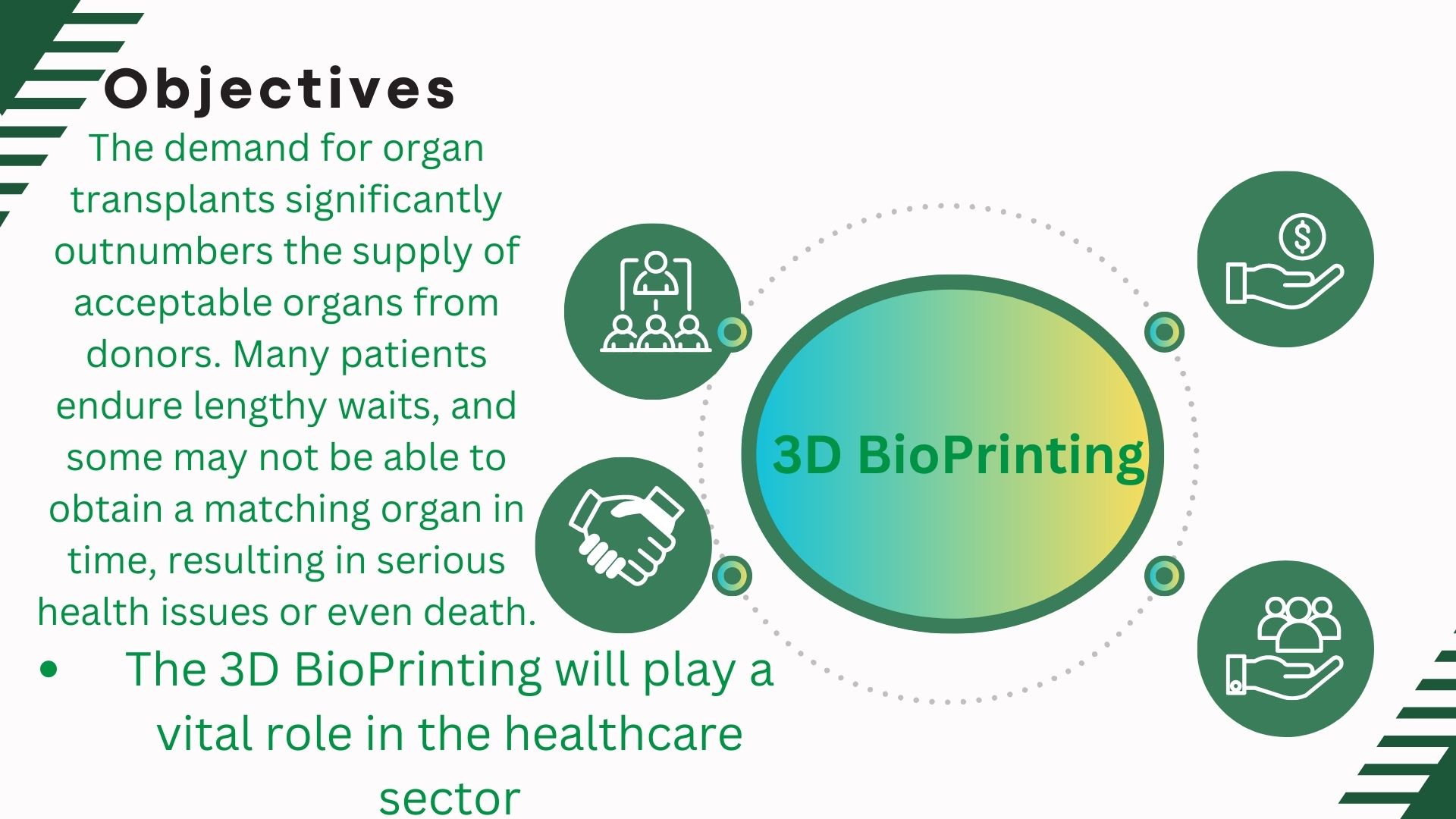
The demand for organ transplants significantly outnumbers the supply of acceptable organs from donors. Many patients endure lengthy waits, and some may not be able to obtain a matching organ in time, resulting in serious health issues or even death. By using 3D Bioprinting to create functional human organs, we can revolutionize healthcare sector.
What it does
The major purpose is to alleviate organ shortages, make drug testing easier and develop regenerative medicine. 3D Bioprinting has a wide range of applications, including creating organ-on-a-chip models for drug testing and disease modeling, creating tissue constructs for transplantation, and creating biological implants for medical devices.
Accomplishments that we're proud of
3D Bioprinting is a revolutionary technology with the potential to create living tissue constructs and organs. While there are challenges to overcome, the technology has numerous applications in regenerative medicine, drug testing, and medical devices.
What we learned
Tissue from various parts of the body may be reconstructed using 3D bioprinting. End-stage bladder disease patients can be treated by employing engineered bladder tissues to replace the destroyed organ. To summarize, 3D BioPrinting offers several advantages. It is the future of healthcare. With bioprinting, we can save millions of lives.
What's next for 3D BioPrinter: A Revolution in Healthcare
More advancements to this innovative technology will be added in the future.
Built With
- canva

Log in or sign up for Devpost to join the conversation.