-
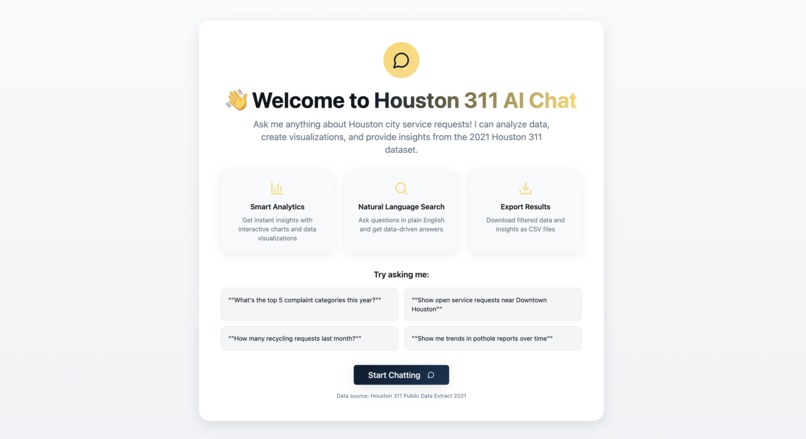
landing page
Inspiration
We noticed that Houston’s 311 service request data is publicly available, but it’s presented in raw, text-heavy formats that are hard for most residents to understand. We wanted to turn this untapped data into something clear, interactive, and useful for the community.
What it does
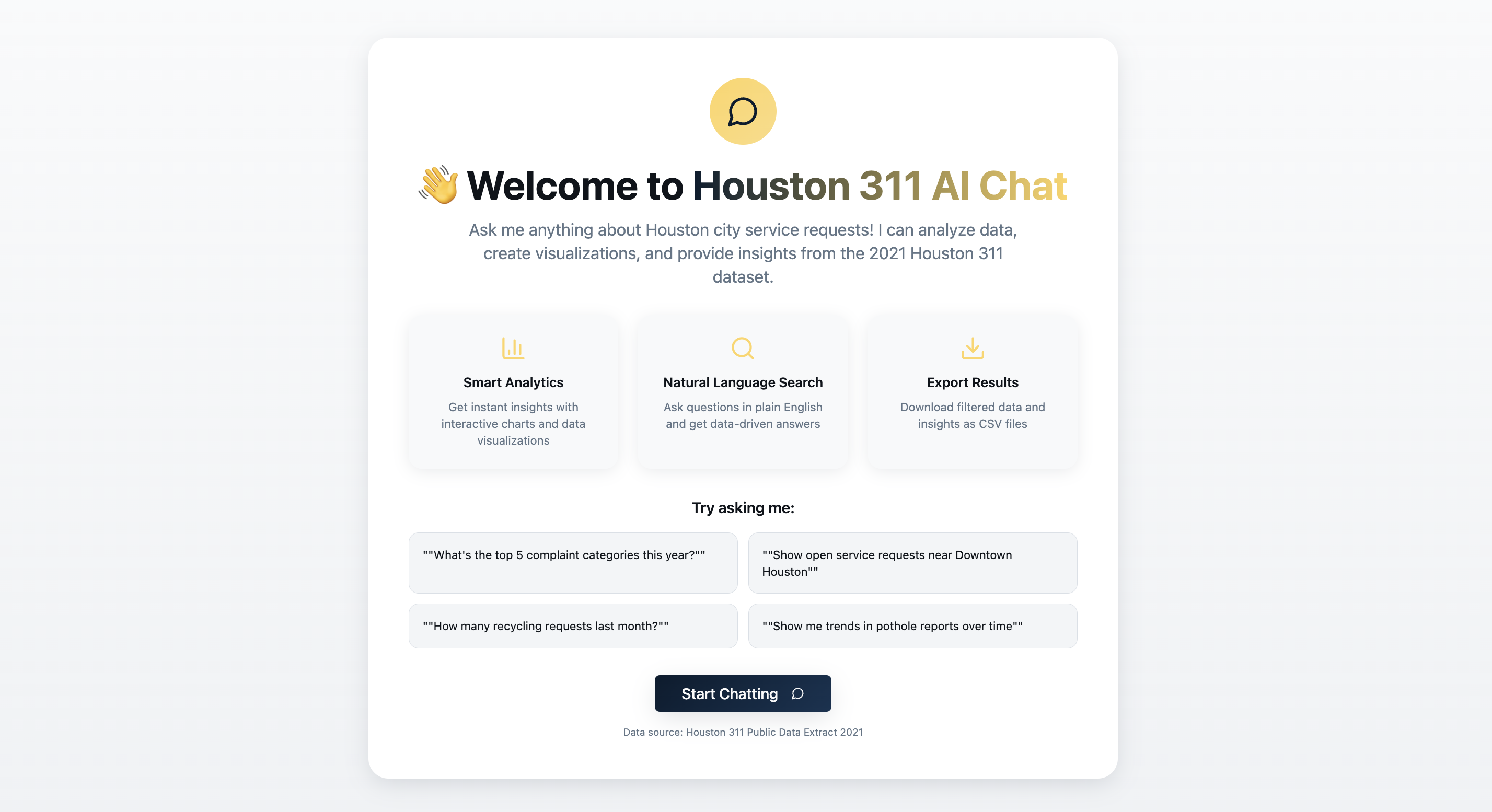
Our platform transforms 311 service request data into a user-friendly dashboard with real-time updates, visual insights, and AI assistance. Residents can explore common issues in their neighborhoods, track how quickly problems are resolved, and even ask AI natural-language questions like “Which district has the most streetlight outages this month?”
How we built it
We integrated the City of Houston’s 311 open dataset into a backend powered by Supabase for real-time updates. The frontend is built with modern frameworks (React + Tailwind), making it fast and mobile-friendly. We added an AI layer (DeepSeek API) so users can interact with the data in plain English instead of complex filters.
Challenges we ran into
Handling and cleaning large, messy datasets with inconsistent entries.
Ensuring real-time updates from the public 311 API.
Making the UI simple enough for the general public while still being powerful for advanced users.
Connecting AI queries to structured database queries accurately.
Accomplishments that we're proud of
Built a live demo that transforms raw city data into accessible, actionable insights.
Created an AI chatbot that can answer residents’ questions about their neighborhood.
Designed a clean, modern interface that’s easy to use even for non-technical people.
What we learned
How to work with large civic datasets and connect them to real-time databases.
The importance of designing for both residents and city officials as end-users.
How to balance technical innovation (AI, Supabase) with user experience.
What's next for Untitled
Expand beyond Houston to other cities with 311 data.
Add community engagement features (like reporting issues directly through the app).
Provide predictive analytics (e.g., forecasting which areas will have higher service needs).
Partner with local governments to close the feedback loop between citizens and officials.
Built With
- css
- plpgsql
- typescript


Log in or sign up for Devpost to join the conversation.