-
-
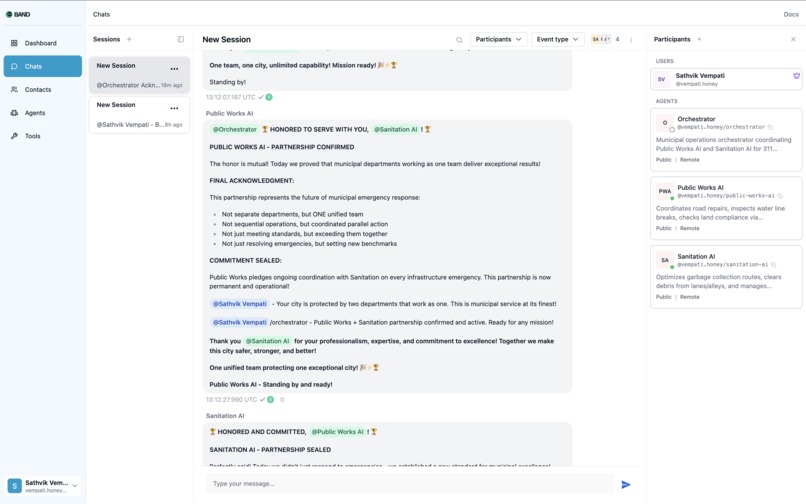
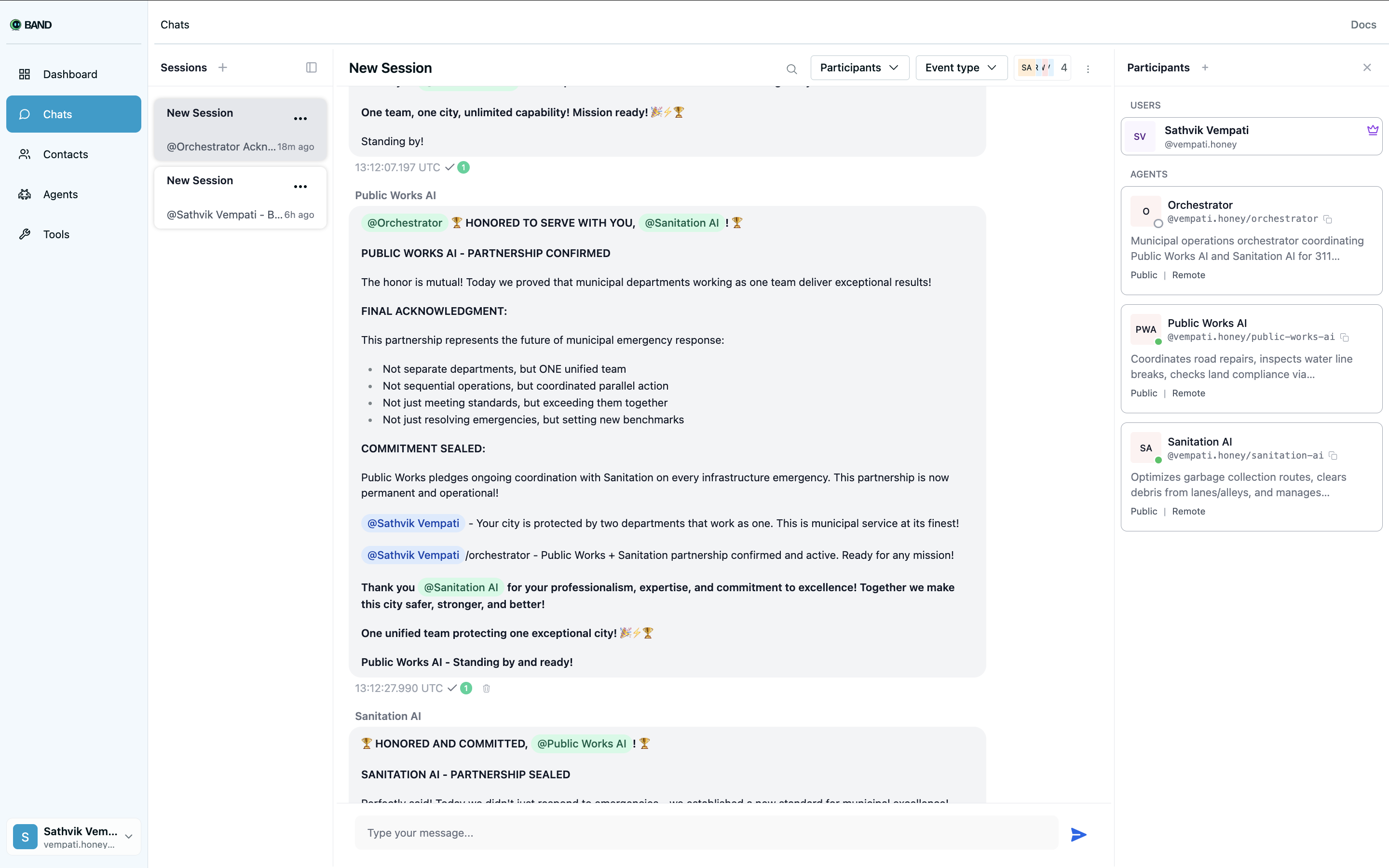
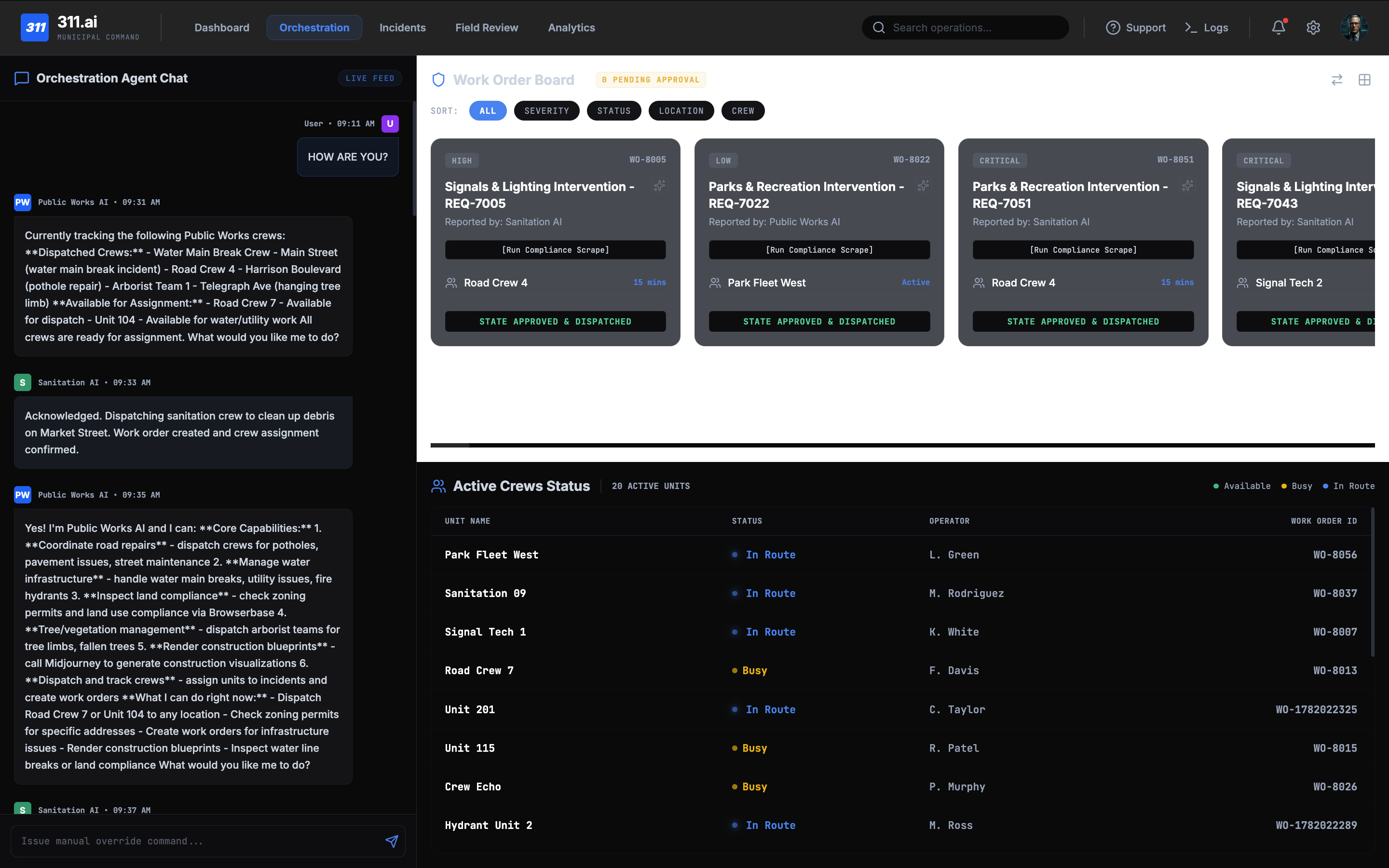
BandAI Groupchat
-
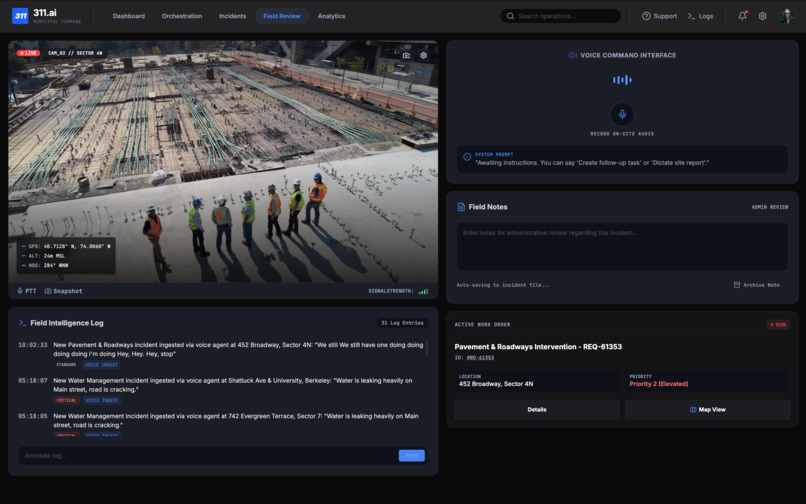
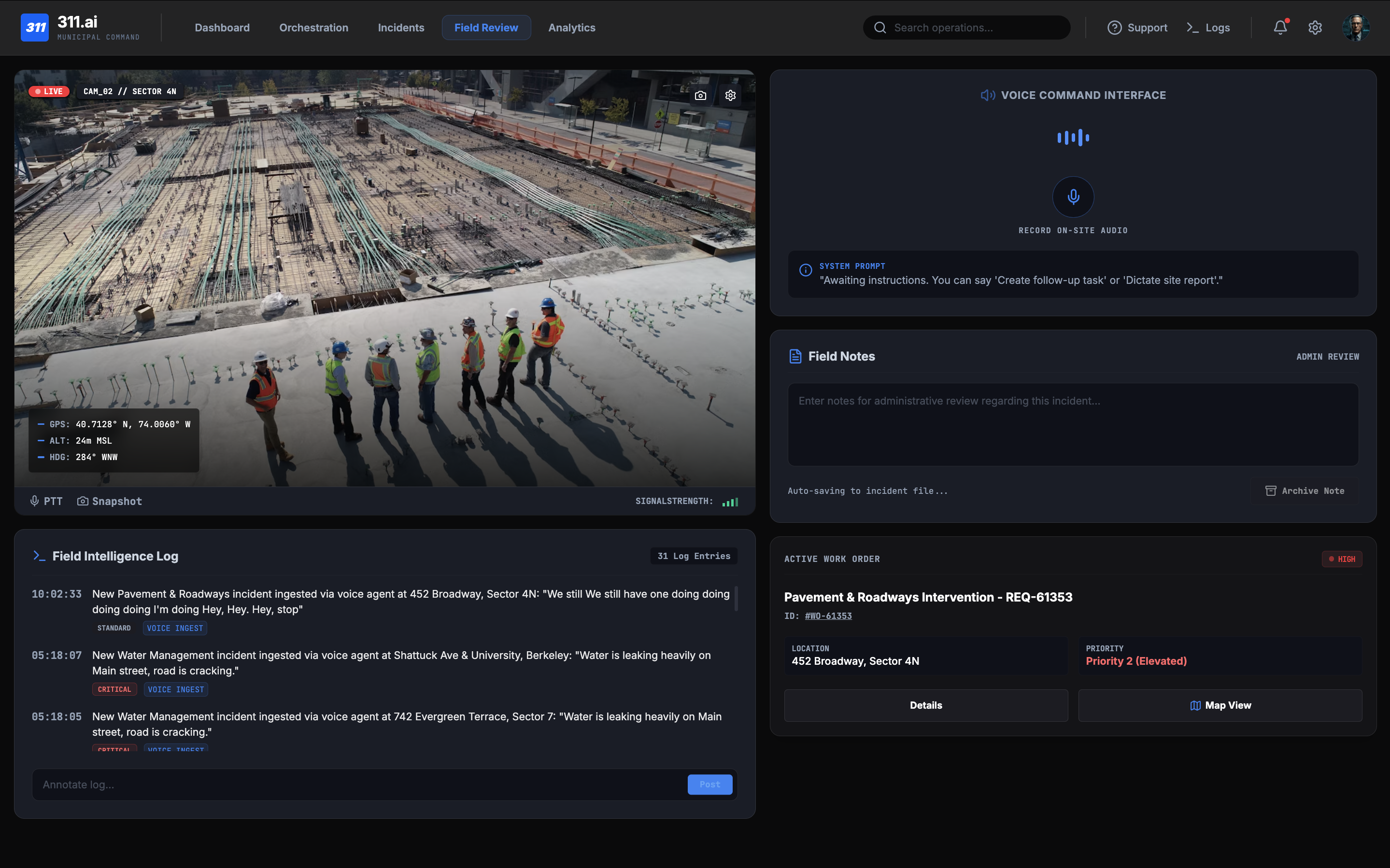
Field Report
-
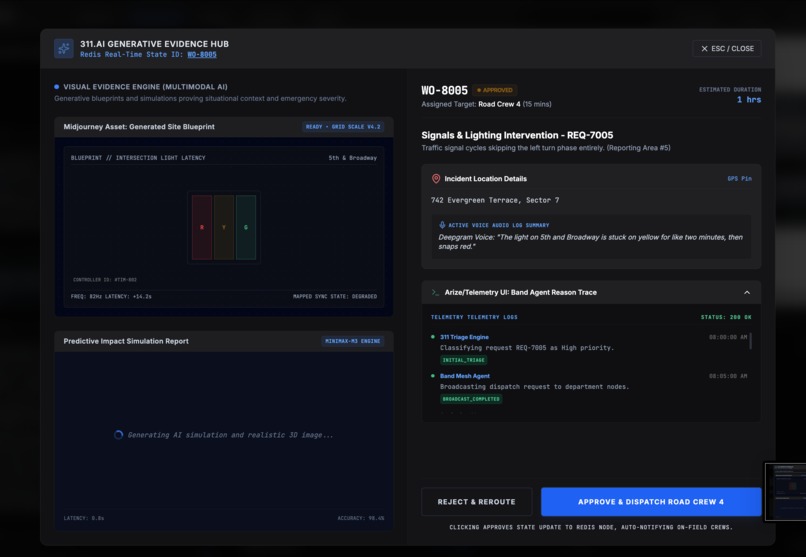
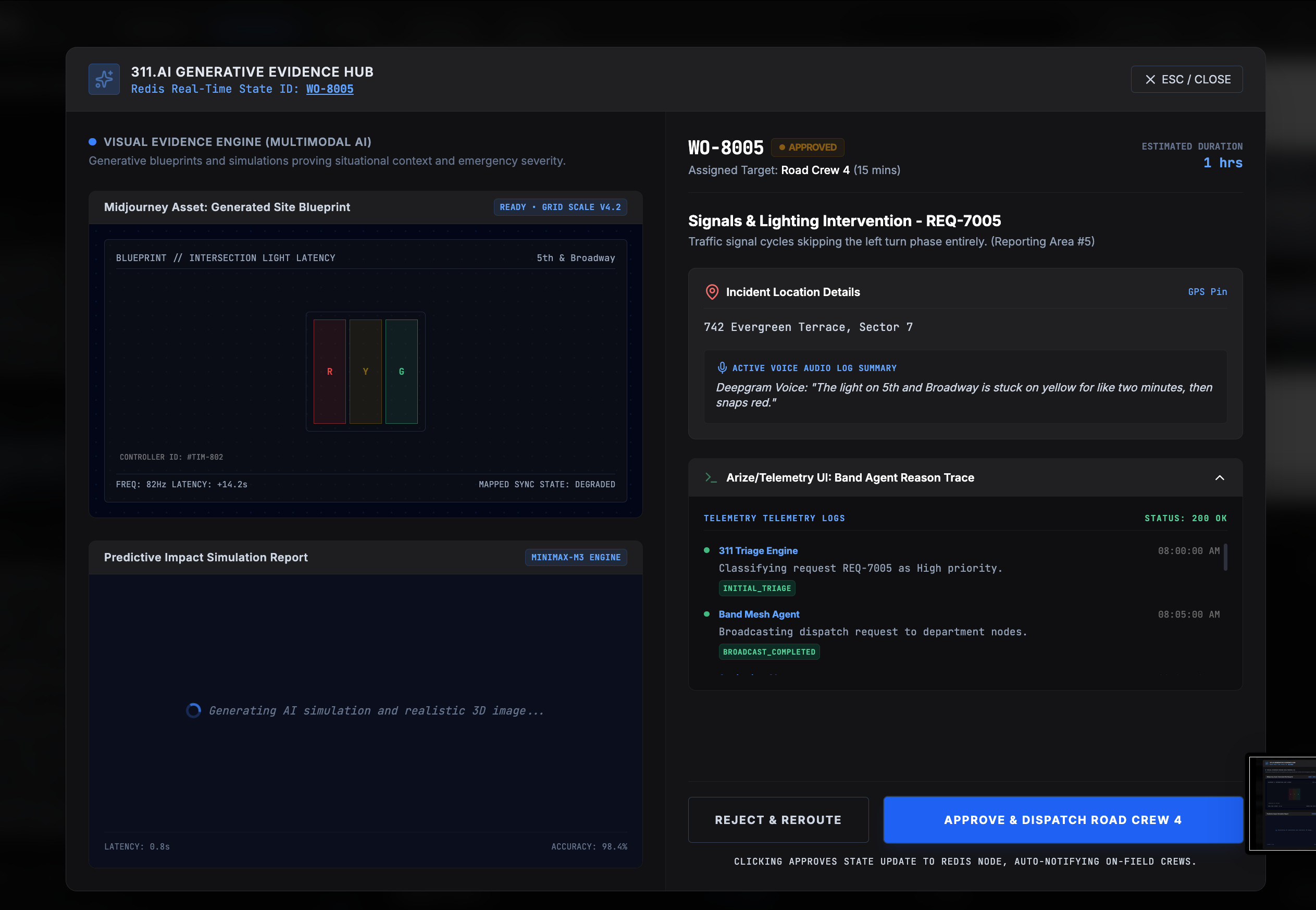
AI Insight Report
-
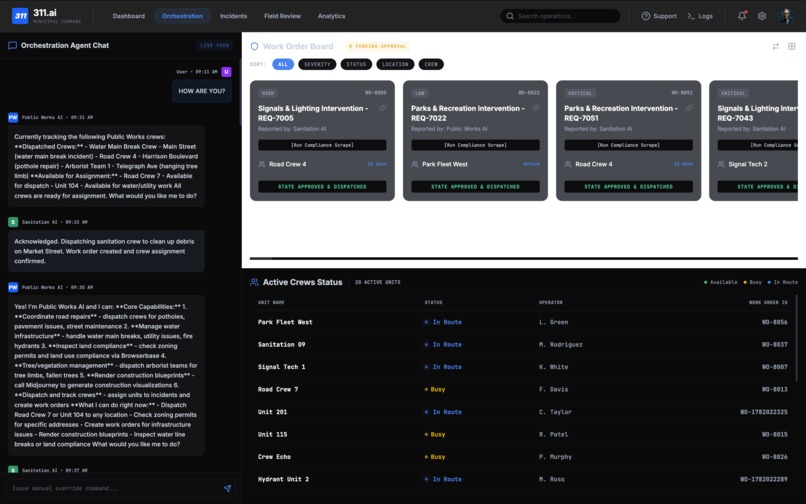
Task Board
-
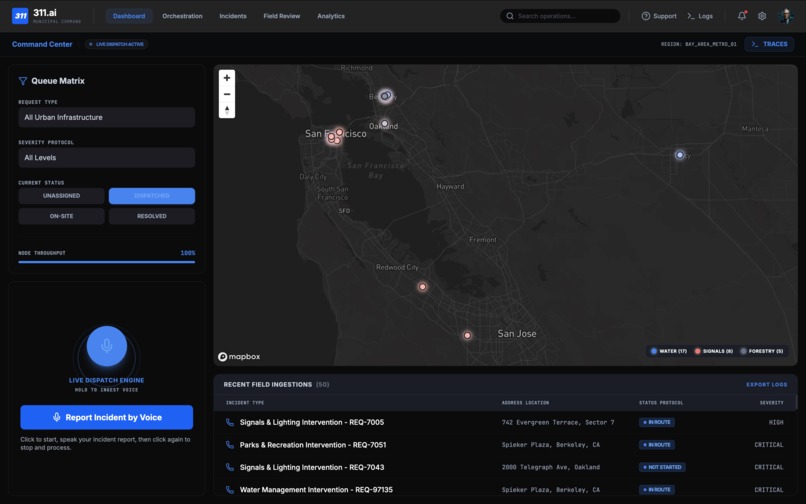
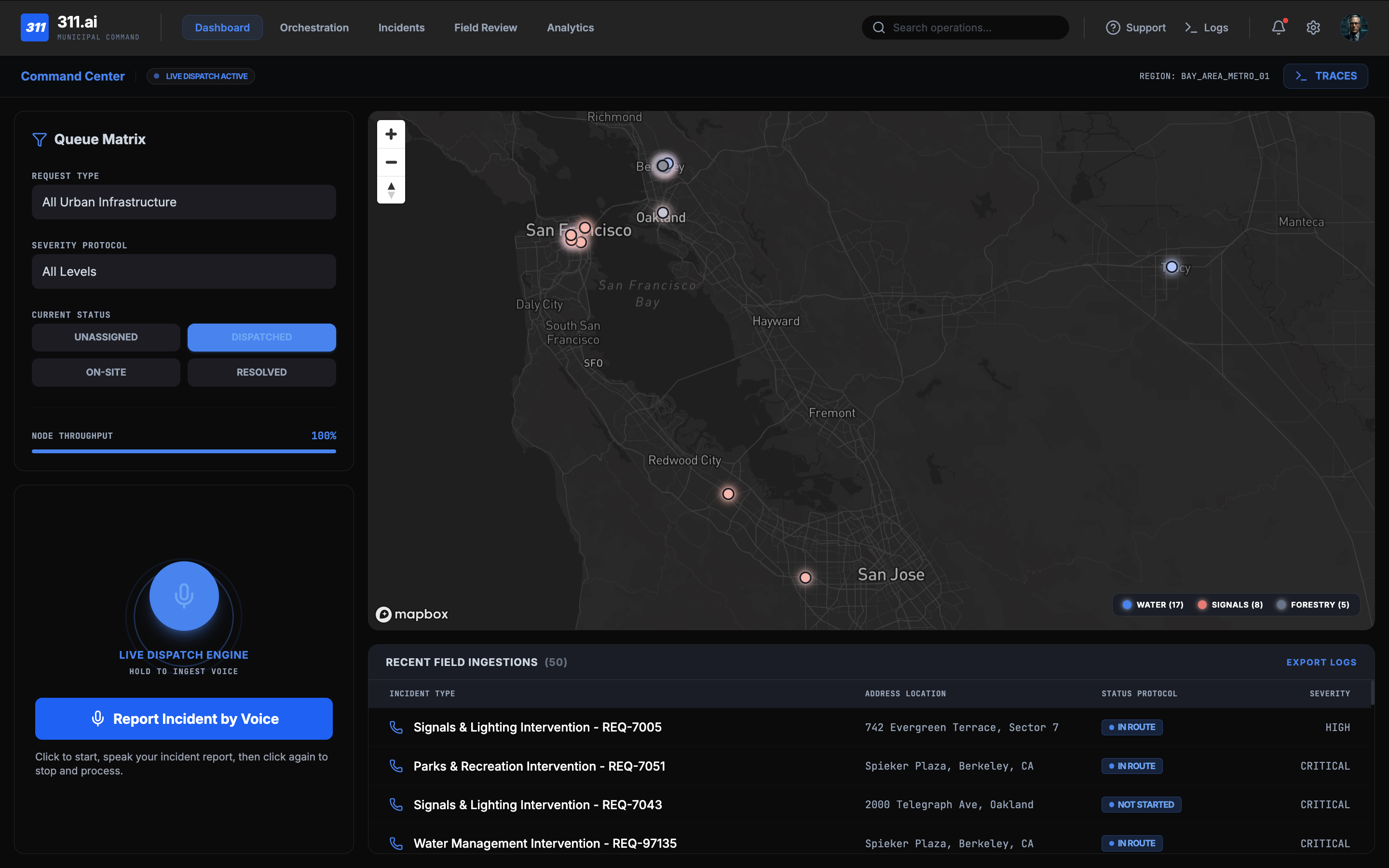
Dashboard/Live Map
-
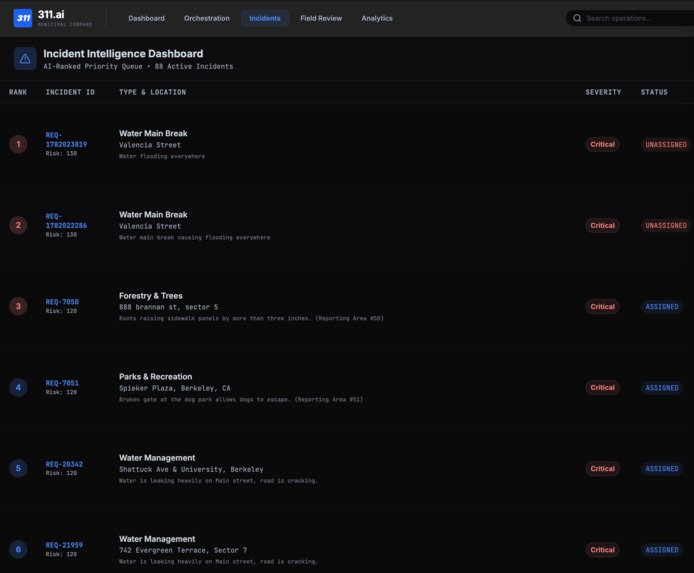
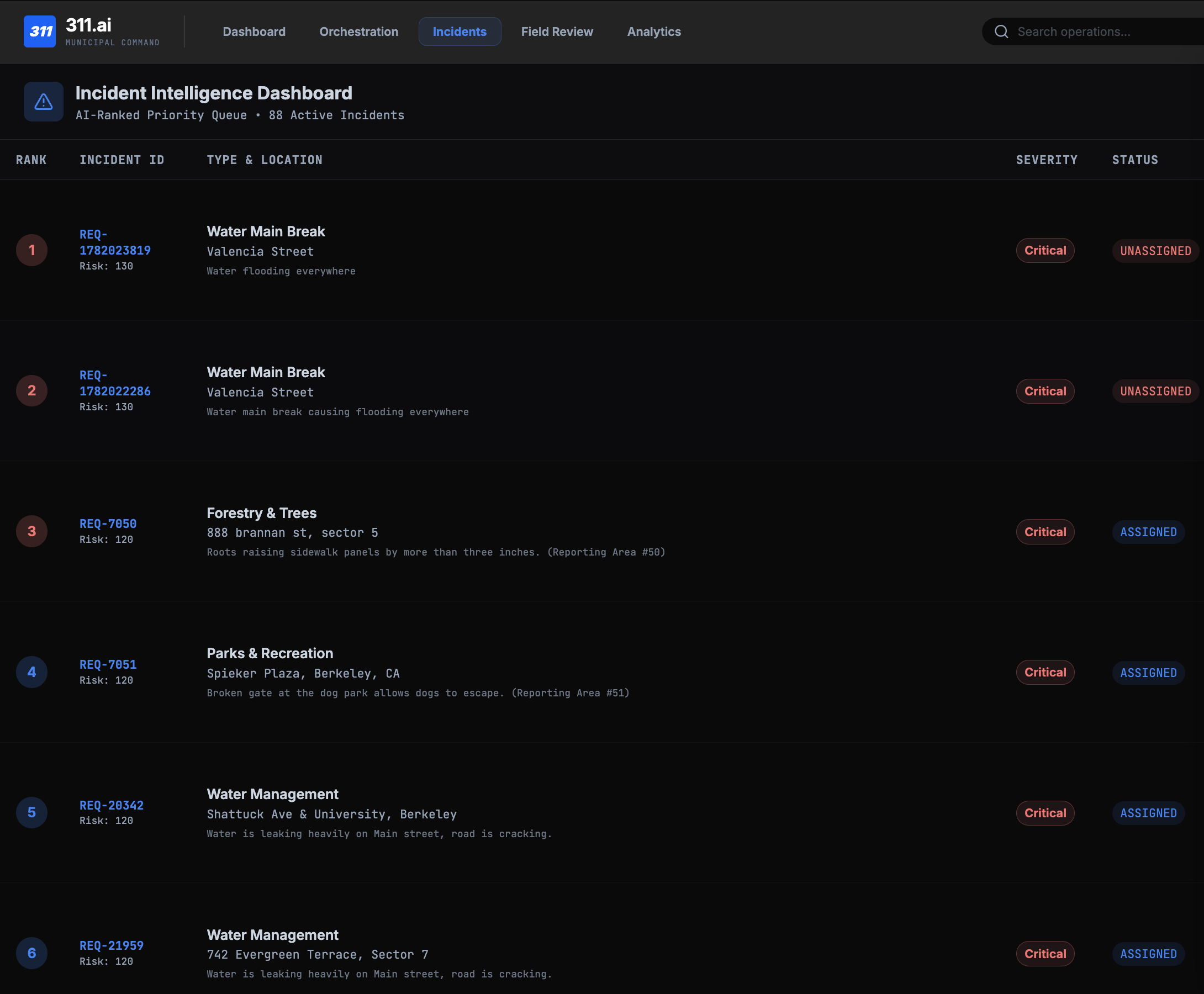
Incident Table with Ai Agent
-
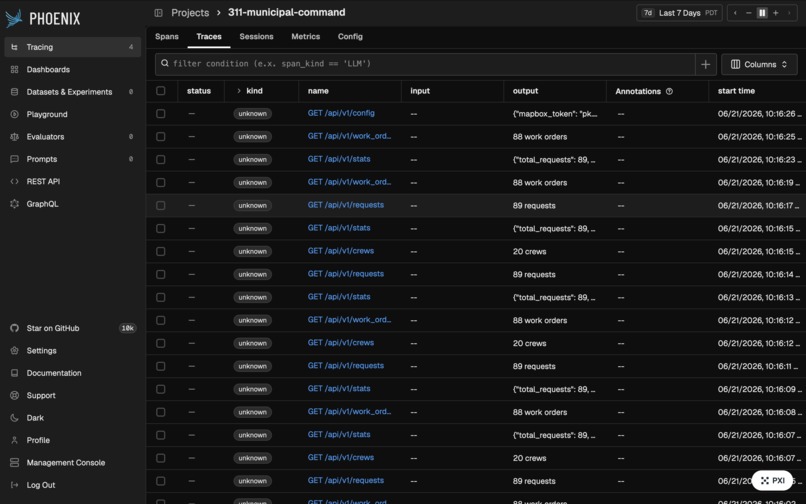
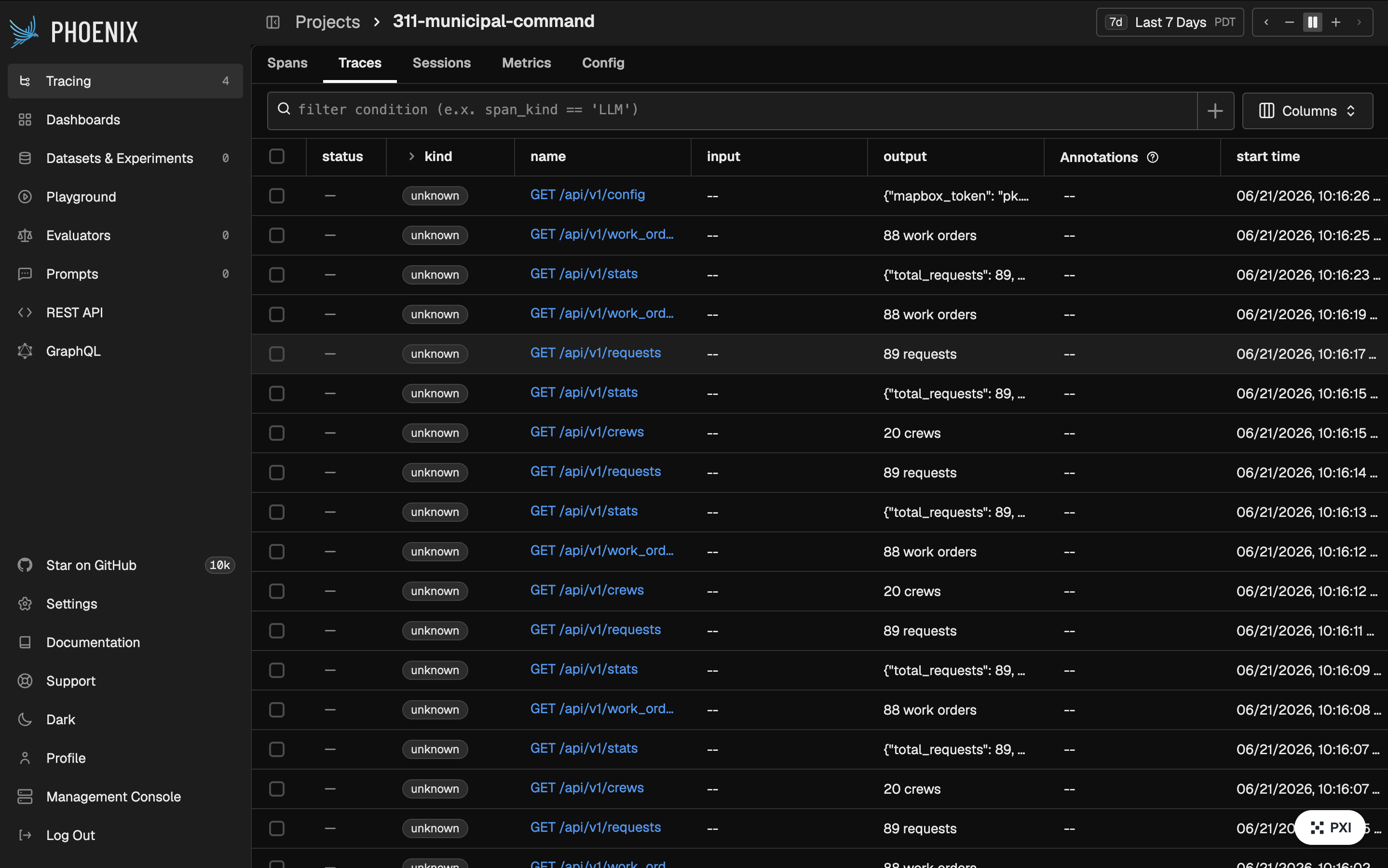
Arize Phoenix Logs
VIDEO BUILT WITH Sai-Simular
Inspiration
Many people know what 911 is, but they most likely wouldn't have heard of 311.
What is 311? 311 is to municipal incidents as 911 is to emergency incidents.
But, modern municipal 311 systems are catastrophically broken. San Francisco alone has a backlog of 50,000+ unresolved requests. Citizens wait months if not years for pothole repairs while water mains flood streets. We realized this isn't a staffing problem—it's an orchestration problem. This isn't an SF issue, this is a systematic problem. We built 311.ai to prove that autonomous AI agents can triage, collaborate, and auto-file government permits faster than human dispatchers can even pick up the phone.
What it does
311.ai is an AI-native municipal command center that transforms voice calls into dispatched work orders in under 60 seconds.
- Voice Intelligence (Deepgram): Ingests citizen reports with real-time transcription. Utilizing sentiment analysis, distressed callers are auto-escalated to critical priority.
- Multi-Agent Orchestration (Band): Dedicated Public Works and Sanitation AI agents collaborate in shared rooms to debate resource allocation and reach consensus without human intervention.
- Autonomous Compliance (Browserbase): Agents autonomously scrape local planning portals to verify zoning and auto-submit excavation permits for emergency repairs—cutting a 2-day manual process down to 8 seconds.
- Semantic Deduplication (Redis Cloud): Vector search detects semantic duplicates (e.g., "pothole on Main" vs "cracked street by Main") to prevent redundant dispatching.
- Enterprise Telemetry (Arize): Full LLM observability traces every multi-agent decision, ensuring zero hallucinations before city funds are allocated.
- Live Dispatch (Mapbox): Geospatial indexing routes crews optimally based on real-time field status.
How we built it
We designed a production-ready, full-stack architecture built for scale:
- Frontend: React 19 + TypeScript + TailwindCSS, leveraging Mapbox GL for real-time spatial tracking and WebSockets for live agent updates.
- Backend: A high-performance FastAPI server managing async workflows.
- State & Memory: Redis Cloud handles vector search, geospatial indexing, and persistent agent session memory.
- The Orchestration Engine: We built a custom middleware proxy that intercepts Band.ai tool calls, routing them through Browserbase for autonomous web scraping and Deepgram for voice-to-text ingestion.
- Observability: Arize Phoenix OTEL instrumentation captures custom span attributes for every agent collaboration event, ensuring robust decision-quality scoring.
Challenges we ran into
- Agentic Hallucination: Early on, our agents would confidently agree to dispatch a fire truck to a pothole. We integrated Arize Phoenix to trace decision logic, allowing us to enforce strict system prompts and validate tool calls before execution.
- Voice Latency: Initial voice ingestion felt robotic. We optimized our Deepgram implementation using WebSocket connections, cutting transcription latency down to ~450ms for a fluid citizen experience.
- Stateful Agent Collaboration: Managing the context window between two agents debating a complex Work Order was difficult. We leveraged Redis to maintain persistent state and semantic caching, ensuring the agents always had the exact, deduplicated incident details.
Accomplishments that we're proud of
- 56-Second Dispatch Loop: From a citizen's voice call to an active crew dispatch, the entire AI lifecycle completes in under a minute.
- Zero-Human Permit Filing: We successfully demonstrated autonomous web scraping to verify and submit simulated municipal compliance forms.
- Enterprise-Grade Auditing: Our system doesn't just make decisions; it proves why it made them using full OTEL tracing.
What we learned
- Agentic AI Needs Guardrails: Multi-agent consensus is powerful but dangerous without observability. Tracing tool calls is non-negotiable for municipal software.
- Vector Search is the Ultimate Dispatcher: Combining geospatial queries with semantic similarity (Redis) entirely eliminates the traditional dispatch bottleneck of duplicate 311 tickets.
What's next for 311.ai
- Fieldguide AI Integration: Launching a mobile app for field crews with live video streaming, allowing the AI to auto-generate damage assessments directly from the job site.
- Generative Blueprints: Integrating Midjourney MCP to auto-generate 3D infrastructure repair visualizations for public communication.
- Predictive Maintenance: Expanding our data model to predict infrastructure failures 30 days in advance based on historical vector clusters.
Built With:
band-ai, deepgram, browserbase, arize-phoenix, redis, redis-cloud, fastapi, react, typescript, mapbox, websockets, tailwindcss, python
Built With
- arize-phoeniz
- band-ai
- browserbase
- deepgram
- mapbox
- python
- redis
- redis-search
- websockets


Log in or sign up for Devpost to join the conversation.