Images are a driving force for any kind of website. From a business website to an ecommerce, images play a pivotal role in enticing users to buy a product. One of the main reasons is that, users value a product or a service based on its images. Therefore, not paying importance to those website images is a huge loss. In this article, ecommerce website design company brings forward 3 easy ways to optimize images for a website.
1. Choose the right file format
Choosing the right file format is essential for image optimization. Website images can be in the form of JPG/JPEG, PNG, or GIF. Each format comes with its own positive and negative points.
For instance, GIF formats don’t work well as images but are great for thumbnails and icons. Then, there are vector images that offer high-quality images that are small in size. However, as per web design company in Toronto, most marketplaces and online stores do not support this format.
Choose an image file format that is supported by websites and marketplaces. Like JPG / JPEG files. They are good quality images in a low-file size. This is crucial because, a business usually has to go for multi-platform selling.
The right file format is essential for image optimization ● PNG images support a wide range of colors and also support transparent images. However, they are ideal for larger files. ● JPG / JPEG images are one of the most common image file formats that are supported by smartphones and online sites. They are one of the best formats that support image quality and file size. ● GIF images support animated and static images. They are lossless files. But they are better for thumbnails, small icons, etc.
2. Compress images
Compressing images reduces file sizes and improves load times. But the major problem with compressing images is that of quality. For instance, compressed images may appear grainy or a bit morphed. Which is why, choosing the right online tool is critical to compress images without losing quality.
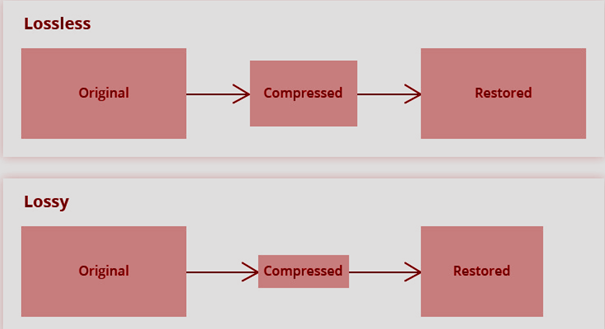
Two major ways of compression 1. Lossless compression As per Adobe, “Lossless compression is a form of data compression that reduces file sizes without sacrificing any significant information in the process”.
2. Lossy image compression Contrary to lossless image compression, lossy image compressions lose data irreversibly. Hence the final product will not have the same data that the original image file had. This compression works great for large-sized images which when compressed have lesser visible changes.
**Some famous online tools help with great-quality images of low file sizes. ● tinypng ● compressnow ● JPEG Optimizer
Another great and better option is to hire a web designer The task of clicking or collecting images, resizing, renaming and optimizing them is not a quick task. Instead, it takes days to create optimized images. Most importantly, it’s a continual process.
Hence, one should always delegate the work to a professional to distribute the workload evenly. A web design Mississauga agency like Cube InfoTech helps in designing and optimizing images for various clients. From hair salons to paint dealers, they create websites. And in the process, choose and optimize images on those websites.
3. Use descriptive filenames
Descriptive file names for images greatly help with on-page optimization. This is because, they provide search engines with additional context about the image.
When search engines crawl a web page, they analyze the text on the page as well as go through the image file names and alt tags of images on the page. This allows them to understand what the page is about and thus helps with indexing the page to come out in search results of relevant searches.
Describe the image in the file name for Google bots to index better By using descriptive file names for images, such as "red-apple.jpg" instead of "IMG_12345.jpg", SEO experts provide search engines with concise information about the image.
Descriptive file names rank in search engines as well as help users to understand the context In image search, when someone searches for a particular product, they have a list of images pop in the search result page. This happens because, one gets to use keywords in these image file names. As a result, such images appear higher in search results and thus attract higher engagement.
Overall, using descriptive file names for images is not only simple but also an effective way to improve the optimization of your website's content - both for search engines and for users.
Final Note
To conclude, a seller must pay heed to great quality optimized images. Images, web content, keywords, etc. act like a chain between the buyer and the user. And this chain is managed expertly by search engine bots. Hence, these bots must be able to recognize, crawl and index various web pages, images, etc. Only then, will they be able to present that site for any relevant search.
From a user’s perspective, bad images lead to; ● Lesser user engagement ● Higher bounce rates ● Bad brand image
It is said that “an image is worth 1000 words”. When there is high competition, it’s great-quality images, that allow one to win a user’s trust. Therefore, use good-quality images that are well-optimized for the website.
