-
-
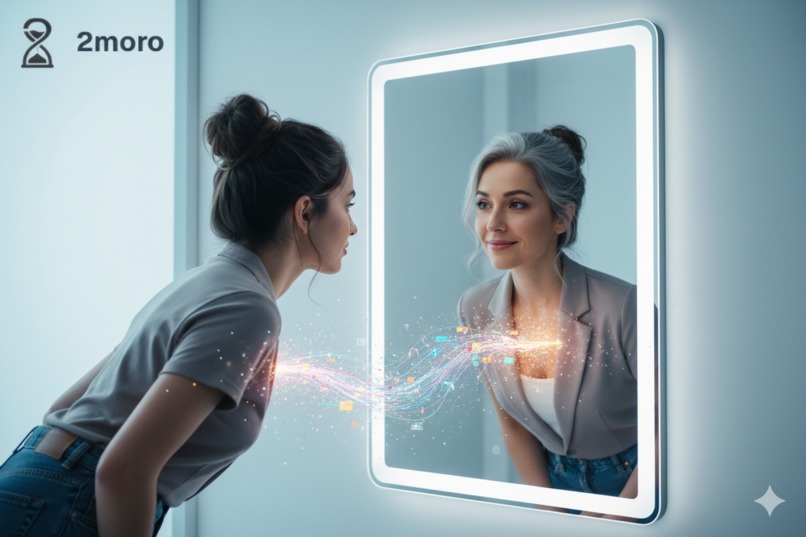
2moro Oracle future self chat
-

-
-

Inspiration
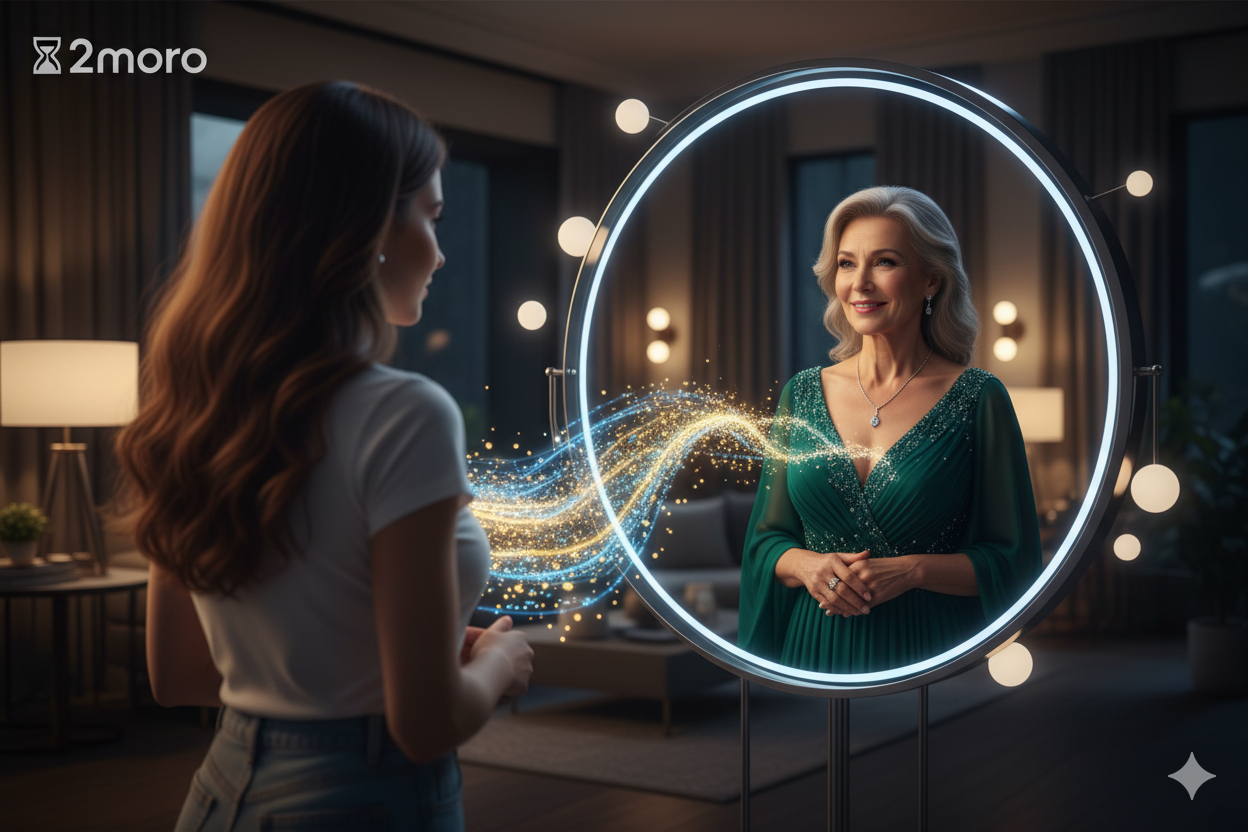
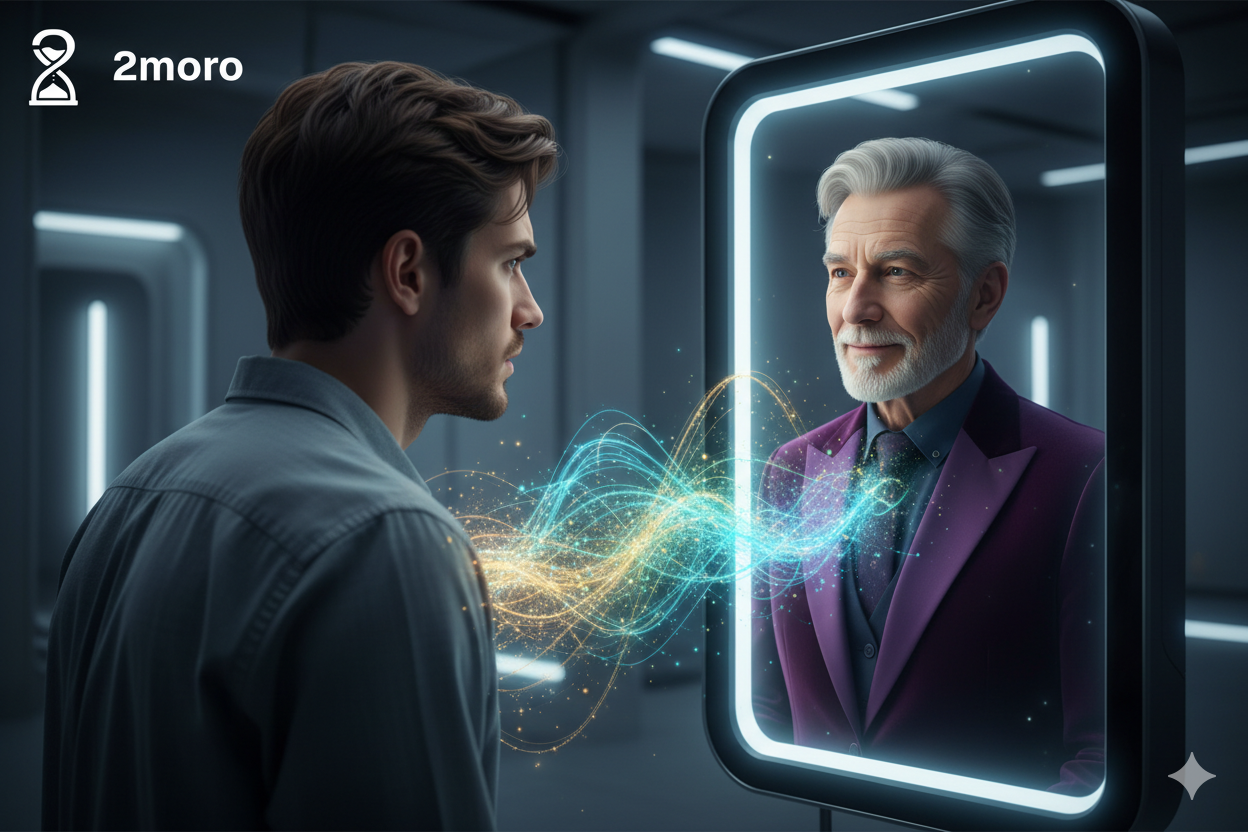
The seed for 2moro was planted in a simple, haunting question: "What if you had known?"
I realized that there is a fundamental "Wisdom Gap" in the human experience. Young people (Gen Z and Gen Alpha) possess boundless energy and time, but they often lack the long-term foresight to maximize it. Science tells us the prefrontal cortex, the brain's planner, doesn't fully mature until the mid-20s. This biological reality often leads to a disconnect where the best time to build a legacy is exactly when we are least equipped to plan for it.
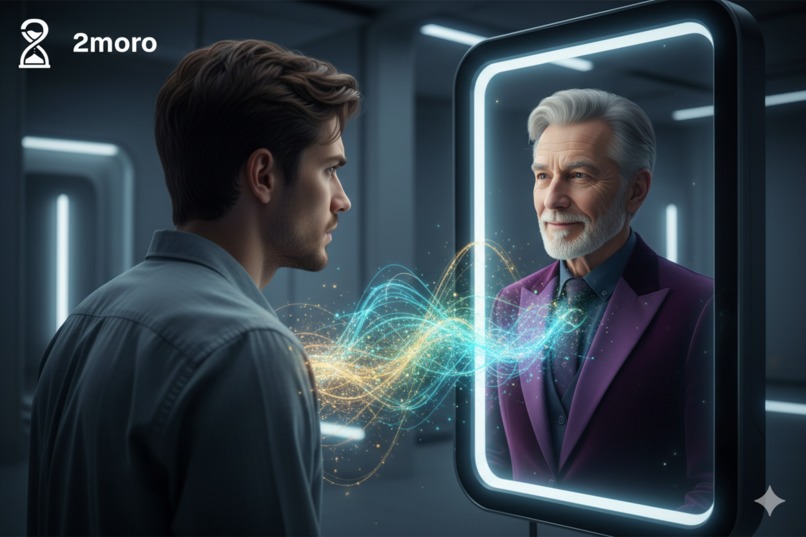
I saw that mentorship is the bridge, but it’s in short supply. Furthermore, young people often reject external advice due to a "stranger danger" bias. We resist lectures from others but inherently trust our own internal voice. I wanted to build a solution that didn't just tell users what to do but showed them who they could become. I was inspired by the proverb, "The best time to plant a tree was yesterday. The next best time is today," and set out to build a tool that helps youth plant those trees today, without the regret of tomorrow.
What it does
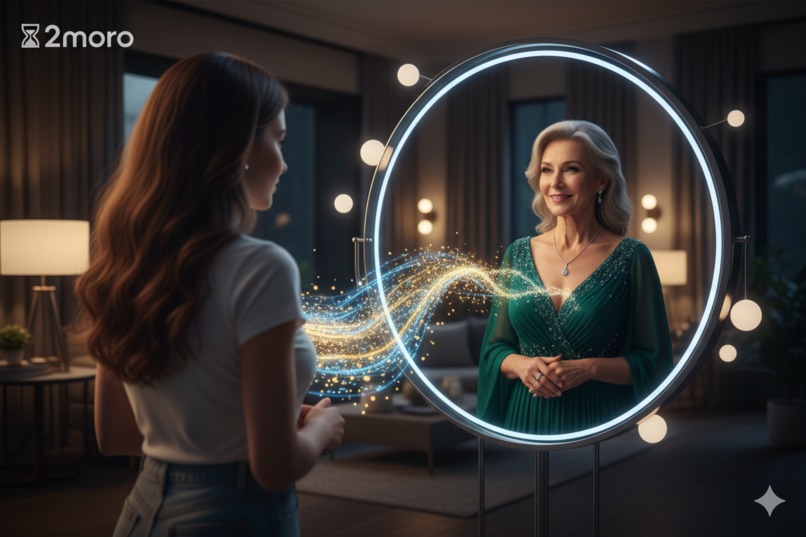
2moro is a comprehensive Life Operating System (LifeOS) that turns the abstract concept of "future consequences" into a tangible, real-time relationship with your Future Self. It functions on three core levels:
- The Oracle (AI Mentorship): This is the heart of the platform. It allows users to text or speak with a simulated "Future Version" of themselves. By analyzing user data, habits, and personality, The Oracle provides advice not as a generic bot, but as a wiser, older you. It helps shift perspective on current obsessions and prevents rash decisions.
- Real-Time Digital Autobiographer: I built an Omni-Journal that takes non-linear input, such as a voice note about a childhood memory, a photo of a current achievement, or a text entry about a fear, and intelligently stitches them into a linear, coherent life story. It acts as a ghostwriter, allowing users to read their own legacy as it unfolds.
- Future Simulator: This engine tracks financial and behavioral habits to project a visual reality of the future. It connects current actions (saving $50, exercising daily) to future outcomes (wealth projections, health visualizations), serving as both a warning system and an encouragement engine.
How I built it
I built 2moro with Gemini 3 Pro on AntiGravity IDE, using modern web technologies to ensure it felt fast, responsive, and alive.
- Core Framework: I utilized Next.js 16.1 and React 19, taking advantage of the latest App Router features and Server Actions for seamless data mutation. This allowed me to keep the frontend snappy while handling complex server-side logic.
- AI & Intelligence: The "Future Self" persona is powered by Google Gemini, capable of deep context understanding. For the voice interactions in The Oracle, I integrated Google Gemini Live to enable natural, real-time conversations. I also used ElevenLabs for generating high-quality audio narrations of the user's autobiography.
- Visuals & UX: To make the experience immersive, I used Three.js (
@react-three/fiber) to create the animated 3D orb for The Oracle, giving the AI a visual presence. Styling was handled with Tailwind CSS 4.0, ensuring a sleek, modern aesthetic. - Backend & Data: User data is securely managed with Prisma ORM (v5.22) and PostgreSQL. Authentication is handled by NextAuth 5.0 (Beta), ensuring robust security for sensitive personal journals and financial data.
Challenges I ran into
- Gemini Live "Meta" Leaks: I encountered a persistent issue where the Gemini Live audio model would occasionally output its internal "meta" dialogue (system thinking or stage directions) directly into the text interface while responding. This behavior was inconsistent and difficult to filter out completely.
- The Transcription Pipeline: Accurately capturing and transcribing user audio in real-time was a major hurdle. I implemented AssemblyAI to handle the speech-to-text conversion. The workflow involves sending the user's audio to AssemblyAI, displaying the generated transcript on the chat interface, and then feeding that text into Gemini Live for a response. While functional, this multi-step process introduced noticeable latency that I am still working to optimize.
- Prompt Engineering the "Future Self": Tuning the AI to sound like a mentor rather than a generic assistant was difficult. It needed to be empathetic yet firm, using the user's specific memories to ground its advice without hallucinating details.
- Handling Non-Linear Narratives: Building the "Omni-Journal" required complex logic. Users don't remember life chronologically. I had to build a system that could take a memory uploaded today about an event from 2015 and correctly insert it into the autobiography's timeline.
Accomplishments that I'm proud of
- The Emotional Connection: I am most proud of the "Aha!" moment when users first interact with their Future Self. Seeing the visual aging and hearing advice based on their own data creates a profound emotional hook that generic habit trackers lack.
- The "Ghostwriter" Engine: Successfully building the system that turns scattered notes and voice memos into a readable, flowing autobiography. It feels like magic to speak a memory and see it written into your life's book seconds later.
- Technical Integration: I successfully combined 3D graphics (Three.js), advanced AI (Gemini), and rigorous data management (Prisma) into a cohesive, performant application using the very latest Next.js 16 stack.
What I learned
- Psychology meets Technology: I learned that technology is most powerful when it mimics human psychology. By externalizing the internal monologue (talking to oneself), I made self-reflection accessible to people who usually find it boring.
- The Power of Multimodality: I discovered that users express themselves differently, some type, some talk, some take photos. Building a system that can accept all these inputs (Multimodal AI) is crucial for capturing the full picture of a user's life.
- Next.js 16 Capabilities: Working with the newest version of Next.js taught me the power (and quirks) of Server Actions and how they can drastically simplify the communication between my client components and the database.
What's next for 2moro LifeOS - What if you had known?
- Mobile App Development: I am moving 2moro from the browser to the pocket. The goal is to make The Oracle accessible instantly, anywhere, just like a real phone call.
- Deeper Financial Integrations: I plan to expand the "Financial Projection" engine to connect directly with more banking institutions, providing real-time adjustments to the user's "Future Reality" based on daily spending habits.
- Social Legacy: I want to explore features that allow users to selectively share parts of their "Autobiography" with family or mentors, turning the platform into a tool for intergenerational connection.
Built With
- antigravity
- assemblyai
- elevenlabs
- gemini
- google-calendar
- next.js
- nextauth
- postgresql
- prisma
- react
- tailwind
- three.js
- tts
- typescript

Log in or sign up for Devpost to join the conversation.