-
-
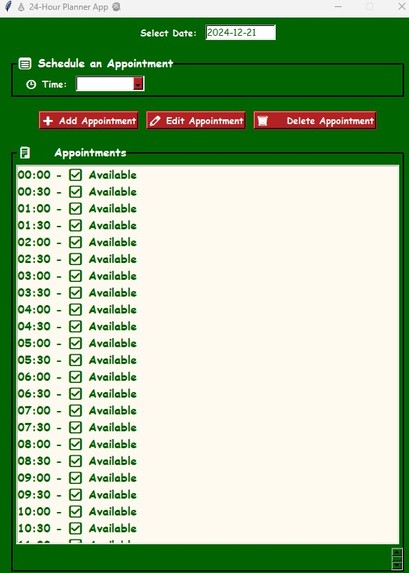
24 Hour Planner
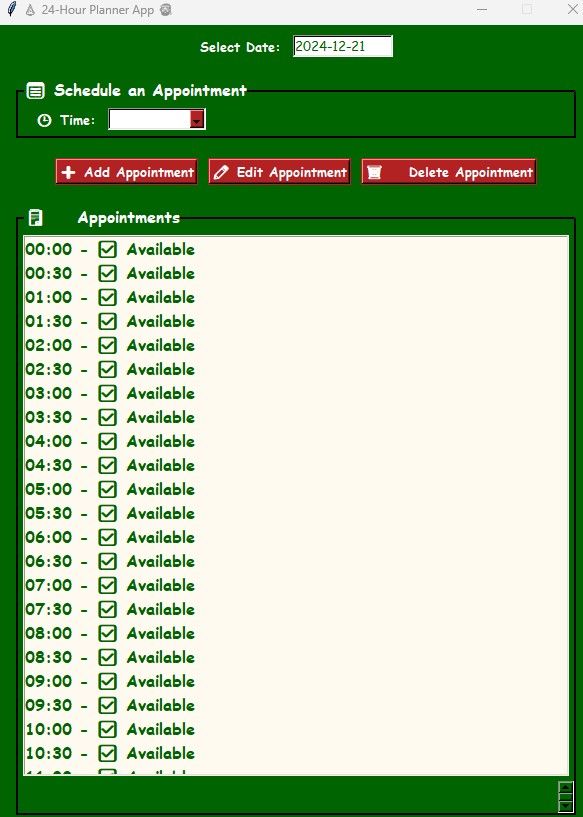
Project Story: 24-Hour Planner
Inspiration
In today's fast-paced world, managing time efficiently is more crucial than ever. I noticed that many people struggle to balance their personal and professional lives, often feeling overwhelmed by endless to-do lists and tight schedules. This led me to envision a 24-Hour Planner that not only helps users organize their day but also promotes mindfulness and productivity around the clock.
What I Learned
Throughout the development of the 24-Hour Planner, I gained valuable insights into:
- User-Centered Design: Understanding the needs and preferences of different user groups to create a versatile and intuitive planner.
- Time Management Techniques: Exploring various productivity methodologies like Pomodoro, Eisenhower Matrix, and time blocking to incorporate effective strategies into the planner.
- Digital vs. Physical Planning: Balancing the benefits of digital tools with the tactile satisfaction of physical planners, leading to a hybrid design approach.
- Feedback Integration: Learning how to collect and implement user feedback to continuously improve the planner's features and usability.
How I Built the Project
Research & Planning:
- Conducted surveys and interviews to identify common pain points in daily planning.
- Analyzed existing planners to determine gaps and opportunities for innovation.
Design Phase:
- Created wireframes and prototypes focusing on a clean, user-friendly interface.
- Incorporated sections for daily schedules, goal setting, habit tracking, and reflection.
Development:
- Utilized design software like Adobe XD for digital prototypes and high-quality print layouts.
- Collaborated with a small team of designers and productivity experts to refine features.
Testing:
- Distributed prototypes to a select group of beta testers for real-world feedback.
- Iterated on the design based on user experiences and suggestions.
Launch & Marketing:
- Developed a marketing strategy highlighting the planner's unique features and benefits.
- Leveraged social media and influencer partnerships to reach a broader audience.
Challenges Faced
Balancing Simplicity and Functionality: Striving to create a planner that is both comprehensive and easy to use required careful consideration of which features to include without overwhelming the user.
Incorporating Diverse Productivity Methods: Integrating various time management techniques into a cohesive design was challenging, as it needed to cater to different user preferences and workflows.
Supply Chain Issues: Navigating the logistics of printing and distribution, especially when scaling up production to meet demand, posed significant hurdles.
User Feedback Integration: Deciding which feedback to prioritize and implement required critical judgment to maintain the planner's core vision while addressing user needs.
Despite these challenges, the project was a rewarding journey that culminated in a product designed to help individuals make the most of every hour in their day.


Log in or sign up for Devpost to join the conversation.