Inspiration
In Georgia, a tenant served with an eviction case has 7 days to file an answer, and weekends count. Miss the deadline and the landlord can win without a hearing. Metro Atlanta had about 144,000 eviction filings in 2025 more than New York City and many cases are resolved once tenants act in time. Three of us are Nigerian and one of us is from Atlanta. In Lagos, the laws are different, but tenants face a similar problem: confusing notices, short deadlines, and not knowing their rights until it is too late.
We wanted to build something useful in the first few minutes after that paper lands in someone’s hand.
What it does
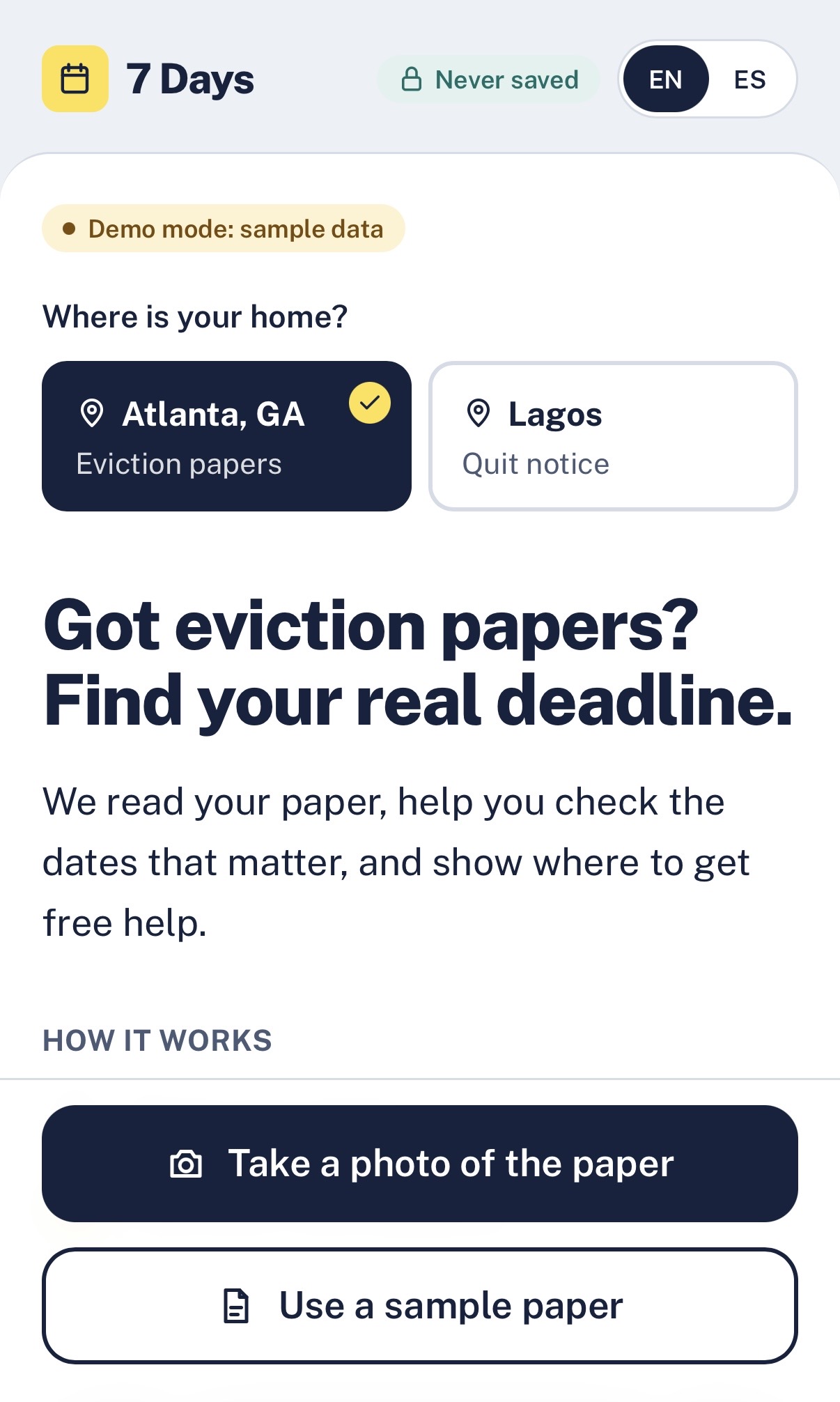
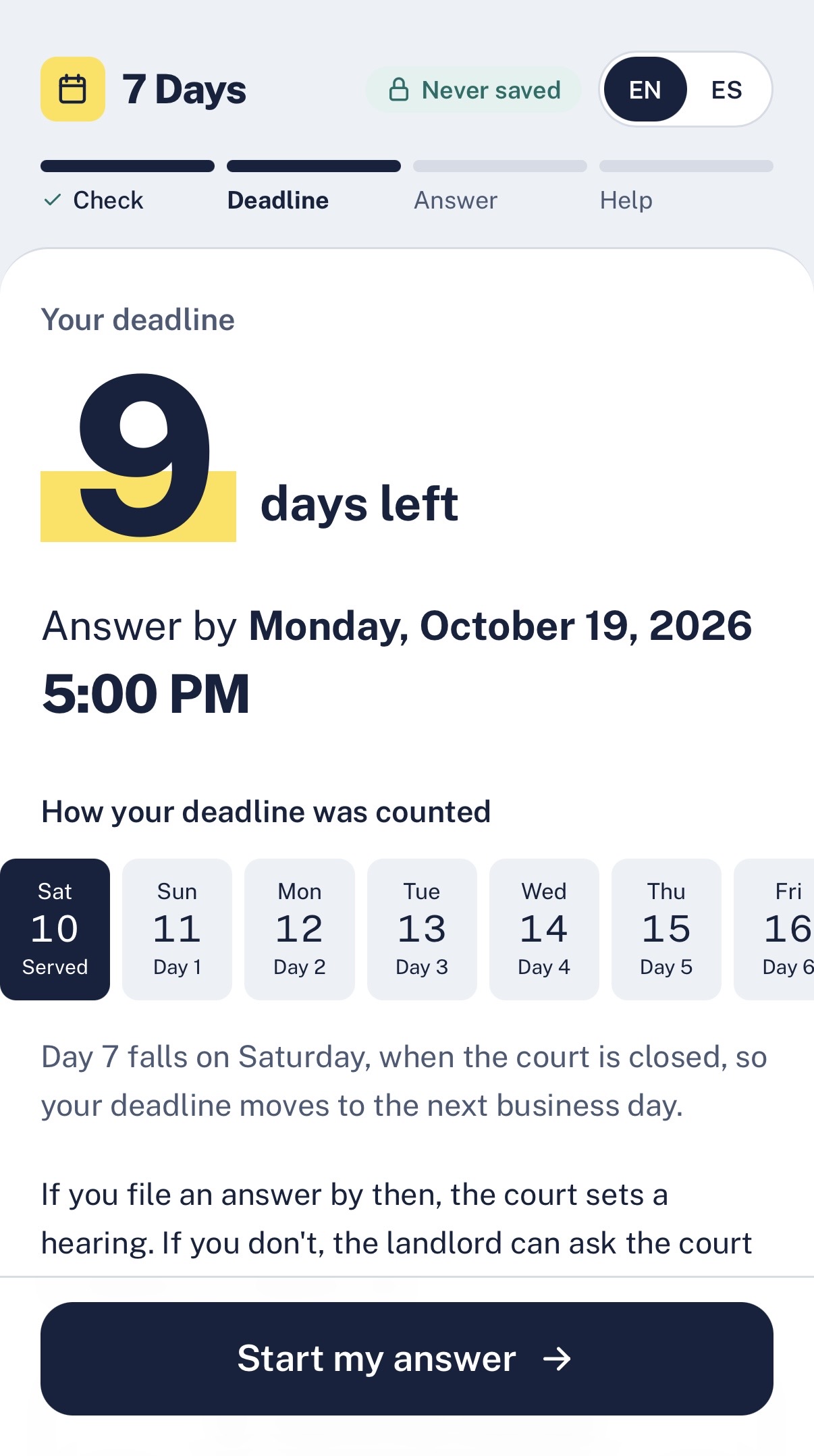
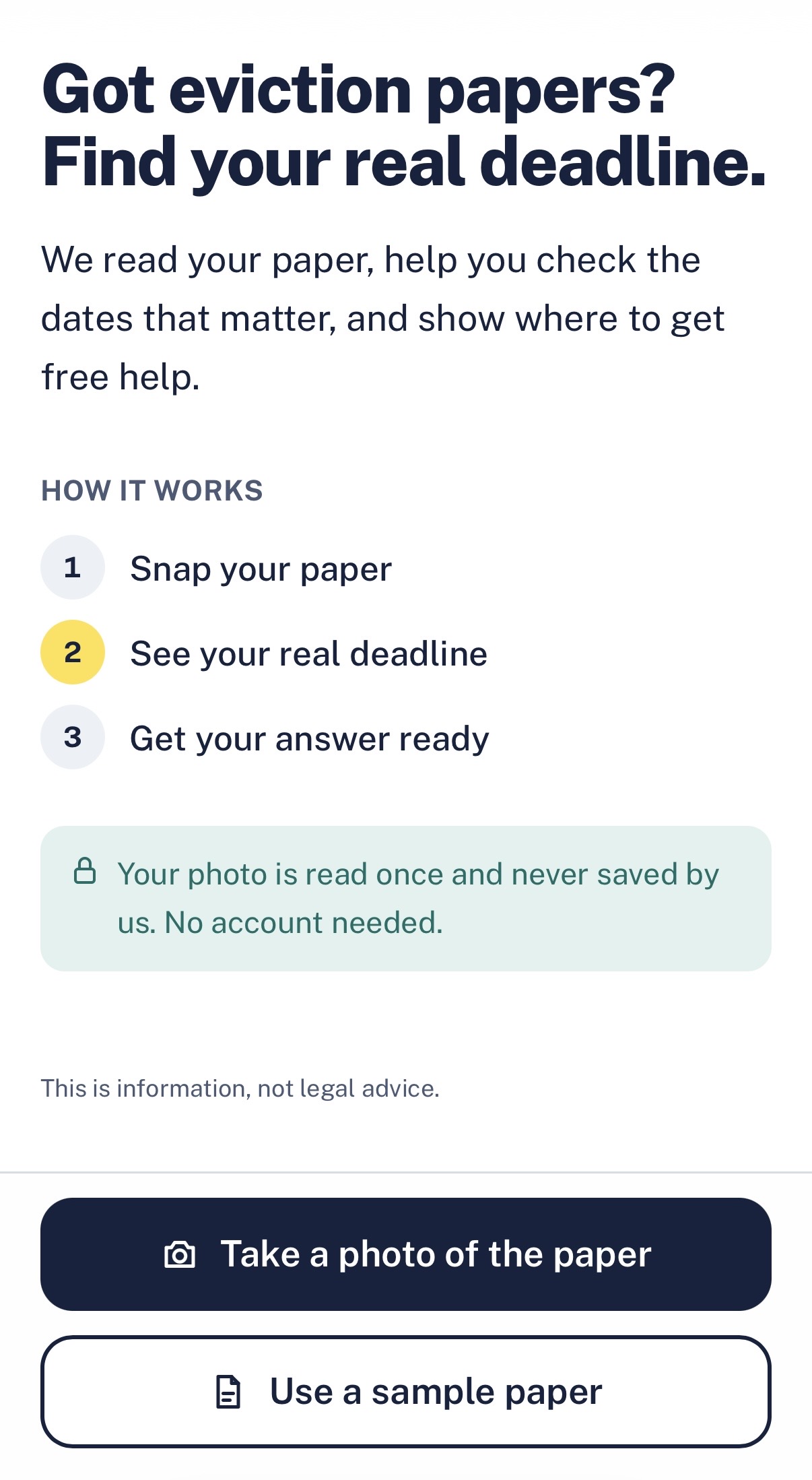
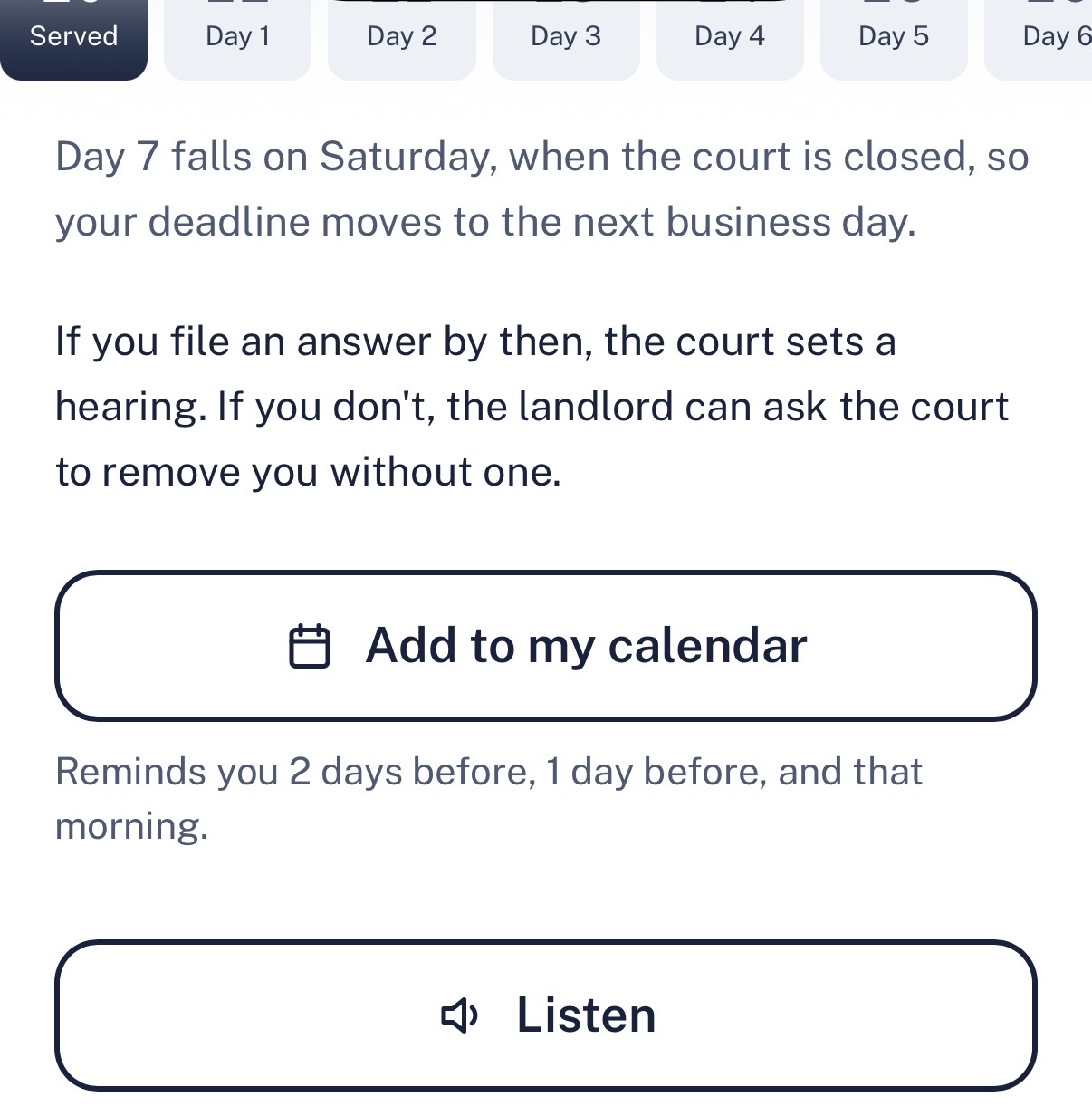
7 Days turns an eviction notice into a clear plan. Snap the paper, understand your deadline and rights, hear what it means, and prepare your response. In Atlanta, 7 Days reads the notice, extracts important details, and lets the tenant confirm them before anything is calculated. It then shows the exact 7-day deadline, including weekend and Georgia court-holiday rules. Users can hear a plain-language explanation in English or Spanish, check potential issues, tap confusing legal terms for explanations, and select only the defenses that actually apply to them. The app can then create a filled-in answer PDF, filing checklist, calendar reminders, and a summary to bring to legal aid.
In Lagos, users can scan a quit notice and check whether the notice period matches how they pay rent. The app also checks for possible forced-eviction warning signs such as changed locks, removed property or threats, provides next steps, and can create a reply letter that is read aloud in English, Spanish or Pidgin.
How we built it
The frontend (Next.js, React, Tailwind CSS) was designed phone-first for someone who may be stressed and reading on a small screen, with support for English, Spanish and Pidgin. Our backend (Python, FastAPI, Render) is stateless with no accounts or database. Google Gemini reads the notice image and returns structured fields as JSON while flagging anything it is unsure about. The user confirms those fields before the app continues, and if the models fail, the information can be entered manually.
Importantly, AI does not calculate legal deadlines or decide a tenant’s rights. Deadline calculations and notice checks use rule-based Python, including Georgia’s 7-day calculation, court holidays, and Lagos notice periods.
We use ElevenLabs for spoken explanations and ReportLab to generate answer drafts, Lagos reply letters, and legal-aid summaries. Calendar files are generated directly for the user’s device.
7 Days has no accounts, database, cookies, analytics, or saved files. Refreshing the page clears the session. Uploaded photos are held in memory only while being read, and generated PDFs are created in memory and returned directly to the user. Calendar files are also created locally on the user’s device.
Challenges we ran into
One of our biggest challenges was making AI safe around something as important as a legal deadline. We solved this by keeping AI out of the actual decision-making: Gemini reads the document, the user confirms the information, and fixed Python rules handle the calculations.
We also had to correctly handle Georgia’s deadline rules, including weekends and court holidays, while supporting two different legal systems with different documents and requirements.
Speed was another challenge. When our first AI model timed out, we added a faster primary model, a backup model, timeouts, and a manual-entry fallback.
Finally, we had to translate complicated legal language into something someone who is scared and in a hurry could understand immediately.
Accomplishments that we're proud of
We built a working end-to-end experience that can go from photo → deadline → explanation → audio → answer draft → legal-aid summary in under two minutes.
We’re especially proud that 7 Days never chooses a defense for the tenant and doesn’t store their information. It supports three languages, includes a Nigerian voice for the Lagos experience, and uses human-written cards and spoken scripts so important information stays consistent.
What we learned
We learned that the hardest part of legal technology isn’t necessarily the code, it’s being careful about what the technology claims and keeping the person using it in control.
We also learned how important accessibility is. Big text, audio, plain language, and a phone-first design can matter more than adding another complicated feature when the person using the app is under stress.
And while eviction works differently in Atlanta and Lagos, the underlying need is similar: know your deadline, understand your rights, and get help early.
What's next for 234 + 404
Next, we want Georgia legal-aid partners and Lagos lawyers to review our rules and scripts. We’d also like to support more Georgia counties’ answer forms and e-filing links, add verified tap-to-call legal-aid resources, and expand language support to Yoruba, Haitian Creole, and Vietnamese. We also want to create an SMS version for people who don’t have reliable data access.
