-
-
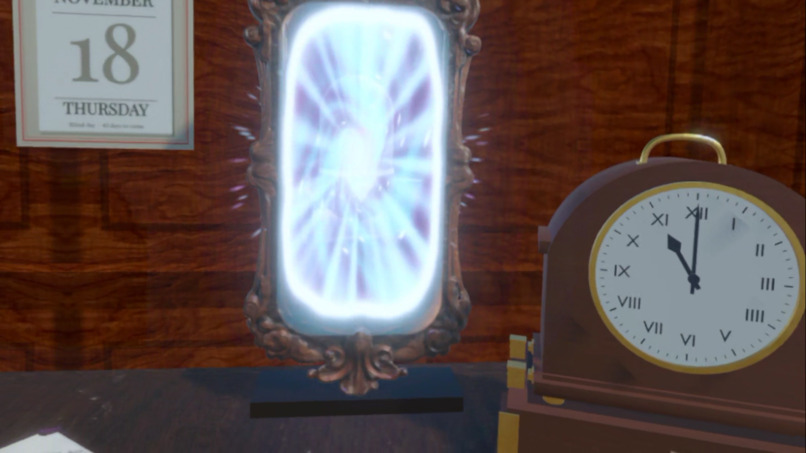
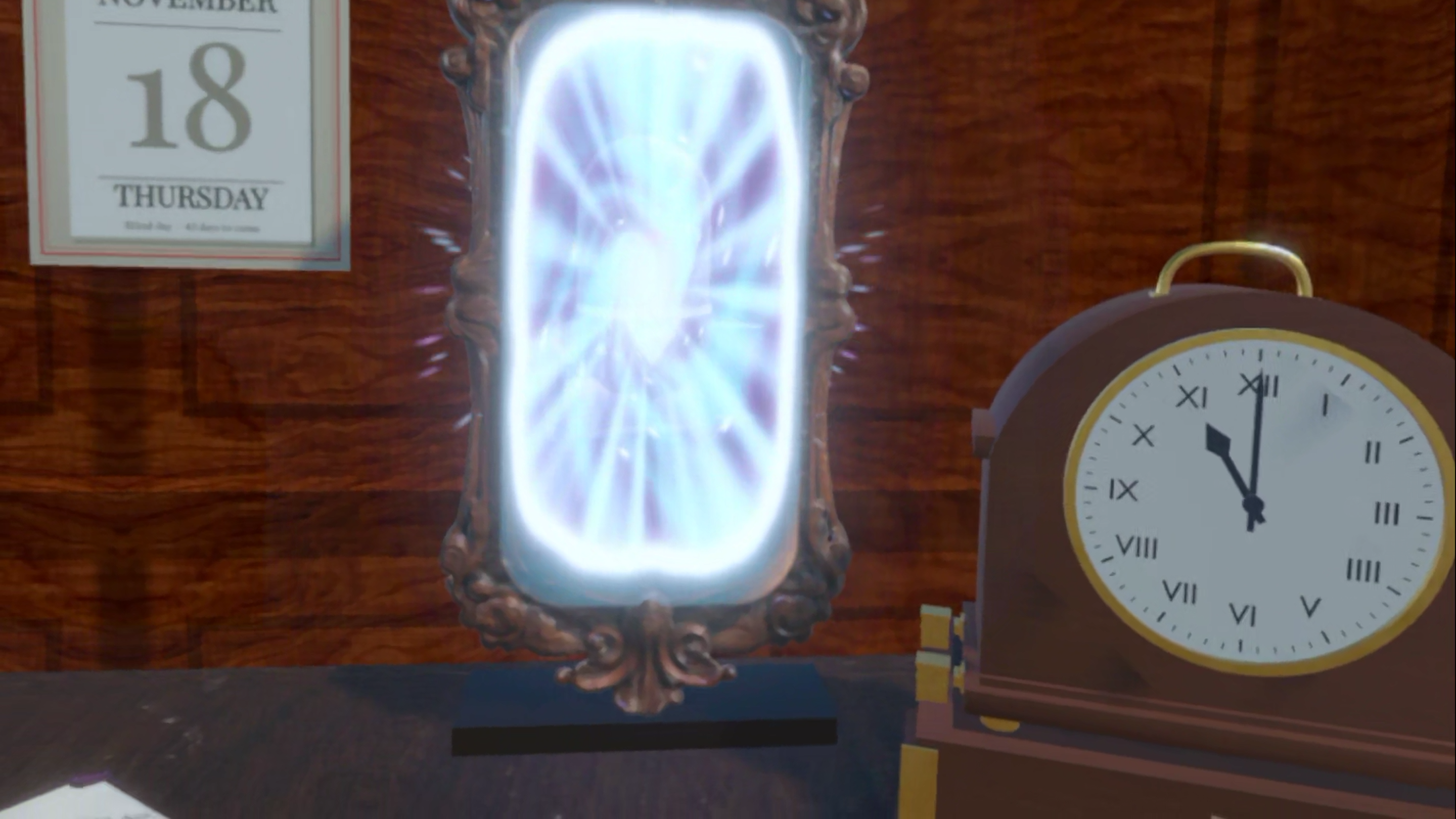
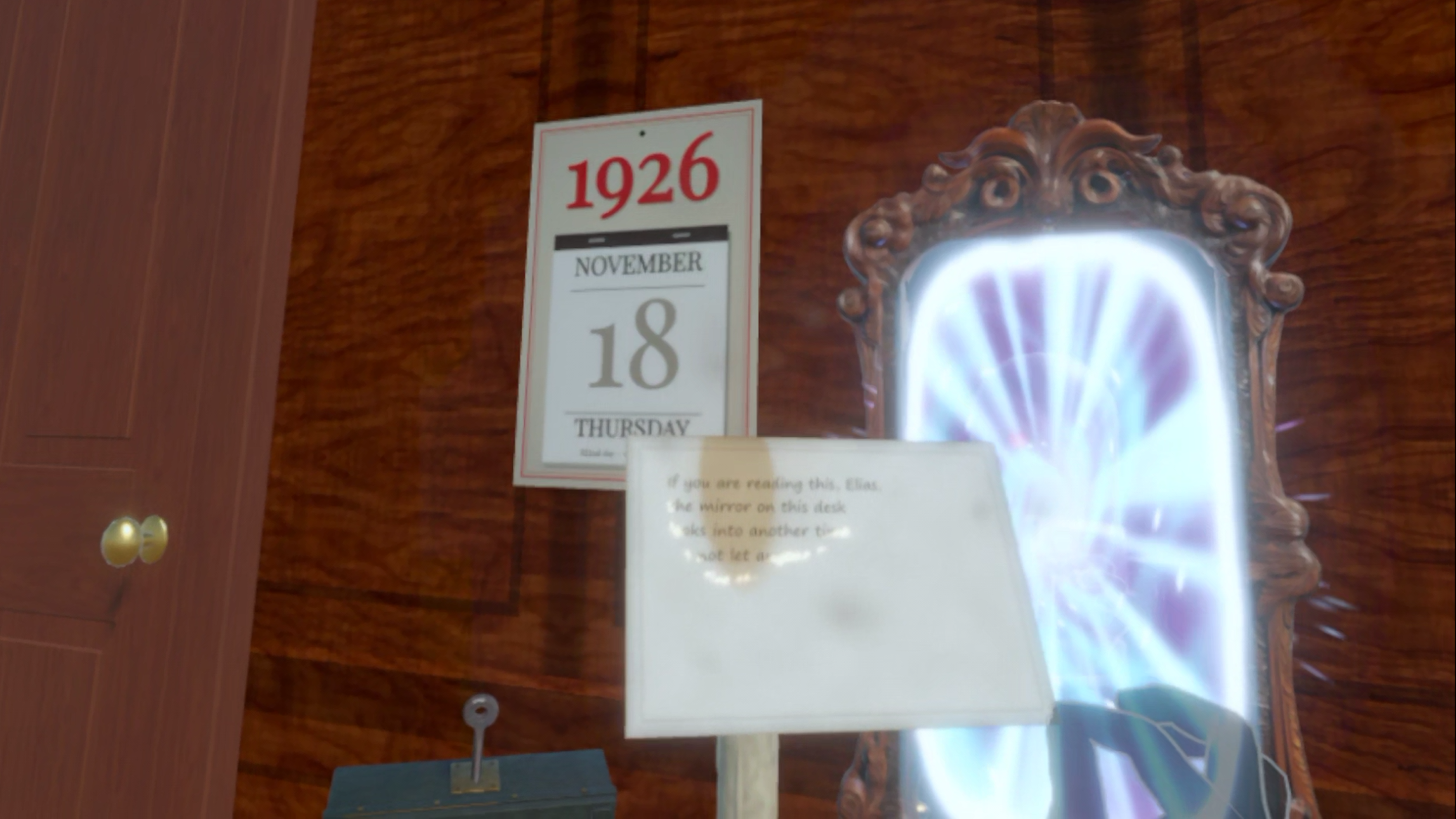
The study, before the fire.
-
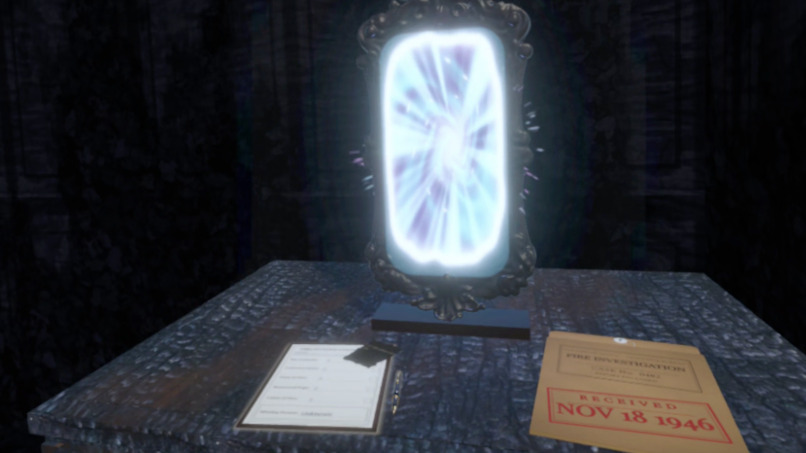
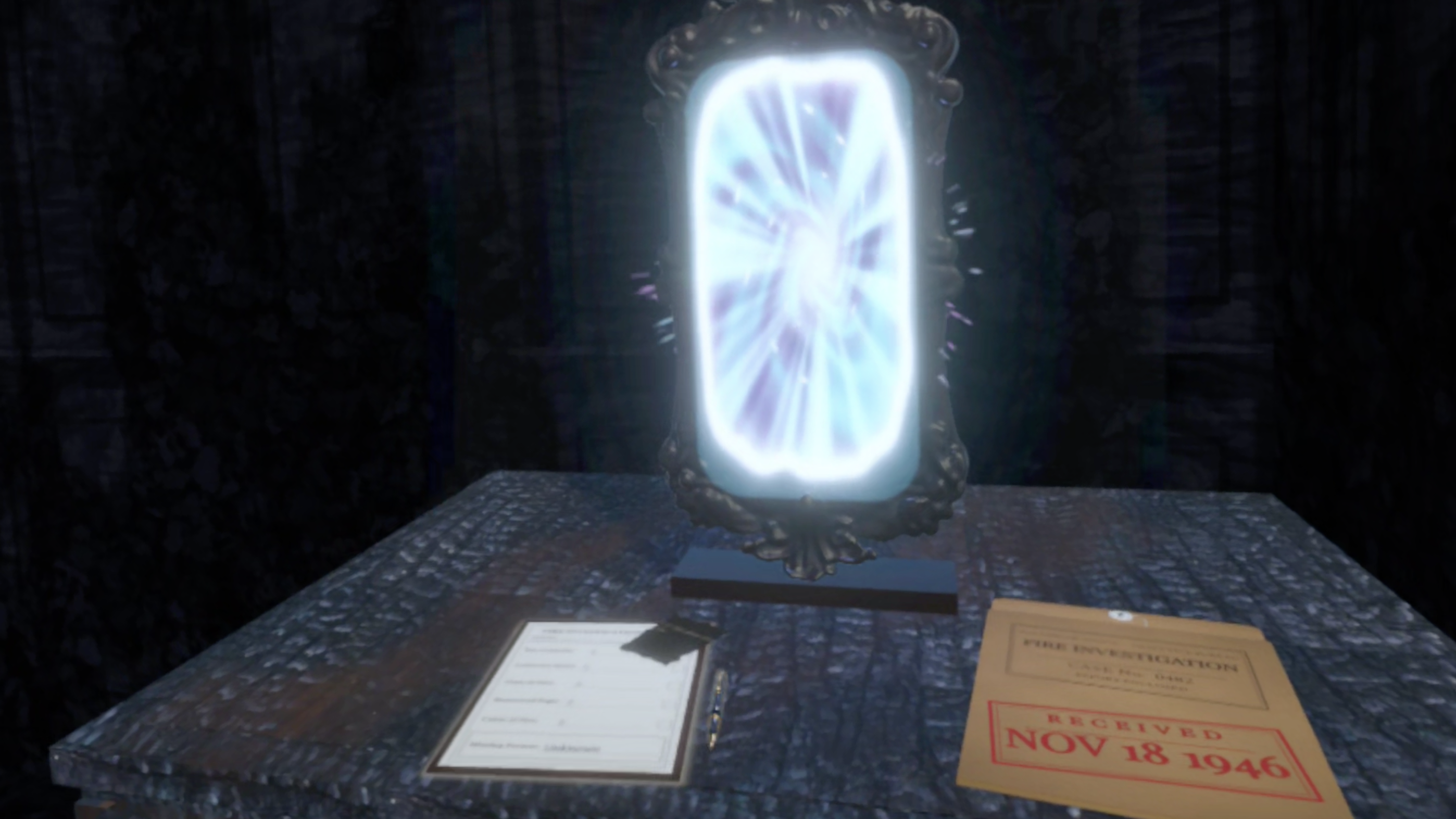
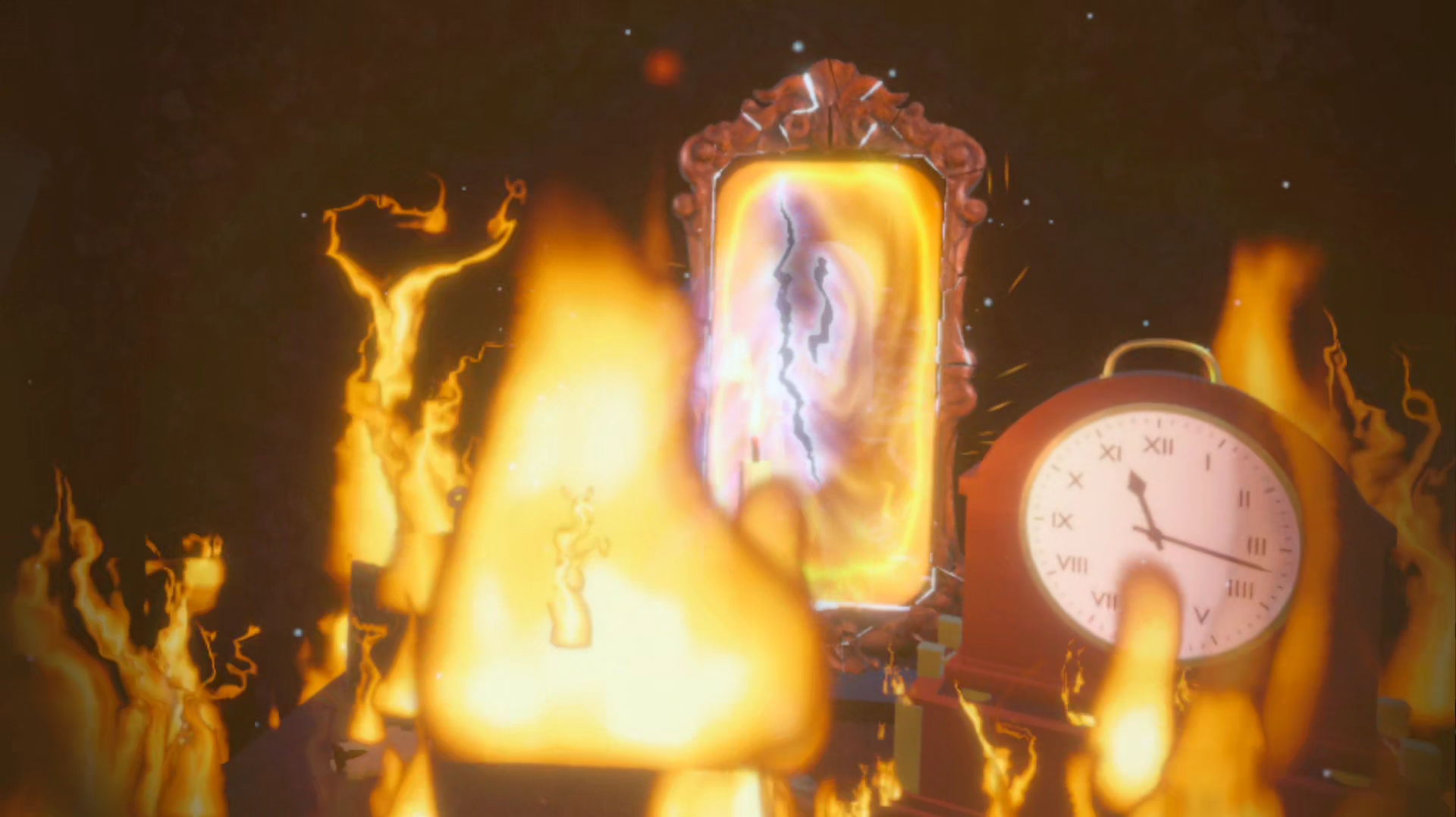
The same study, after the fire.
-
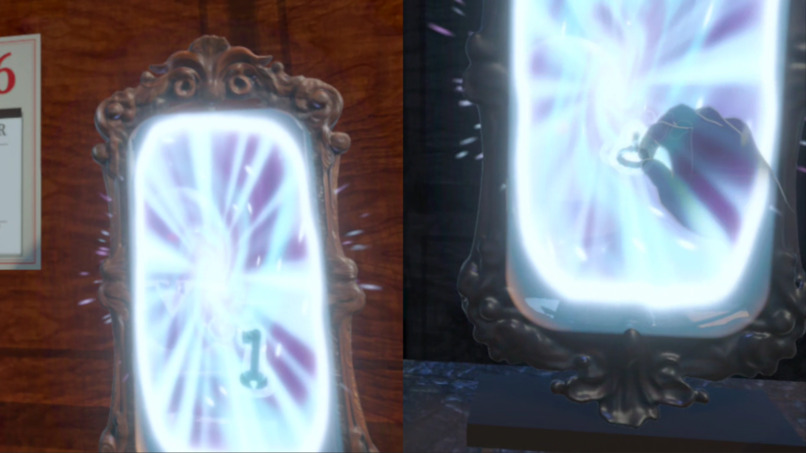
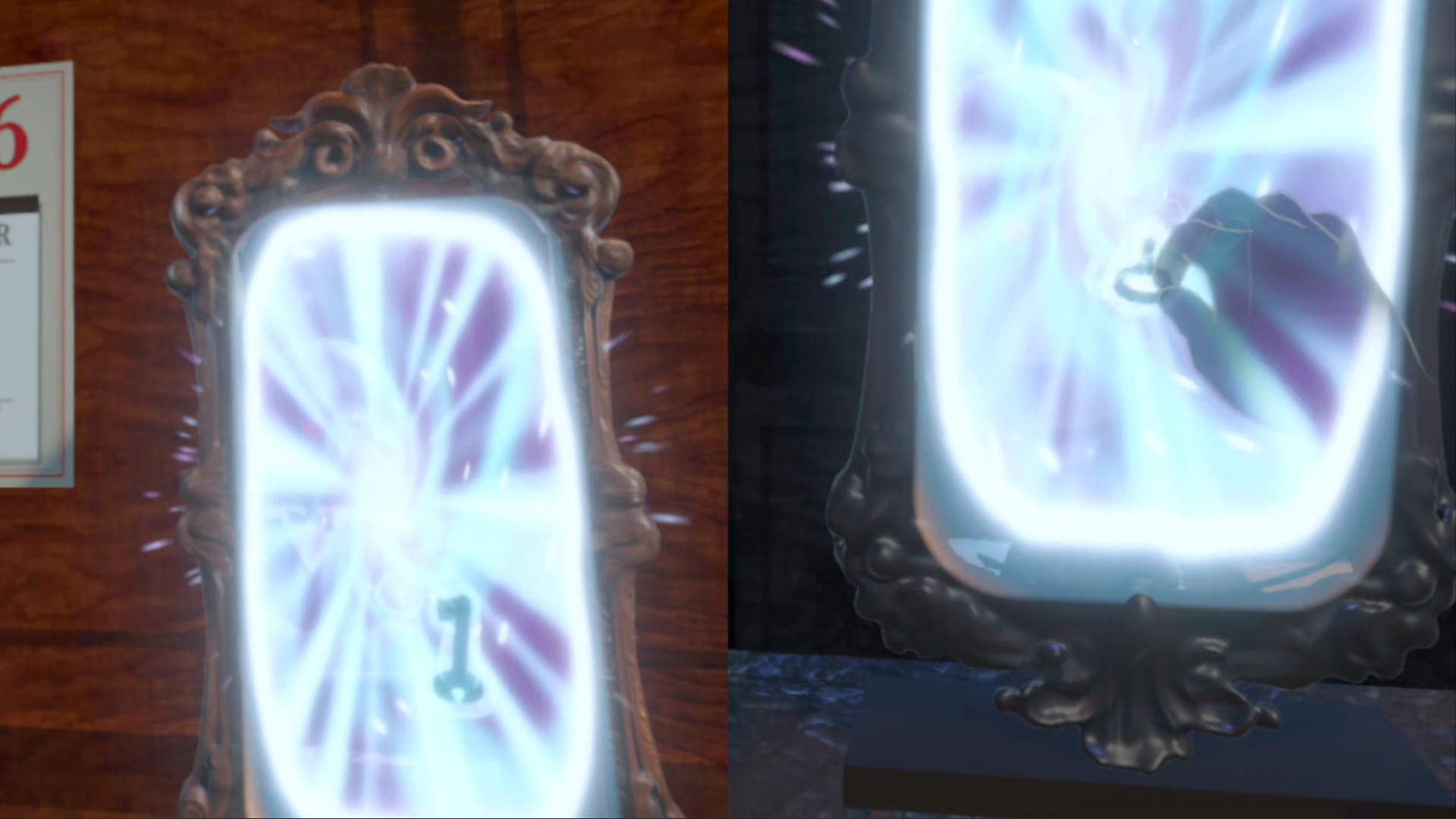
Objects change as they cross time.
-
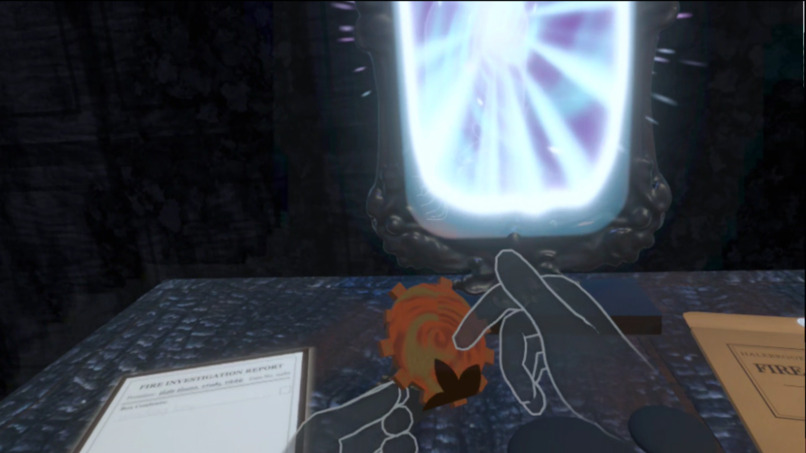
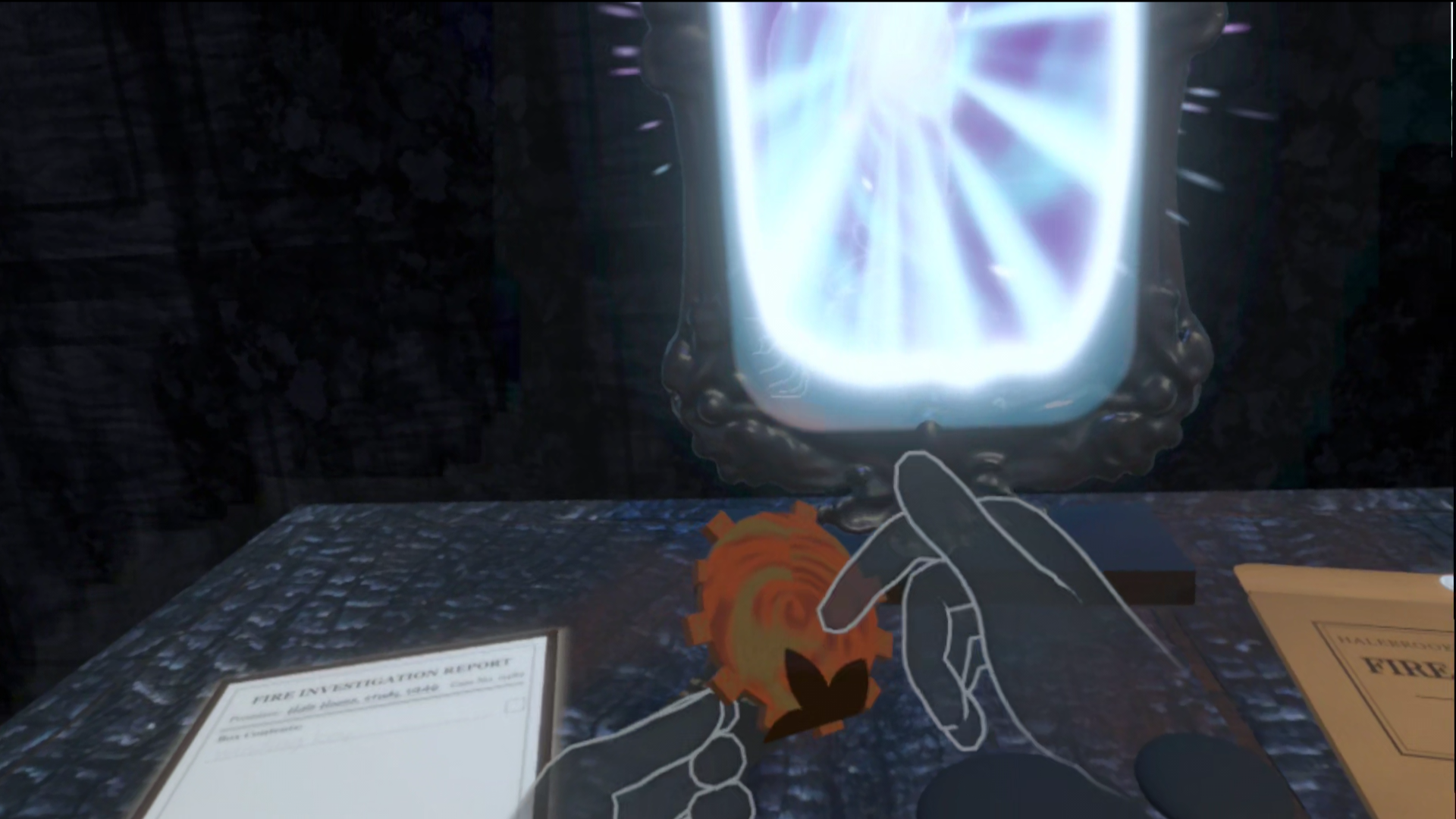
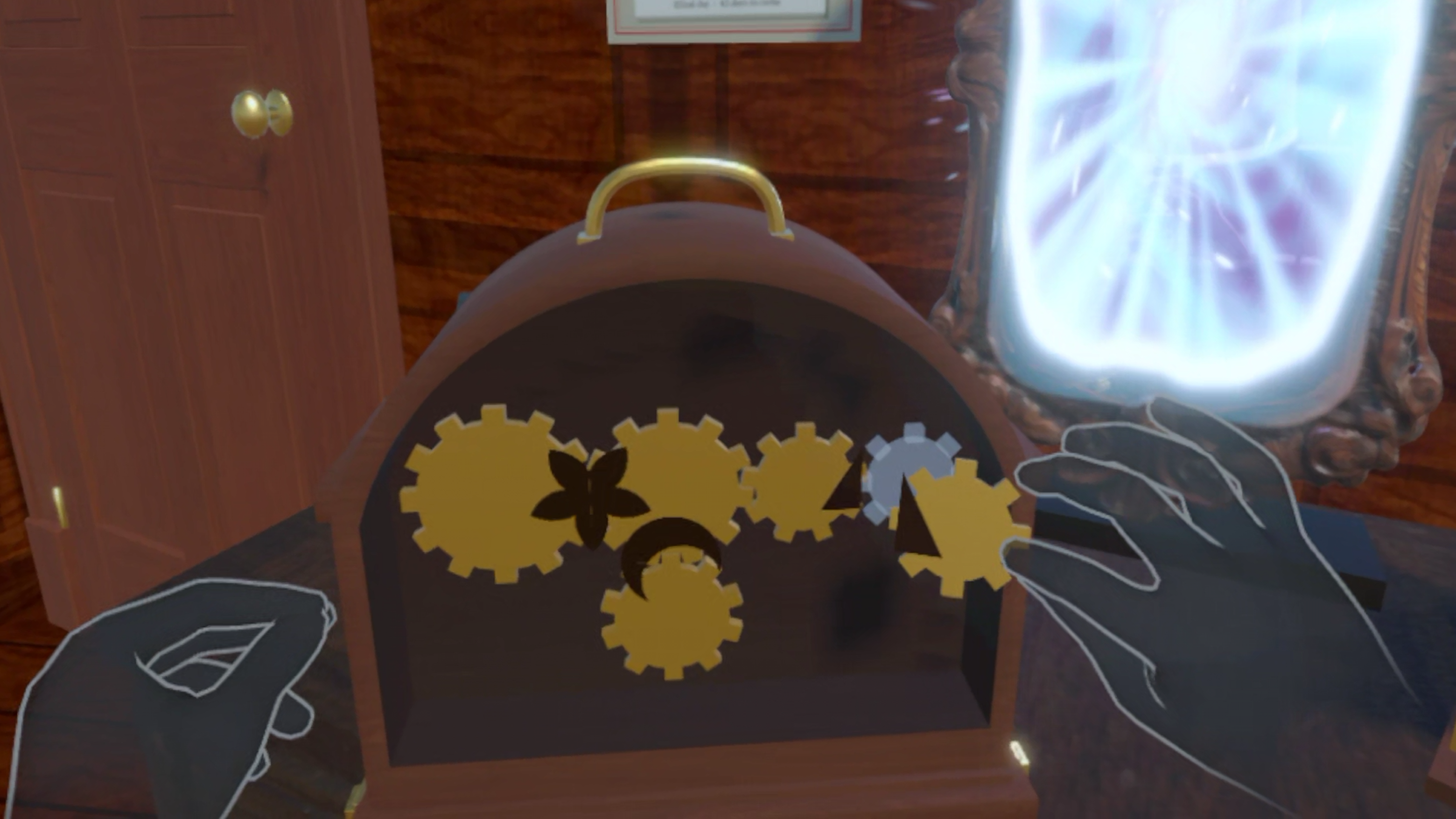
Rub away the mud to find the right gear.
-
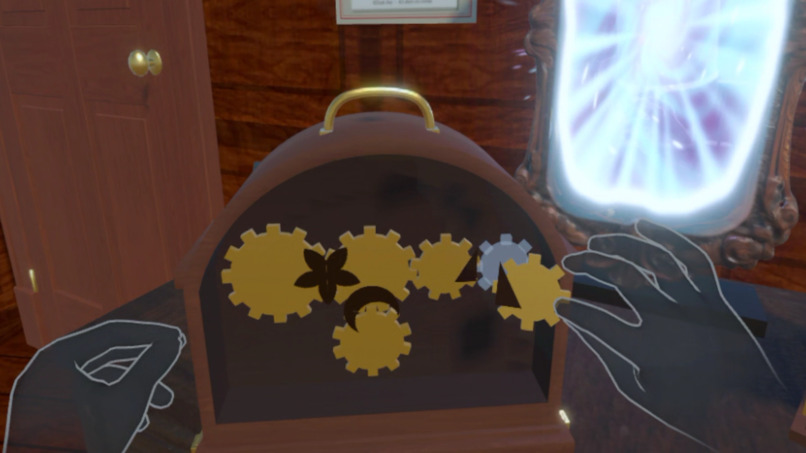
Repair the past with pieces from the future.
-
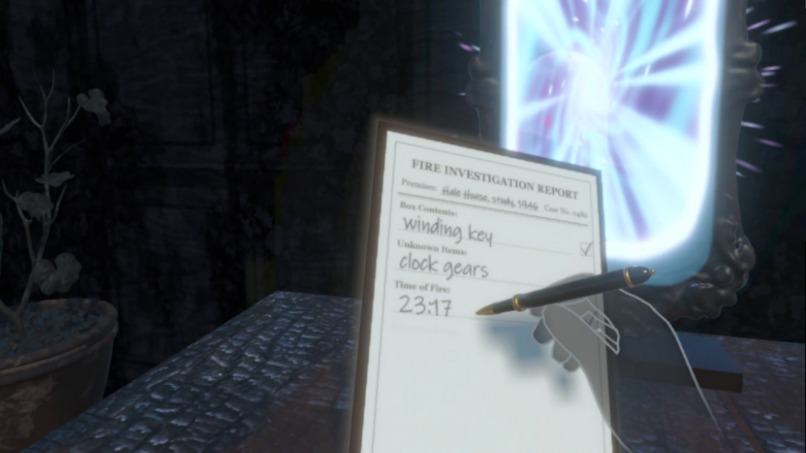
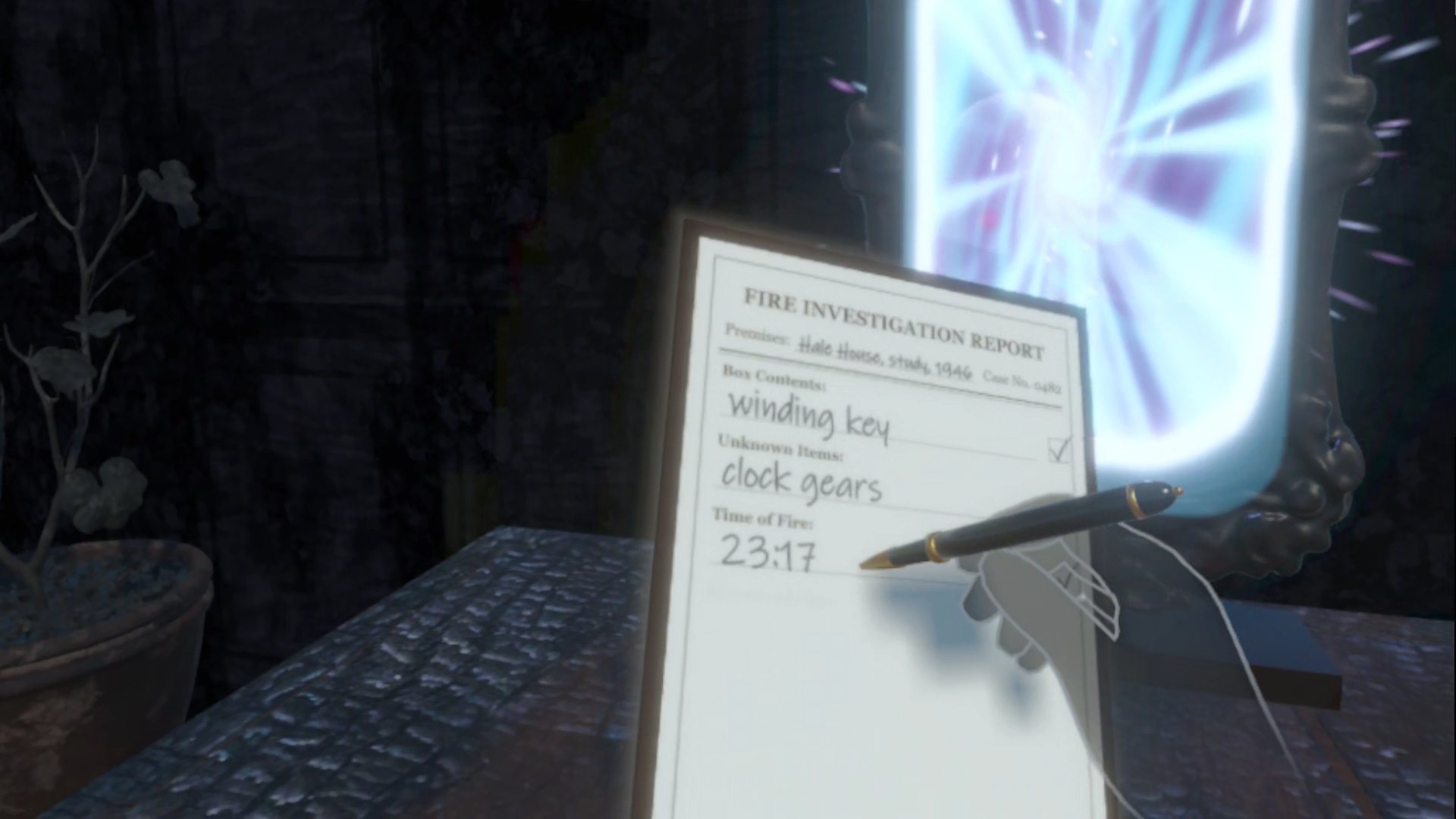
Fill in the report as the case unfolds.
-
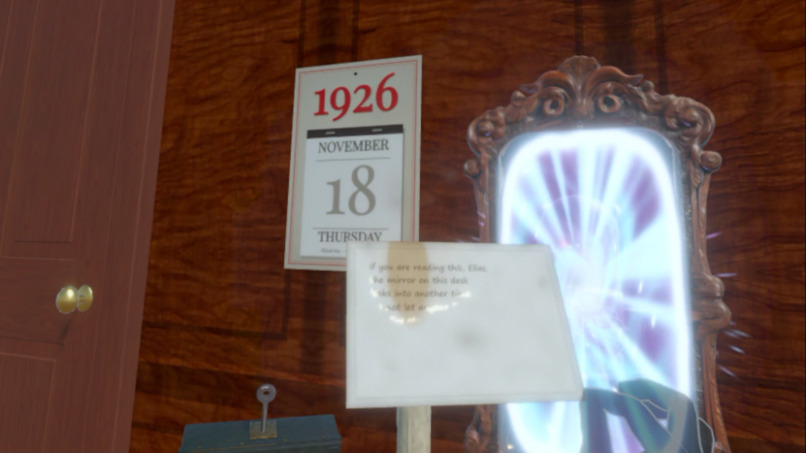
Some notes hide more than they show.
-
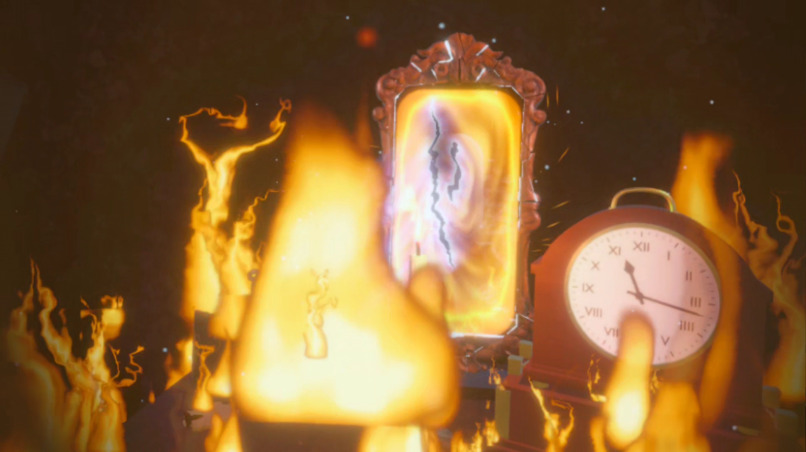
Everything leads to 23:17.
Inspiration
We started by brainstorming across genres, from casual games to action games. We weighed what a competition entry needs, what we had learned from shipping games before, and the games we love, then narrowed it down. One idea stuck with both of us: Portal. We were also inspired by VR games like A Fisherman's Tale, which turn space and scale into puzzles. That led us to a question: what if a portal crossed not only space, but time?
What it does
23:17 is a remote two-player co-op puzzle game. Each player sits at their own real table, which becomes the same study desk in a different era: a guest arriving shortly before a fire, and an investigator searching the ruins decades later. A clock on the guest's desk counts down to the moment it all burns.
Objects change as they cross time. A rusted box sent to the past arrives clean and can be opened. And what the guest does in the past changes what the investigator finds in the future. Every puzzle is built on these rules.
Each player holds half of every answer. The guest has intact objects but no context. The investigator has context but only damaged evidence. They cannot see each other's desk and can only talk by voice, so every puzzle is solved by describing, comparing, and passing things back and forth.
Hands only. Players rub mud off gears to reveal their markings, wind a clock, strike a match, hold paper to a candle, and piece together burnt fragments.
How we built it
We are a team of two developers. We started with a single prototype: a key passed through a portal that arrives rusted on the other side. Once that moment worked, we built every puzzle on top of it, then ran four playtests with pairs of players and reworked the flow after each one.
- Unity and the Meta XR SDK for hand tracking
- MRUK to place the virtual desk on each player's real table
- Photon Fusion to keep both desks and every object in sync across two headsets
- Photon Voice for the conversation between players
- A two-state object system: every object has a past and a future version, and swaps between them as it crosses the portal
- Google AI Studio to generate the colleague's radio lines
Challenges we ran into
- Designing for asymmetry. Each player sees a different desk and holds different information, so each needs their own way in. In early playtests, the investigator had a colleague and a report to follow while the guest had only a letter and felt lost, so we gave each side its own goal and guide from the first minute.
- Balancing challenge and guidance. We wanted players to work things out on their own, but some pairs stalled at one step for minutes. We added hints that only play after a pair has been stuck for a while, so the game stays challenging for players who are making progress.
- Rules that read as bugs. Some restrictions were intentional, like objects locked until a puzzle is solved or items that cannot cross yet, but players read them as bugs. We reworked how each one shows itself, and made props clearer so they look like what they are.
- Playtesting a two-player game. Every session needs two people, two headsets, and space for both, so outside playtests were hard to schedule and each one had to count.
Accomplishments that we're proud of
A complete story, start to finish. Built in our spare time outside work, 23:17 runs from the opening to a full ending, and playtesters have played it all the way through.
What we learned
- A player's role comes first. Who players are and what they want shapes how they read every clue, so it can't be added at the end. It was worth pausing development to ask what each player's goal is and why they keep going.
- If players can't tell a rule from a bug, they assume it's a bug. Every restriction needs a reason players can see.
- Playtest early and often. Each session changed more of our design than weeks of discussion.
What's next for 23:17
- A stronger opening. Refine and test the first minutes so each player knows who they are and what they need to do before the first puzzle begins.
- A smoother path through the mystery. Refine the puzzle sequence and the hints, based on what we saw in playtests.
- A release on the Meta Horizon Store, once the experience is polished.
Instructions for play
What you need
- Two Meta Quest headsets, one per player
- Two players in separate rooms, each seated at a table
- Hand tracking turned on. No controllers needed.
- An internet connection on both headsets
How to start
- Install 23:17 from the release channel invite on both headsets.
- When asked, run Space Setup and mark the table you will sit at. Make sure it is the only table in your Space Setup, so the game places the desk in the right spot.
- Both players launch 23:17. The first player to join plays the investigator, and the second plays the guest.
- You will not hear each other at first. Voice chat opens as part of the story, within the first few minutes.
- Talk to each other constantly. Neither of you can see the other's desk.
Play time is about 10 to 20 minutes.
No partner? We are happy to join as your second player. Email us at [email protected] or [email protected] and we will set up a session.
