Inspiration
"2049: Beyond the Grid" draws inspiration from the highly popular game 2048, which took the world by storm with its simple yet challenging tile-merging mechanics. We wanted to take this concept to the next level by adding more dynamic gameplay elements, such as power-ups, obstacles, and evolving grids. Our goal was to create a game that combines the satisfying strategy of 2048 with new, exciting twists to keep players engaged and coming back for more.
What it does
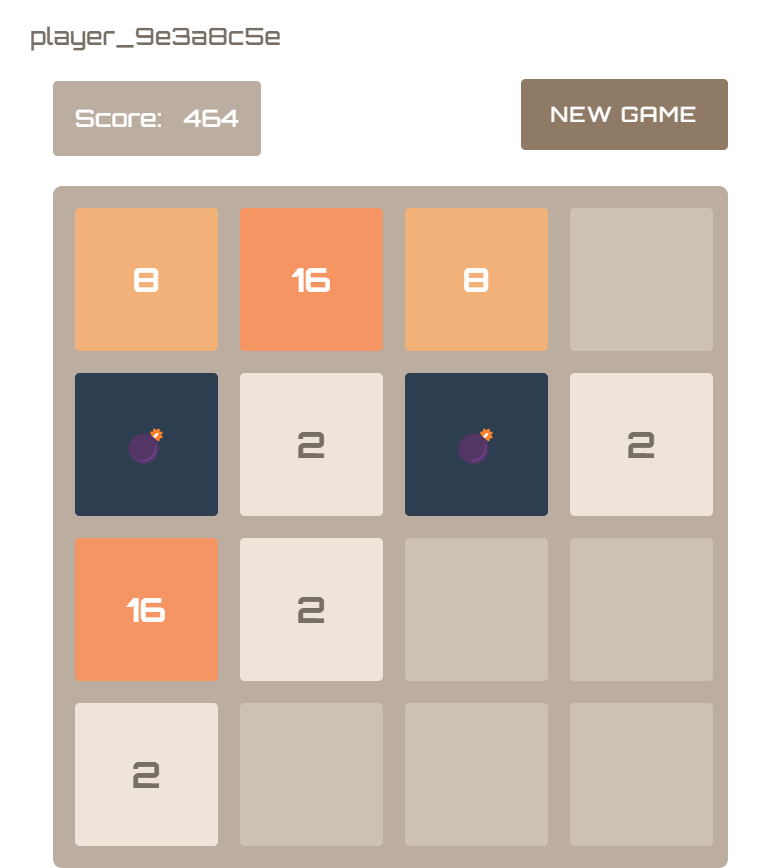
"2049: Beyond the Grid" is a puzzle game where players merge tiles with the same number to create higher values. However, it introduces new mechanics that make the experience unique:
- Dynamic Grid: The grid expands and changes over time, increasing the challenge as players progress.
- Power-Up Tiles: Special tiles like Bombs and Multipliers add new strategic layers.
- Obstacle Tiles: Random "blocker" tiles appear, forcing players to think ahead and plan their moves.
- Randomized Effects: New tiles randomly appear with different effects that can help or hinder the player’s progress.
How we built it
We built the game using HTML, CSS, and JavaScript (with a sprinkle of TypeScript). The game logic was written entirely in JavaScript, with special attention given to creating a seamless user experience and dynamic tile mechanics:
- The grid system is implemented using a flexible layout structure, allowing for easy expansion and manipulation of the grid.
- The tile merging mechanics were enhanced to include new power-ups and random obstacles that evolve as the player progresses.
- We used JavaScript event listeners to handle player input (keyboard arrows) and update the grid state in real-time.
- A random tile generator was implemented to add unpredictable elements like bombs, multipliers, and blockers.
Challenges we ran into
- Balancing the difficulty: Adding new power-ups and obstacles while ensuring the game remains fun and fair was a challenge. We needed to fine-tune how frequently special tiles and blockers appeared to maintain a good level of challenge without overwhelming the player.
- Handling grid expansion: Dynamically resizing the grid while maintaining smooth gameplay and visual clarity required some complex logic to handle tile merging and repositioning without breaking the user experience.
- Optimizing performance: As we introduced more complex features (e.g., power-ups and blockers), we had to ensure the game still ran smoothly on all devices, particularly lower-powered devices.
- Designing a cohesive visual theme: Finding the right style that matched the futuristic theme of "2049" while also ensuring that all the new tiles and features were easily recognizable was another challenge. We experimented with different color schemes and layouts to achieve a balance of style and clarity.
Accomplishments that we're proud of
- Innovative Power-Ups: The integration of unique power-ups like Bombs and Multipliers really enhanced the core 2048 mechanics and created new ways for players to strategize.
- Dynamic Grid Evolution: We are proud of how the grid expands and introduces new obstacles and challenges as players progress. This keeps the gameplay fresh and exciting, encouraging players to adapt their strategy.
- Smooth Gameplay and UI: Despite the added complexity, the game runs smoothly across different devices, with a visually clean and easy-to-understand UI. We ensured that the gameplay and interactions feel fluid and intuitive.
- Creative Theme: The futuristic, dynamic style sets the game apart from the original 2048, and the design elements fit well with the unique mechanics we've added.
What we learned
- Importance of Balancing Complexity: Adding new features can quickly complicate the game. We learned that finding the right balance between new mechanics and maintaining simplicity is key to keeping the game fun and engaging.
- User Feedback: We realized that players appreciate challenge, but too many new elements can cause frustration. Playtesting and adjusting the appearance and functionality of new power-ups and obstacles were vital.
- Optimizing Code: We learned the importance of efficient code, especially when dynamically manipulating the grid. Ensuring smooth interactions between the grid and the added elements made a big difference in the user experience.
What's next for 2049: Beyond the Grid
- Mobile Optimization: We’re planning to adapt the game for mobile devices, ensuring a touch-friendly experience while maintaining the same level of interactivity and responsiveness.
- New Game Modes: We hope to introduce new game modes, like a time-limited challenge mode or a multiplayer version, where players can compete against each other in real-time.
- Advanced AI Opponent: We would like to add an AI opponent with its own set of power-ups, introducing a competitive edge to the gameplay.
- Visual & Audio Enhancements: We plan to improve the visual design further with more animations and sound effects, enhancing the overall experience.
- Leaderboards and Achievements: We want to add a leaderboard system so players can track their progress and compete for the top score.


Log in or sign up for Devpost to join the conversation.