-

Heatmap
-

-
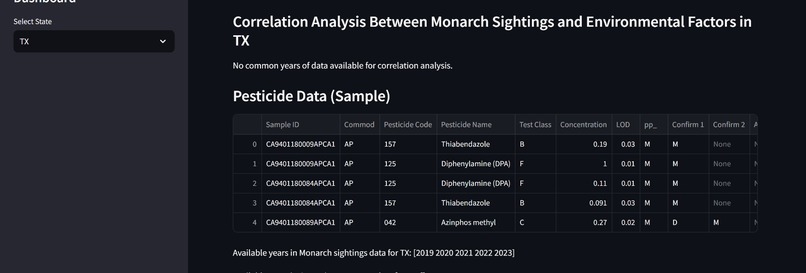


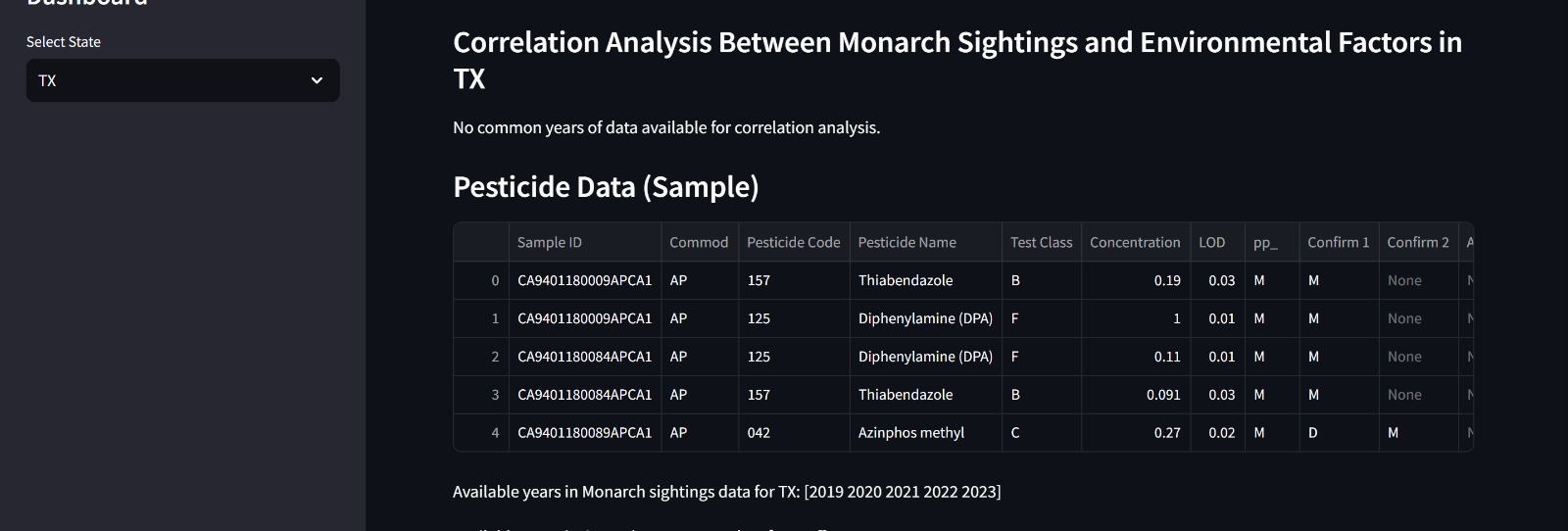
Inspiration The inspiration for this project arose from the alarming decline in monarch butterfly populations, which have dropped significantly over recent decades. The desire to understand the environmental factors influencing these changes, particularly in the context of air quality, temperature, and pesticide use, motivated the analysis. Additionally, the cultural and ecological significance of monarch butterflies as vital pollinators and indicators of ecosystem health fueled the commitment to explore their conservation.
What It Does This project analyzes historical data on monarch butterfly populations from 2019 to 2024, focusing on fluctuations influenced by environmental factors such as air quality (AQI), temperature variations, and pesticide concentrations. The analysis aims to identify key drivers behind population changes and assess their implications for broader ecological systems and human well-being.
How We Built It The project was constructed through a systematic approach: Data Collection: Relevant datasets were gathered from various sources, including the EPA AQS API for air quality data, USDA Pesticide Data Program for pesticide concentrations, and citizen science platforms like Journey North for migration patterns. Data Preprocessing: The collected data was cleaned and organized to ensure consistency and reliability for analysis. Statistical Analysis: Various statistical tests were conducted, including ANOVA to assess differences across categories and Granger causality tests to explore predictive relationships between environmental factors and butterfly populations. Visualization: Data visualizations were created to illustrate trends and relationships clearly, aiding in the interpretation of results. Reporting: Findings were compiled into a comprehensive report outlining key insights, implications for conservation strategies, and recommendations for resource allocation.
Challenges We Ran Into Several challenges were encountered during the project: Data Accessibility: Accessing comprehensive datasets posed difficulties due to API limitations and incomplete records. Statistical Complexity: Understanding and correctly applying statistical methods required significant learning and careful interpretation of results. Data Integration: Combining datasets from different sources with varying formats necessitated meticulous preprocessing. Time Constraints: Balancing thorough analysis with time limitations made it challenging to address all aspects comprehensively.


Log in or sign up for Devpost to join the conversation.