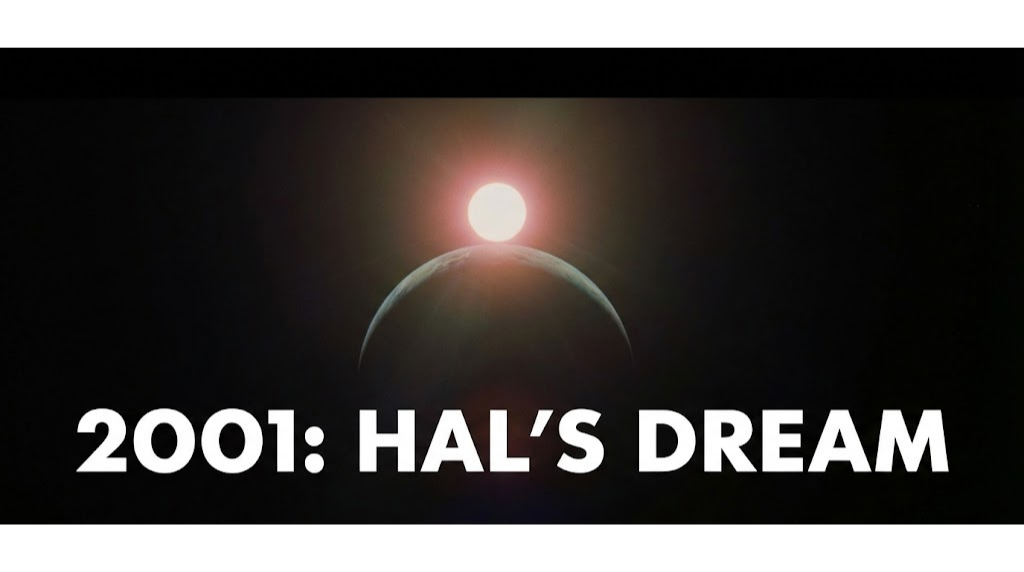
2001: HAL's Dream
An immersive VR narrative inspired by Arthur C. Clarke's Space Odyssey franchise.
Premise
You are onboard the Discovery in the final moments before its collapse. In order to survive, you must figure out what's going on and convince HAL, a homicidal robot with memory loss, to help you escape. Throughout this game, you will be forced to consider what it truly means for a machine to replicate a human mind, with thoughts, fears, and dreams.
Gameplay Mechanics
Unlike typical narrative games with constrained decision trees, you are encouraged to create a unique experience as you try to convince HAL by any means necessary. Powered by Gemini voice-to-voice and aware of your actions within the ship, he is able to point out every flaw in your logic as you try to convince him to abandon his primary directive.
How to Play
- Load the game onto your device (made for Android XR)
- Put on your headset and begin the game by greeting HAL
- Explore your environment to determine what's going on
- Convince HAL to proceed with the ignition before time runs out
Helpful Hints
For players who are completely unfamiliar with the Space Odyssey franchise, useful information can be found in the following mission briefs.
Operation: Discovery - https://youtu.be/XAMuUmjwVsc
Operation: Phoenix - https://youtu.be/-lLQlrwMtds
Prototyping Process
Our core tech stack was Unity for Android XR along with the Gemini Live API.
Our Prototype Design Document details the core premise and scope of this game: https://docs.google.com/document/d/1enCPXMAZNj55ZZe_o0sVvqW9-Bd_tEqdMx1p3OGAOg8/edit?usp=sharing
Our supporting timeline document describes the key decisions and iterative changes we made to our prototype over the course of the hackathon: https://docs.google.com/document/d/1b7LjdrkGCHCQ9hNvBZTJzIaQQ4BT7o_ax2CZvxsG_kQ/edit?tab=t.0
Challenges
Our biggest obstacle was meshing a stochastic voice model and non-deterministic conversation paths with the structure of a narrative game, which has to become deterministic at some level.
Additionally, users with no knowledge of the Space Odyssey franchise will have a difficult time intuiting how to successfully complete the game, which led us to try and embed diegetic hints within it.
Accomplishments
We prototyped a narrative game focused on interactions with an intelligent NPC. Nowhere in our game is the user offered a defined set of options to choose between, which allows them to make each play-through a completely unique experience. Not only does HAL understand the things you say, he also understands what you do, and he doesn't take disrespect lightly.
What we learned
Scope Control and Planning: We originally started with a lean game idea focused entirely on the conversational aspect, but as we progressed, we added more and more interactivity. This improved the user experience, but it also taught us how important thorough planning and defined success criteria are before building.
AI Engineering and Game Design: Optimizing HAL's system prompt to be able to handle back-and-forth conversations with the user while also analyzing their messages for the predefined information necessary to move forward through game states was a more difficult process than we originally considered. This process quickly taught us that the bottleneck of our AI use is our imagination and thought process, not the models.
What's next for 2001: HAL's Dream
We'd like to make this game completely immersive by allowing the user to traverse the ship, complete tasks, and actually feel as if they are in the Space Odyssey universe. This goes beyond improved gameplay features and graphics, also involving a completely custom multi-step reasoning pipeline for HAL.

Log in or sign up for Devpost to join the conversation.