-
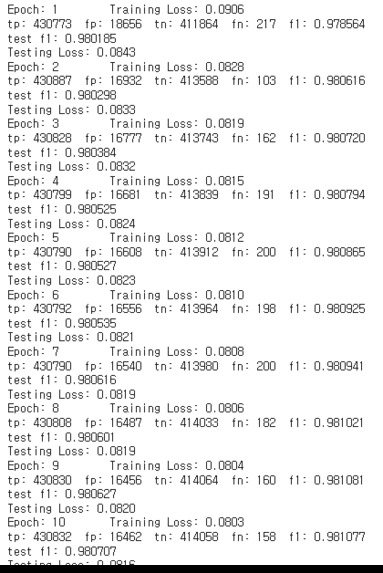
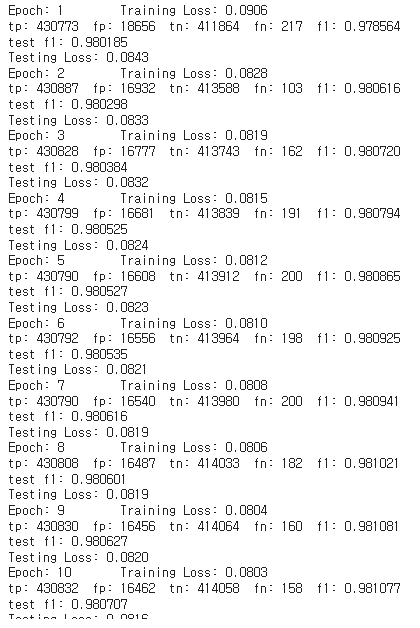
Neural Network Data over 10 Epochs
-
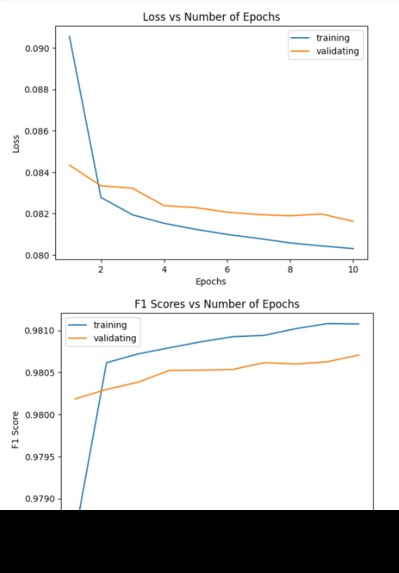
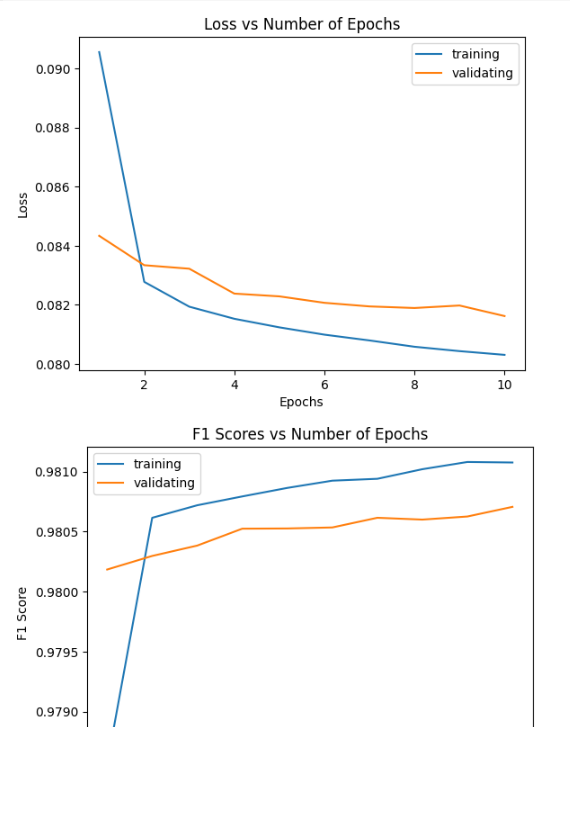
Loss vs # Epochs and F1 Score vs #Epochs
-

3Y1B Logo

Inspiration
We were inspired by Amazon and their ability to retain customers. Amazon has amazing customer service and they often communicate with their customers in the form of recurrent advertisements online and through email. They also have a membership program with many perks like insanely fast shipping.
What it does
We preprocessed the dataset and ran many ML models including Logistic Regression, KNNs, Adaboost, Gradient Boosting, XGBoost, Decision Trees, Random Forest, and most notably, a Neural Network. These models would predict whether the customer datapoint will churn or not churn depending on the data features.
How we built it
We used pandas and numpy to preprocess the data. We used one-hot encoding to turn the categorical data into numerical data, and we also oversampled the minority class and filled in missing data. Then, we used sklearn to run the classical ML models and PyTorch to implement a Neural Network.
Challenges we ran into
We faced some challenges collaborating. When we used the same Google Colab Notebook, sometimes things would not be synced, or we would have permission issues. In terms of coding, we all had our minor issues with implementation, but we were able to overcome these issues through debugging.
Accomplishments that we're proud of
We are proud of achieving a F1 score of around 98% using the Neural Network on the testing dataset.
What we learned
We learned how to go through the whole process of analyzing a dataset, going from initial exploration to preprocessing to model implementation and final analysis. For example, we learned about numerous pre-processing techniques to turn categorical data into numerical data and the different code a Neural Network.
What's next for 3Y1B
Perhaps improving performance metrics even further or incorporating our ML model in a full-stack app.

Log in or sign up for Devpost to join the conversation.