-
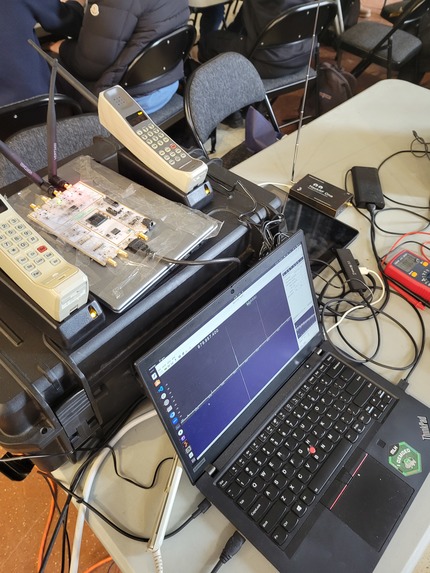
POV of a hacker about to escape the matrix
-
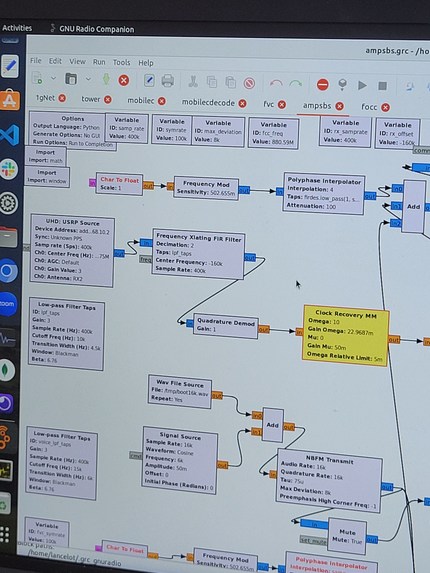
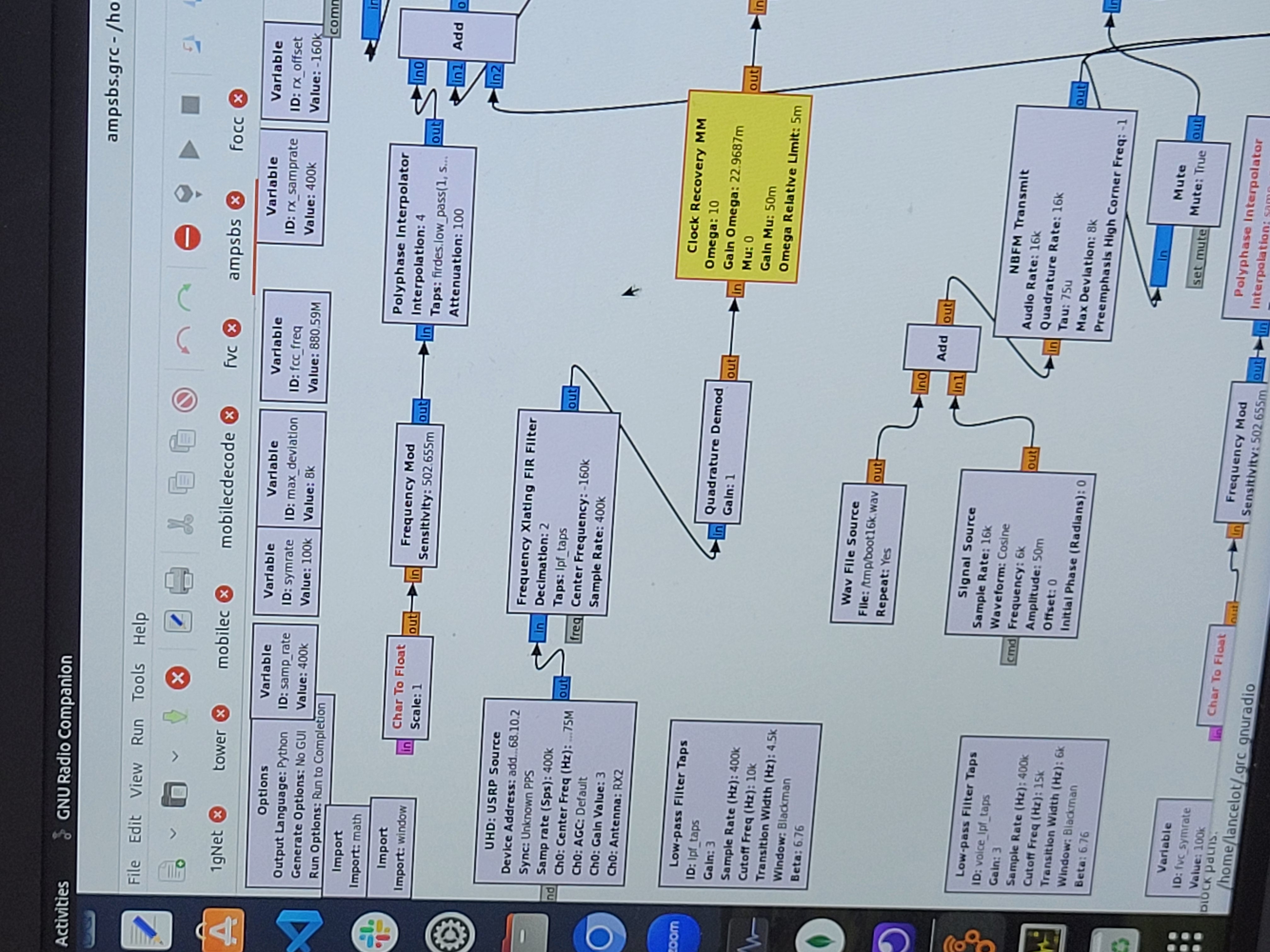
gnuradio at its best
Inspiration
Phones are ubiquitous today, yet very few of us understand the intricacies of the underlying network. In this hackathon we aimed to demystify this by taking the oldest possible brick phone and putting it back on our very own 1G network.
What it does
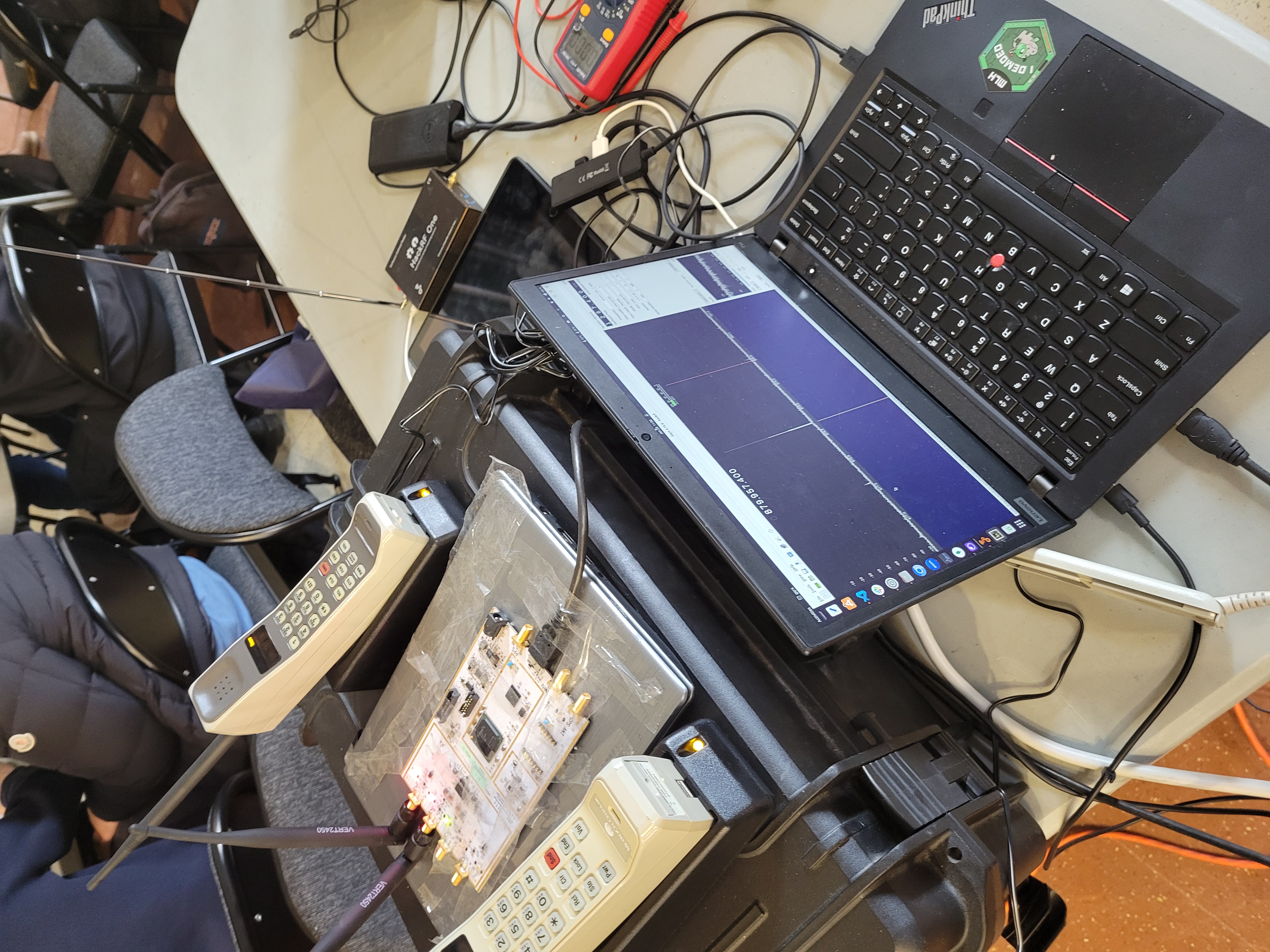
The goal of this project was to recreate the AMPS network (sometimes referred to as the 1G network) which was completely shut down in 2008. The idea was to make our own small-scale AMPS network with a receiver and a transmitter, which would then allow us to make phone calls with 2 DynaTAC 8000X brick phones we had acquired. These brick phones are the very first brick phones that were invented (back in 1983), so bringing them back to life seemed like an awesome project.
How we built it
The first step was to gather the hardware in preparation for the McHack. We searched the internet far and wide for similar projects, and while a few fellow hackers made their own attempt at recreating the AMPS network, none of them did so with a DynaTAC 8000x brick phone. The feasibility of the project was far from assured. To build the base station (cell tower), we used a combination of a USRP B210 (Universal Software Radio), a Hack RF, and an RTL-SDR. Each of these components functions as antennas, enabling us to capture and emit radio waves. For the software (the core part of that Network), we utilized gnuradio, a versatile platform that allowed us to develop our network infrastructure using a blend of C++ and Python programming languages.
Accomplishments that we're proud of
The fact that we were able to deploy a phone network in 24 hours and were able to place calls between each other felt amazing.
Challenges we faced
Because the technology is so old, very few resources were available online-- and forget about GPT. But perhaps the most challenging part we faced was working with gnuradio, particularly managing Out Of Tree Modules in C++, which demanded extensive hours of debugging before getting the hang of it.
What's next for 1G
We worked hard to put this thing to life and we want it to be useful in the future. That is why we have chosen to donate parts of our infrastructure to the Connections Museum In Seattle.
Built With
- c++
- gnuradio


Log in or sign up for Devpost to join the conversation.