Inspiration
Every time I started a new application, I found myself rebuilding the same foundation again and again: authentication, authorization, notifications, users, permissions, and system management.
These capabilities are not the core business logic, but almost every application needs them. I searched for existing open-source solutions, but most projects focused on only one layer. Some provided backend frameworks, some provided frontend components, but few offered a complete, extensible application foundation.
I wanted to build a system where the core infrastructure remains stable while new capabilities can grow through an ecosystem of plugins.
This became the foundation of 1flowbase.
What it does
1flowbase is an AI-native application foundation that allows AI agents to understand, extend, and operate software systems.
It combines three layers:
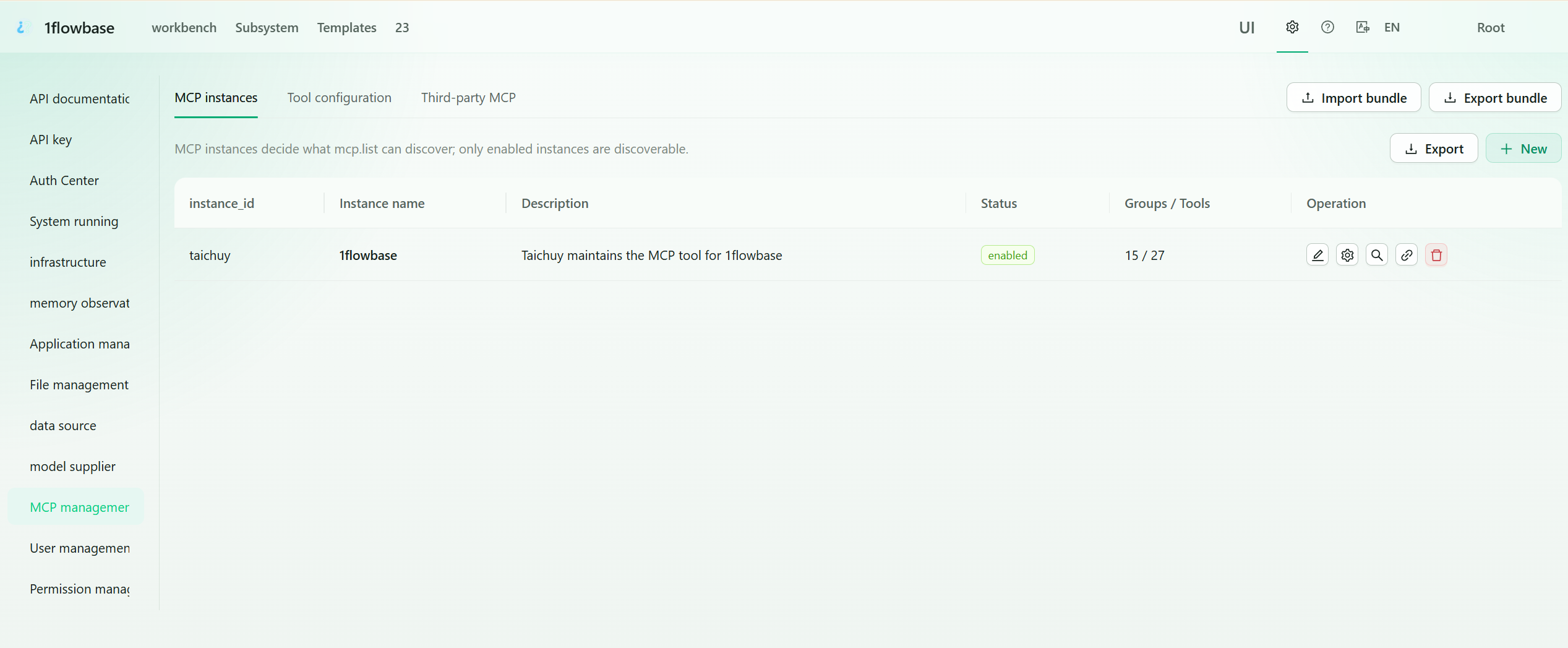
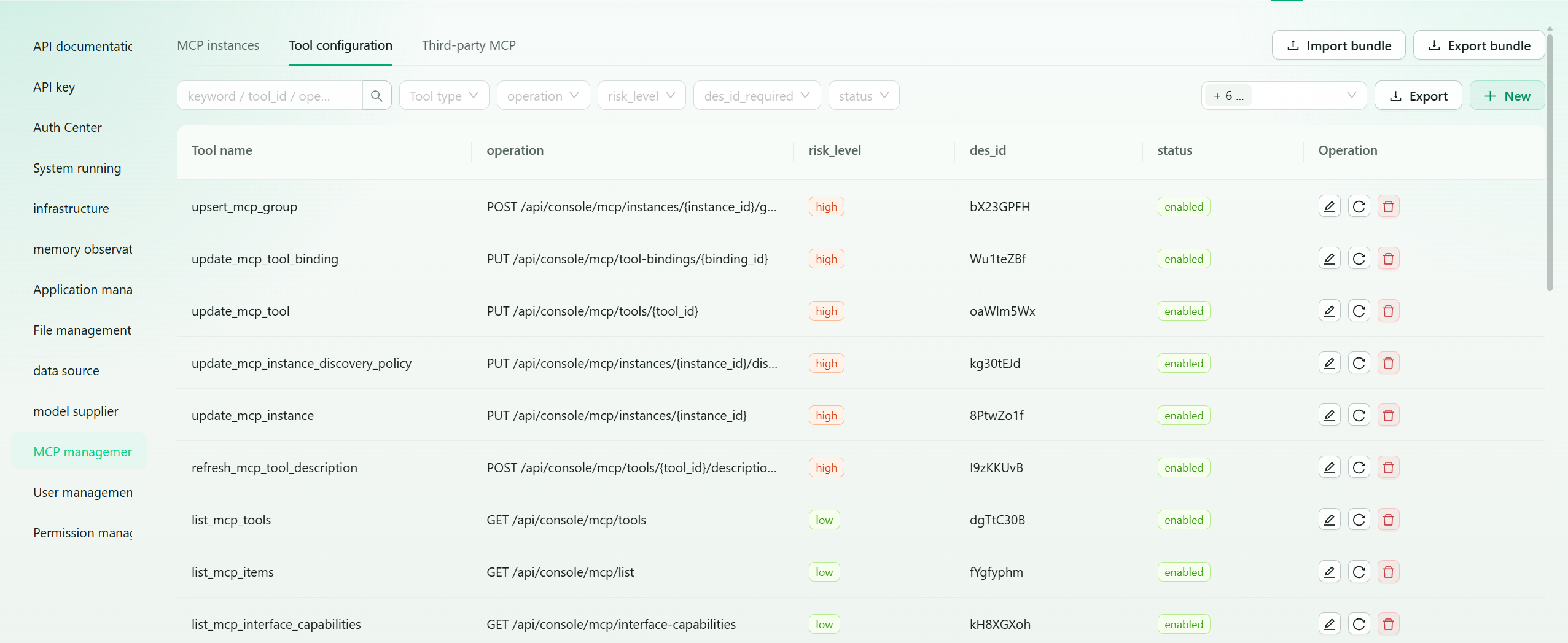
- Progressive MCP
- Instead of exposing hundreds of tools at once, 1flowbase provides a progressive capability discovery system.
Agents can explore available capabilities through three primitives:
- list: discover available capabilities
- get: understand schemas and definitions
- call: execute operations
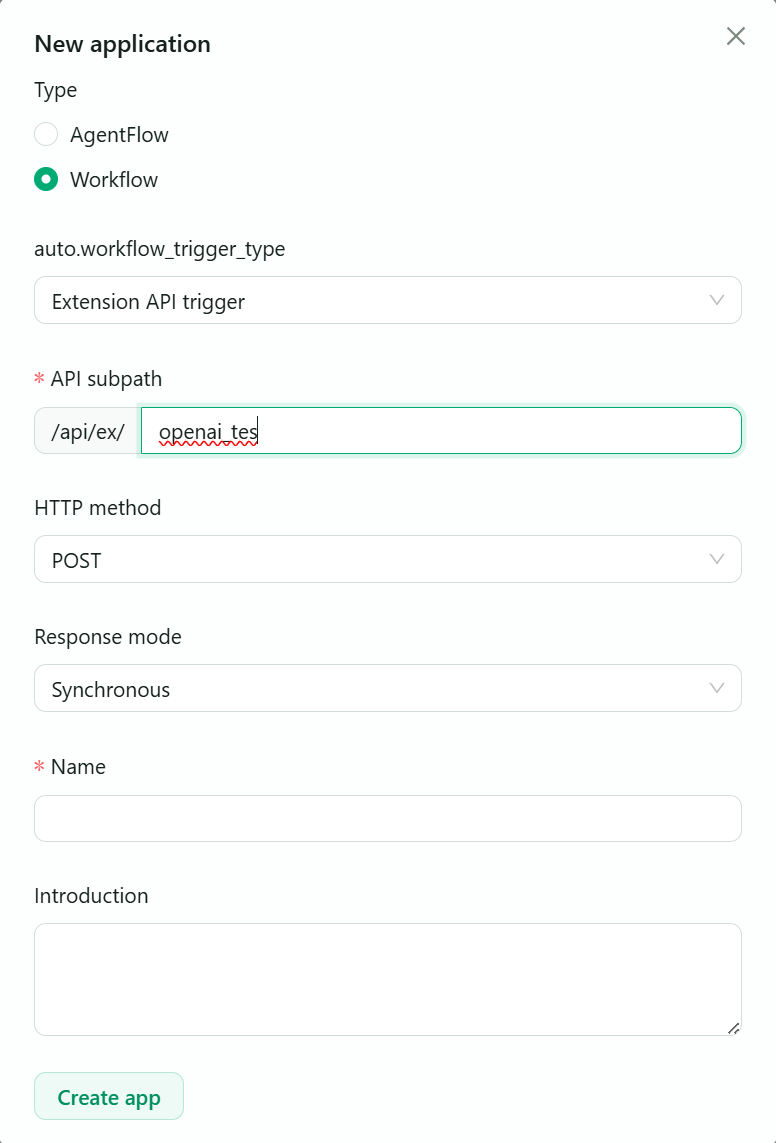
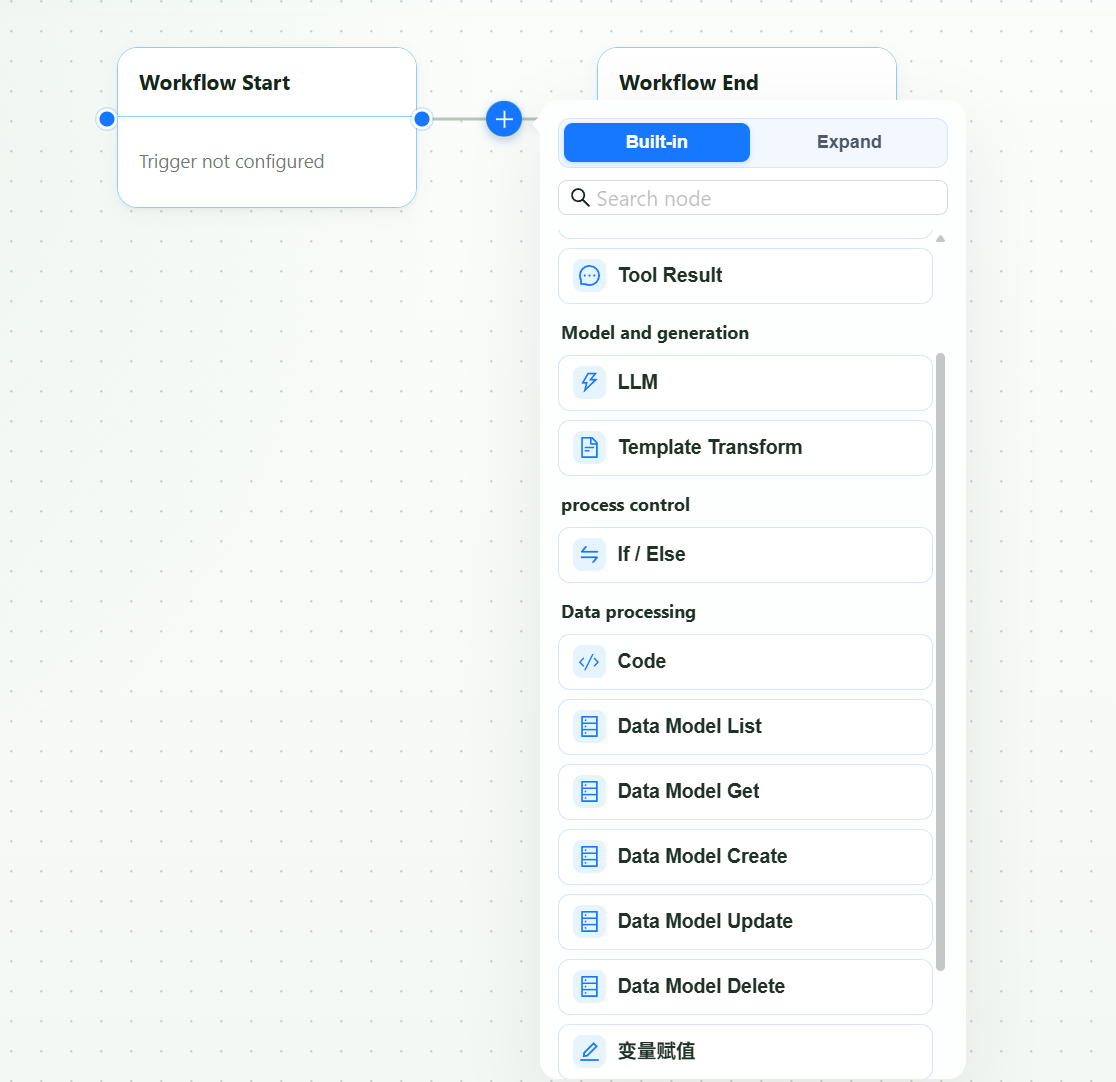
Workflow API
AI agents can compose existing capabilities into reusable workflows.
Workflows can become APIs that can be consumed by applications or other agents.
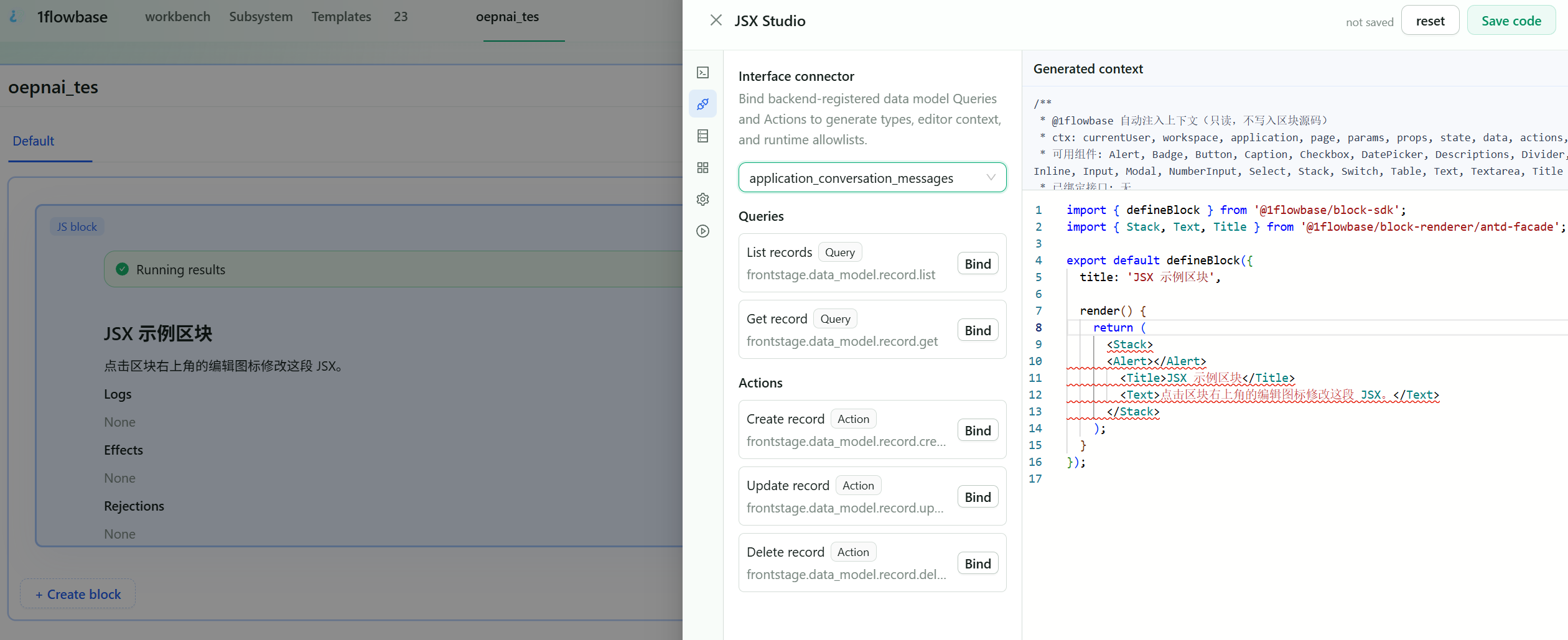
Schema-driven UI
From schemas, AI can generate dynamic user interfaces.
This creates a complete loop from conversation to working application.
Conversation → Capability Discovery → Workflow API → Dynamic UI → Application
How we built it
The backend is built with Rust because reliability, performance, and resource efficiency are important for a long-running application foundation.
The frontend uses React and is distributed as static assets, creating a simple and stable production deployment model.
We designed a plugin architecture where the core repository focuses on infrastructure, while extensions can evolve independently.
The plugin system went through multiple redesigns before reaching the current architecture because supporting frontend and backend extensibility together is much more challenging than traditional backend-only plugins.
For AI integration, we built MCP support first because it provides a standardized way for agents to understand and interact with systems. The same progressive discovery model can later extend to CLI-based automation.
Challenges we ran into
The biggest challenge was designing a system that works for both humans and AI agents.
Traditional software systems are designed for humans:
- developers read documentation
- users click interfaces
- APIs are manually integrated
AI agents need something different:
- discoverable capabilities
- structured schemas
- predictable operations
- composable workflows
Designing MCP around progressive discovery instead of exposing a large collection of tools required many iterations.
Another challenge was creating a plugin architecture across frontend and backend while keeping the core system stable.
Accomplishments that we're proud of
We built a complete AI-ready application foundation instead of only another AI assistant or API wrapper.
Some achievements:
- Designed a progressive MCP architecture for AI system interaction.
- Created a plugin ecosystem model for extensible applications.
- Built workflow APIs that allow AI-generated business logic to become reusable services.
- Enabled schema-driven UI generation.
- Open-sourced 1flowbase and reached 200+ GitHub stars.
Most importantly, we created a foundation where AI agents can move beyond calling tools and start building applications.
What we learned
Building AI-native software requires rethinking traditional application architecture.
A system designed for AI agents cannot only expose APIs. It needs to expose understanding.
The combination of capability discovery, workflows, and schemas creates a bridge between AI reasoning and real software systems.
We learned that the future of applications may not only be humans building software for AI to use, but AI participating in creating and operating software.
What's next for 1flowbase
Our next goal is making self-hosted applications fully agent-ready.
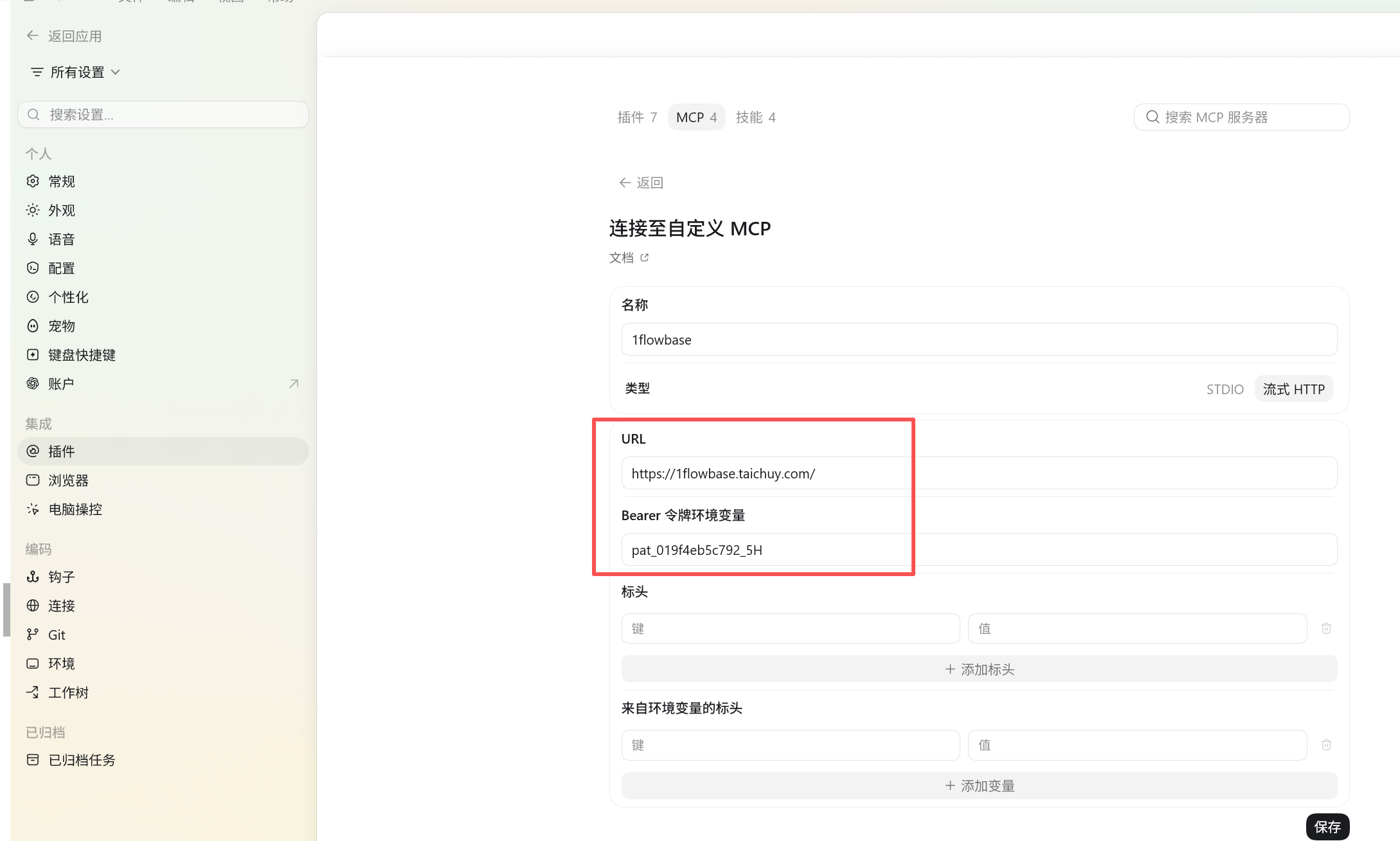
Imagine connecting your own 1flowbase instance to an AI coding agent such as Codex. The agent can understand your system, create workflows, verify changes, manage operations, and automate daily tasks.
The long-term vision of 1flowbase is to become an AI-native operating layer where humans describe goals, and agents help build, operate, and evolve applications.
Built With
- agentic-workflows
- ai-agents
- api-gateway
- gpt-5.6
- json-schema
- low-code-platform
- mcp
- openai-codex
- plugin-system
- react
- rest-api
- rust
- typescript
- workflow-automation


Log in or sign up for Devpost to join the conversation.