-
-
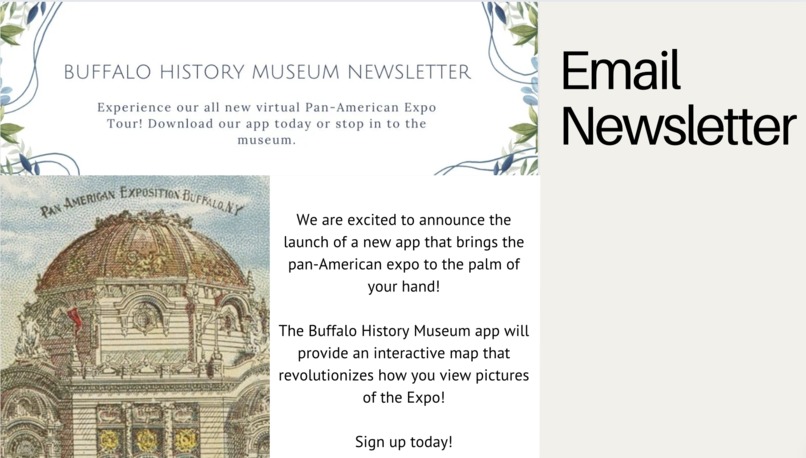
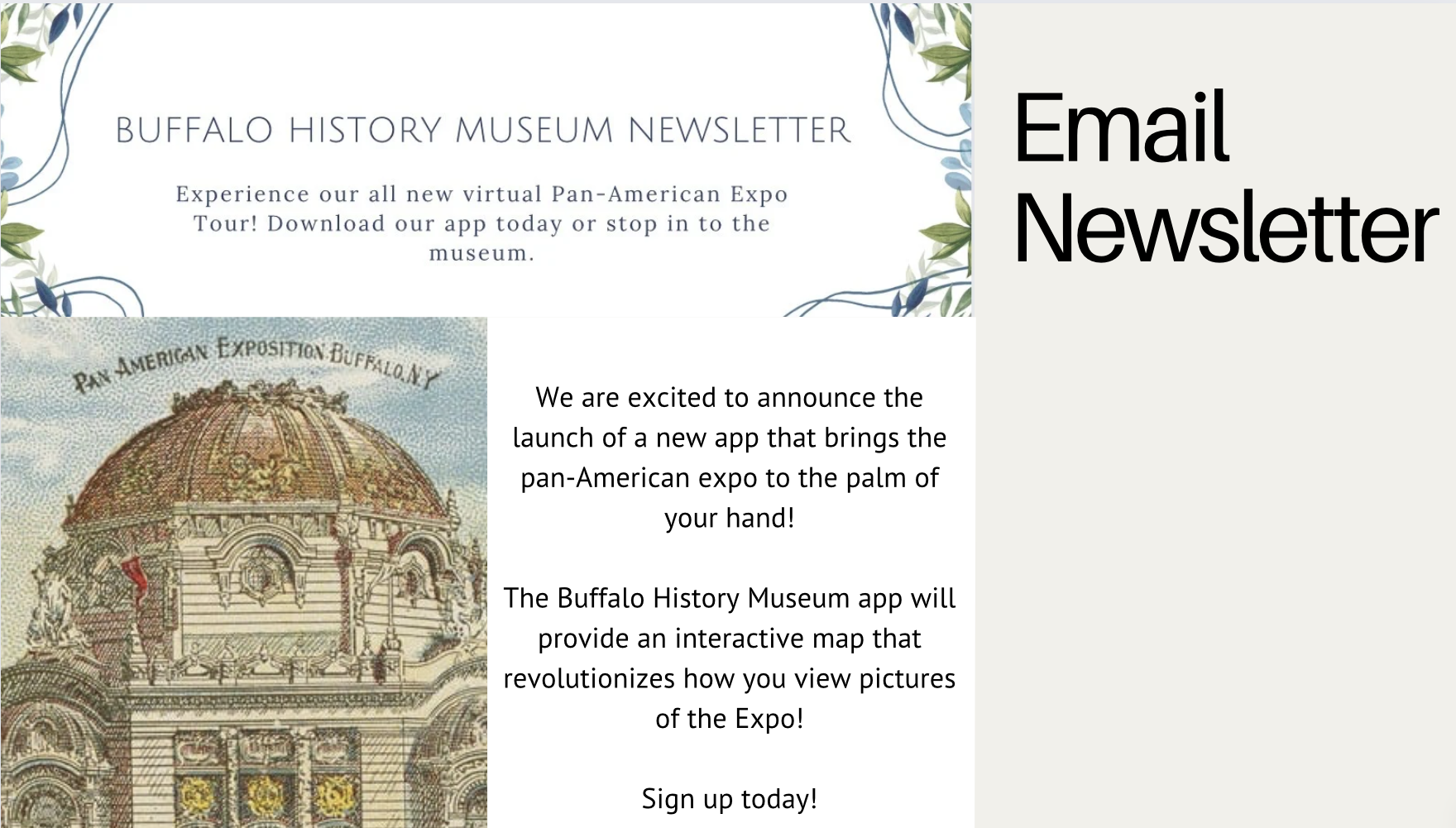
Example of an email newsletter.
-
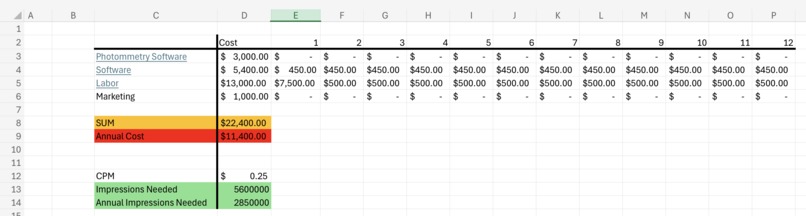
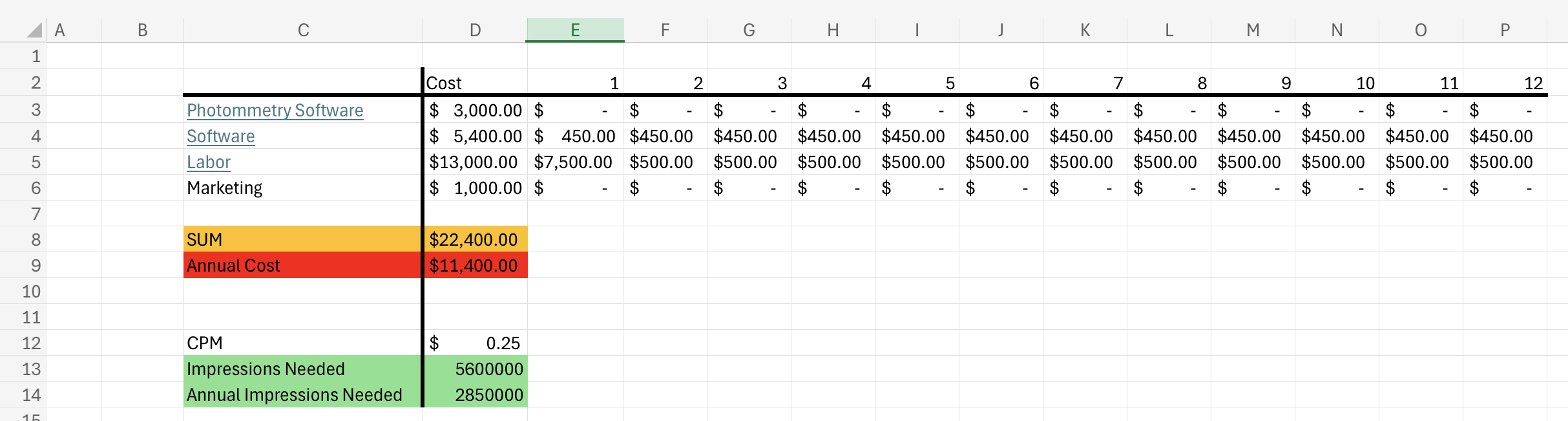
A screenshot of an Excel file detailing the financial aspects of the project.
Functionality
Steps taken by User and App
User gets notification on phone when GPS detects them to be near a former significant sight of the Pan-American expo
User clicks on notification which opens the app
User gets taken to a camera function and takes a picture of the space around them
App detects the exact location and direction the picture was taken and generates an historical image from the location where the image was taken by sorting through a data base
User gets the image on their app and a description of the sight
User earns a token from a token-based system for each significant sight they see
User earns a prize at The Buffalo History Museum when enough tokens are collected
Technical Feasibility
You can use React Native to create a cross platform mobile app and use then use a geolocation library to track where the user is
Image Recognition can be done using a Neural Network or a BoVW model which will be accessible through an API (models will be hosted on the cloud)
Colorization and upscaling can be done beforehand using DeOldify and Stable Diffusion X4
Since there are a limited number of locations, data for these locations can be stored locally
- Creating a 3D model from a 2D image is a particularly challenging task. It is hard to tell whether the quality of the produced model will be satisfactory since many of the photos are complex and of low quality. Very experimental.
Non-technical Feasibility
Mapping coordinates to images must be done manually which can be time intensive
Costs money to develop the app and it is hard to know if the return is worth it
With a CPM of $0.25 which is extremely generous, it is expected that 5.6 million users are needed cover the cost from ad revenue alone
Sponsors may help cover the cost, however, finding a sponsor may be difficult to do
Need to find companies willing to spend money on ad space
Marketing
Create Stories and Reels demonstrating the use of the mobile app to be posted on the Instagram account, along with in-feed posts showing the virtual experience that can be gained through the app.
Use email newsletters to inform current museum members of the new app and explanations of how the app will expand on their experiences with The Buffalo History Museum.
Connect with current partners of the Museum and schools that frequently visit the Museum to allow them the opportunity to pilot the app before launching to the public.
Encourage visitors to expand their experiences at The Buffalo History Museum by posting information within the Museum describing the app, its functions and how to download it.
Giving incentives within the app requires users to visit the Museum to redeem their prizes, bringing their app experiences back to the Museum to continue exploring Buffalo’s history.
Future Development
Time Slider
Slider to switch between different time periods Functionality from 1901 to 2024 Serves as a method of showing the progression of Buffalo over time
Expand Geographic Area
Expand apps functionality outside of former Pan-American Expo location Include sights in downtown and rural communities undersaturated from tourism Serves as a tool for The Buffalo History Museum to expand tourists understanding of Buffalo’s history more holistically Increases accessibility by increasing the number of locations the app can be used
App Tour
Virtual video tour without having users going to the location Expands user base Increases accessibility for people with mobility issues Users outside of the Buffalo area can use the app
Built With
- canva
- figma


Log in or sign up for Devpost to join the conversation.