-
-
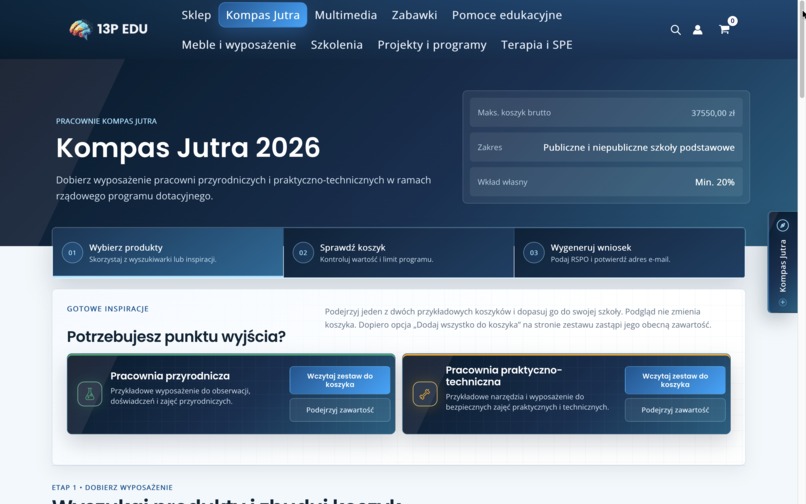
Kompas Jutra 2026: Chance for Polish schools
-
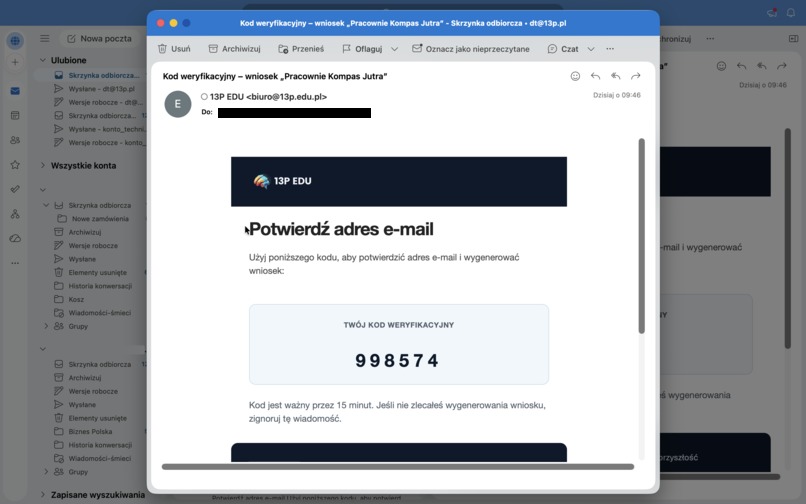
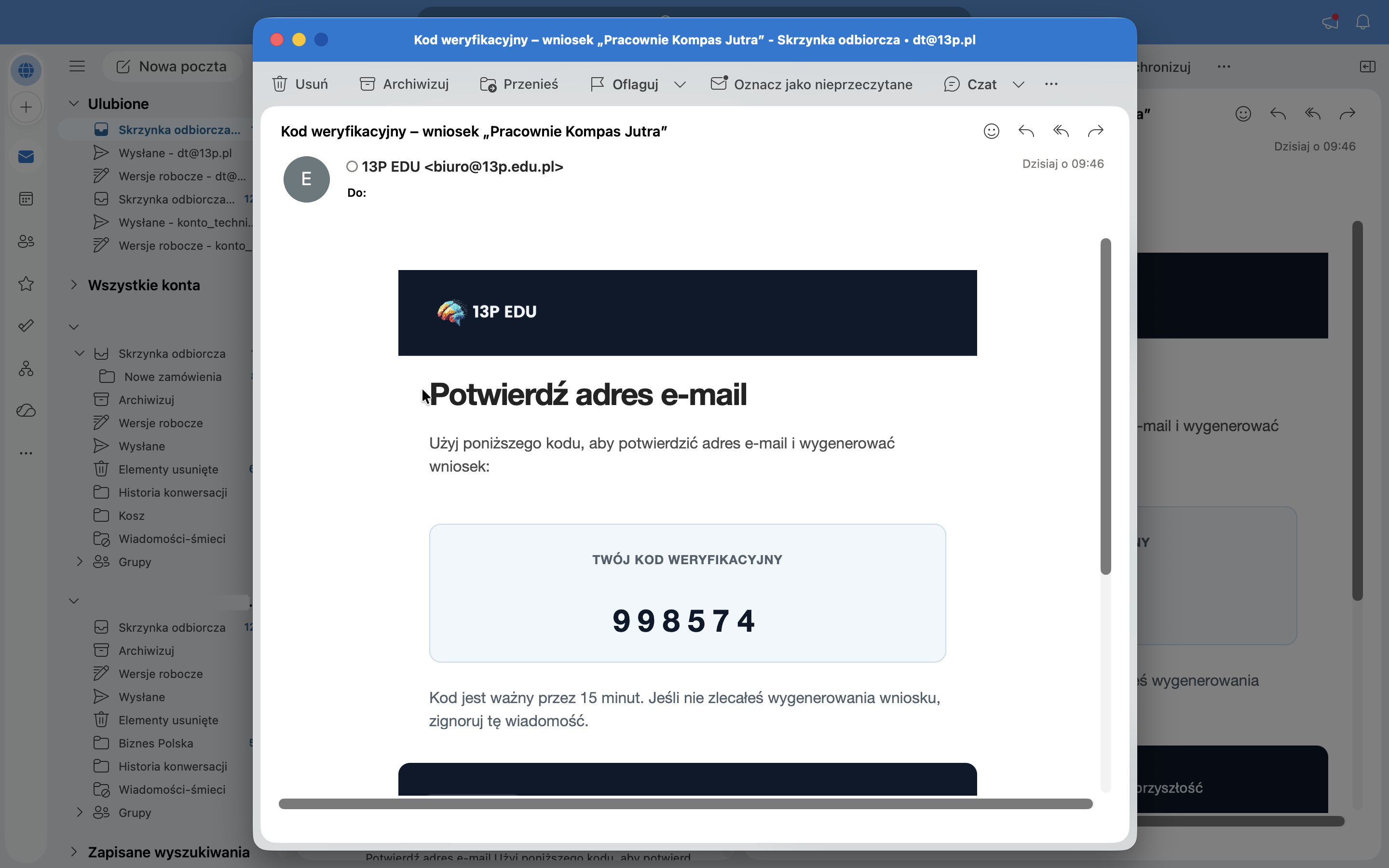
Kompas Jutra 2026: School ID and verification code
-
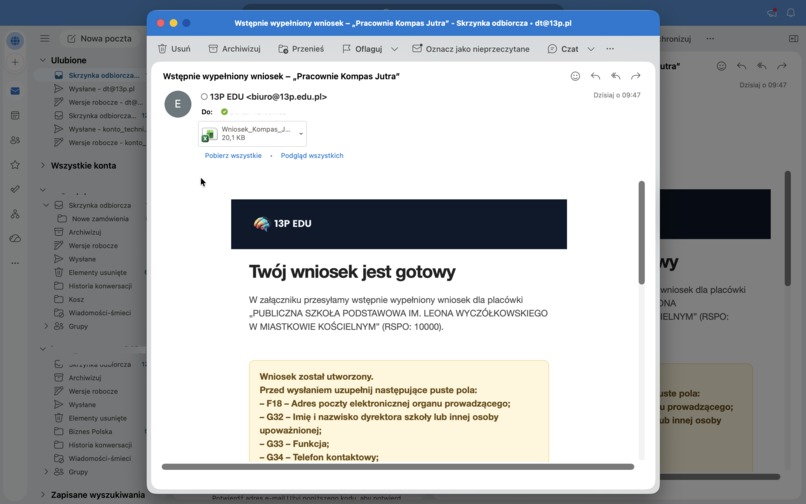
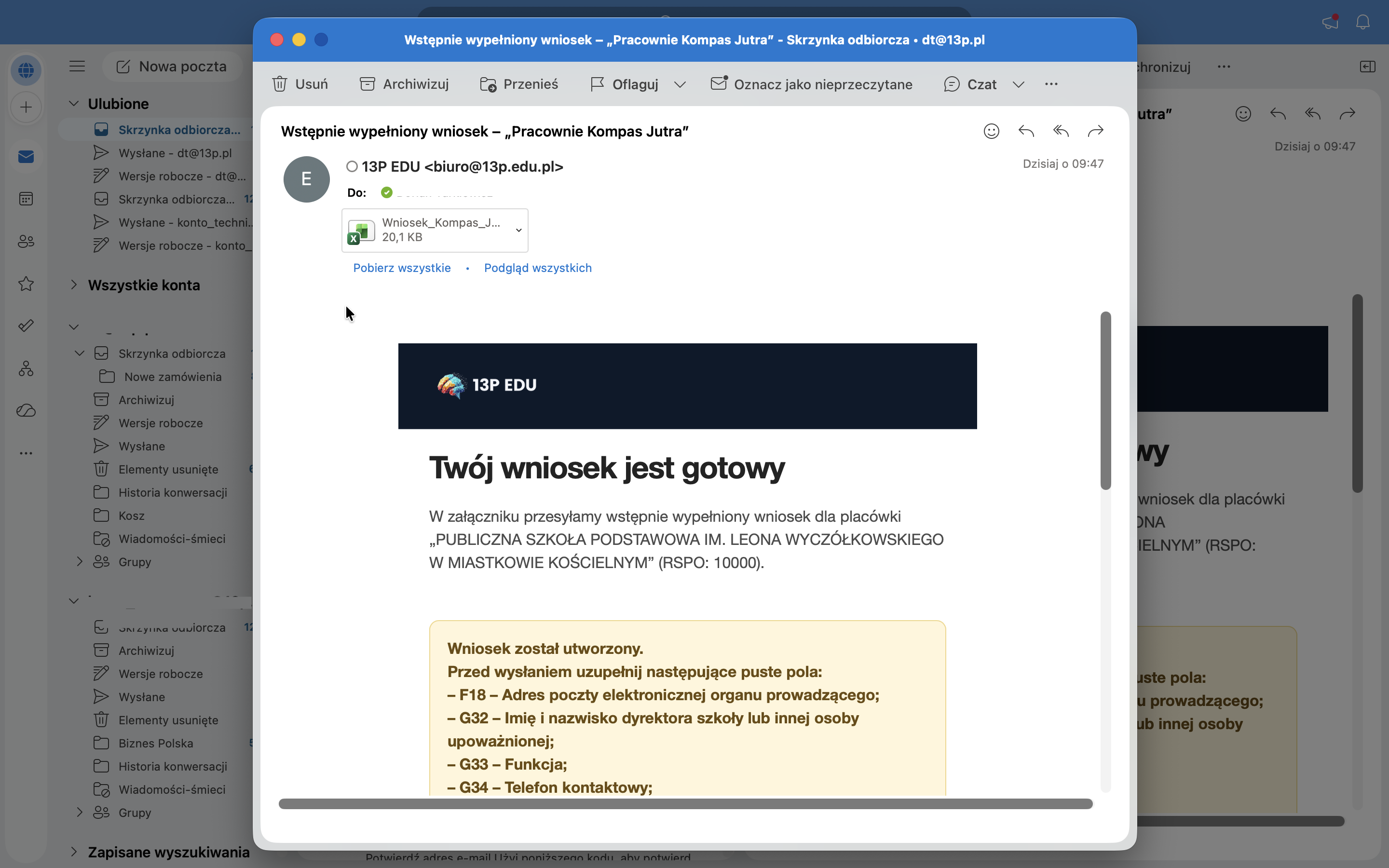
Kompas Jutra 2026: Email with filled application
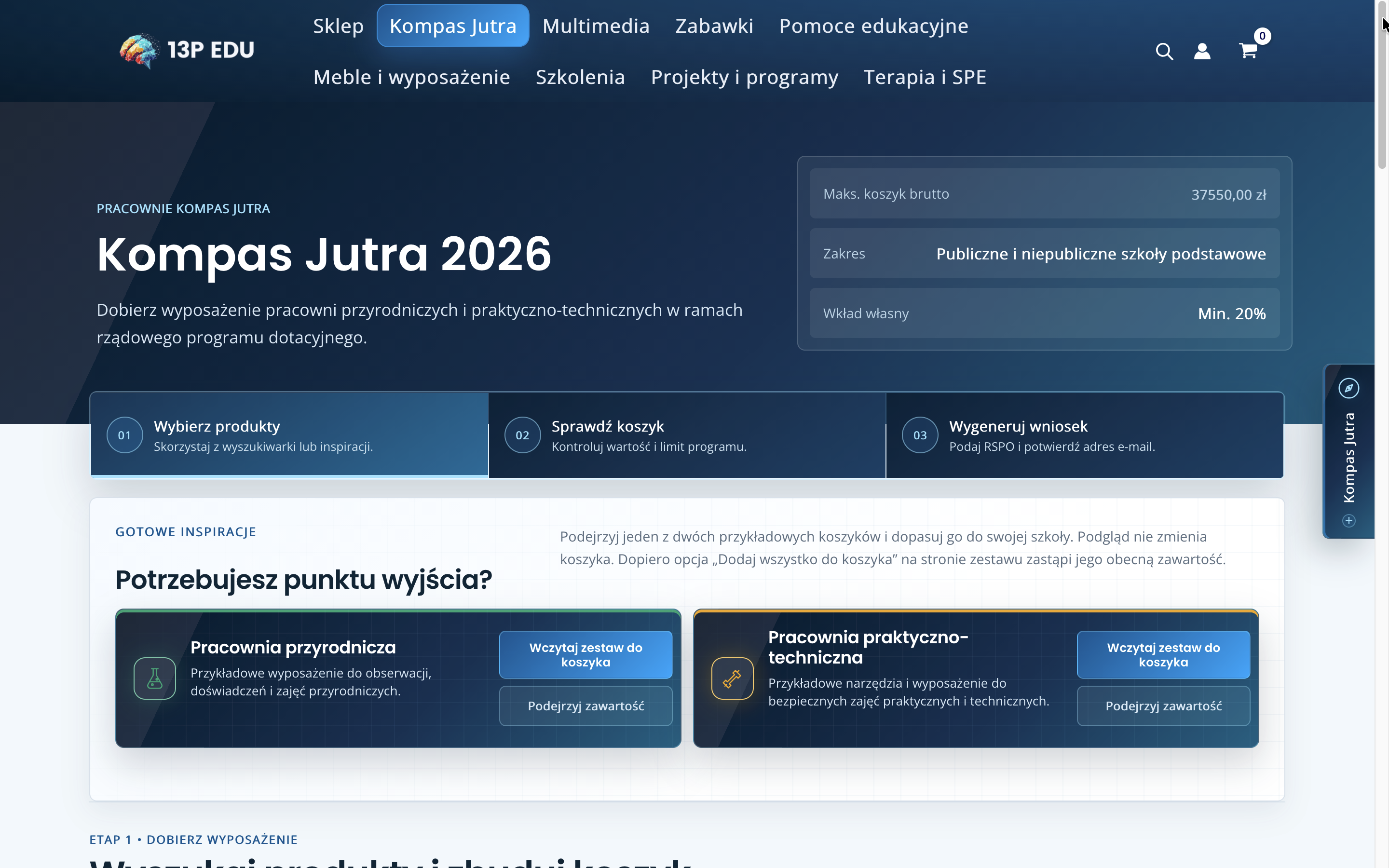
Ten days for schools. Three days to ship. The clock is still running.
Inspiration
Poland’s Ministry of Education launched “Pracownie Kompas Jutra”, a programme designed to help primary schools equip natural science and practical-technical laboratories.
With a total planned value of PLN 249,413,475—nearly PLN 250 million, it represents a major source of funding for modern laboratories in Polish schools.
When the programme was initially announced, the practical application materials were not yet available. The participation workbook that school directors needed became available on July 14, 2026.
For the schools we support, applications are due on July 24, 2026.
That created a preparation window of only ten days.
Within this extremely short period, a school director has to understand the newly published requirements, select eligible equipment, collect data about the school and its governing body, calculate the requested funding and own contribution, prepare an itemised budget, write a curriculum-aligned justification, complete the official XLSX workbook, and follow the required institutional approval path.
For many school leaders, completing all of this correctly before the deadline would be close to impossible. The problem is not a lack of need, commitment, or ideas. It is the combination of fragmented data, formal requirements, a complex spreadsheet, and an exceptionally short deadline.
I decided to turn that fragmented administrative process into one guided workflow.
What the project does
Kompas Jutra: AI School Grant Application Builder helps Polish school leaders prepare applications for the “Pracownie Kompas Jutra” programme.
The process begins with the equipment itself. A user can build a cart for a natural science or practical-technical laboratory, or start from a ready-made example set.
The tool then guides them through the complete application-preparation workflow:
- Validates the equipment cart against the programme’s financial thresholds.
- Calculates the funding structure automatically.
- Retrieves official school data using the school’s RSPO registry number.
- Enriches governing-body information with data from public BIR/GUS and territorial registers.
- Converts commercial product names into short, neutral descriptions aligned with the style of the official ministry equipment lists.
- Generates a formal, curriculum-grounded justification based only on the equipment actually selected.
- Fills the official XLSX workbook, including school data, governing-body data, equipment, quantities, prices, funding calculations, and justification.
- Highlights information that still requires manual completion, instead of pretending unavailable data is known.
- Delivers the editable application by email after verification with a one-time code.
For an eligible total equipment cost, the system applies the programme’s funding structure: 80% public funding and 20% own contribution.
The result is not an uncontrolled, automatically submitted application. It is a pre-filled, editable copy of the official workbook that the school leader can review, complete where necessary, and submit through the required school-to-governing-body process.
How I built it
I built the project as a WordPress and WooCommerce plugin because the equipment-selection process already takes place in an online product catalogue. This allowed me to connect product selection, budget validation, school data, AI-assisted writing, and document generation in one experience.
I developed the project in Visual Studio Code with Codex, primarily using GPT-5.6 Sol.
Codex helped me analyse the fragile official workbook, design the plugin architecture, implement PHP and JavaScript components, build the OOXML transformation pipeline, connect WooCommerce with public-register workflows, refine bounded AI prompts, identify edge cases, and create regression tests.
I remained responsible for the product, regulatory, privacy, and final engineering decisions.
The runtime system combines deterministic software with narrowly bounded AI:
- Financial rules, cart validation, registry mapping, workbook generation, security checks, and completion audits are deterministic.
- AI is used where language judgement is genuinely helpful: producing neutral product descriptions and drafting a concise, formal justification.
- Generated content is grounded in trusted data and the equipment selected by the user.
- Final responsibility and review remain with the school leader.
Instead of recreating the government spreadsheet with a generic Excel library, the plugin modifies the official OOXML workbook directly. This preserves its formatting, protected areas, drawings, print settings, and institutional structure while allowing the equipment table to expand dynamically.
Challenges
Working against a moving, real-world deadline
This is not a hypothetical problem with an arbitrary hackathon deadline. Schools need the solution now. The development window is determined by the Ministry’s application schedule, and every lost day reduces the time available to school directors.
The target is also still changing.
On July 21, while applications remained open, the Ministry published another updated version of the official workbook.
For the schools we support, this happened with only three days remaining before their July 24 deadline.
I am now reviewing the new workbook structure, adapting the generator where necessary, and rerunning regression tests against its OOXML output while schools are already preparing real applications.
The project is therefore still being developed, tested, and improved in real time.
Making AI safe for formal documents
A grant application cannot contain invented facts, promotional product language, incomplete sentences, or unsupported claims about a school.
The justification generator is therefore limited to the selected equipment and verified school data. It is instructed not to invent shortages, achievements, facilities, personal data, or circumstances that were not provided.
The output is constrained to formal Polish prose, a maximum of 1,500 characters, and complete sentences.
Commercial product names are transformed into neutral catalogue descriptions using trusted examples from the official ministry lists, followed by deterministic validation.
Handling incomplete public data
RSPO, BIR/GUS, and territorial datasets do not always expose every field in the same format.
The system normalises these sources, resolves data conservatively, and never silently invents a missing value. Any field that still needs attention is highlighted in the workbook and listed for the user.
Preserving consistency and privacy
The cart is captured as a verified snapshot. If it changes after the email verification code is requested, the application process must be restarted. This prevents the confirmed budget and generated document from diverging.
The project also uses one-time email verification, rate limits, privacy-conscious diagnostics, protected administrative records, and automatic cleanup mechanisms.
What I learned
The most important lesson was that trustworthy public-sector AI is not created by asking a model to do everything.
It comes from combining complementary safeguards:
Trustworthy automation = authoritative data + deterministic validation + bounded AI + human review
AI is excellent at transforming structured context into clear formal language. It should not be responsible for financial calculations, eligibility limits, identities, or deciding whether missing data can be safely inferred.
I also learned that transparency is more valuable than false completeness. Showing a director exactly which fields remain empty is safer and more useful than generating a document that merely looks finished.
Real-world impact
I released the first public version on Friday, July 17, 2026—only three days after the participation workbook became available.
That same day, our representatives began receiving unsolicited phone calls from school directors thanking us for creating the generator. The tool had been publicly available for only a few hours, yet it was already solving an urgent, real-world problem.
Those calls were the clearest possible validation. Kompas Jutra was no longer just a technical project or an internal prototype. It had become a tool that school leaders genuinely needed at that exact moment.
But this project is not a retrospective. It is still underway.
As I write this on July 21, schools are preparing real applications, the Ministry has just published another version of the workbook, and I am adapting and retesting the generator against that new template.
The schools we support have only days left.
Without this workflow, many directors would struggle to understand, prepare, verify, and correctly route their applications within the ten-day window. The generator compresses hours of searching, copying, calculating, formatting, and checking into a guided and reviewable process.
Kompas Jutra is helping schools compete for support from a programme worth nearly PLN 250 million right now.
A school’s opportunity to improve its laboratories should depend on its educational needs—not on whether its director can survive a ten-day paperwork race.

Log in or sign up for Devpost to join the conversation.