-
-
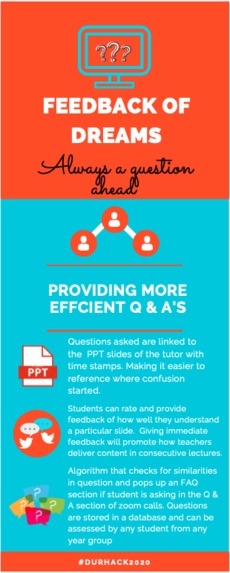
Poster Outlining the project
-
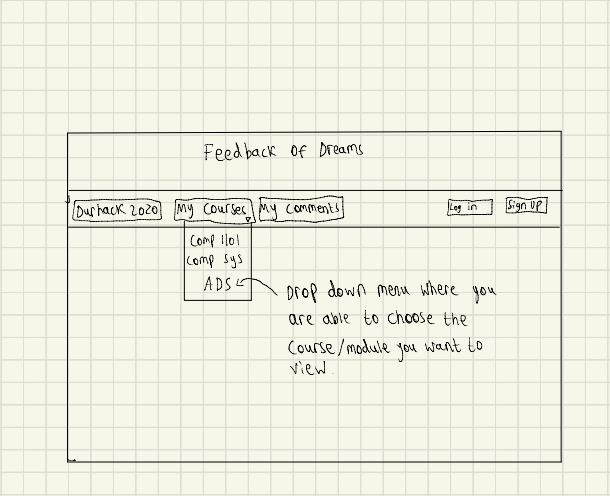
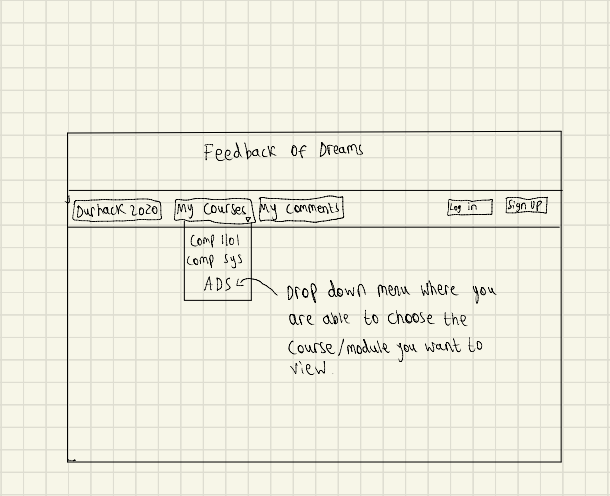
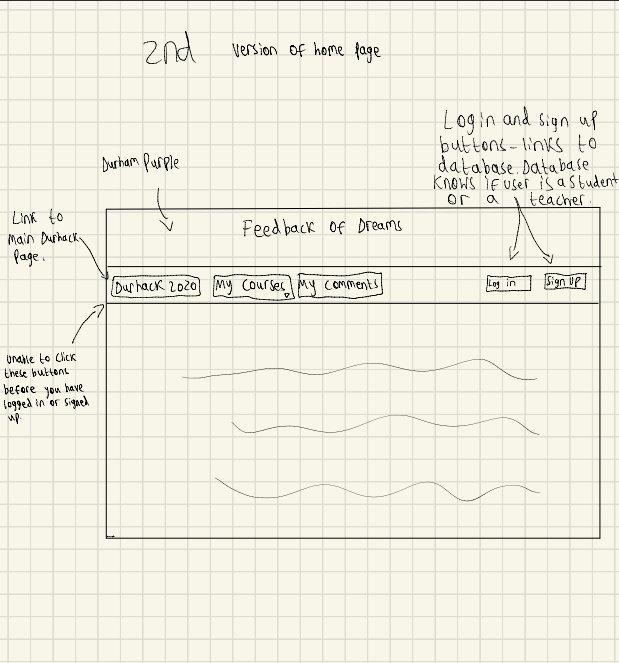
Design version 2 for the home page
-
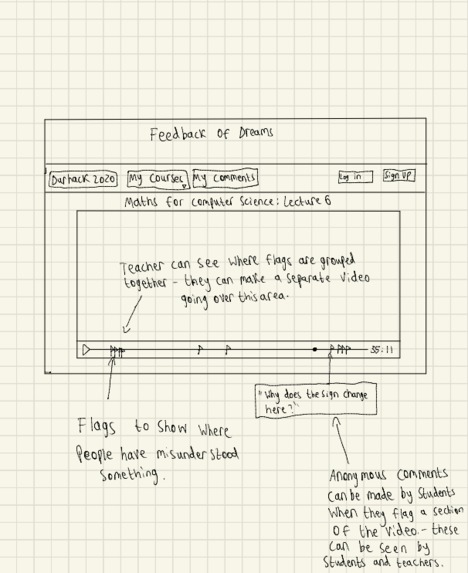
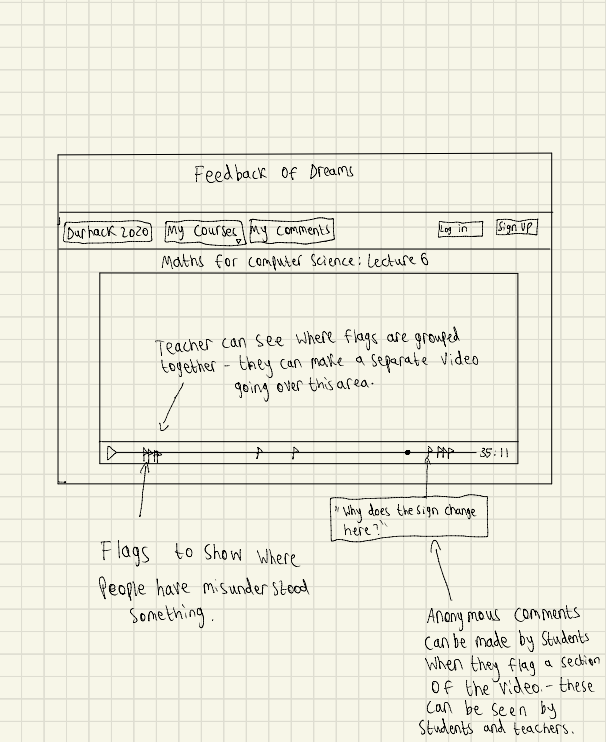
Design for the lecture slides page
-
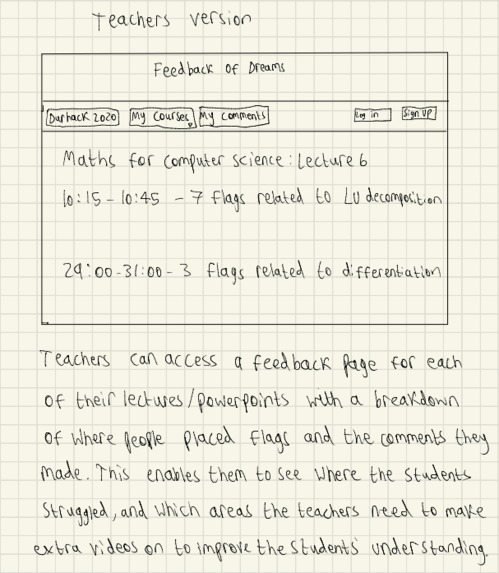
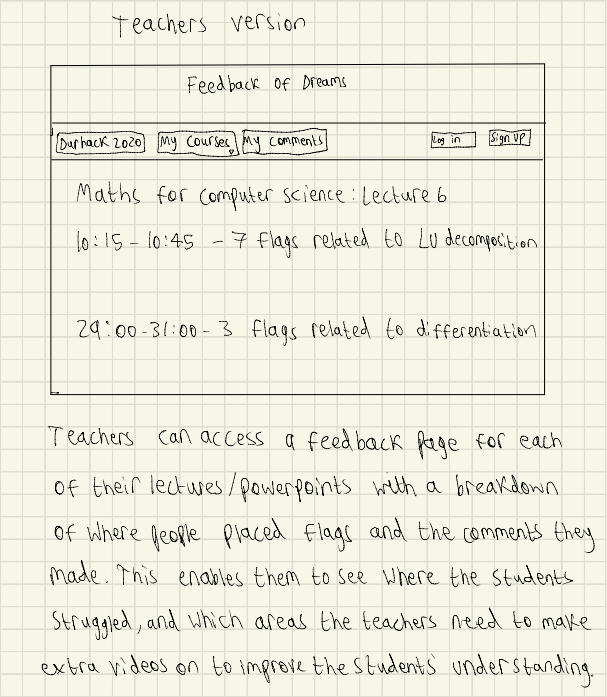
Design for the teachers view web page
-
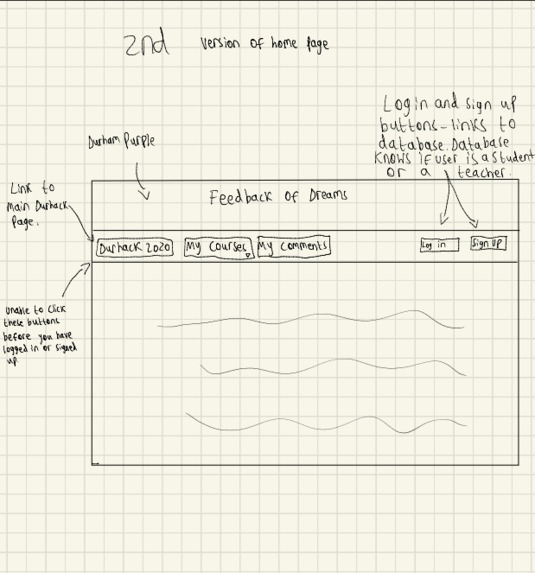
Design version 2 for the home page
-
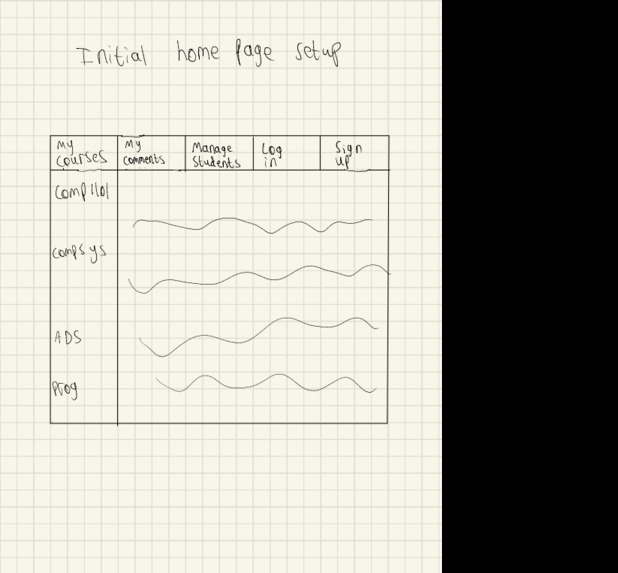
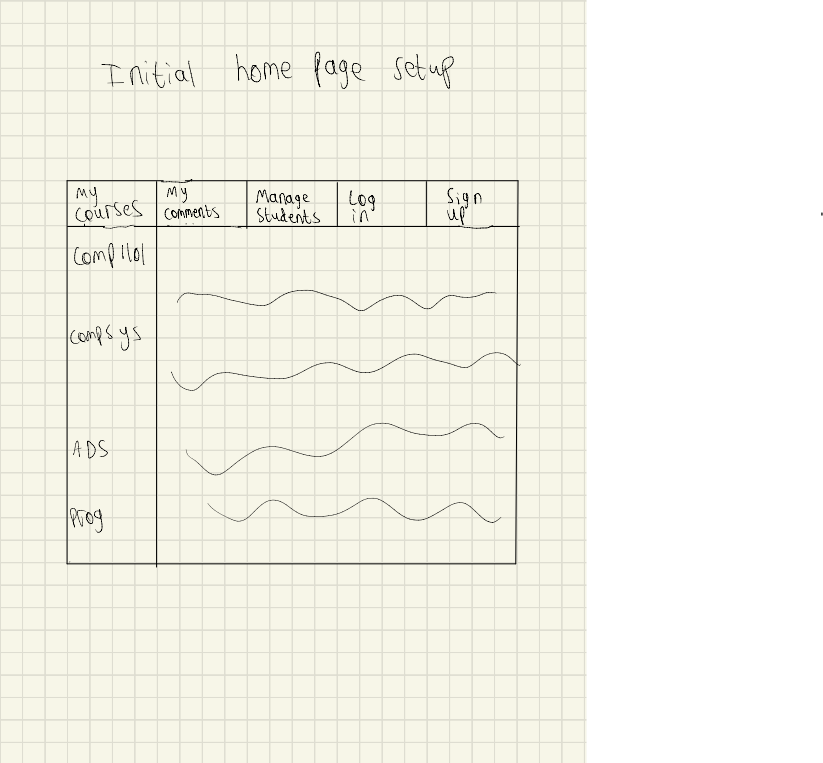
Design version 1 for the home page
-
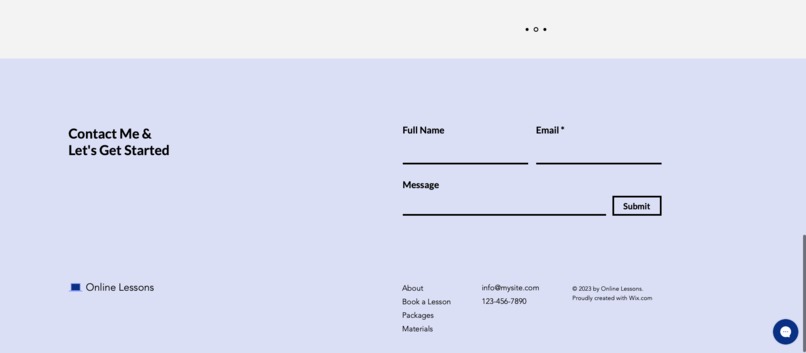
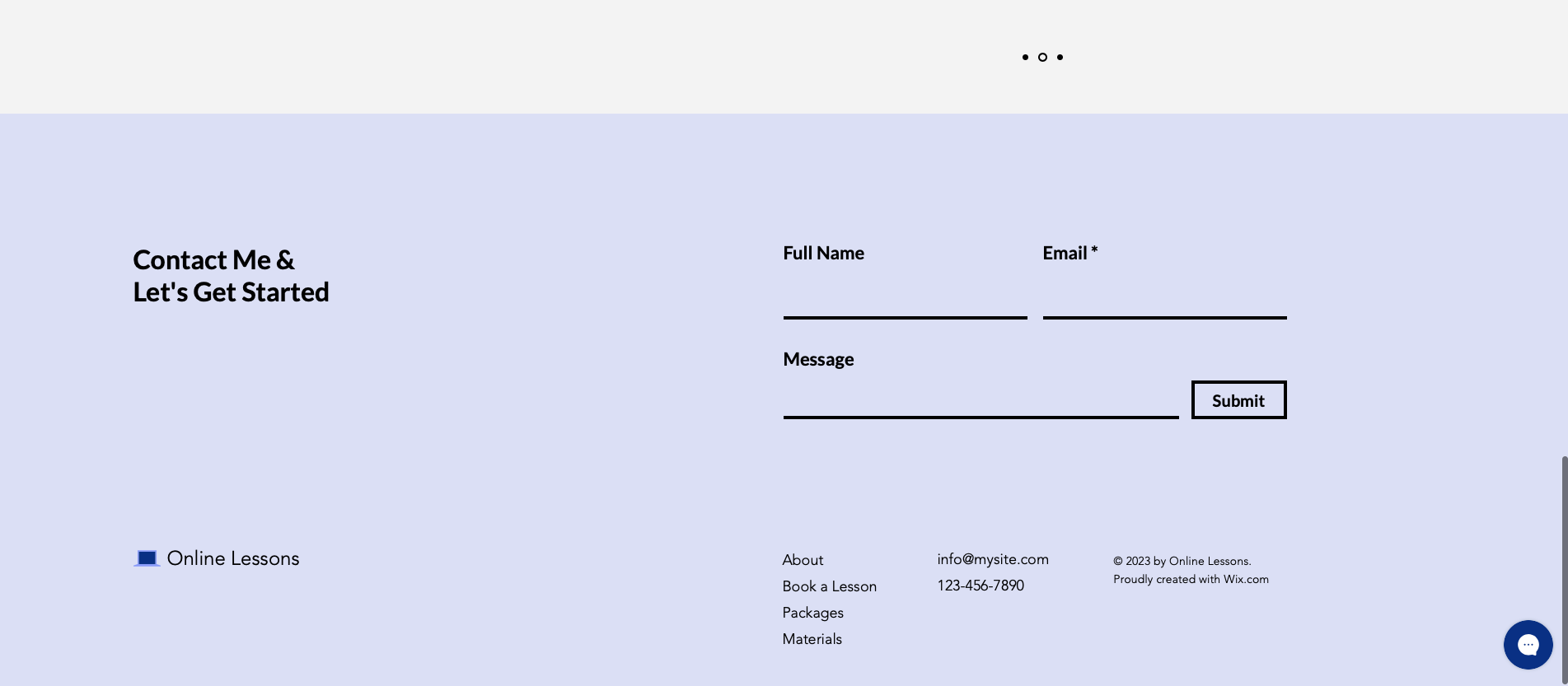
Design for signup page
-
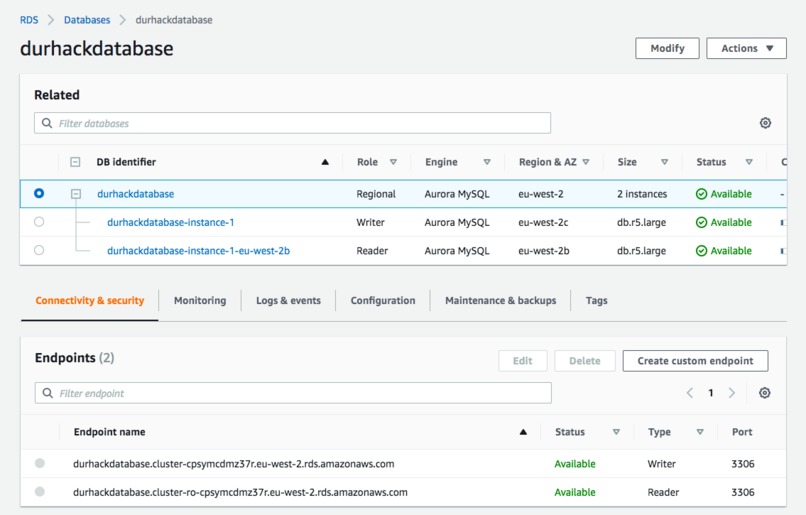
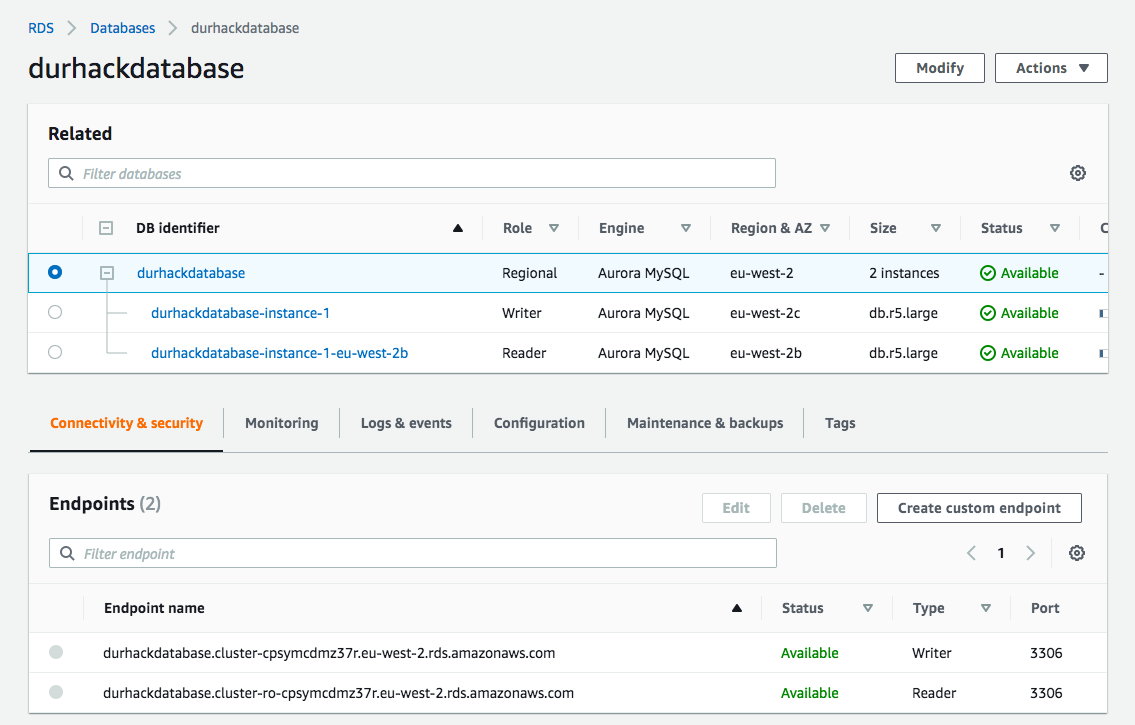
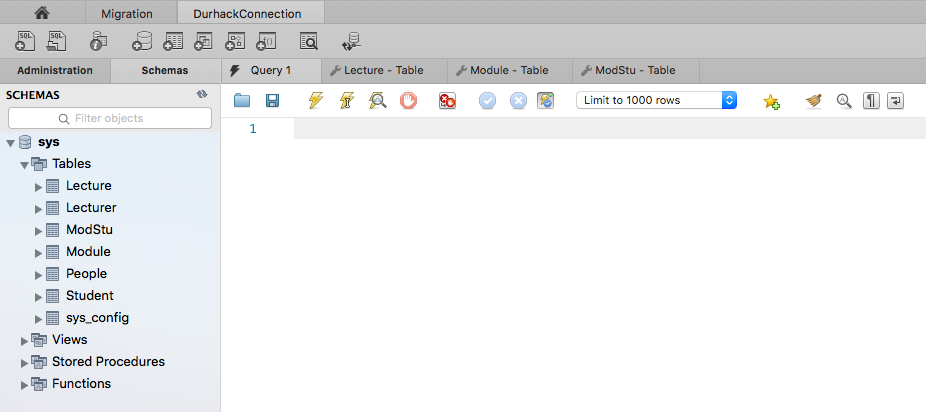
Database created to handle log in
-
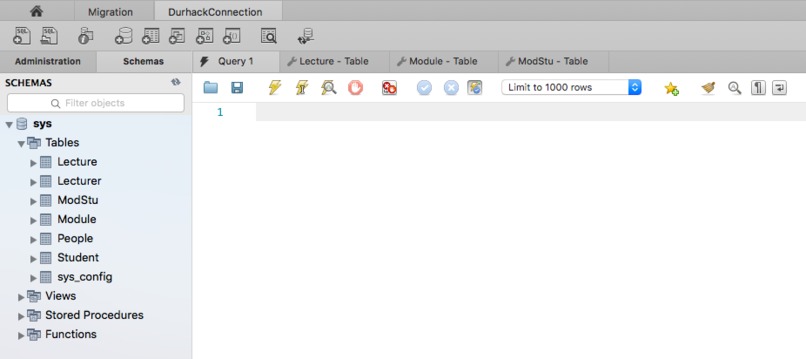
Database created to handle log in
-
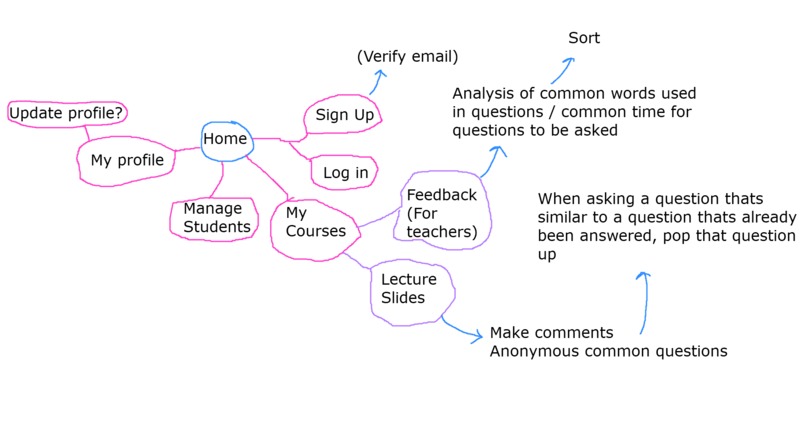
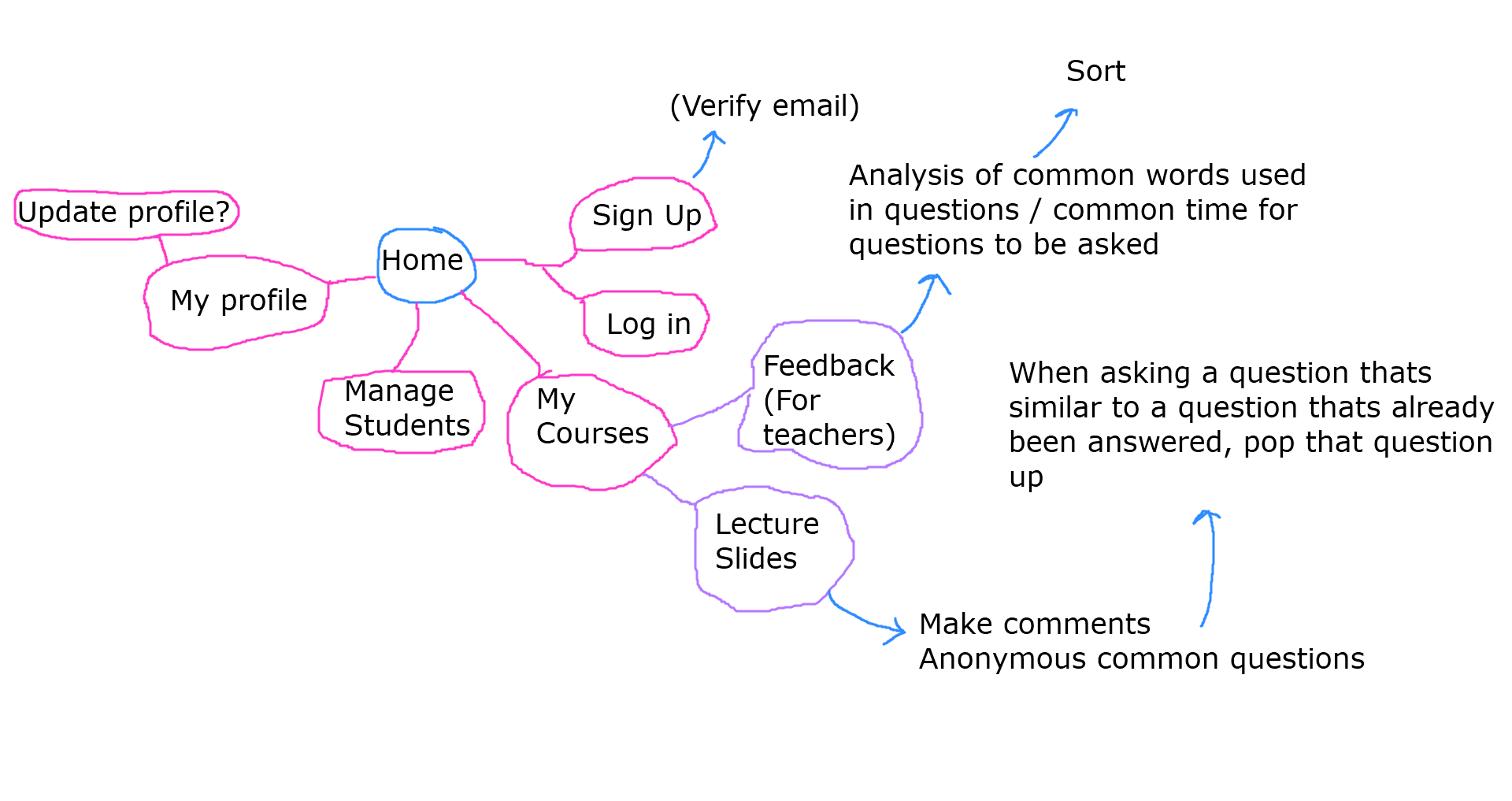
Proposed structure of website
-
3am Shenanigans
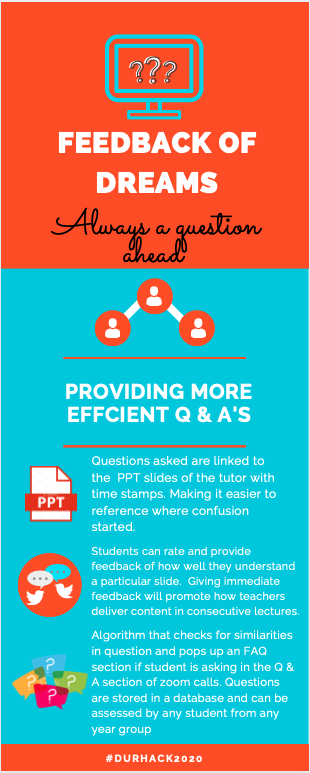
Problem that inspired our project
Many students feel intimidated in large zoom calls to ask the crucial questions that could be the key to understanding a subject. Many lecturers use office hours to solve this to this however office hours have their own problems like being restricted to a certain time of day every week that students might not be able to make.
Outline of the project
Our application, feedback of dreams, will let students view the slideshow for a lecture (or a lecture recording) and ask questions that correspond to specific slides / timestamps. These questions are sent directly to the lecturer and optionally anonymously posted to a forum board where students can view, comment and like. The lecturer can then manage all questions posted for a lecture and post answers on the forum that all students can see. Alongside asking questions, students will also be able to rate how clearly they understand the contents of a slide using a traffic light system. This data will be sent to the lecturer so that they know what parts of the lecture they may need to go over in more detail. To encourage engagement between students and lectures, asking questions and providing feedback could be gamified for example you level up your profile for every comment you provide. Many algorithms can be used to enhance this experience, one idea our group had was to use a NLP algorithm to analyse the question the user is about to ask and suggest similar questions that other users have asked that may have been answered
Planned implementation of features
To accomplish this, we set out to create a series webpages using bootstrap connected by a NodeJS server. We would incorporate a database into this server that would allow users to log in using a whirlpool encrypted logon system that takes their Durham email and password. Teachers would be given access to create classes of students that can view the slideshows that they can upload onto the webserver. To begin creating the back-end we began looking into how to use AWS for hosting, even though we didn’t complete the project it taught us how to deploy servers and connect to them. Since we didn’t have any prior knowledge on back-end programming languages we started learning the basics of NodeJS and then learnt how to use express to create an API that can route requests and responses to and from the server. Learning these languages took up most of our time so we were unable to put them into practice but being able to understand the foundation of the back-end will prove to be very useful in the future. We also developed our basic JavaScript skills by learning asynchronous JavaScript so that programs can send requests on the webpage and continue running without getting a response immediately. We learnt the concept of promises and using the XML requests module. The skills we gained through doing this would form the basis of our project.
Final Outcome and Review
We created the building blocks of our project. By the end of the hackathon the homepage was functional, we had a suitable database and a NodeJS web server hosted on AWS. Our group was learning web development from scratch while creating our project. Admittedly our project idea was too ambitious given the skill set of our group and the time constraint of a hackathon. Even though we never got a working solution that we set out to create we are confident in the idea and we tried are best
We've all learned many key skills involved in the web development process including but not limited to: how to collaborate using GIT, using bootstrap and CSS to create a clean looking webpage and hosting a back end server using AWS. As well as this, we've all learned what it's like to collaborate on large project and what to expect from a hackathon. Thank you so much for the experience and we're looking forward to seeing the winning project.


Log in or sign up for Devpost to join the conversation.