-
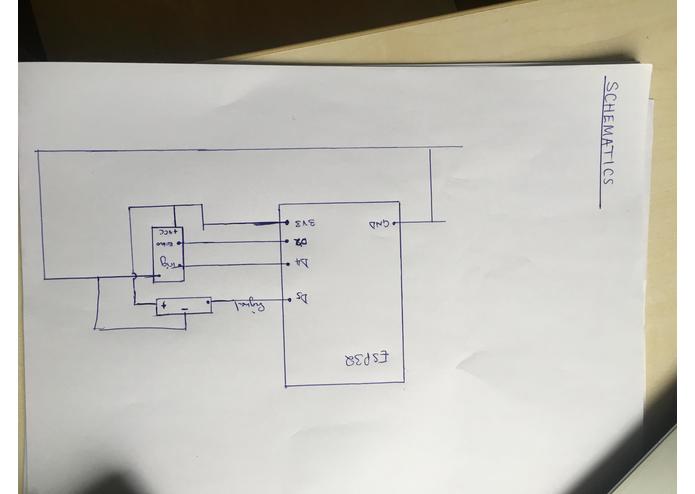
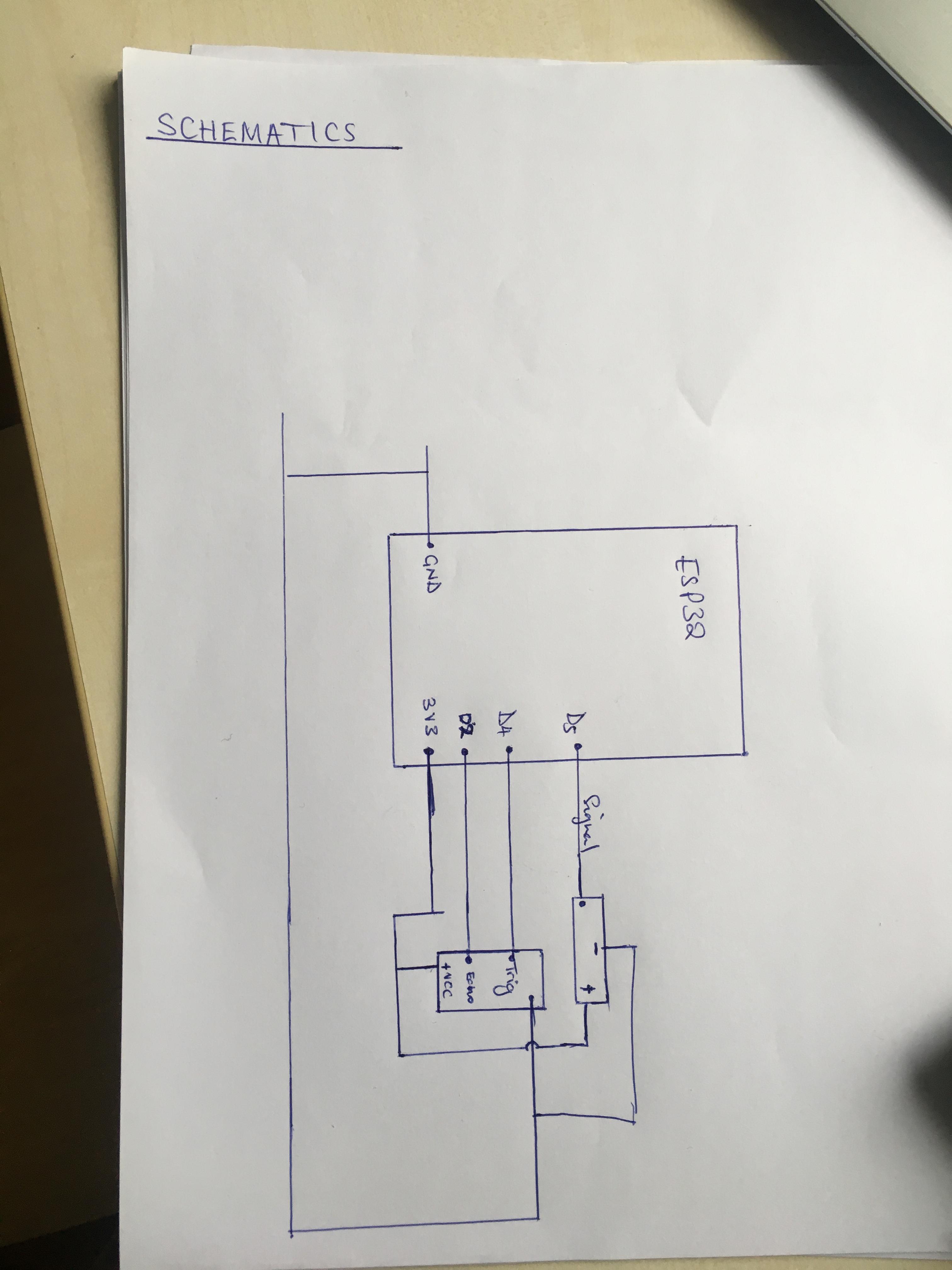
Schematics
Inspiration
We wanted to create a device that uses input from the environment to create the best audio experience.
What it does
The device starts playing audio when you enter the room - detected using a motion sensor. From there, an ultrasonic sound sensor tracks your distance from the speaker, adjusting the volume accordingly.
How we built it
The project was collaboration between (second year undergraduate) ECE and CS students - combining expertise in hardware hacking and web development. We had to get input from the various sensors and then project the calculated output to the the the website. We used the ultrasonic sound sensor to measure the time taken for a reflected sound wave to hit the incident surface. This was used to compute the distance of the nearest object in the path of the signal and this feature adjusted the volume of a web based audio player accordingly.
Challenges we ran into
Hosting the website from the the ESP32 Controller proved a great challenge - its was certainly a new experience. Communication between the browser and the hardware was particularly challenging since we were both not experience with the other's set of skills.
Accomplishments that we are proud of
We managed to collaborate effectively despite our diverse skills. We accomplished a lot in a day for a team of only two people.Despite many hardware components failures, we did not give up.
What we learned
We both got to learn about the other 's skills/major. The way the html is handled over the server was really strange at first , but we got great insights for future projects and the inner workings of html.
What's next for 1151 Smart Volume Control
Allow playing sound at a frequency that is suitable for a person's ears - possible from medical prescription. Instead of playing the audio from the a website, we would like to connect speakers directly when we get the hardware.
Another improvement would be to improve sound quality in a bigger room by tackling the challenges posed by reverberations and echoes. This would require changing the frequency of the audio signal such that we obliterate the phase difference between the incident and the reflected wave which is introduced by the increase in the distance between the incident surface and the reflecting surface.

Log in or sign up for Devpost to join the conversation.