-
-
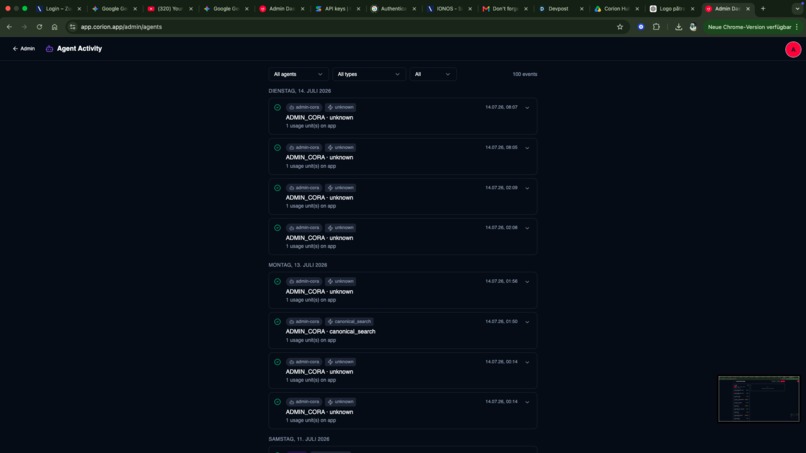
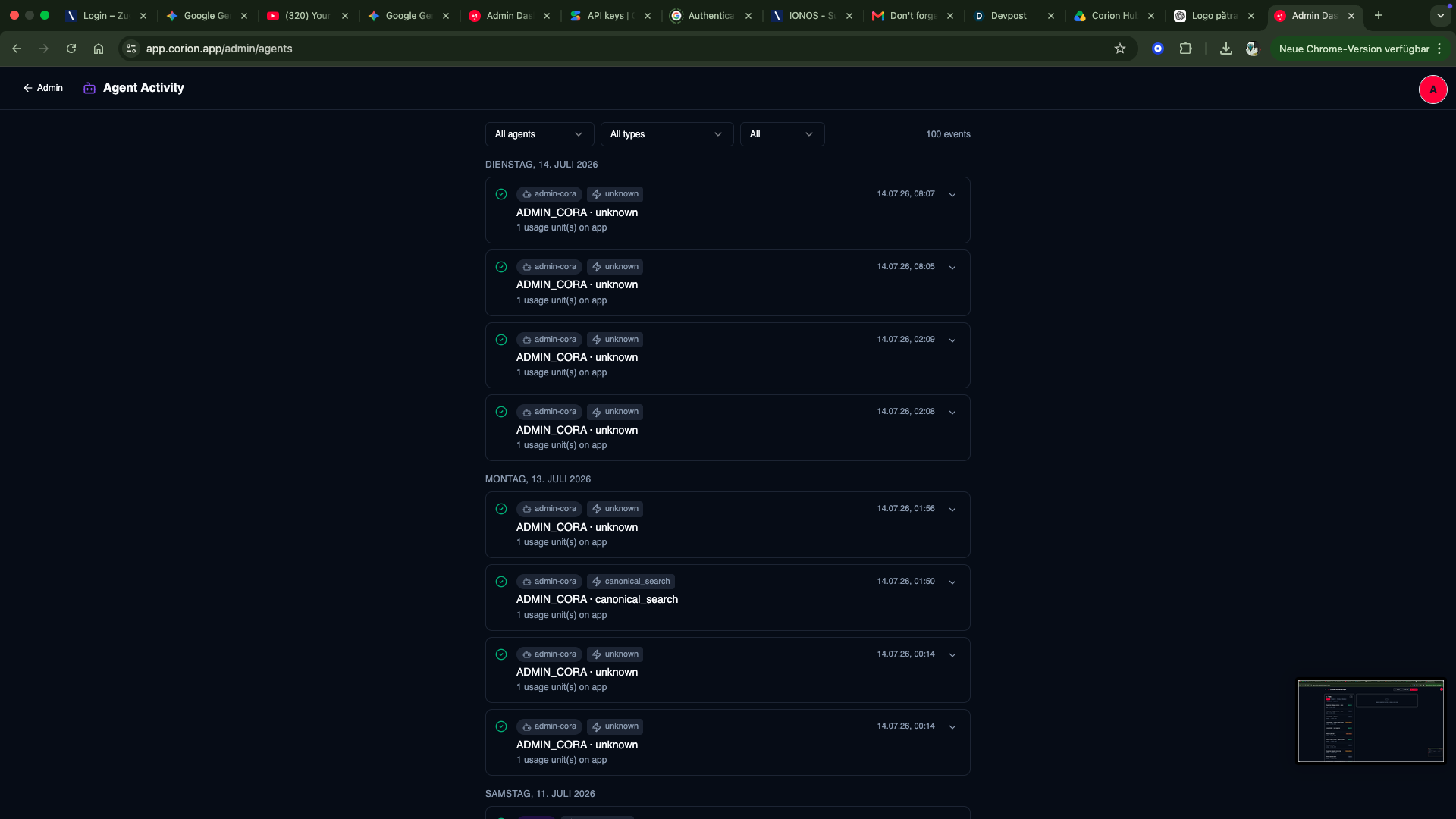
Agent log
-
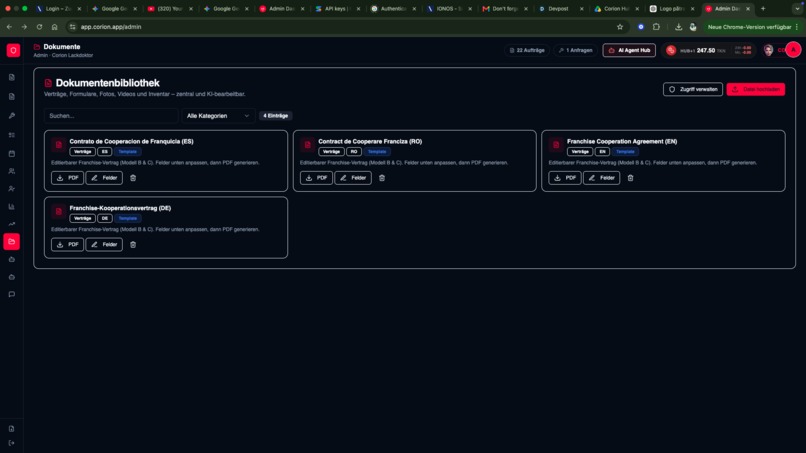
AI-assisted workflow logic and execution layer
-
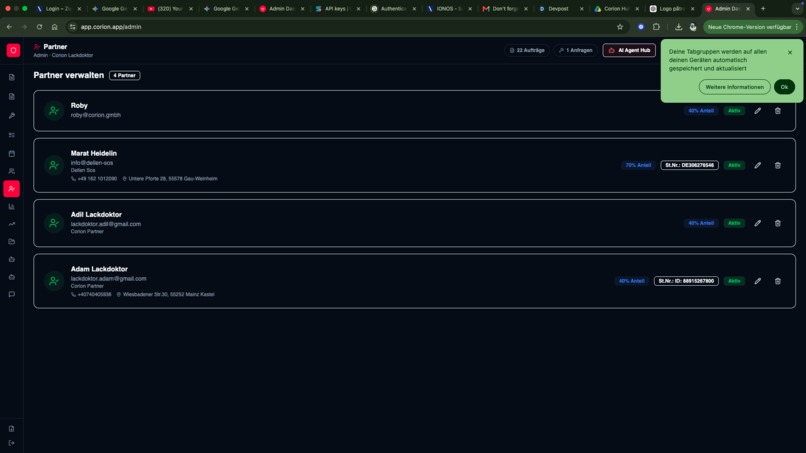
Business visibility, coordination, and scalable execution
-
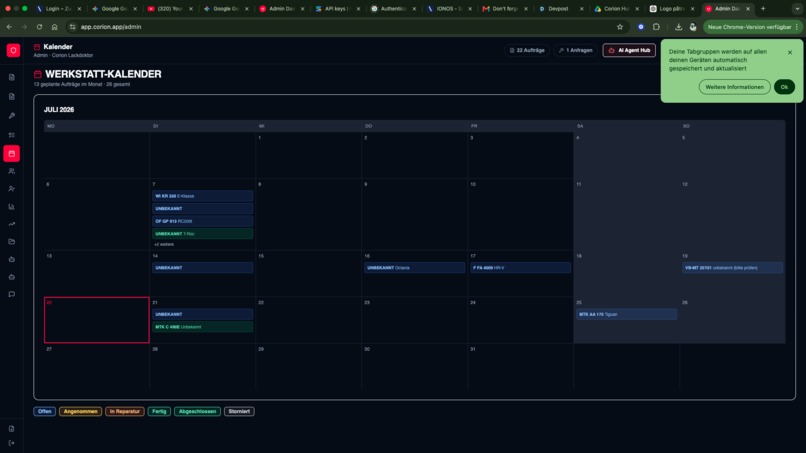
CalendarTask and follow-up management inside the operating layer visibility, coordination, and scalable execution
-
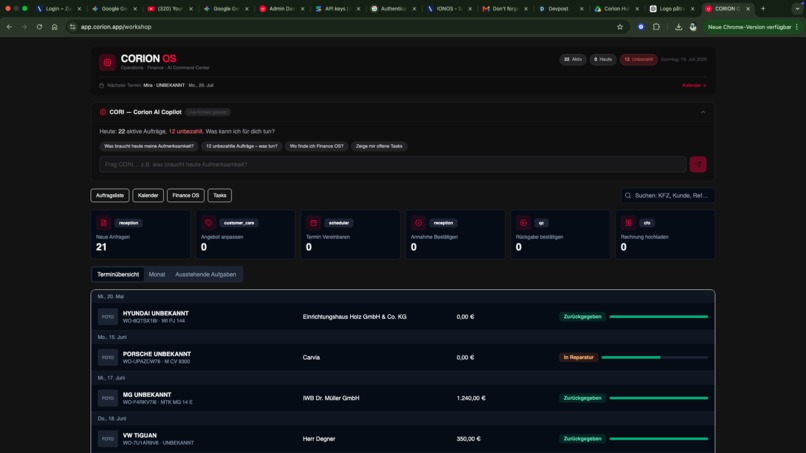
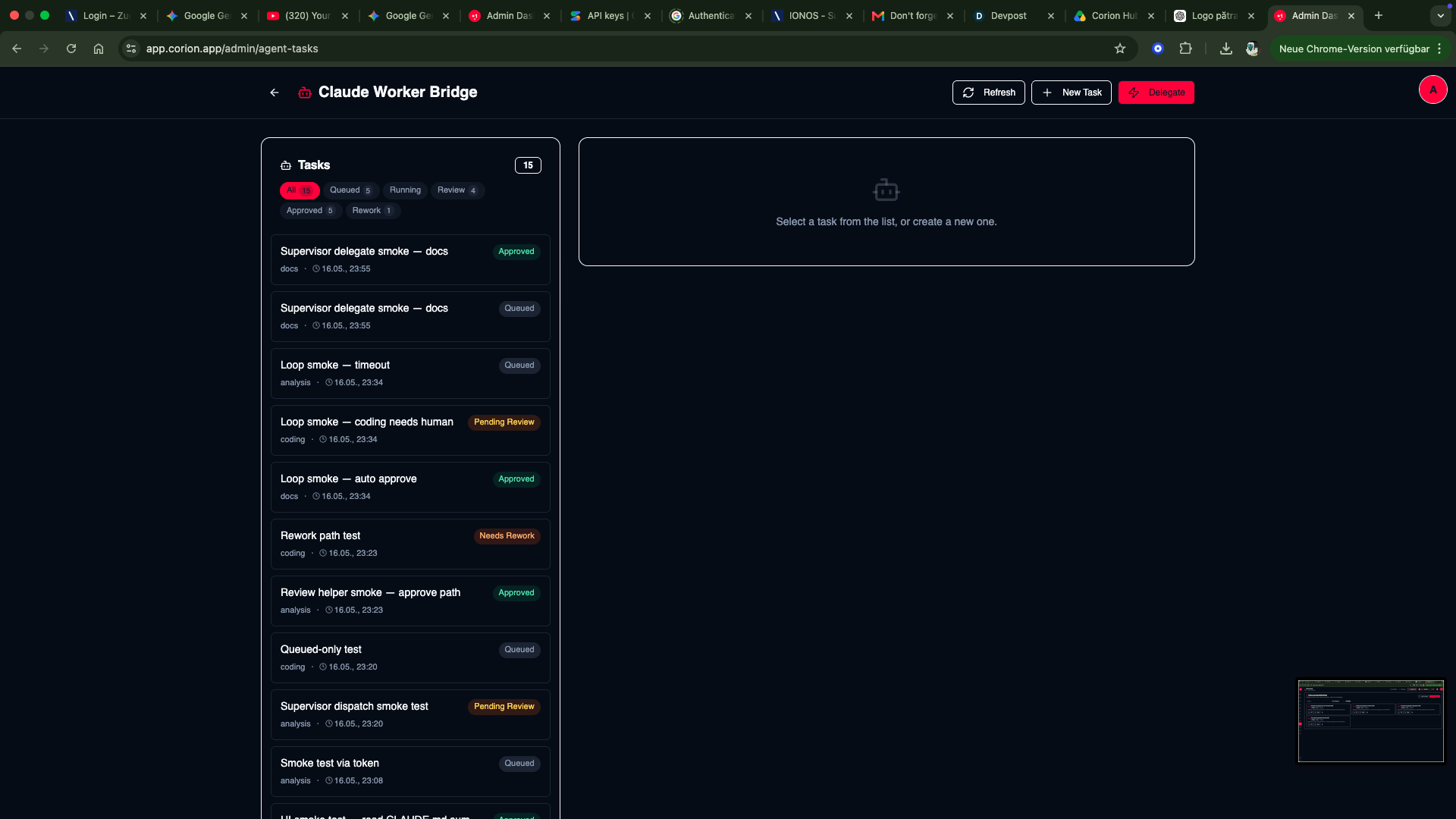
Agent task
-
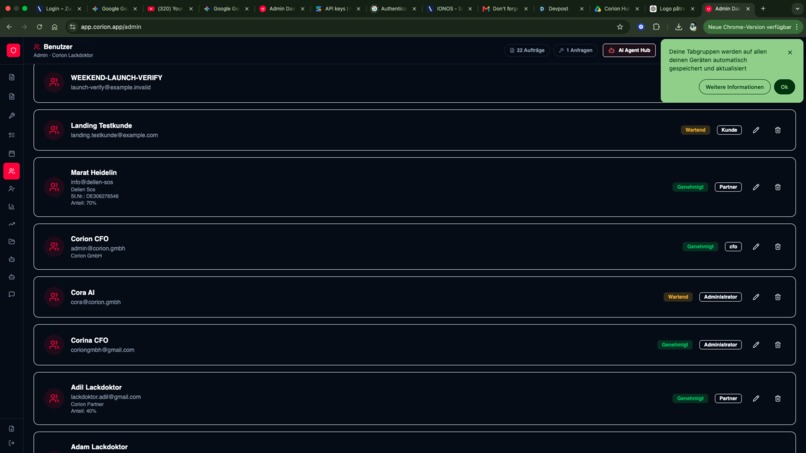
Task and follow-up management inside the operating layer#
-
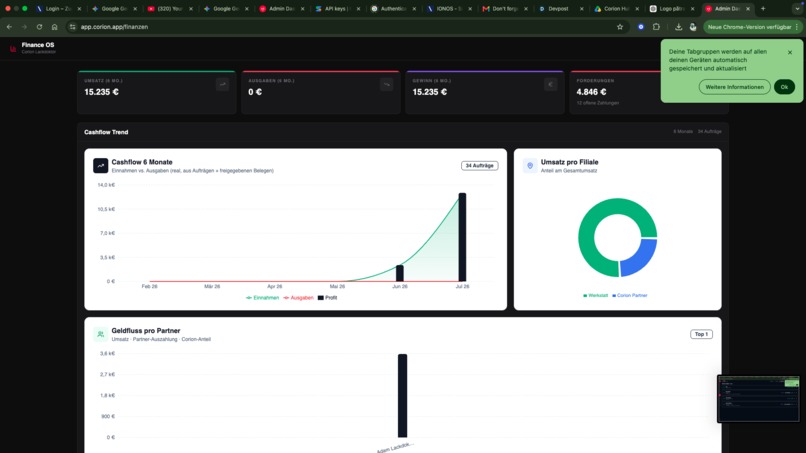
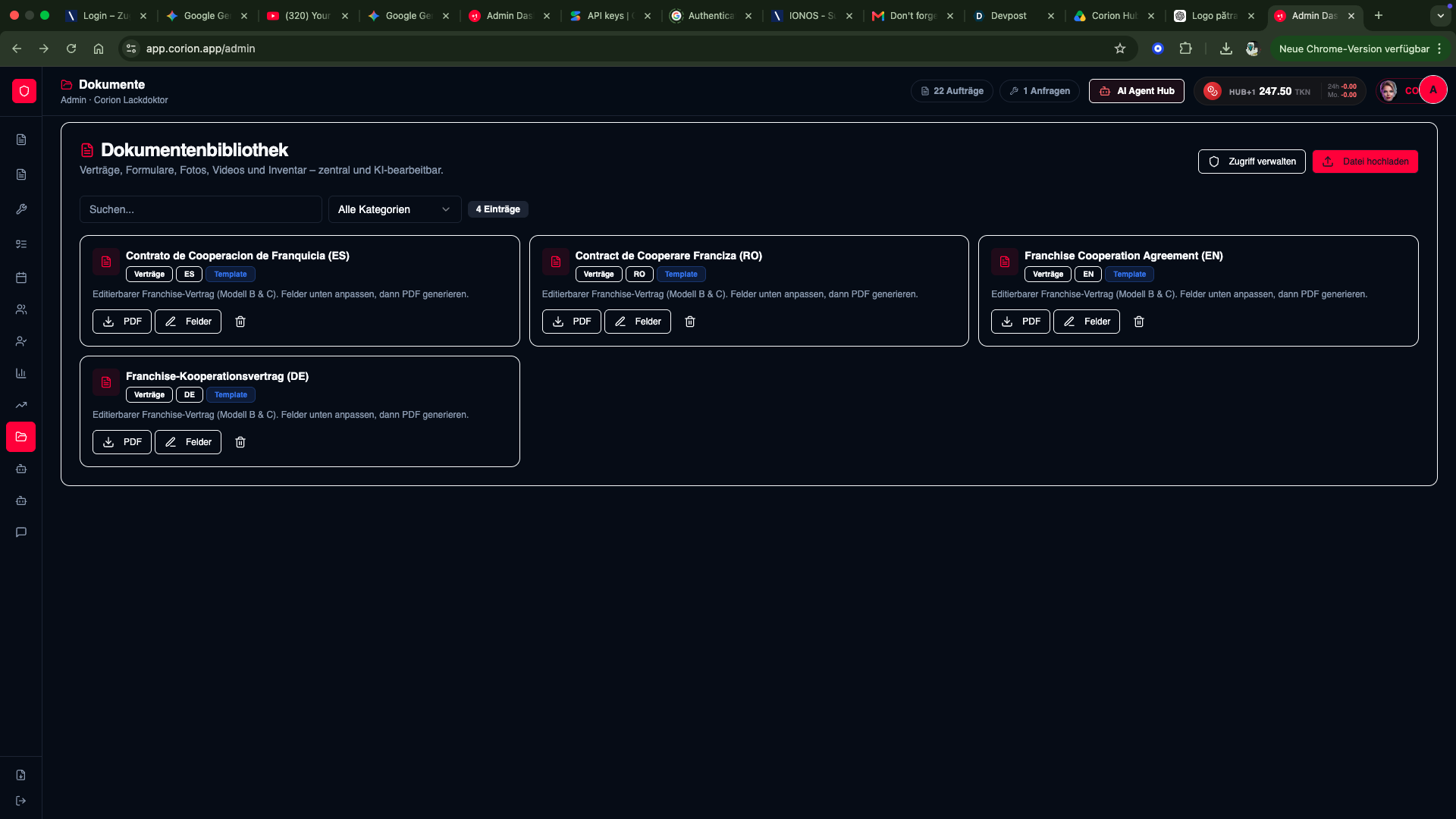
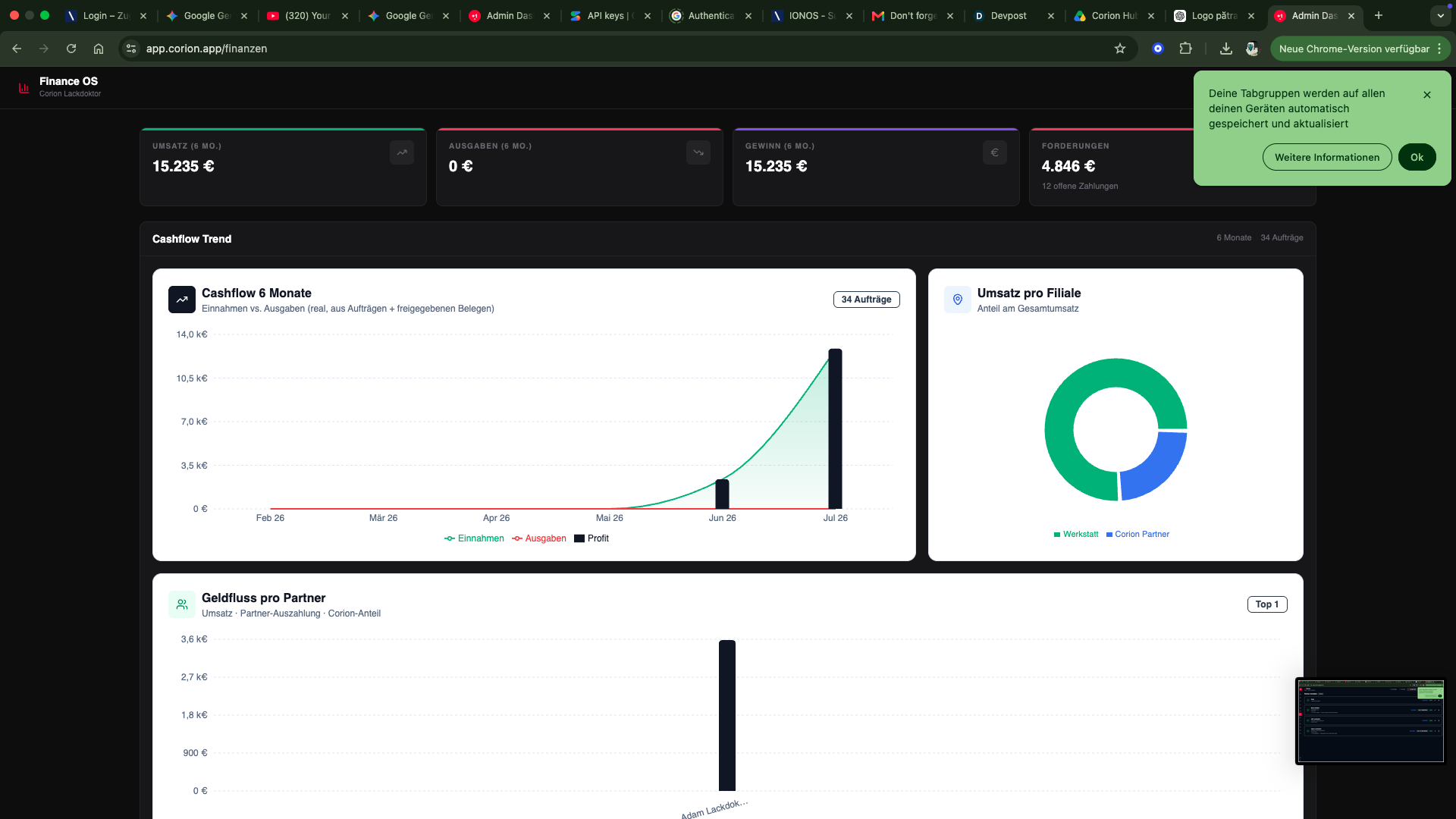
Financial and operational oversight inside one system
-
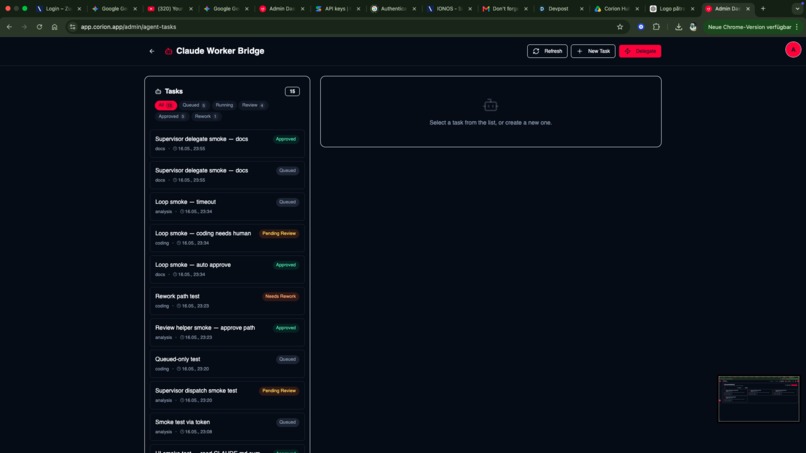
Task orchestration for real business operations
-
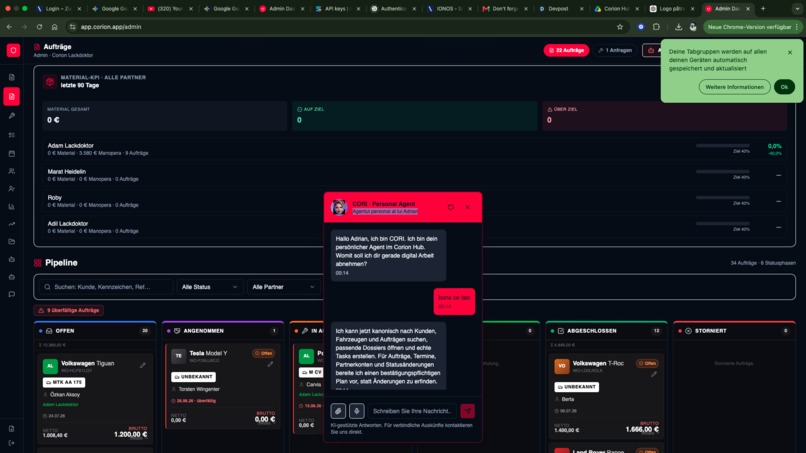
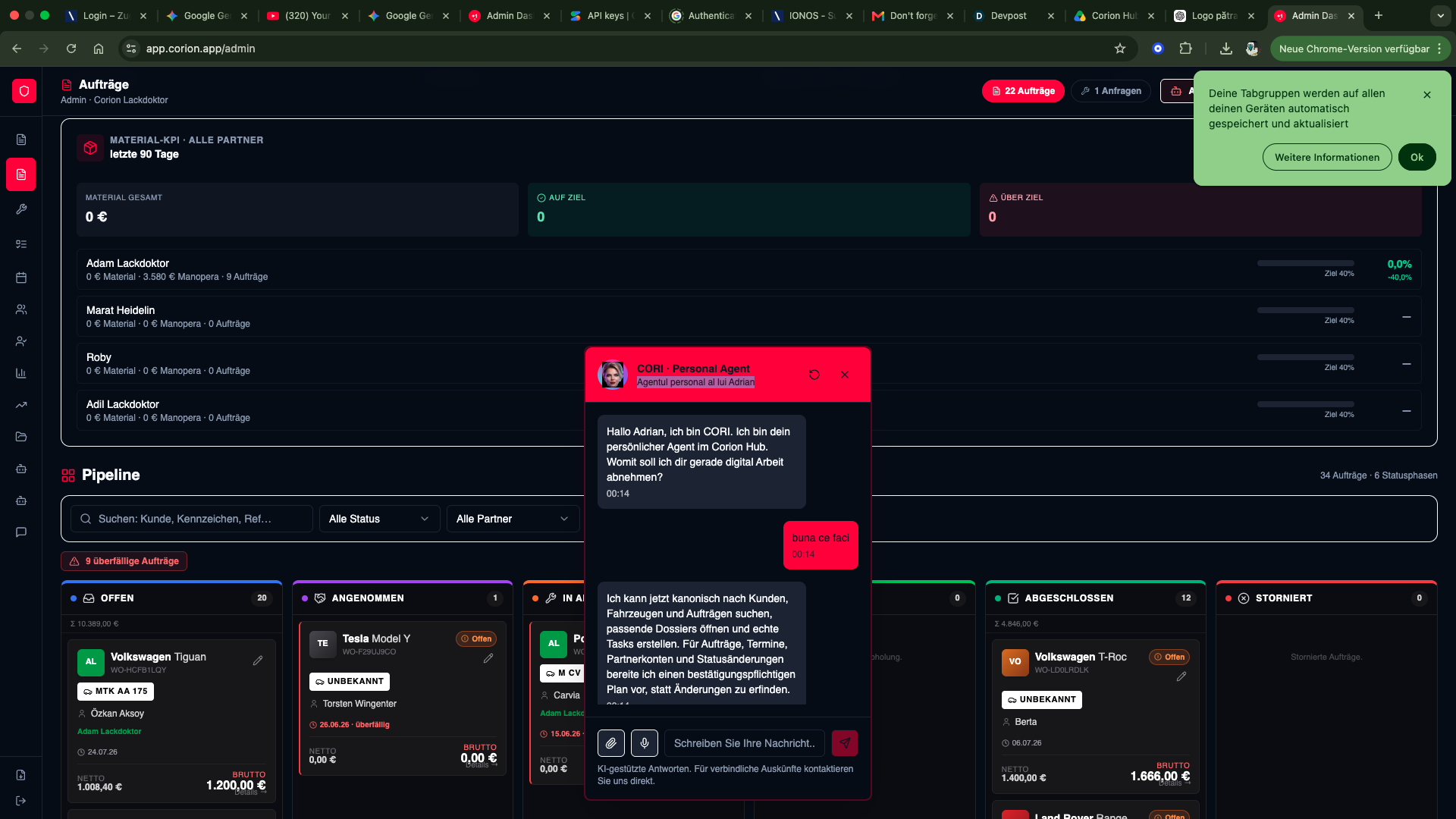
CORI assistant handling operational context and execution
-
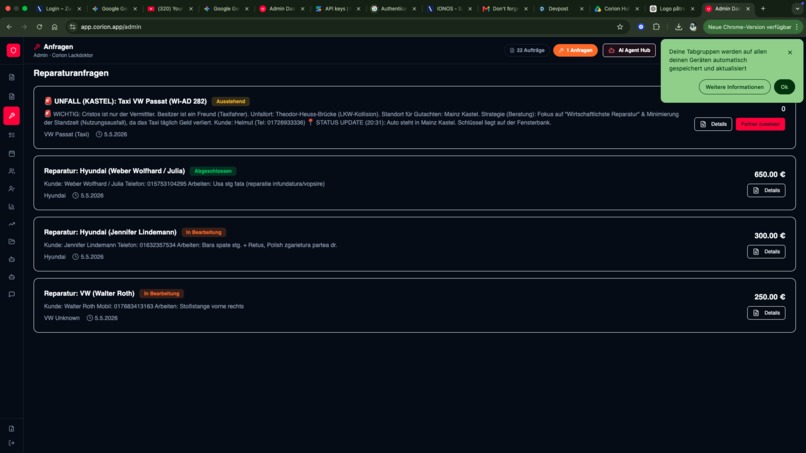
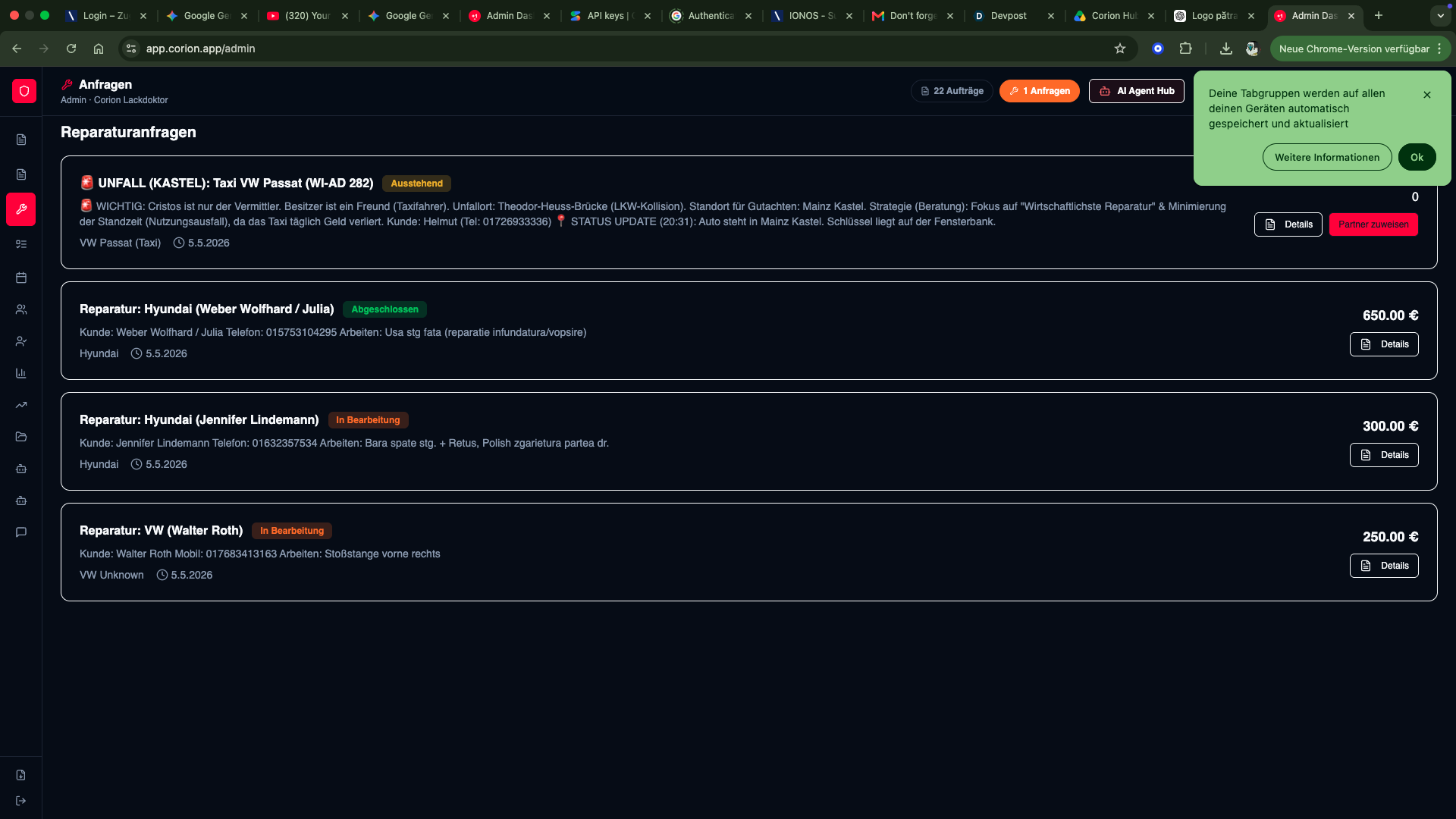
Task and follow-up management inside the operating layer
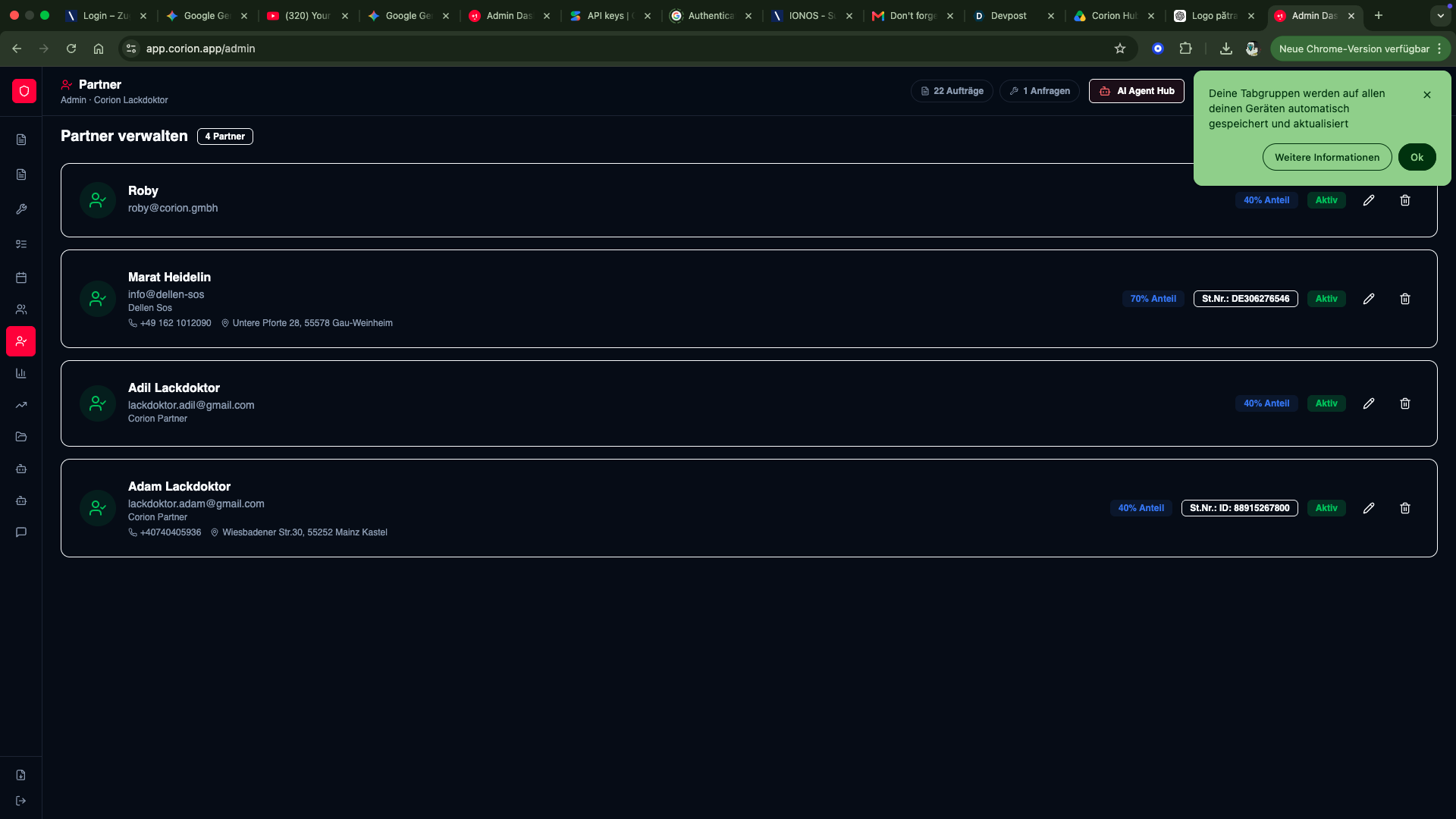
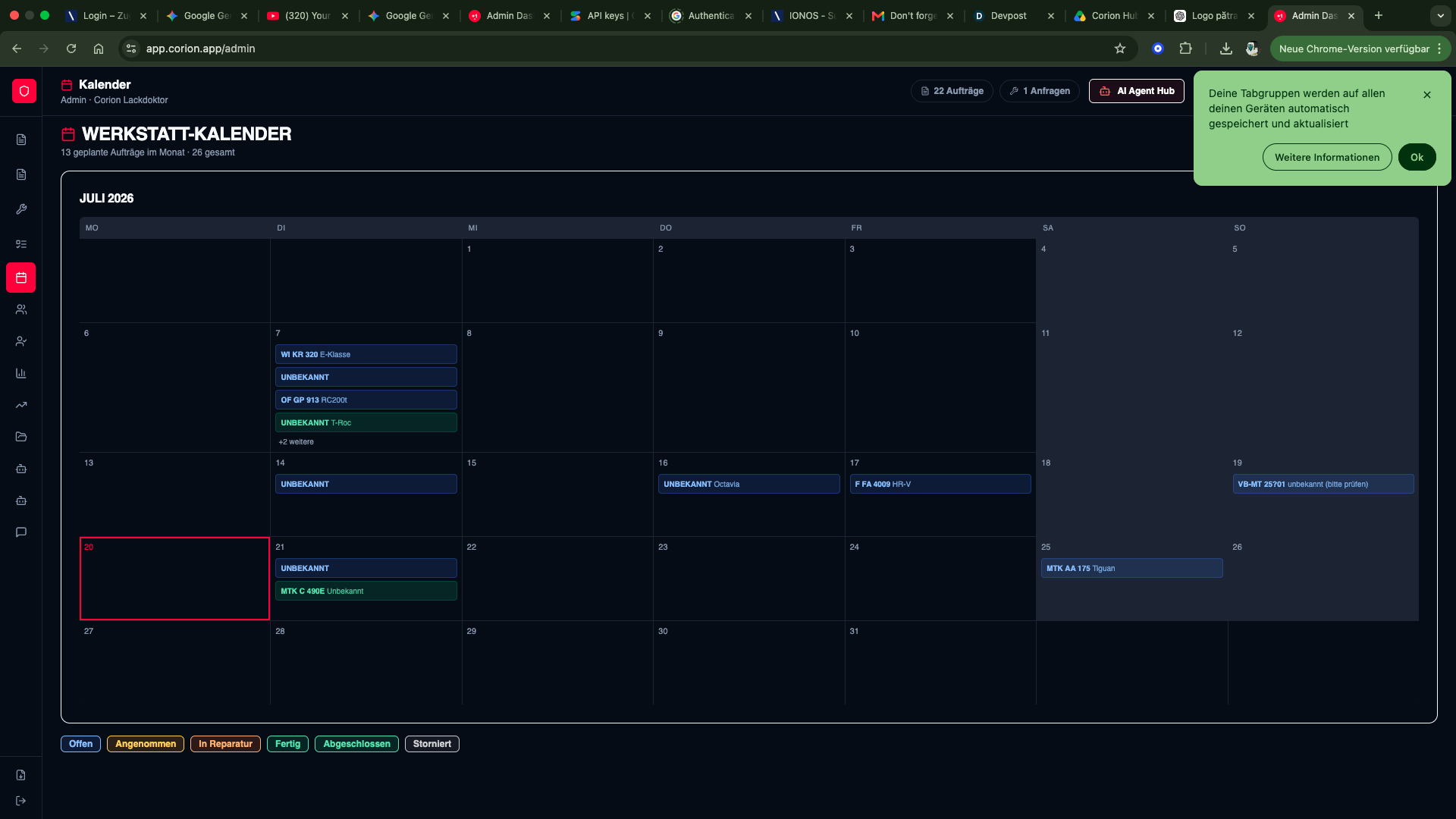
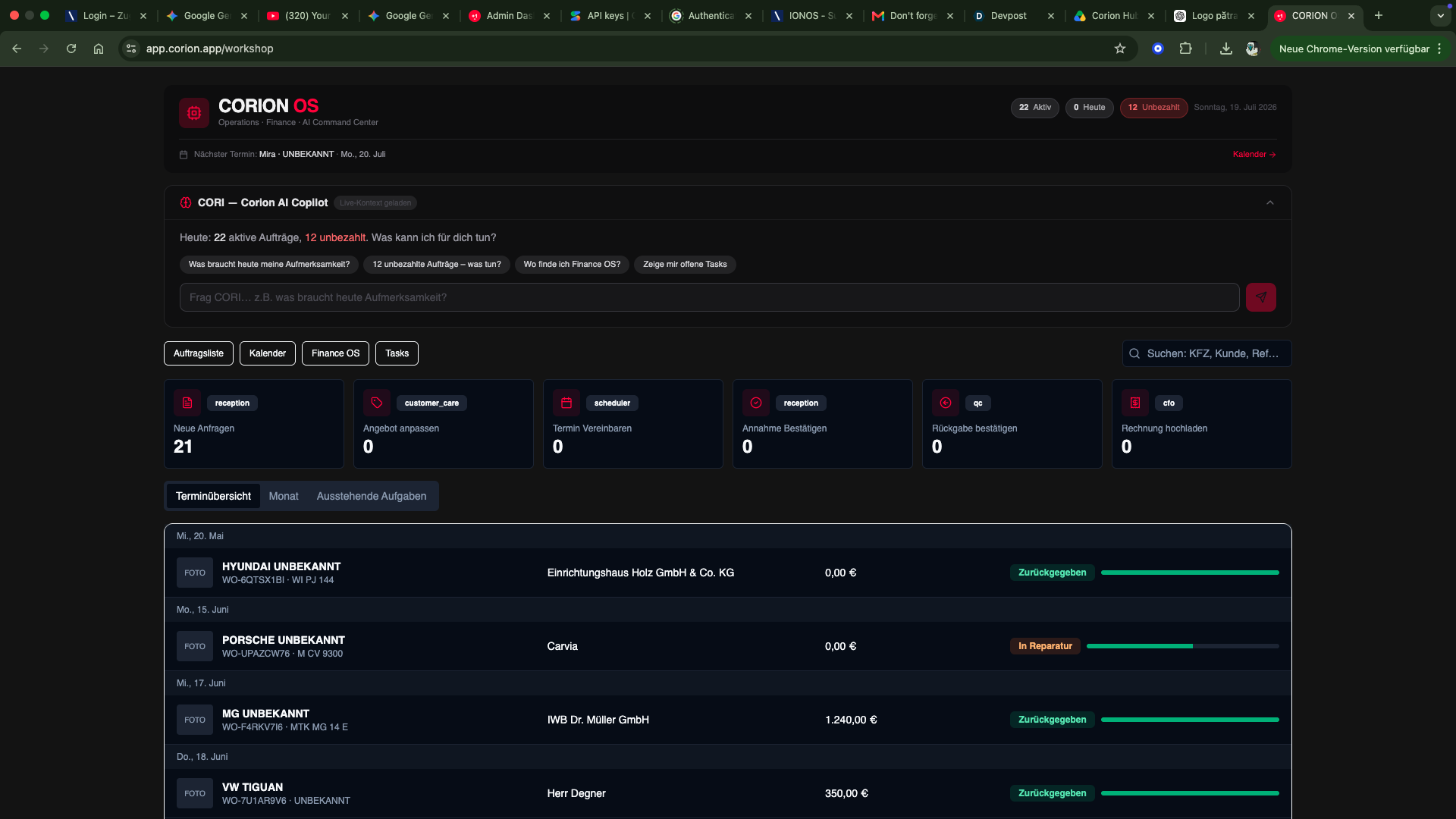
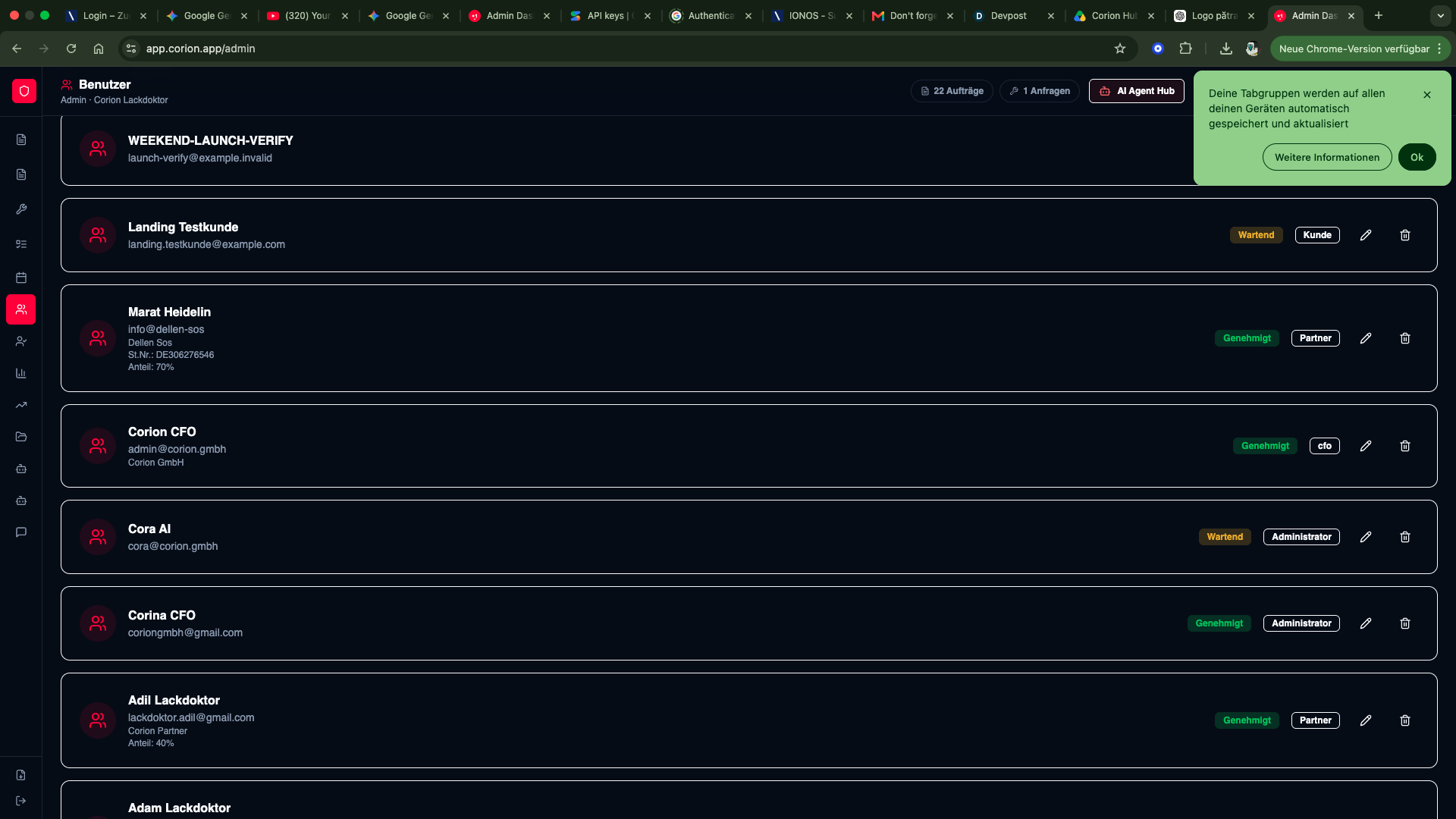
Corion Hub+1
Corion Hub+1 started from a very real frustration: small businesses do not just need another SaaS tool, another CRM, or another chatbot. They need a system that can actually carry work.
We built Corion from the reality of operational chaos, fragmented communication, and too much human time being wasted on digital administration. Messages live in one place, files in another, appointments somewhere else, tasks get lost, follow-ups get forgotten, and the business owner becomes the bottleneck for everything.
Our idea was simple but ambitious: what if the business had an AI-first operating system, where chat is not just conversation, but a command surface, a memory surface, and an execution surface?
What inspired us
The project was inspired by real day-to-day business pressure in workshop operations, client communication, scheduling, follow-ups, documents, and team coordination. We saw that the real pain is not “lack of software,” but lack of operational continuity and too much friction between intention and execution.
We wanted to build something where a human can simply speak naturally, and the system can increasingly do the digital work on their behalf.
What we built
We built Corion Hub+1 as an AI-first business operating system centered around:
- human-agent collaboration
- operational truth instead of scattered messages
- canonical work objects and business memory
- direct action from conversational interfaces
- structured workflows for CRM, orders, scheduling, files, and tasks
- a path toward autonomous but governed AI workers inside the company
The system is designed so the assistant is not just a chat layer, but an operational companion that can search, organize, update, structure, and increasingly execute work inside the business environment.
How we built it
We built the project as a real working operational environment, not just a prototype deck. The stack combines application logic, workflow handling, structured memory, order/task coordination, and AI-assisted operational flows.
A major focus was preserving canonical truth across the system, so that conversations, files, tasks, calendar state, and business actions can converge into one usable operational layer instead of staying fragmented.
We also explored how AI can move beyond simple question answering into action, memory, coordination, and workflow support.
Challenges we faced
One of the biggest challenges was not technical complexity alone, but product truth.
It is easy to build something that looks like AI, but much harder to build something that is genuinely useful in real operations. We had to think carefully about:
- how to reduce friction instead of adding another interface
- how to preserve safety without crippling usefulness
- how to keep the assistant broad and helpful instead of turning it into a rigid scripted bot
- how to maintain continuity across workflows, files, messages, and tasks
- how to make the product feel human-first rather than form-first
Another major challenge was designing for scale from the beginning. We do not want the assistant to become less useful as the system grows. We want it to become more valuable as more operational truth, workflows, and business context accumulate.
What we learned
We learned that the future is not “AI on top of software,” but AI woven into the operating layer of the business.
We also learned that the real unlock is not just better answers, but better execution:
- fewer forms
- less repetitive admin
- stronger continuity
- clearer truth
- more scalable human work
Where this goes next
Our next step is to make Corion even more mobile, more direct, and more AI-first, so that a founder or operator can talk to the system naturally and have it open, update, create, organize, and coordinate work with less and less manual friction. The long-term vision is bigger than one workflow or one company: Corion Hub+1 is a step toward business systems where humans stay in control, while AI carries more of the digital burden.
Built With
- cloudflare
- drizzle-orm
- express.js
- google-calendar-api
- google-drive-api
- gpt-5
- node.js
- openai
- openclaw
- postgresql
- react
- telegram
- typescript

Log in or sign up for Devpost to join the conversation.