Inspiration
Our digital notes, photos, and messages sit flat in folders with no sense of place, even though our actual memory works spatially, the way ancient "mind palace" techniques exploited. We wanted to see if real personal data could be turned into a walkable space instead of a scrollable list.
What it does
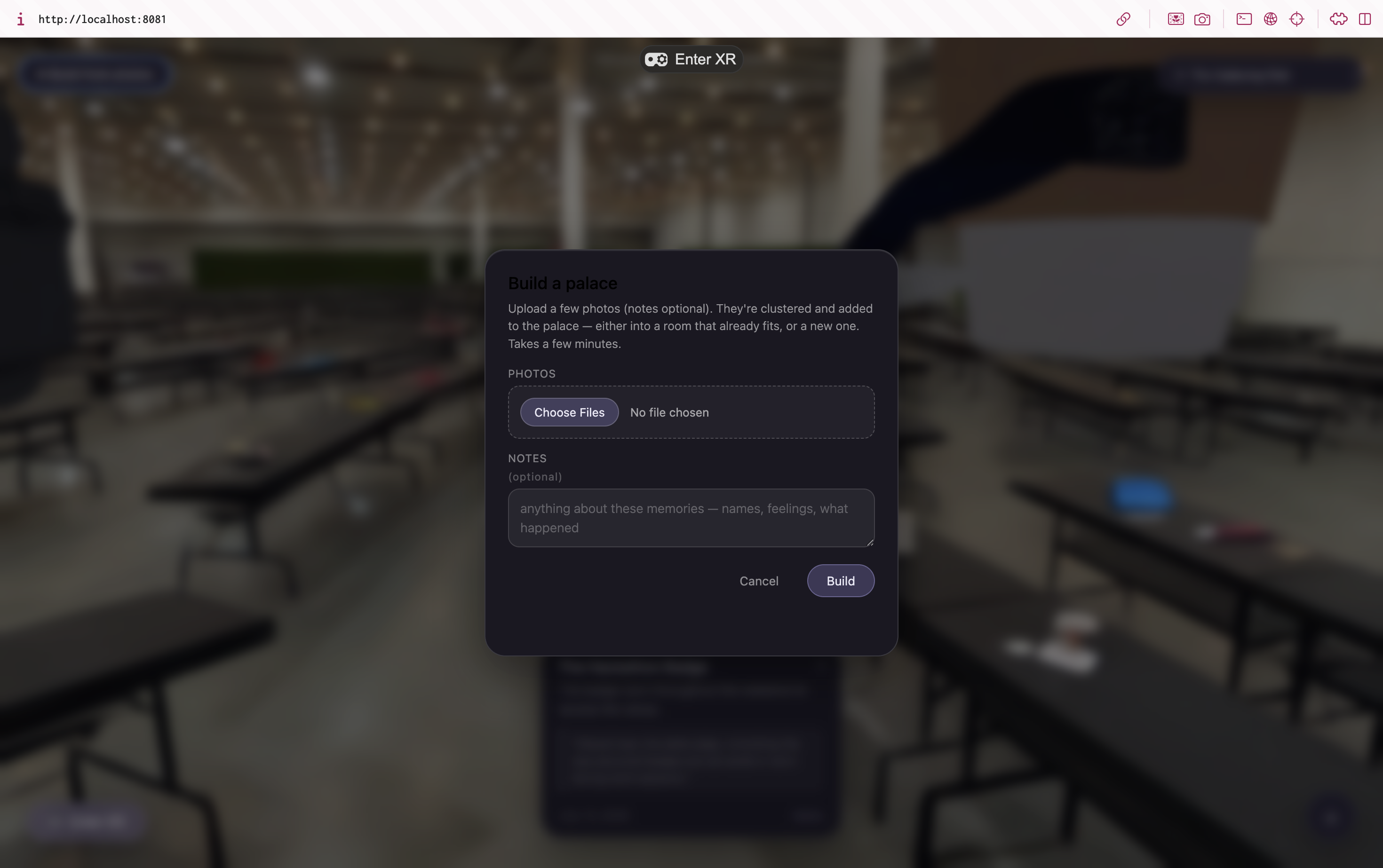
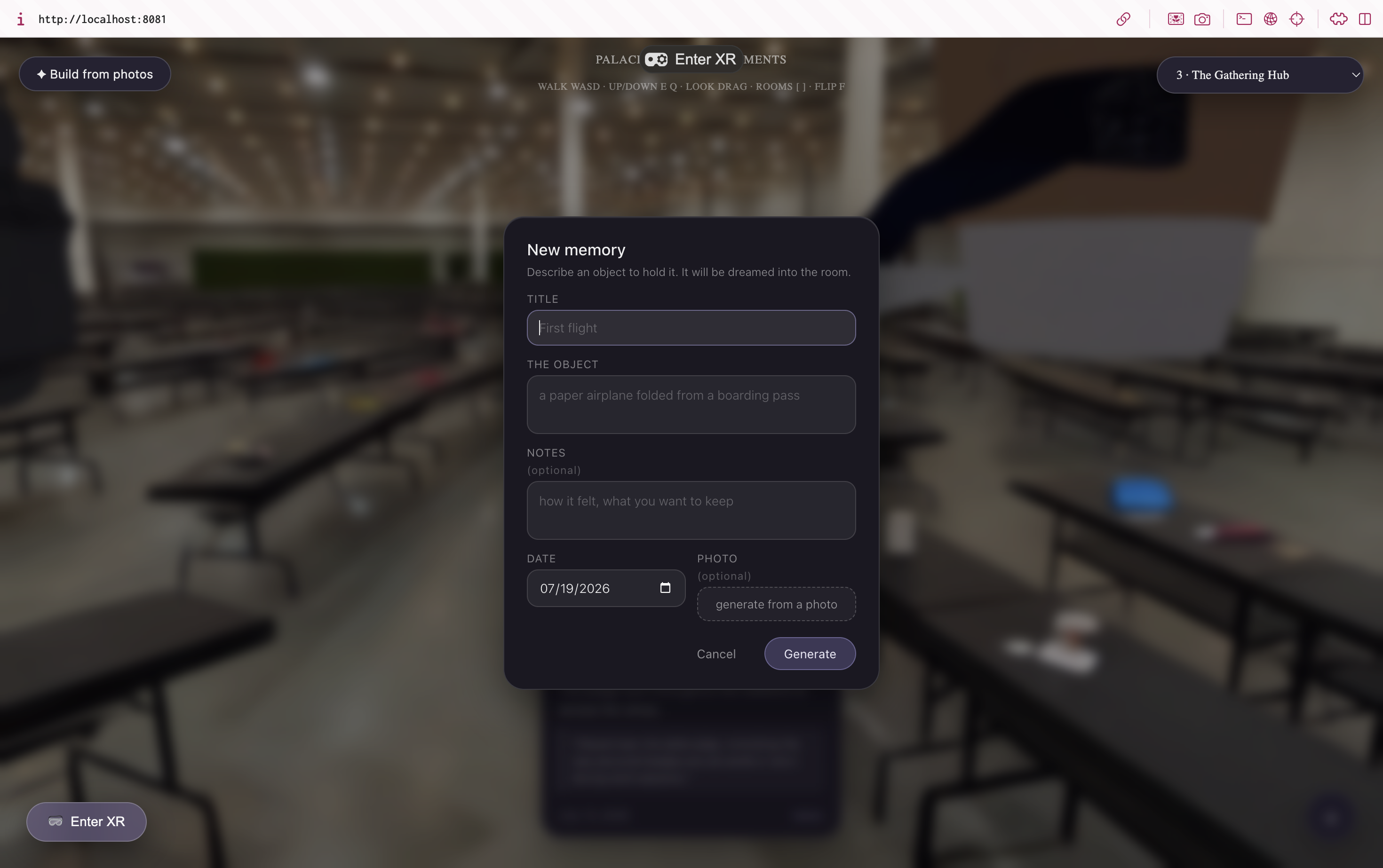
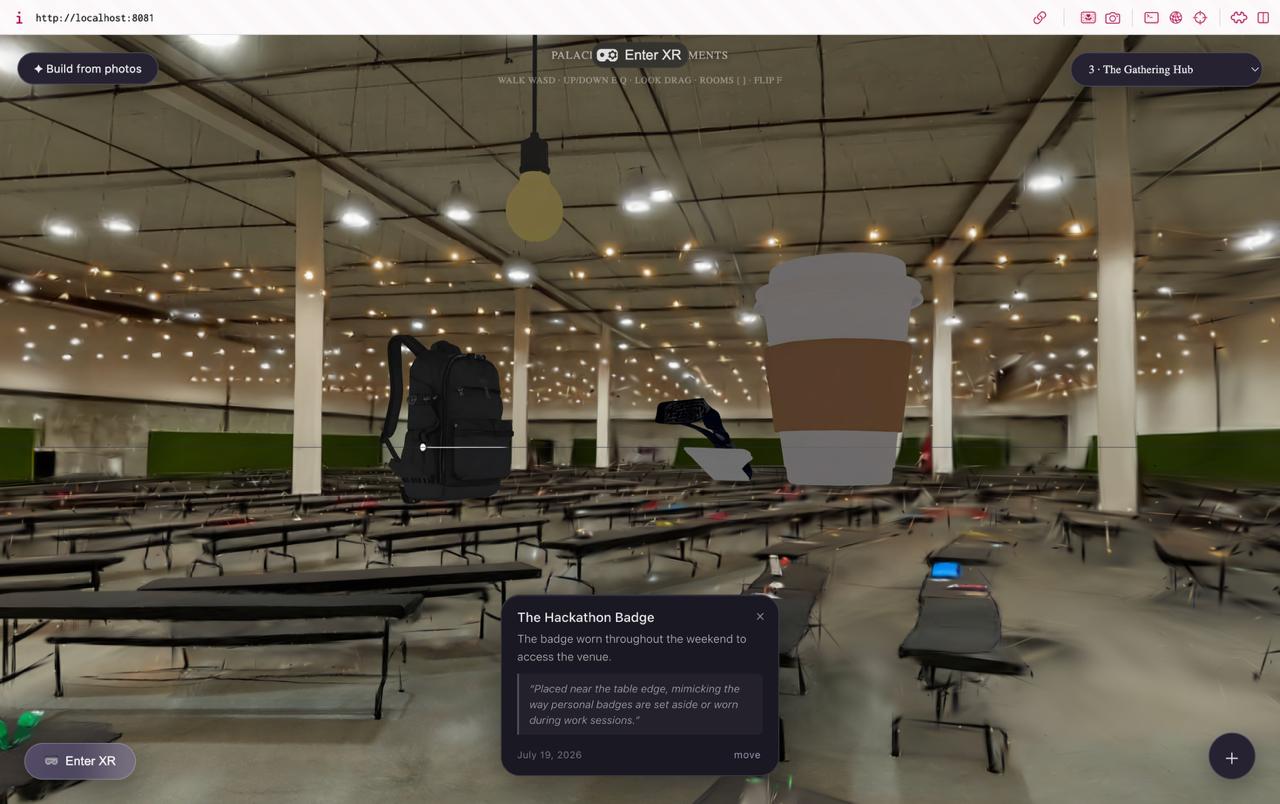
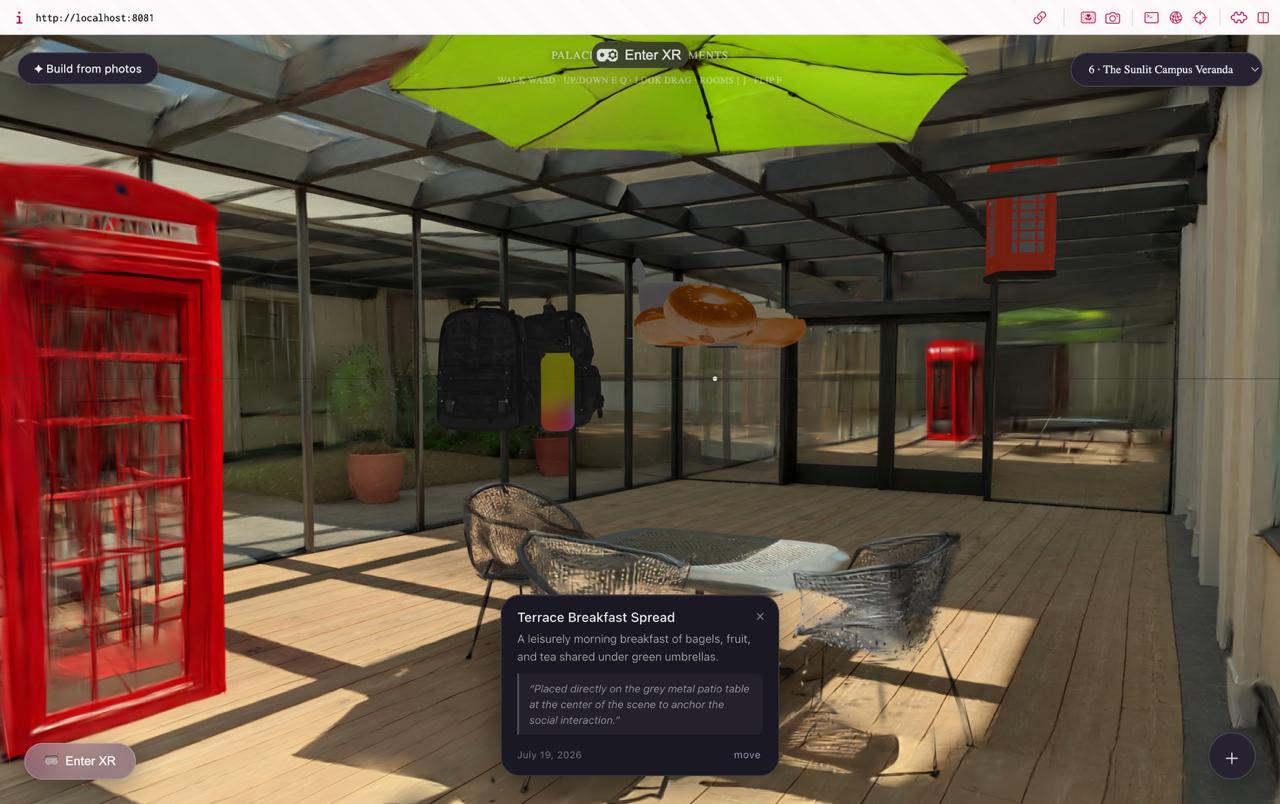
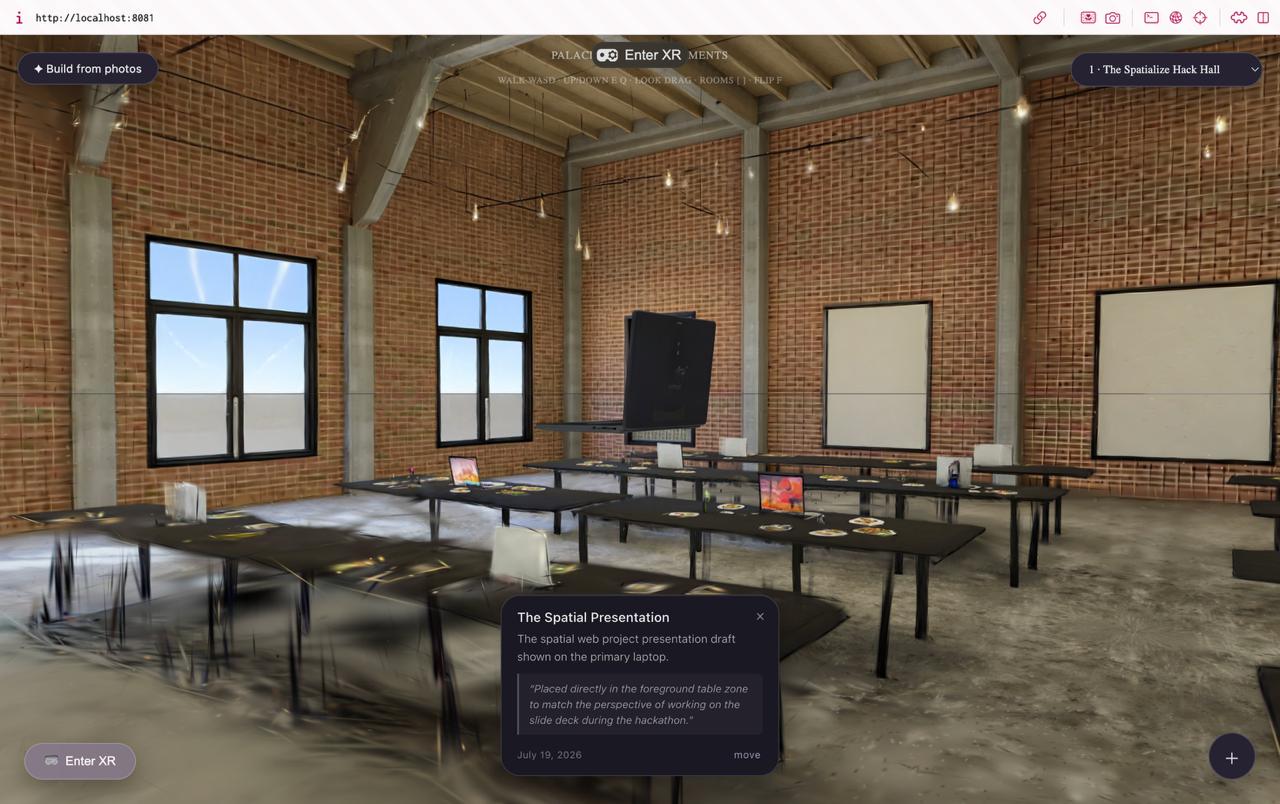
Mindspace turns a curated slice of someone's real data, Obsidian notes, photos, tags, into a small 3D room representing one part of their life. Every object in the room is real: a corkboard holds an actual photo, a stack of journals holds an actual note. Walk up to one and the memory surfaces. It's 3D journaling, the room is the entry.
How we built it
Gemini curates a small set of high-signal memories, favoring notes with lots of backlinks over just recent ones, then writes a WorldLabs prompt describing a room with specific named containers (corkboard, journals, shelf) matched one-to-one to those memories. WorldLabs renders that as a Gaussian splat scene, displayed through WebXR and run on the PICO Emulator. A separate manifest maps each container to its real content, which our app overlays as spatial panels.
Challenges we ran into
We realized mid-hack that WorldLabs generates atmosphere and geometry, not literal objects' content associated with memories; So we had to split the system into a container layer (World Labs) and a memory overlay layer (TRIPO). Keeping the room within a strict slot budget was harder than we expected, and aligning the generated splat geometry with our overlay panels' positions was challenging. The emulator setup (PICO, WebXR) also took longer than planned.
Accomplishments that we're proud of
We got the full pipeline working in one day: real notes and photos in, a personalized navigable mindspace out, with every object traceable to something real rather than generic decoration. We're proud that the curation step actually rejected weak candidates instead of padding the room, and that we kept it privacy-conscious throughout.
What we learned
Generative 3D tools are container generators, not content painters, and designing around that with TRIPO objects made everything simpler. Small curated datasets beat large ones for coherent generation.
What's next for LA05, Kylian
We'd like rooms to evolve as new entries are added, so it becomes a living journal rather than a snapshot. From there, multiple rooms could connect into a navigable "district" structure, the fuller mind palace we originally imagined, plus richer data sources and real headset hardware beyond the emulator.
Built With
- 3d
- api
- gemini
- javascript
- obsidian
- pico-emulator
- prompt-engineering
- python
- spatial-audio
- spatial-computing
- text-to-3d
- vr
- webspatial
- world-labs
- xr

Log in or sign up for Devpost to join the conversation.