About the project
The skill pack for this hackathon starts at 1-start, and 1-start assumes you already have an idea to be interviewed about. Nothing in the pack helps someone who doesn't. 0-IDEA is the step in front of that, which is where the name comes from.
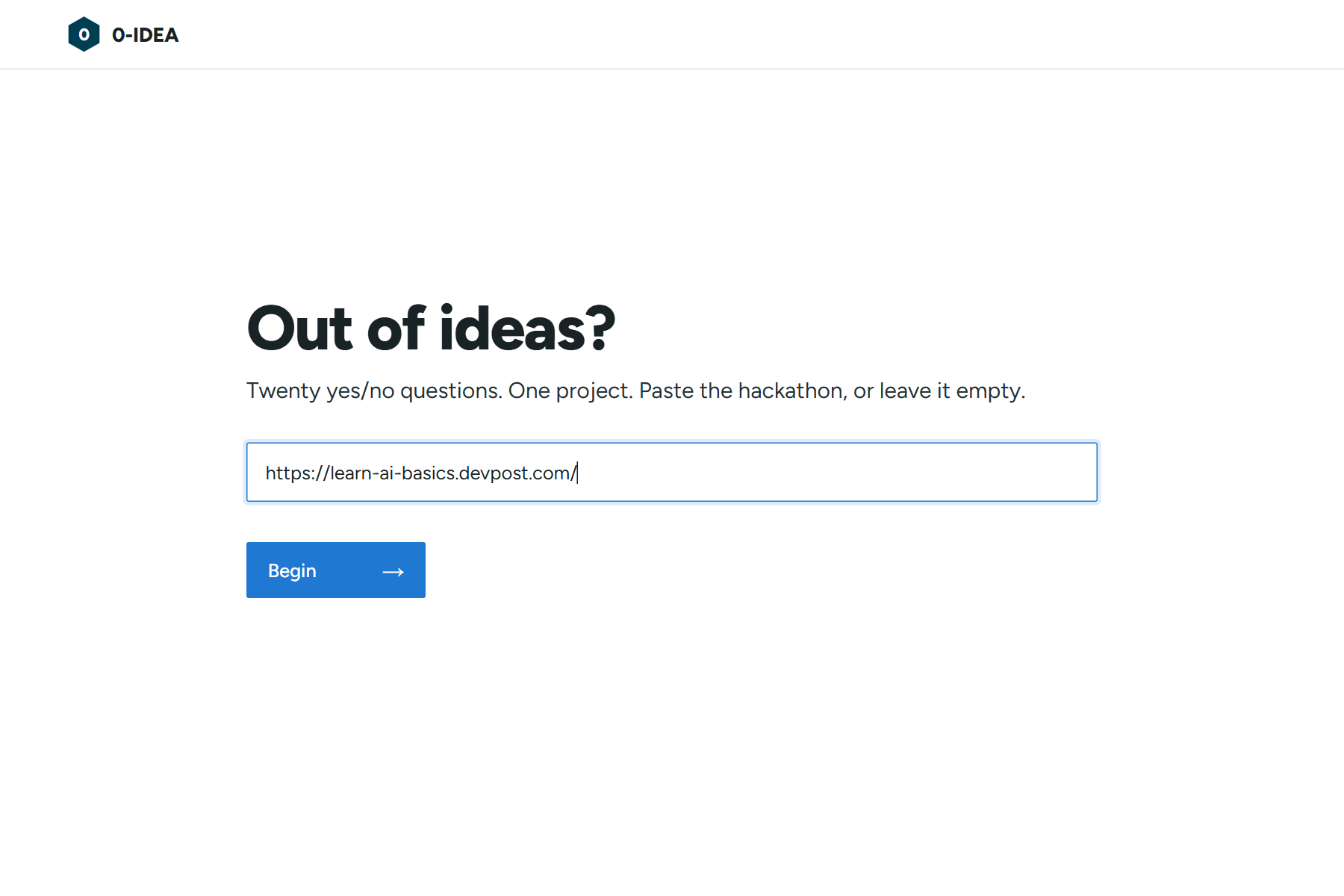
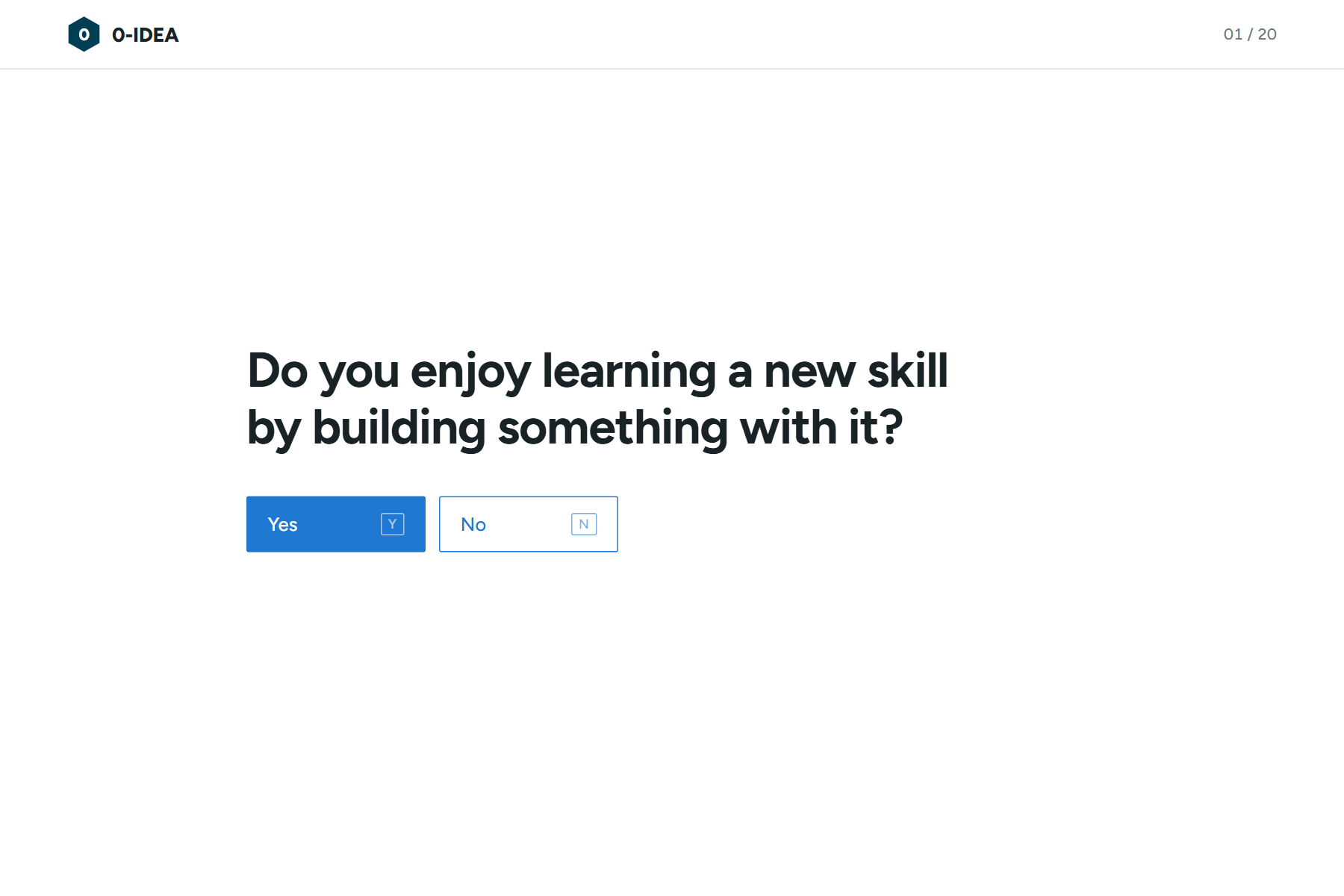
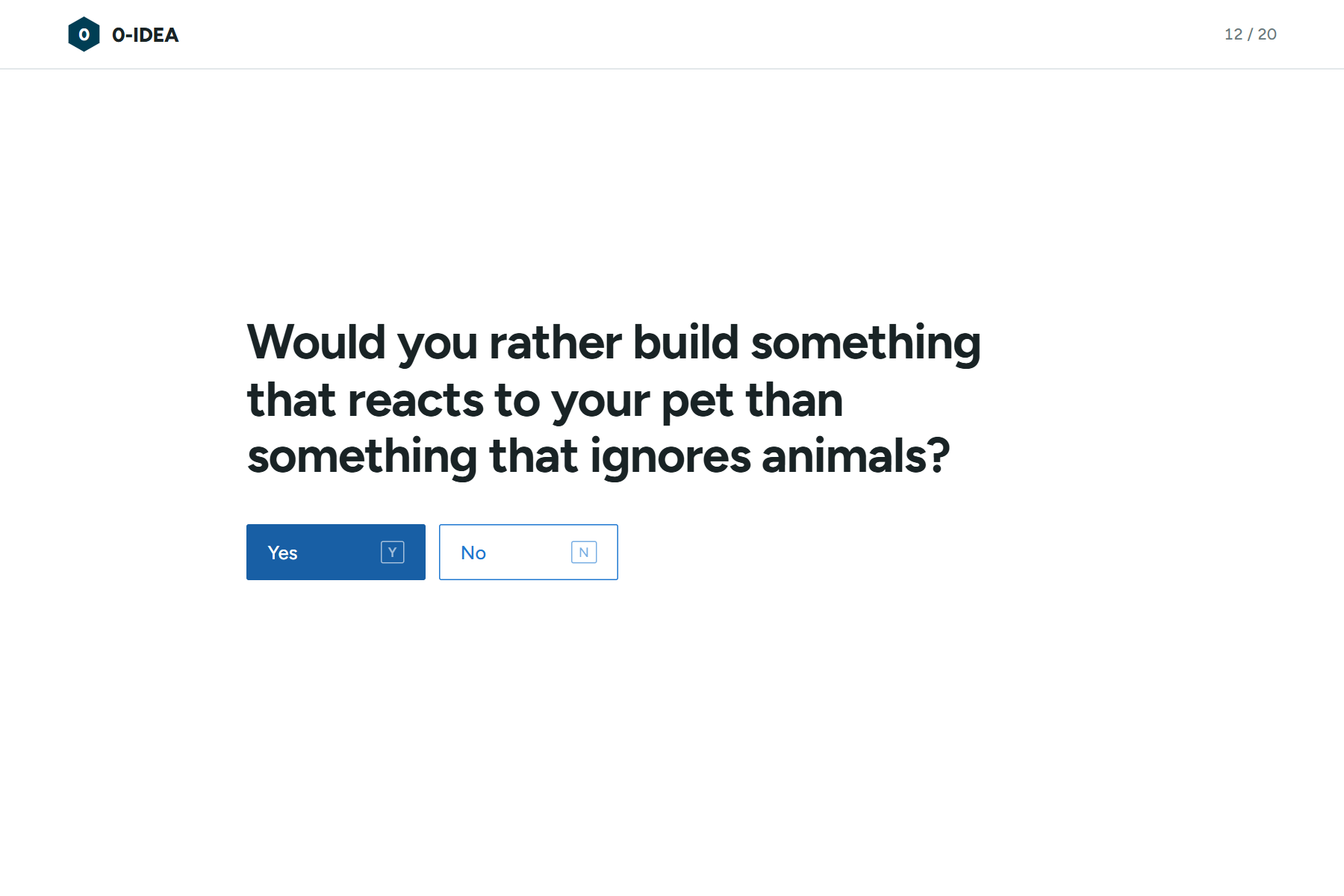
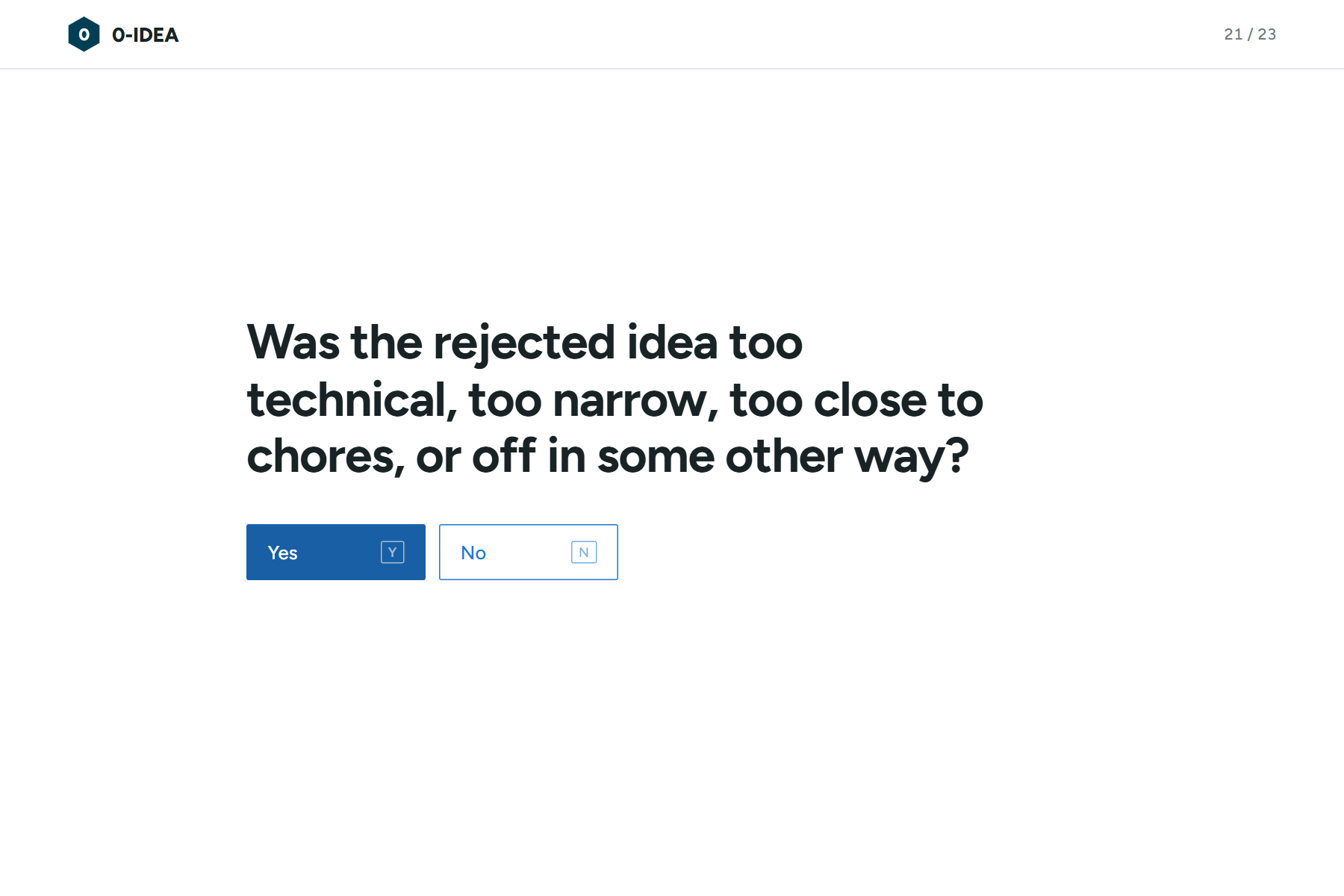
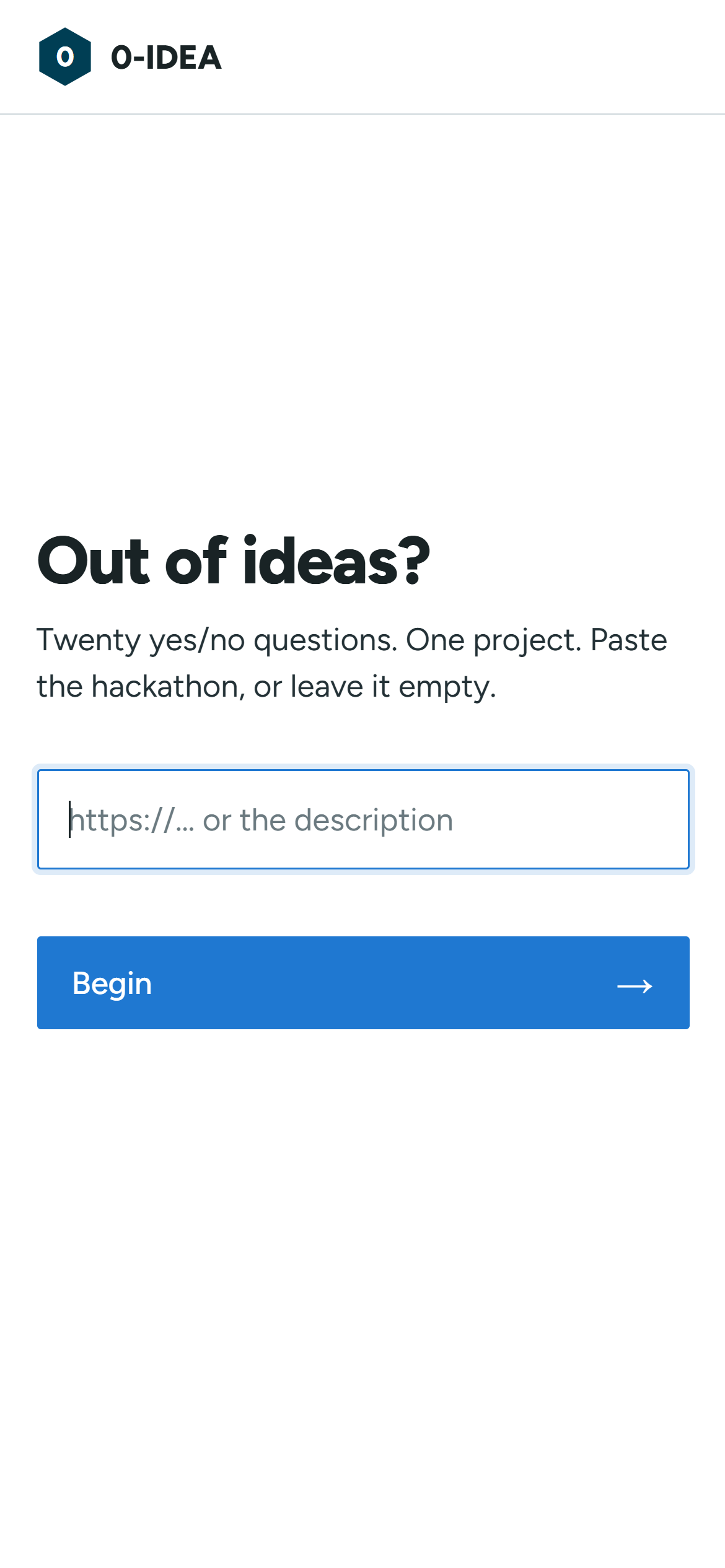
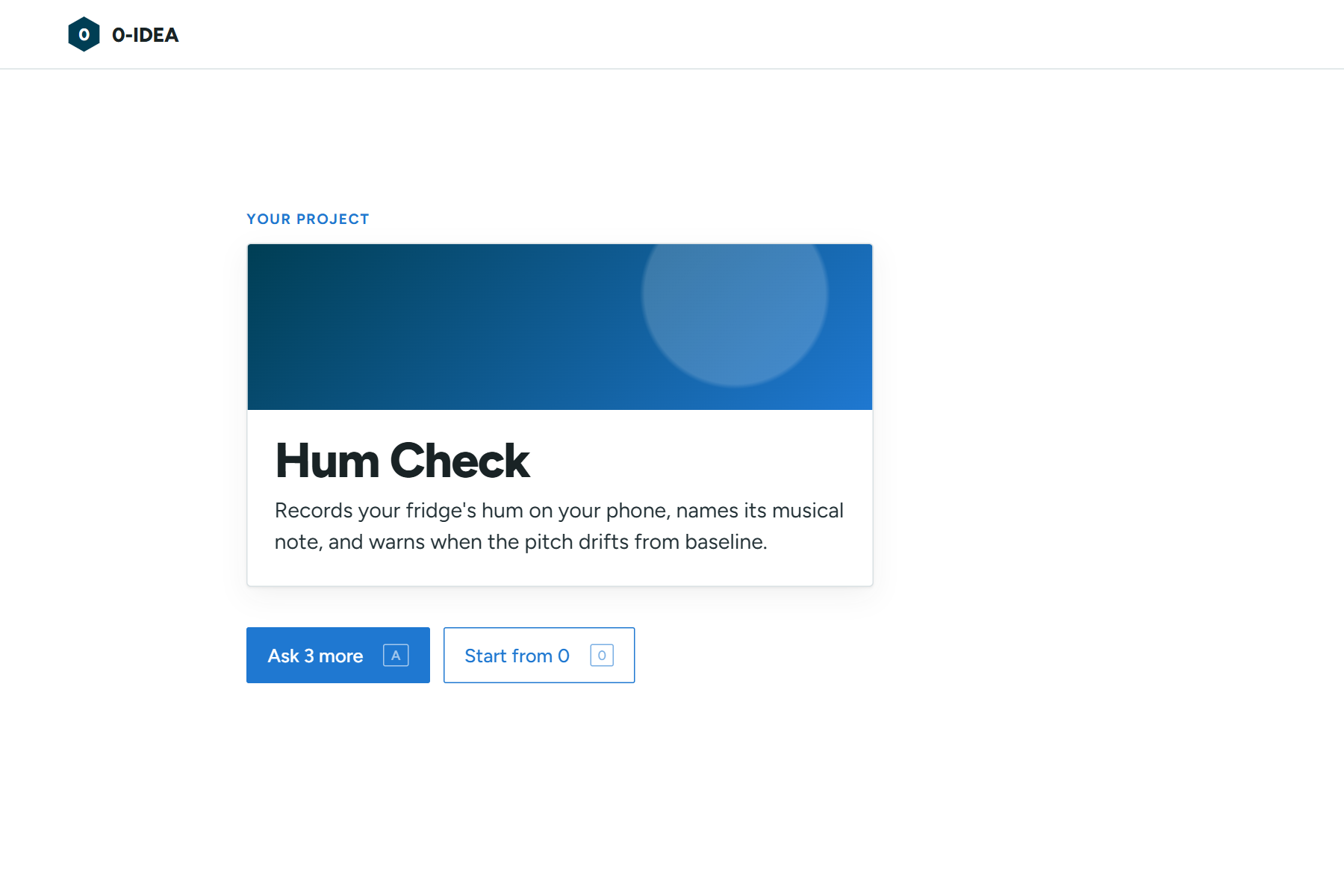
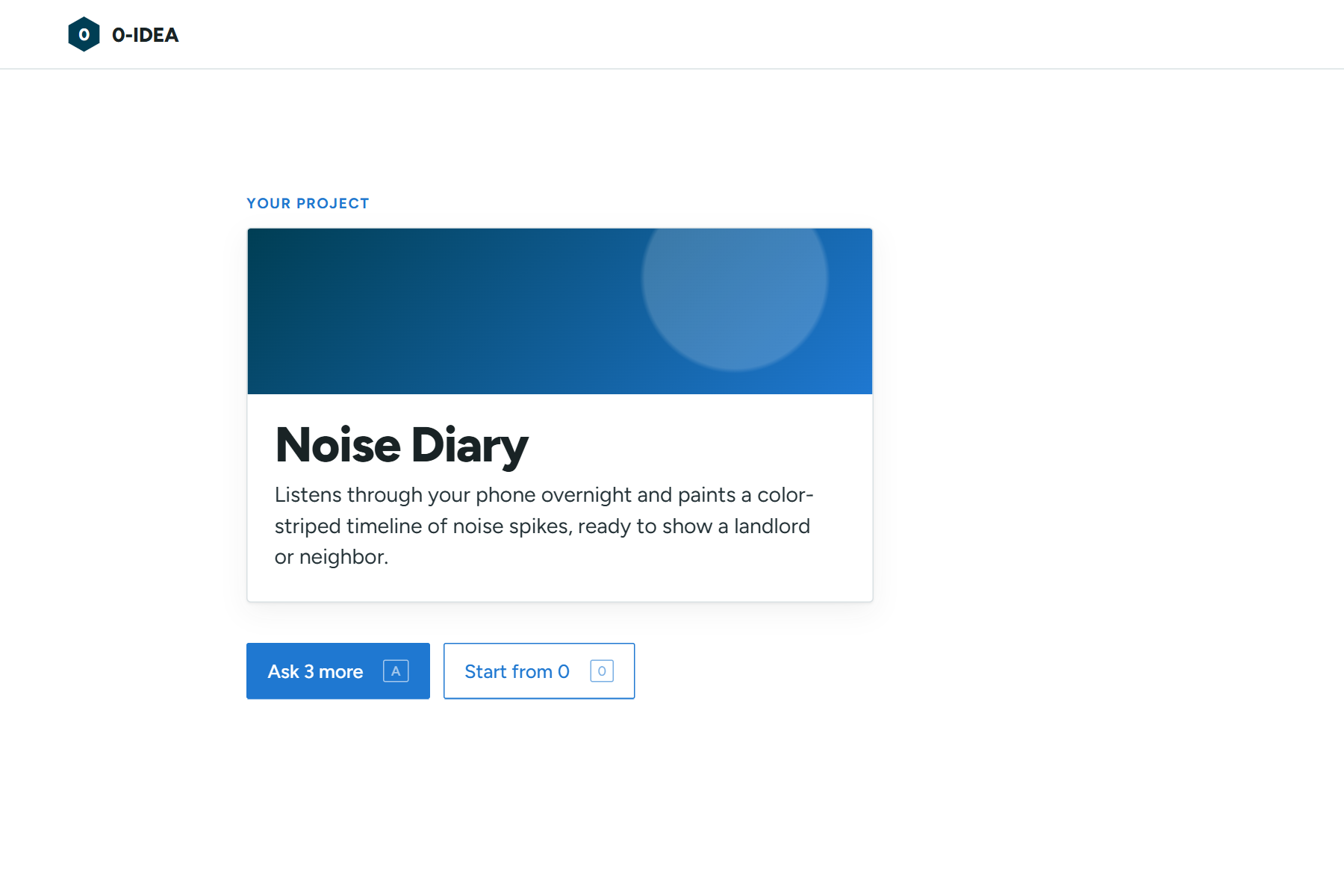
It is twenty questions, but the subject is you. You paste the hackathon link (or the description, or nothing), then answer twenty yes/no questions. No text input after that. Then it names one project. One name, one sentence. It does not offer alternatives, does not explain the reasoning and does not ask if you would like to refine it. If you don't like it, "Ask 3 more" keeps your answers and asks three more questions, and "Start from 0" starts over with different questions.
Why yes/no
Binary questions force the model to narrow down instead of writing three paragraphs of options. A chatbot that asks open questions gets vague answers and gives vague ideas. Twenty forced choices give a position you didn't know you had. The rule "the app decides and does not show its working" is from my earlier project Tonight, which suggests a dish for dinner and learns from refusals.
The app reads the hackathon itself, so the questions are only about you. People don't know the judging criteria or rules by heart, so asking about them with yes/no would be pointless.
How I built it
Ran the Devpost skill pack in Claude Code: start, scope and PRD as interviews, then the spec. I had to leave in the middle of the PRD interview and told the agent to build as much as it can. It wrote the spec and a working prototype on a separate branch. After that I tested it and asked for changes until it was good enough, and merged it.
Plain HTML, CSS and JavaScript, and a small Node server that keeps the API key off the browser and reads the hackathon page. Claude Sonnet 5.5 asks the questions. While you read a question, it already asks the next one for both answers, so most taps are instant. A full run costs about 5 cents.
Challenges
The first versions asked feature questions like "Would you like the app to show a chart?" That is exactly the chatbot thing I wanted to avoid. The fix was to split the questions into phases: who you are, what kind of thing, and what character it has. Feature questions are banned.
Running it twice in a row gave the same questions, which was boring. Sonnet does not take a temperature setting, so now every run draws 8 random life areas (cooking, music, pets, puzzles etc.) for the first questions.
Some things I changed after using it. Maybe as a third answer was dropped. Accept/reject felt artificial, and a single "Try again" that added questions was confusing, so it became two buttons. The first look was dark and serious, like a diagnostic instrument. I changed it to imitate the Devpost style a bit, and the verdict is now shown as a project card, like the submission you haven't made yet.
At one point it showed "No signal" every time. That was the API being overloaded, not a bug. More retries fixed most of it.
What I learned
Every day learning something new, but I feel a little bad that agentic coding works so well, I do not need to take a look at the code at all.
Also having a plan kinda made sense, although my usual process is brainstorming with LLM first, and then change on the fly. But none of that matters if the idea is missing, and that is the point of my project.
Built With
- anthropic-api
- claude
- claude-code
- claude-sonnet
- css
- html
- javascript
- node.js


Log in or sign up for Devpost to join the conversation.