Tourism Team 9
Overview
In a travel-dependent industry, stay-at-home guidelines in the wake of the coronavirus pandemic have wreaked havoc upon the tourism industry. In the United States, over seven million people work in the tourism industry, which takes in over a trillion dollars annually. Convention centers are an integral piece of the tourism industry, serving as the venue for thousands of academic conferences, entertainment conventions, trade shows, and other events every year. A few months ago, these events were filled with bustling guests moving from room to room without worry. Now, COVID has filled organizers and attendees alike with worry and hesitation. Social distancing rules have cut back on the number of people allowed in a room. Contact tracing has become commonplace. How full a building or room is has become a deciding factor for many.
In order to combat these problems, our team has developed EventAndPrevent, a web application that will make large events much safer. EventAndPrevent is the ideal app for businesses in the post-COVID world. Not only can businesses decide how to best set up their spaces based on social distancing guidelines, but customers and attendees can make decisions on where to go based on current capacity. A visitor to a tradeshow can check their phone to see the current capacities of exhibit halls and make their decision based upon this knowledge. Likewise, a family planning to eat out for dinner can see the current capacities of various restaurants in their area.
The app plans to integrate RFID technology where attendees will register themselves entering or exiting a room by scanning their badge on an RFID scanner. This allows organizers to see who went to certain exhibits or halls and monitor the capacity of each room in real-time to ensure the event is as safe as possible. Live tracking also aids them in advertising. If a conference organizer knows that an individual at an academic conference only attended lectures about geology, they can tailor advertisements or email lists to that individual. For the attendees, badge scanning ensures that if a patron were to contract the virus following their attendance at a show, conference organizers can easily see which rooms they visited, and who was in those rooms at the same time. This particular form of contact-tracing narrows down who may have been exposed, while simultaneously maintaining privacy.
Team Members
Isabel Braun (Marketing/Go Team) Isabel is an incoming senior English major at Purdue University. During this challenge, she focused on researching and collating issues facing the tourism industry, and brainstorming how to tailor EventAndPrevent to resolve these issues. In addition, she helped create the environmental analysis, customer profiles, and business model canvas.
Jesus F. Daccarett (Business Analyst/Go Team) Jesus is an incoming sophomore Economics major at Wabash College. His focus was to help build a Value Proposition Design, Business Model Canvas, and an Environmental Analysis that would allow us to build and explain an app that could help the Indianapolis businesses during the COVID-19 pandemic.
Kati Jurgens (Project Manager/Product Team) Kati is an incoming sophomore Computer Science and Software Engineering double major at Rose-Hulman Institute of Technology. Her main focus in this challenge was the database side. This included creating the database, connecting the database to the rest of the project, and creating the logic for methods that used the database.
Travis Zheng (Product Team) Travis is an incoming Sophomore at Rose-Hulman Institute Of Technology studying Computer Science. He was responsible for building the frontend user interface for the app and establishing a connection between the UI and the API.
Drew Keirn (Software Developer/Product Team) Drew is a rising senior at Purdue University majoring in computer science. His focus was on the backend. He implemented the RESTful API and security using Java Spring Boot and deployed the app with Heroku.
Jasmine Wu (Product Team) Jasmine is a rising senior at the University of British Columbia majoring in business and computer science. She was responsible for creating the mock-ups of the app and helping build the frontend user interface using React, HTML/CSS, and Javascript.
How did you decide on this customer segment, problem, and solution?
As our team researched the tourism industry, much of the focus was on the travel industry, specifically international travel. We wanted to focus on a problem that was more widespread and was a major issue for Indiana. Indiana, as the Crossroads of America, hosts thousands of trade shows, conventions, and conferences every year, yet there was little talk about how the convention and conference industry was being impacted by the virus. After we decided that convention centers were going to be our core audience, we contemplated how we could help these places still host events, while complying with any regulations or guidelines. Our idea was to create a calculator that could help these centers set up their rooms to limit the number of people. This idea grew into ideas about advertising capacity to attendees so that they would know if a room was too full or open to new visitors.
While our main focus has been convention centers, we discovered that large hotels often have their own ballrooms and conference halls, which have suffered the same impact from COVID-19 as have convention centers. Bringing in business for hotel conferences might help ease some of the financial strain that hotels have suffered from travel restrictions.
Finally, as we thought about how our app might be widely distributed, we thought about how our capacity monitoring side of the app could aid customers in decision making. As restaurants rely on last-minute decisions from hungry families, we realized that our app would be perfect for helping busy restaurants maintain appropriate crowd levels, while also serving as a sort of advertisement for restaurants with little business.
How did your team build and iterate on the solution?
Our team met a few times a week to brainstorm ideas and create a solution. We identified a lack of technology to help large spaces in the tourism industry be able to host smaller events during COVID-19 again while practicing social distancing and safety guidelines as recommended by the CDC. We came up with EventAndPrevent to help bridge the gap between attendees fearful of attending public events and event hosts wanting to implement social distancing guidelines at their events.
Through the Go team’s research and business model analysis, we determined that we wanted to build an app that helps both event hosts and event attendees practice social distancing guidelines during the pandemic. EventAndPrevent is an all-in-one event safety app that includes a max capacity per room calculator, map and room tracker, and attendee QR codes. The Pro team created mockups of the app structure and used Bootstrap to quickly form the basic structure of our application.
While working on the project, the team communicated regularly each week through Slack channels. The Pro team kept code organized through GitHub and used comments to document each change to the code base. Jasmine and Travis worked mainly on building the front-end of the application while Kati and Drew worked on the back-end database and deployment. When deciding which tools or technologies to use, the team discussed with each other to understand what each member already knew and which tool would be the simplest and most efficient for the project. Each member also helped test the key features of the app and provided feedback to the team.
Some key learnings by working on the project included understanding the user, managing the scope of the project, and communication. Before we started implementing features of the app, the Pro team collaborated with the Go team to understand who our target market was and what pain points they had. By understanding our users of the app, we were able to determine what capabilities were most important to include, and for our app, that was the capacity calculator and tracker. We also learned to manage the scope of the project effectively so that we could accomplish our tasks well within five weeks. Instead of trying to implement all the features we could think of, we focused on a select few so that they worked accurately and effectively. Finally, we also learned to have good communication with team members throughout the week so everybody knew what tasks they were responsible for and were on the same page.
Key Metrics
2 SME interviews
1 contact with the Indiana Convention Center
“Each year Ontario Systems plays host to 1000+ industry experts, clients and prospects at our Annual User Conference, PowerUp.
With more than 60 concurrent sessions and three days of content-rich sessions, EventAndPrevent is the exact solution we are looking for to help us with logistics/planning so that we are in accordance with CDC guidelines to help ensure the safety of our event attendees remains top of mind. Additionally, attendees are desperately looking for some much-needed assurance and this Application is a large step in the right direction.
This event is a critical component of our Marketing/Sales strategy and sets us up for the entire year. Canceling the conference all together is not an option for our organization. We are also excited to contribute to the financial/economic recovery of the event space in which we host. EventAndPrevent is a valuable tool for us and we are excited to move the needle forward.”
Jenny Johnson
Manager, Ontario Systems
Technical Details and Diagrams
GitHub Repo: https://github.com/tourism9/conferencecalculator
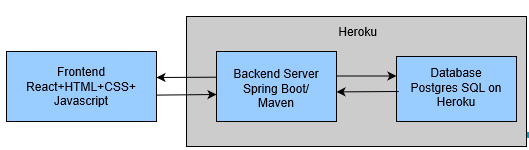
Tech Stack photos below.
https://drive.google.com/file/d/1WMHSaVyORiSwBBvVcEG9eDewWljCYz3k/view?usp=sharing https://drive.google.com/file/d/1uFDkcPns-QhYkEbHM6iiOIJfNw8MbzIS/view?usp=sharing
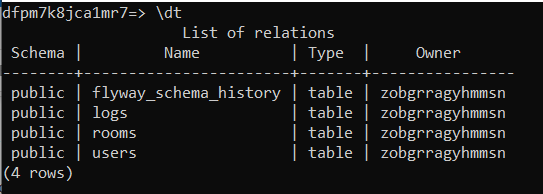
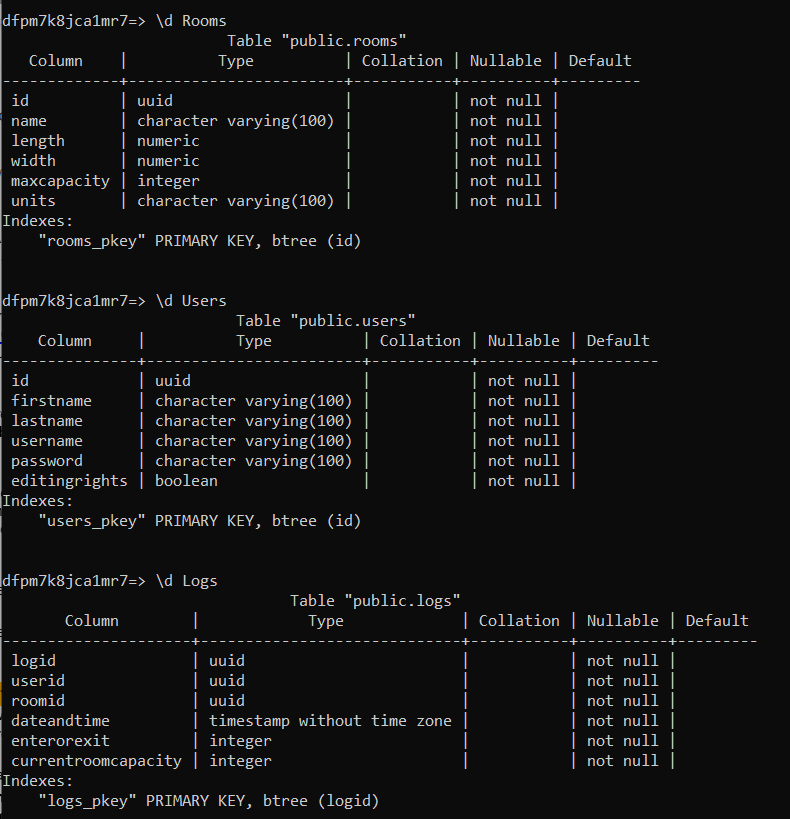
Database photos below.
https://drive.google.com/file/d/1c13LnkZq-wBYozvsSnp0m3XenygC27o1/view?usp=sharing https://drive.google.com/file/d/1jOt1cBECHEWX8ANfGg7PAgWp7PrDW9tw/view?usp=sharing
Key Tools, Libraries, and Frameworks
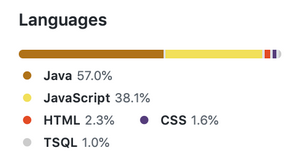
HTML / CSS - We chose to use HTML / CSS because the Pro team was already familiar with the languages and they implemented well with Javascript and React components.
Javascript - We chose to use Javascript for the front-end as we wanted to use React as our framework to build the app’s components and user interfaces fast and responsive.
Java - We chose to use Java to build our back-end as the Pro team was already familiar with the language, Java had a lot of power libraries, integrated well with IntelliJ, and easy to test.
React JS - We chose React JS because it is relatively easy to learn and powerful for building user interfaces.
React Bootstrap - This react framework made life easier. We used many of its pre-built and responsive UI components in our app that would’ve otherwise required complex HTML to build.
Postgres on Heroku - We used Heroku as our deployment environment and Heroku Postgres was a convenient way to host our database.
Spring Boot / Maven - Spring Boot is an easy way to get started with an “up and running” Java application. Maven manages the many dependencies that we used.
If you had another 5 weeks to work on this, what would you do next?
For the technical side, our team would focus on implementing the interactive map page of our app. In addition to the Rooms page that changes color depending on current capacity, users would also be able to track capacity by looking at the map of the convention center or event space. This would help attendees determine where most people are at the event and plan where they would go next in the event space. We would also work on launching the responsive web app as a mobile application in the App Store so attendees would be able to receive notifications, updates, and check room capacities faster on their phones.
On the business side, our team would focus on how to make our app commonplace. We would research potential partnerships and how to obtain them, as well as develop an advertisement or two that could be used by our customer base to garner their own customers. Additionally, we would look into expanding into even larger events, such as concerts. Our business model canvas would be greatly expanded on; narrowing down with specificity how revenue would be collected, and how capital and other key resources would be recruited.
Checklist of Complete Items
Environmental Analysis, Value Proposition Canvas, Business Model Canvas, and Customer Personas uploaded as PDFs.
Built With
- css
- heroku
- html
- java
- javascript
- postgresql
- react
- spring-boot




Log in or sign up for Devpost to join the conversation.