-
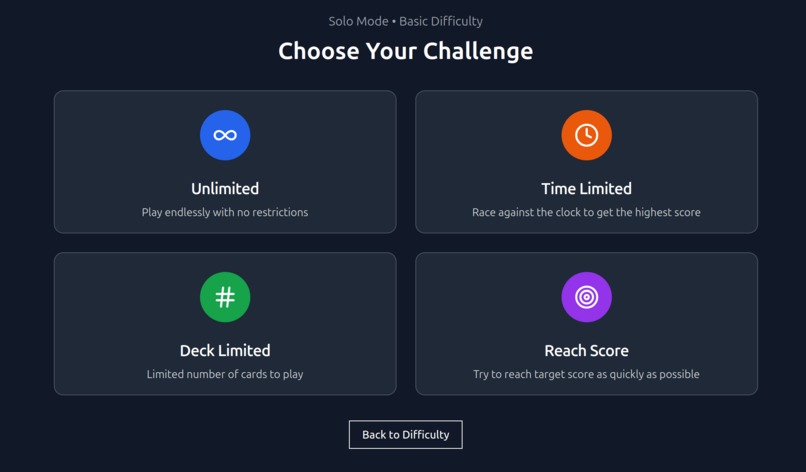
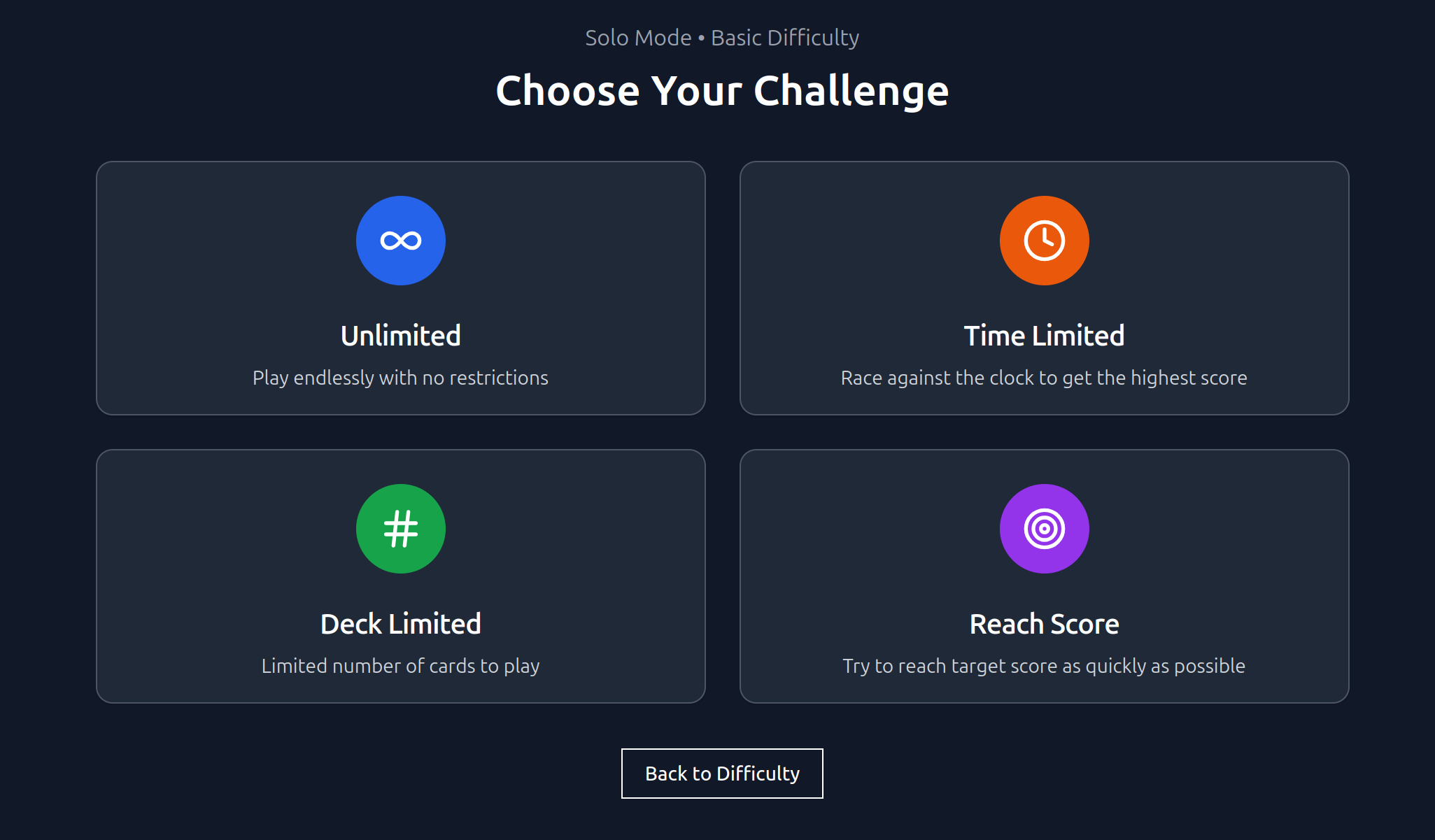
Difficulty Select
-
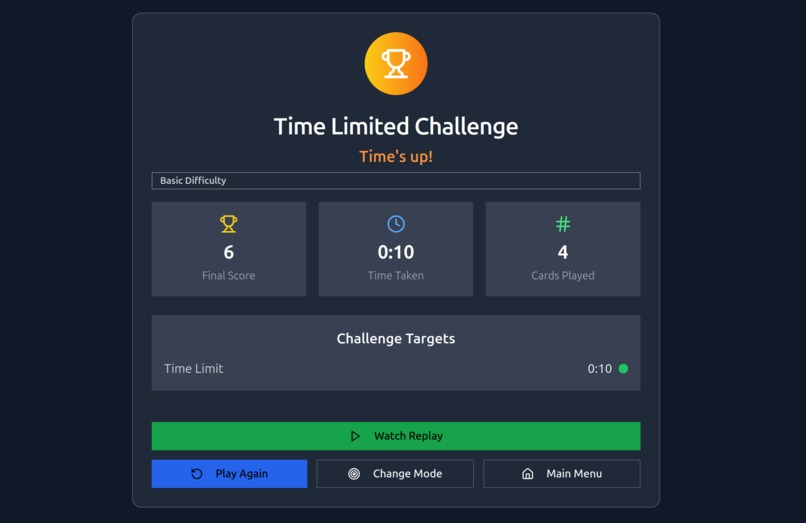
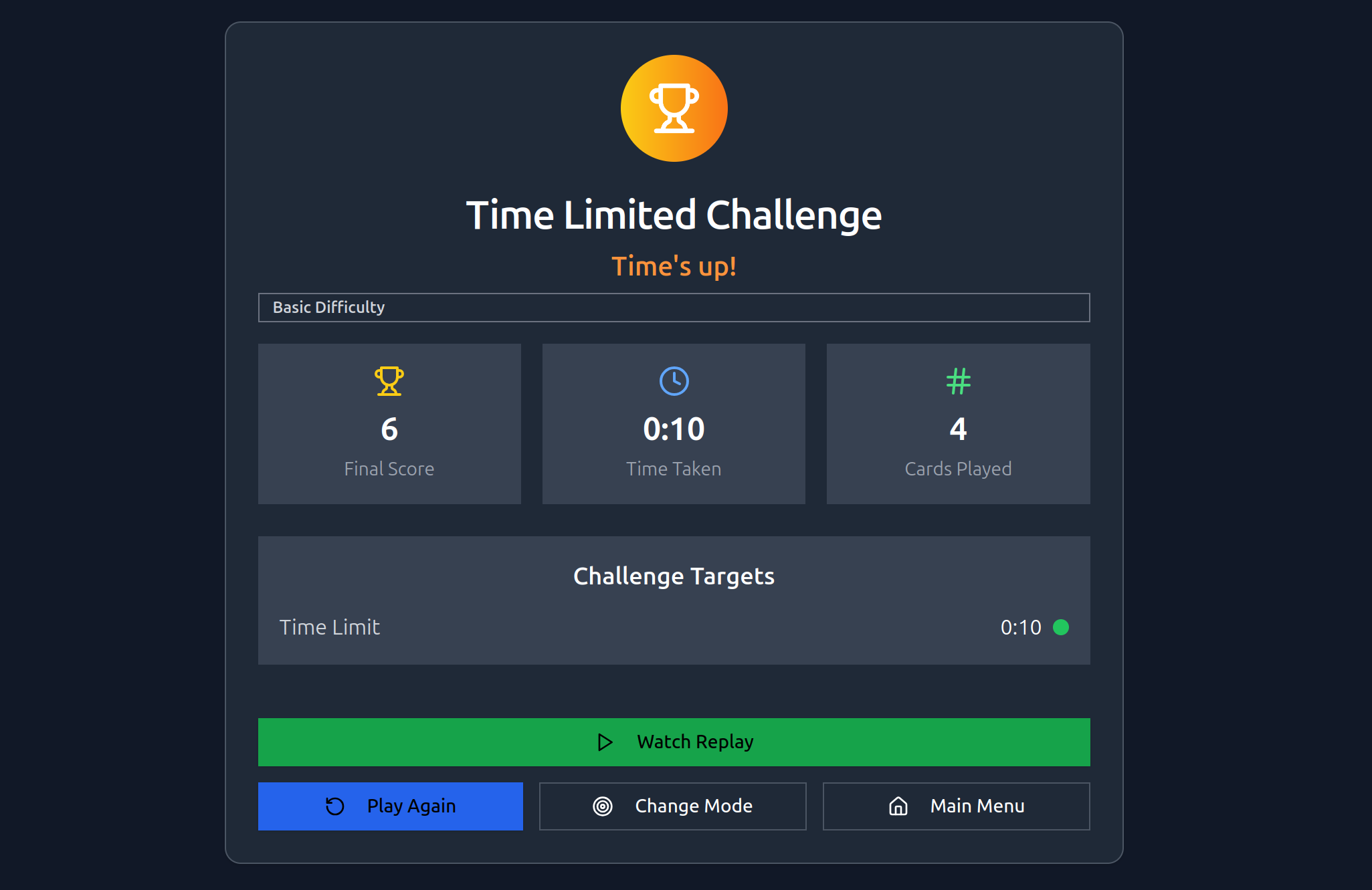
Ending Screen
-
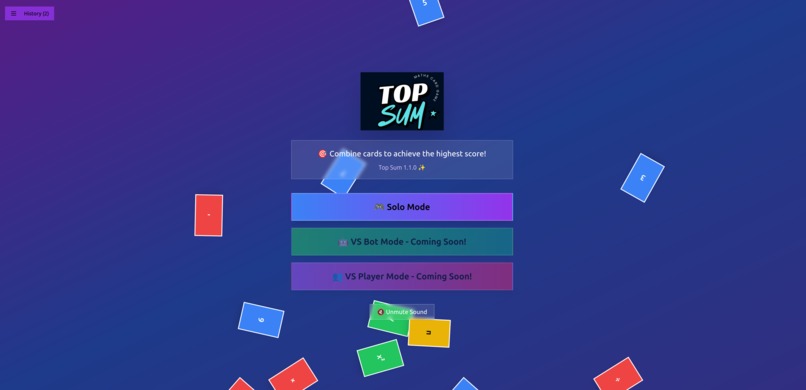
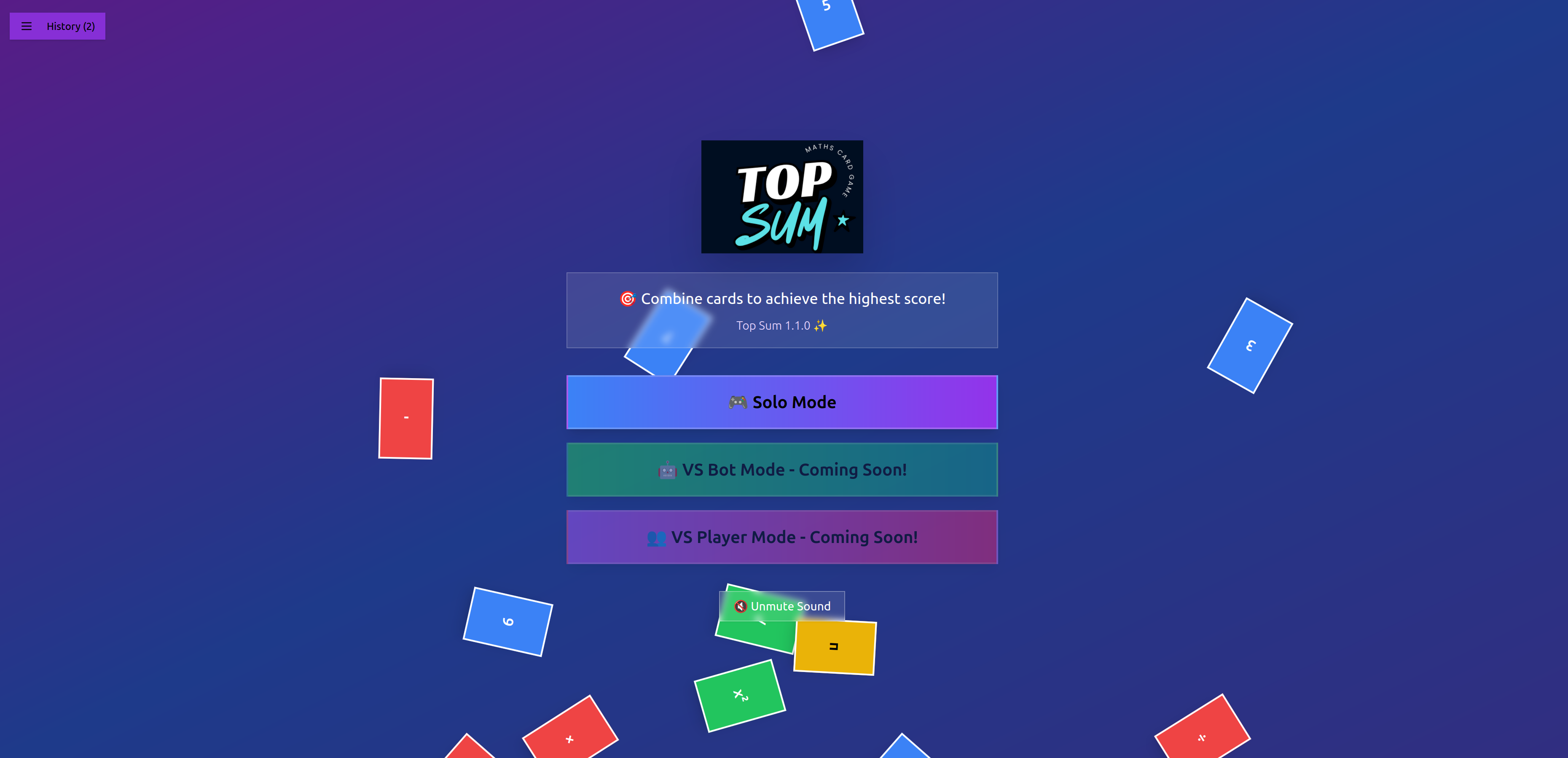
Main Menu / Landing Page
-
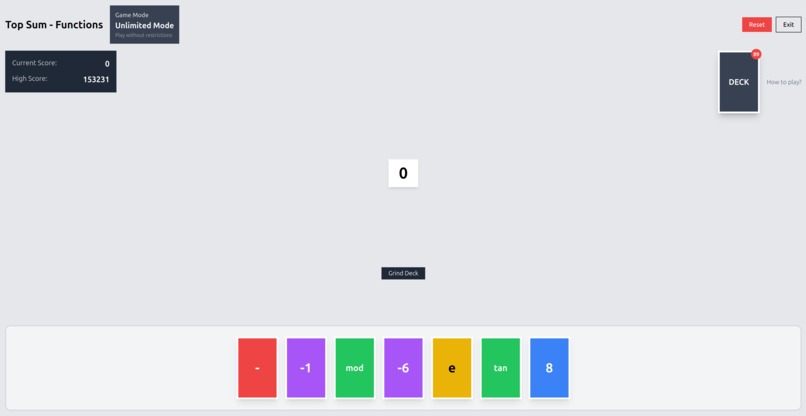
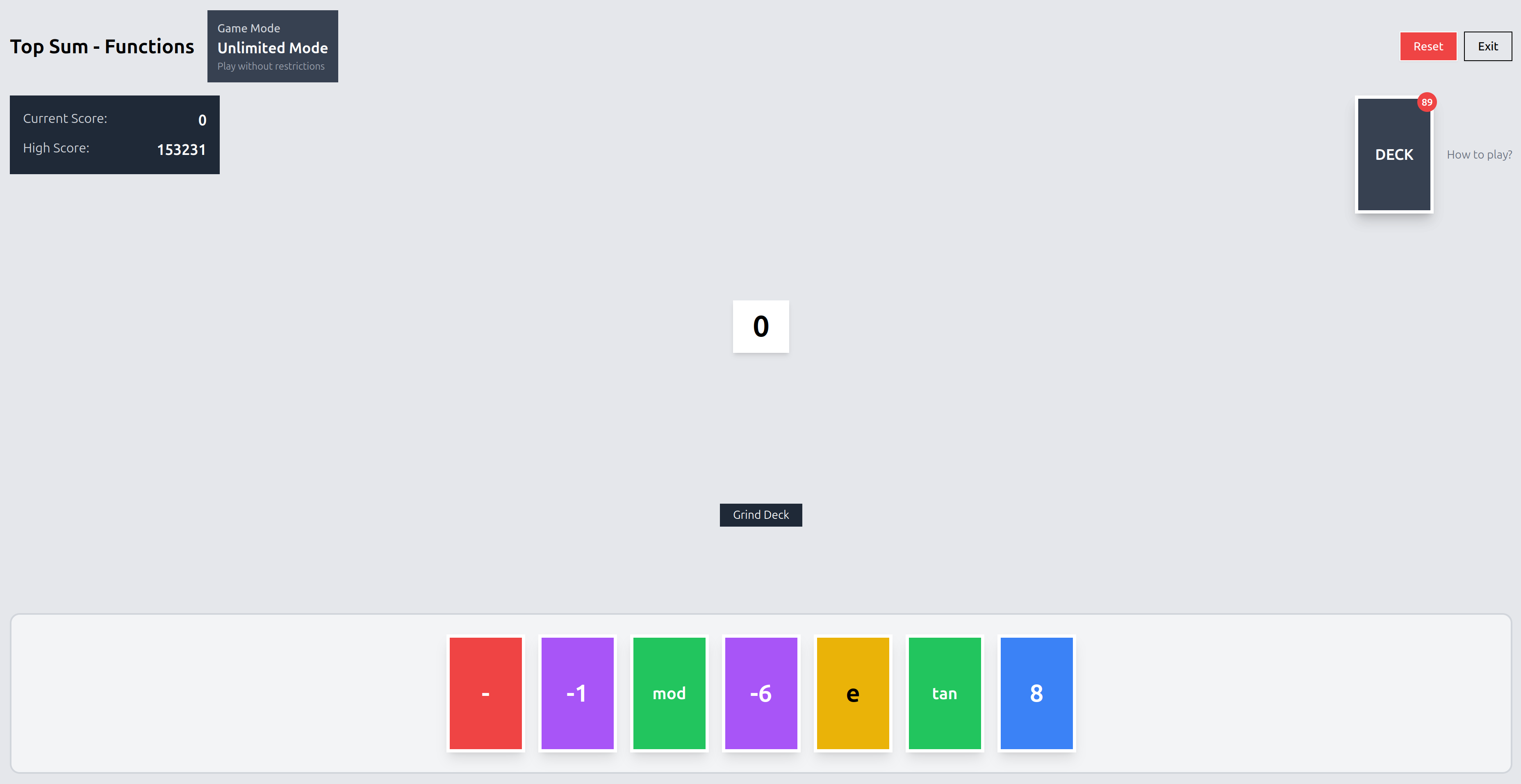
Game Board
Inspiration
I was inspired by a video I saw on the Internet where some guys pretended that they could use maths functions as action cards and play them on their friends to reduce them to the number zero. For example, using the 'ln' card on their friend who had a number 1 reduced them to zero. I was really excited to try and build this as an actual game, with an education focus in mind.
What it does
The goal is simple - get the highest number in the "Grind Deck". This will be recorded as your score.
After selecting your difficulty level, here's how the game works:
- Click on any number card to be your starting value. These are blue (positive) and purple (negative).
- Select any red (operation) or green (function) cards. These change the value of your Grind Deck according to the mathematical symbol on the card. Some cards require a second number card to be played.
- The cards you just played are automatically discarded and new ones are automatically drawn for you.
- Continue, and get the Top Sum! Try different techniques, cards and strategies!
SOLO GAME MODES:
- Unlimited - endless fun!
- Time Limited Get the highest score (the TOP SUM) before time runs out!
- Deck Limited Get the highest score (the TOP SUM) before you run out of cards!
- Reach Score Get the highest score (the TOP SUM) in the shortest amount of time and cards! Strategy is essential!
DIFFICULTY LEVELS: Level 1 - Basic Designed for young learners, the game deck in this mode features number cards with numerals from 0 to 9, and 4 types of operation cards corresponding to the four arithmetic operations in maths: addition, subtraction, multiplication and division. There are no negative numbers or decimals found in this game mode. Division always returns the quotient.
Level 2 - Fractions One big difference between Level 2 and Level 1 is that in Level 2, the Grind Deck can now take on decimal and negative values. That means that division returns the decimal value rather than the quotient. Cards for some mathemtical constants like pi and e are added to the deck. Soon, new number cards with simple fractions will be added to the deck.
Level 3 - Negative Numbers In Level 3, purple cards with negative numbers are added to the deck! This unlocks many new gameplay options and strategies. For example, subtracting negative numbers increase the grind deck value. Try and discover the rest for yourself!
Level 4 - Functions This mode is for players with more experience in mathematics and familiarity with common functions like the use of indices and roots, trigonometric functions, reciprocals, modulus, Pythagoras' Theorem... there is an ever-expanding suite of green Function cards that are added to the deck which unlock loads of new gameplay challenges!
There is a history tab on the main menu which records the games played on your local computer.
How we built it
I used Repl AI to build the initial draft (the 4 game modes) and design the layout, and then I continued working on the game logic, card decks (adding new cards and fixing broken / malfunctioning cards produced by the AI) and deck size limits (ensuring max 7 cards, and that playable cards would always be in the player's hand).
Challenges we ran into
I had never programmed in React before so it was a good challenge learning how to navigate the file tree structure created by the AI and making the changes I needed to the layout and game logic. I had never implemented CI/CD or building and hosting a web app so it was a great learning experience.
Accomplishments that we're proud of
I am truly blown away by how the game exactly matches my vision. I am proud of coming up with the 4 game modes, which from my very informal audience testing has something to offer for everyone. People love exploring new strategies and challenges through the game modes, and people can easily get carried away with Unlimited mode. The use of different difficulty levels as well is a great feature because I can give a different version of the game to different age groups depending on how much maths they have learned in school.
What we learned
I have learned a great deal! From how to program in React to building and hosting web apps, to intentionally creating unique game experiences for different groups of people, creating TOP SUM was great for my personal development, and I hope that it can create great experiences for students around the world!
What's next for TOP SUM
I plan to make VS mode where players can play against other people like the original video that inspired me. I also plan to make Classroom mode (or Education mode) where teachers can create game sessions for students to join, set the game mode and difficulty, and monitor and pause the game students are playing, to facilitate learning.

Log in or sign up for Devpost to join the conversation.