-
-
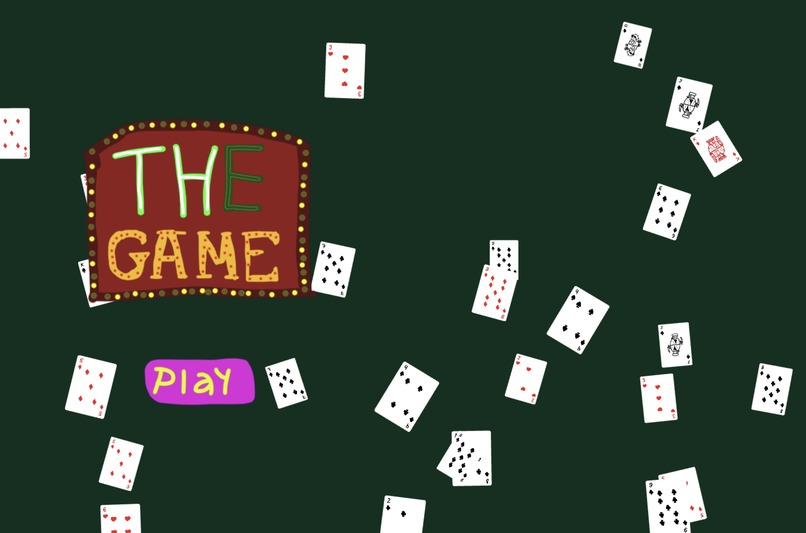
Main Menu
-
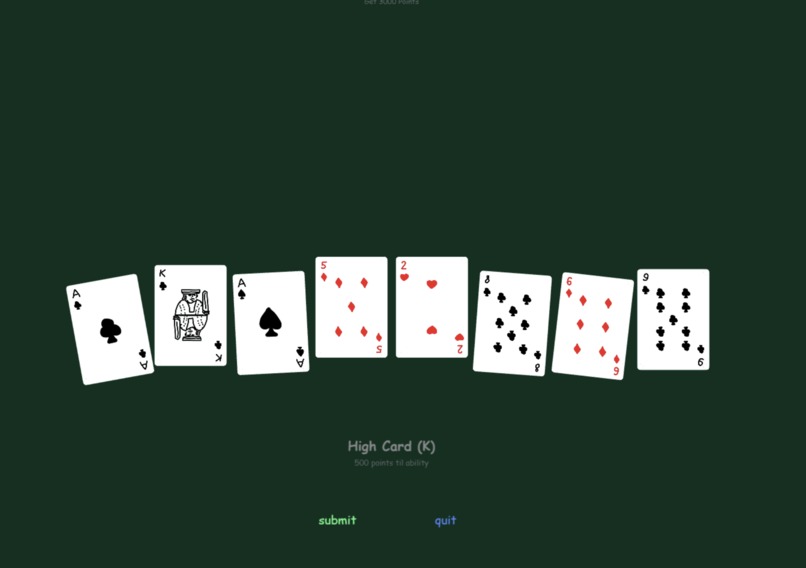
Solo Game
Inspiration
I wanted to make a competitive game that was easy to grasp. I like playing poker, and observing my friend play 1v1 tetris. That was a big inspo.
What it does
THE Game is a real-time browser-based card game with both solo and multiplayer play. Players build poker hands from a live hand of cards, submit them for points, and race toward the score target.
How we built it
The frontend was built with SvelteKit, Phaser, and Vite, with Phaser handling the game scenes, animation, card rendering, and UI transitions. The backend was built with Node.js, Express, and Socket.IO to manage multiplayer rooms, real-time game state, hand scoring, and synchronized gameplay events. Supabase was used for authentication and data-related backend integration. We also containerized the project with Docker and Docker Compose to make local builds and deployment simpler, with AWS in mind for production hosting.
Challenges we ran into
One of the biggest challenges was getting the game to feel good. Small animation issues, awkward hand layouts, and abrupt UI transitions had a much bigger impact on the experience . Multiplayer also introduced a separate layer of difficulty, especially around reconnect handling, and keeping the backend authoritative without making the frontend feel laggy.
Accomplishments that we're proud of
We’re proud that the project ended up feeling like a real game instead of just a prototype. The menu system, animated card presentation, custom sprite buttons, and hand interactions all contribute to a distinct visual identity. On the technical side, I'm proud of building a full multiplayer loop with real-time rooms and a clean separation between frontend presentation and backend logic.
What we learned
We learned how much game feel depends on iteration. Visual polish, motion, timing, and interaction feedback matter just as much as the core mechanics. We also learned a lot about managing real-time state between a frontend game client and a backend server, especially when things go wrong, like disconnects, focus changes, and partial session recovery. Finally, we got hands-on experience with deployment planning, environment separation, Docker workflows, and shaping a project so it can move from local development toward production.
What's next for THE Game
The next step is to fully deploy THE Game and make it playable online through a custom domain
I also have utils to make your own custom deck if you make a spritesheet and stuff. Checkout the source code.


Log in or sign up for Devpost to join the conversation.