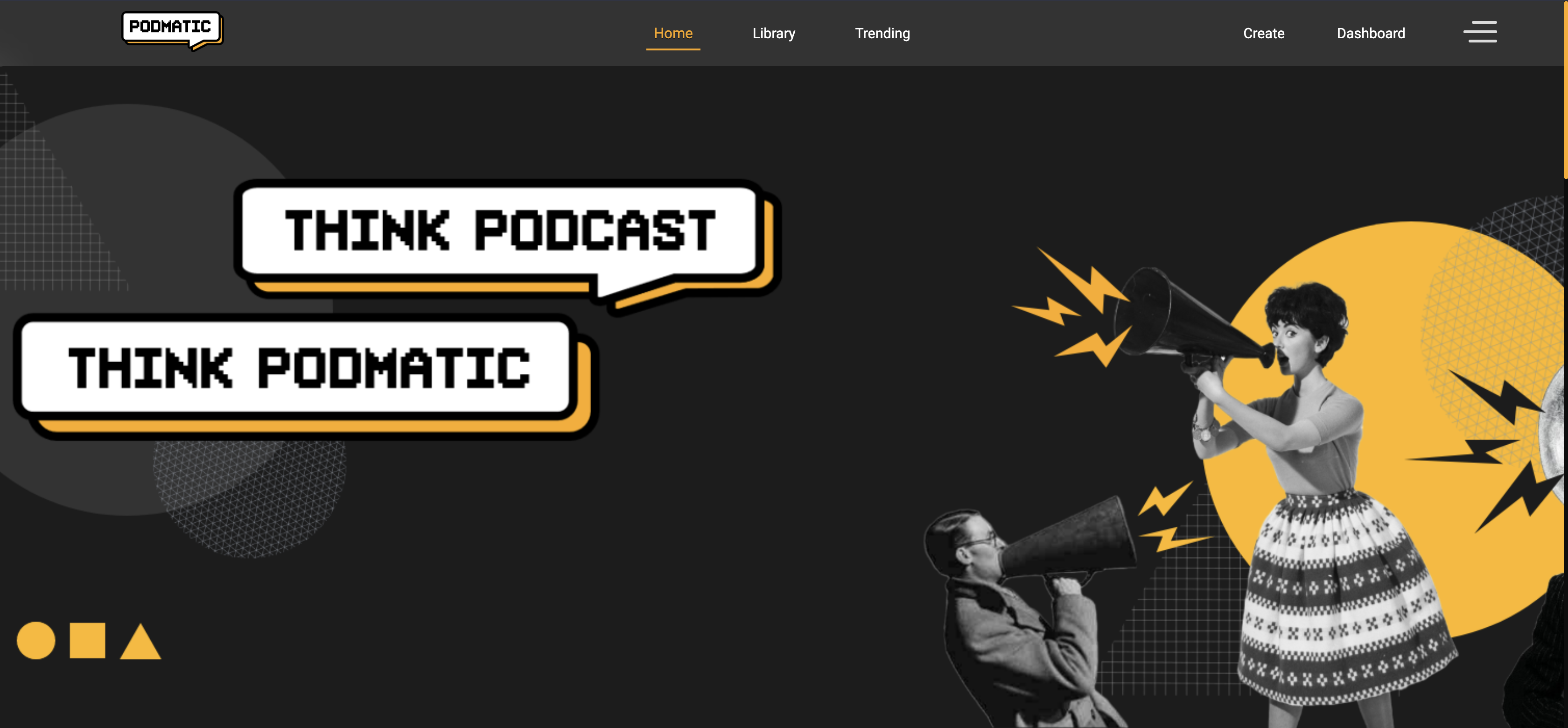
Podmatic is an NFT marketplace for podcasters and fans. We aim to uplift podcasters by enabling them to create NFTs of their podcasts and provide them with the royalties and recognition that they deserve.
Inspiration
The Creator Economy is going through an indie revolution, but the industry is still largely structured in favor of mainstream podcasters signed up by the Majors.
The Indie podcasters struggle to get discovered and are unable to make enough to financially sustain themselves. The centralized platforms and middlemen eat up most of the revenue. The podcasters are unable to differentiate between “real fans” and mere “followers” and that restricts them from cultivating a passionate fan base. Digitalization has made creating and releasing podcasts easier than ever but making money off it is as difficult as it has ever been.
The true fans get lost in the sea of followers, they don’t have a platform to support their favorite podcasters. The fans have no way to invest and grow with their favorite podcaster.
What it does
Podmatic will enable podcaster discovery and provide them with new sources of income, and give fans a chance to own and collect podcasts in this digital age of creator economy while establishing a true connection with the podcasters that they truly admire.
Podmatic is a one-stop shop for podcasters and fans who are looking to establish a real connection with each other, raise money that will help sustain their art, and collaborate with each other.
Podmatic is more than just an NFT marketplace for podcasters and fans. It will bring Podcasters and Fans together like never before and unlock novel models of communications and commerce.
At the same time, investors will be able to own “art” that will increase in value over time. Managers will be able to run marketing campaigns and build a podcaster’s brand. And Record labels will be on the lookout for the best and the brightest talent in the industry and Podmatic will be the place where they discover that talent first!
How we built it
Here's a quick overview of the whole journey of building Podmatic:
- Brainstorming and in-depth research on NFTs, Smart Contracts, UI/UX best practices, case studies, the podcast industry, and so on
- Market Research
- Planning and writing blueprint
- Assigning roles and responsibilities
- Creating a design language for the platform
- UI/UX wireframing
- Phase 1: Designing and developing MVP
- Phase 2: Designing and developing the final product
- Phase 3: Testing and fixing bugs
- Fixing some more bugs : )
- Final testing & upload on GitHub
How does it work?
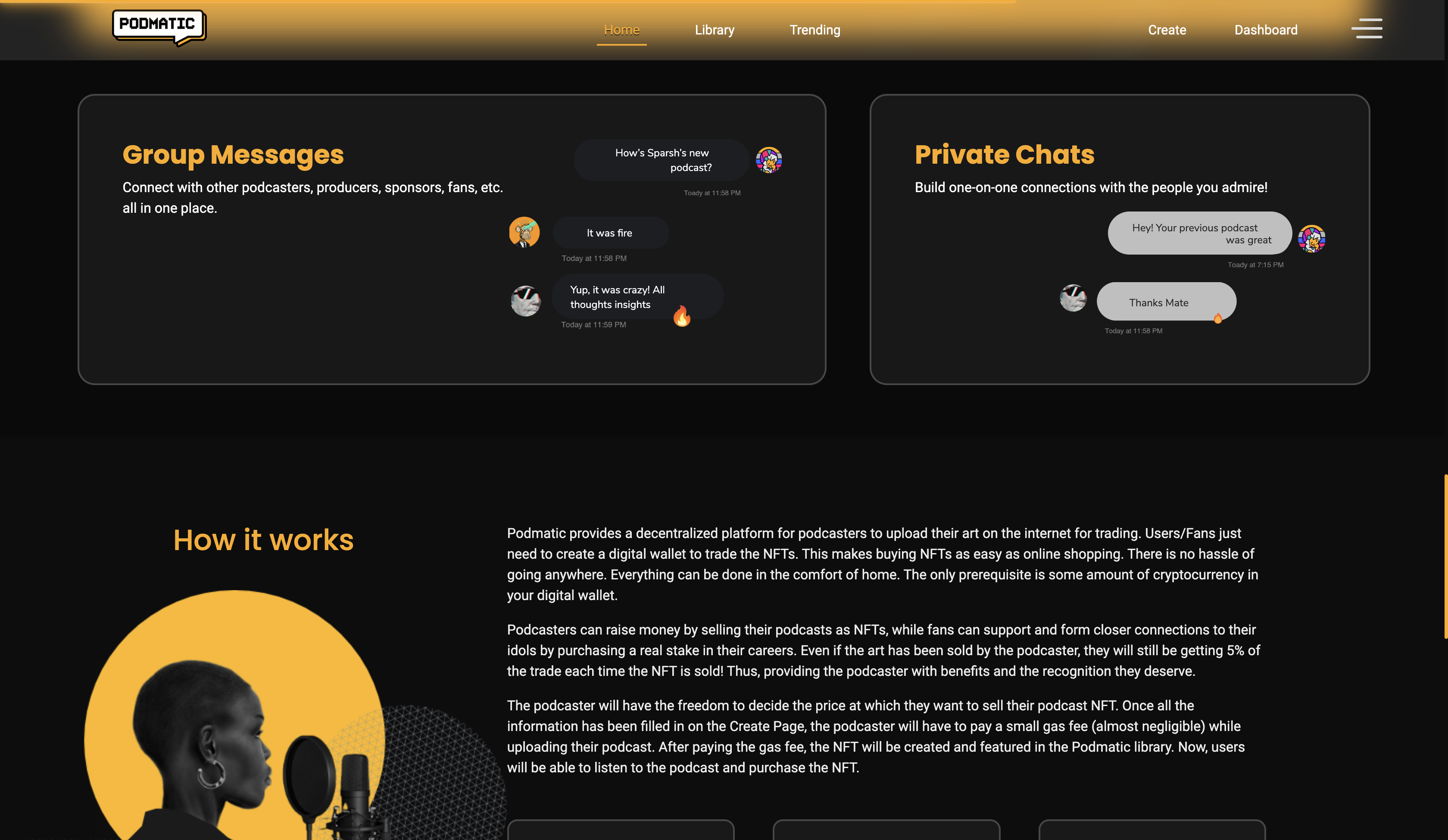
Podmatic provides a decentralized platform for podcasters to upload their podcasts as NFTs. Users/Fans just need to have a digital wallet in order to trade the NFTs. The only prerequisite is some amount of cryptocurrency in their digital wallet.
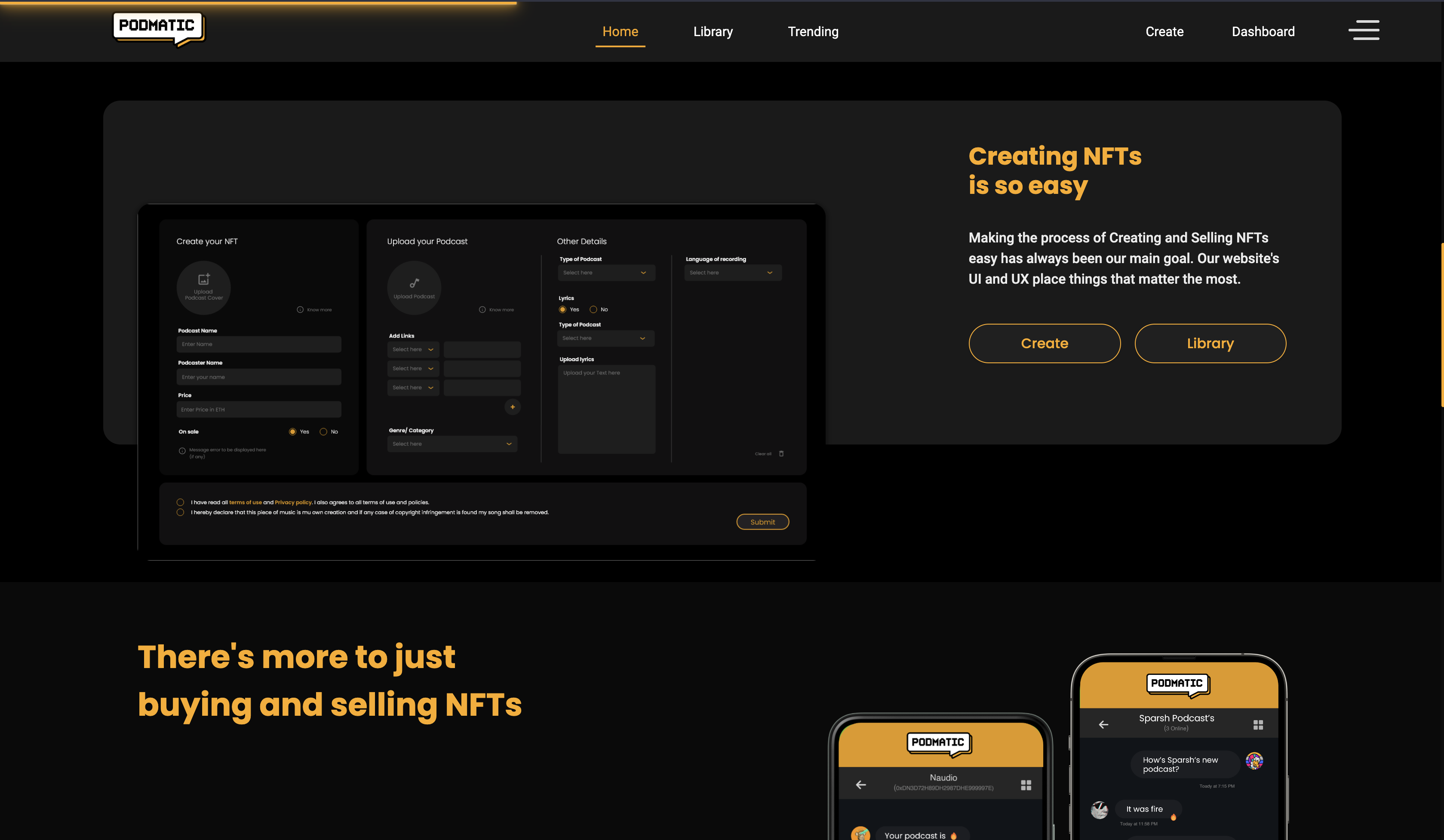
The podcaster will have the freedom to decide the price at which he wants to sell his podcast. Once all the credentials have been filled, the podcaster will have to pay a small amount of gas fee(negligible) while uploading their podcast. After paying the gas fee, the podcast will be featured in the Podmatic library, and the users will be able to preview/buy it.
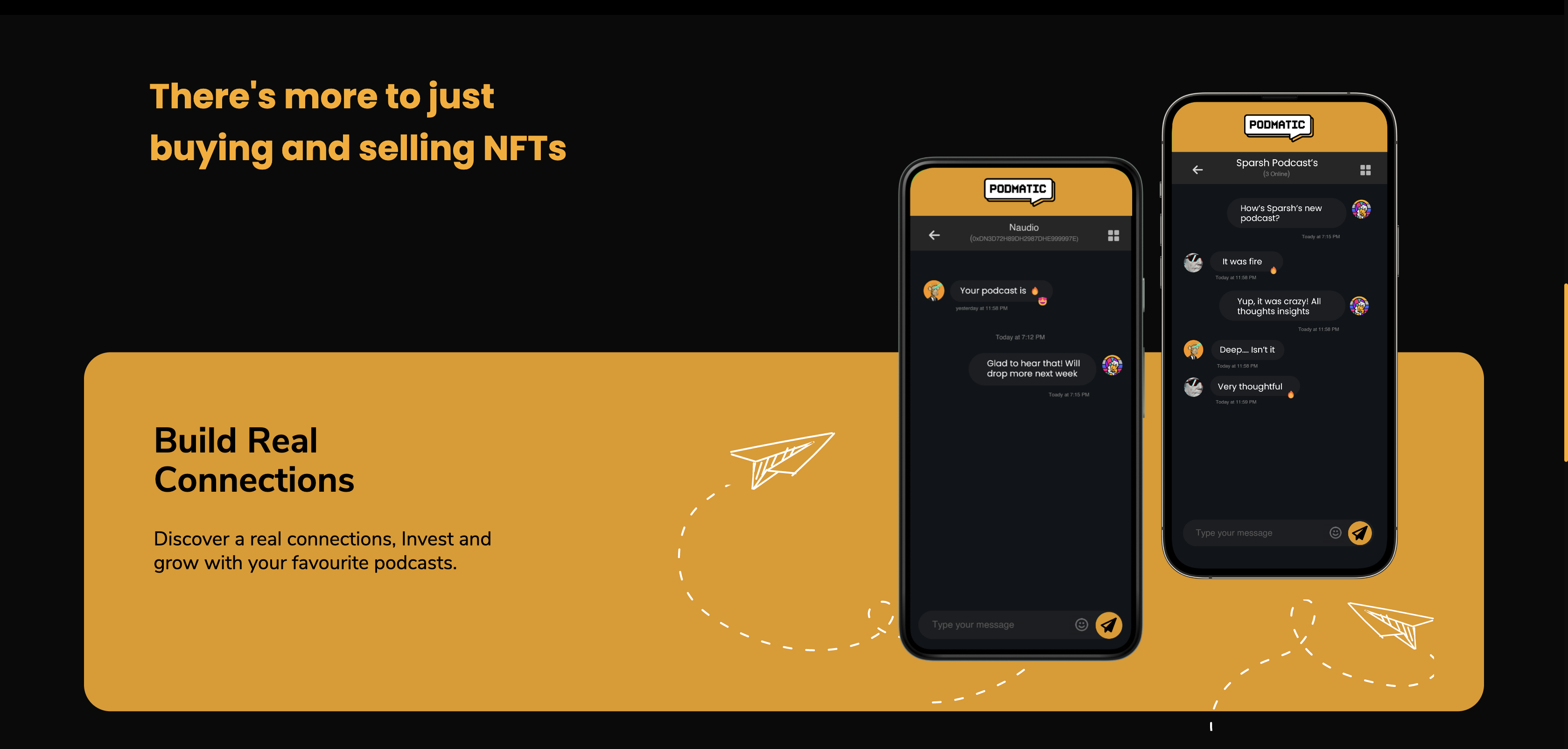
The user who buys the NFT will have the opportunity to make one-on-one connections with their idols by chatting and engaging in the podcast’s own fan community. They’ll also have access to chat privately with the podcaster.
Key Features of the platform:
- NFT Marketplace
- Personal Chat with Podcasters
- Group Chat in Rooms
- Podcast background story only visible to the NFT owners
- Personal user dashboard
- Trending NFTs section
Challenges we ran into
- Bugs, bugs, and bugs.
- Integrating the chat system with blockchain was one of the biggest challenges for us. We’ve developed features like a chat room(whose members are all the NFT holders of a podcaster), and private chats(between NFT holder and podcaster). And this feature is automated. We don’t need to manually create rooms. Our community will reside on the platform itself.
- Writing Solidity code covering all the edge cases was a bit challenging, but we made sure our platform is secure to use.
- Making the platform’s UX smooth.
- The most important phase in the product development was thinking about what the podcast community really needed. We've talked to a lot of podcasters and think that we're very close to nailing it down to the minute details.
Accomplishments that we're proud of
- Eye-catching UI
- Smooth UX
- Bug-free code
- Being able to work on an impactful project that will positively impact the community
What we learned
“Effective planning makes the execution smooth”. We spent quite a time brainstorming on choosing the right problem to solve. After that, we planned everything- from blueprints to wireframes, from MVP designing to the final design of the product, from MVP development to the final development. We divided our product development into phases with deadlines and that planning ultimately helped us to smoothly execute all the ideas that we had. And yes, we learned how to work in a team, how to complete tasks in a fast-paced environment, how to bring life to ideas, and so on.
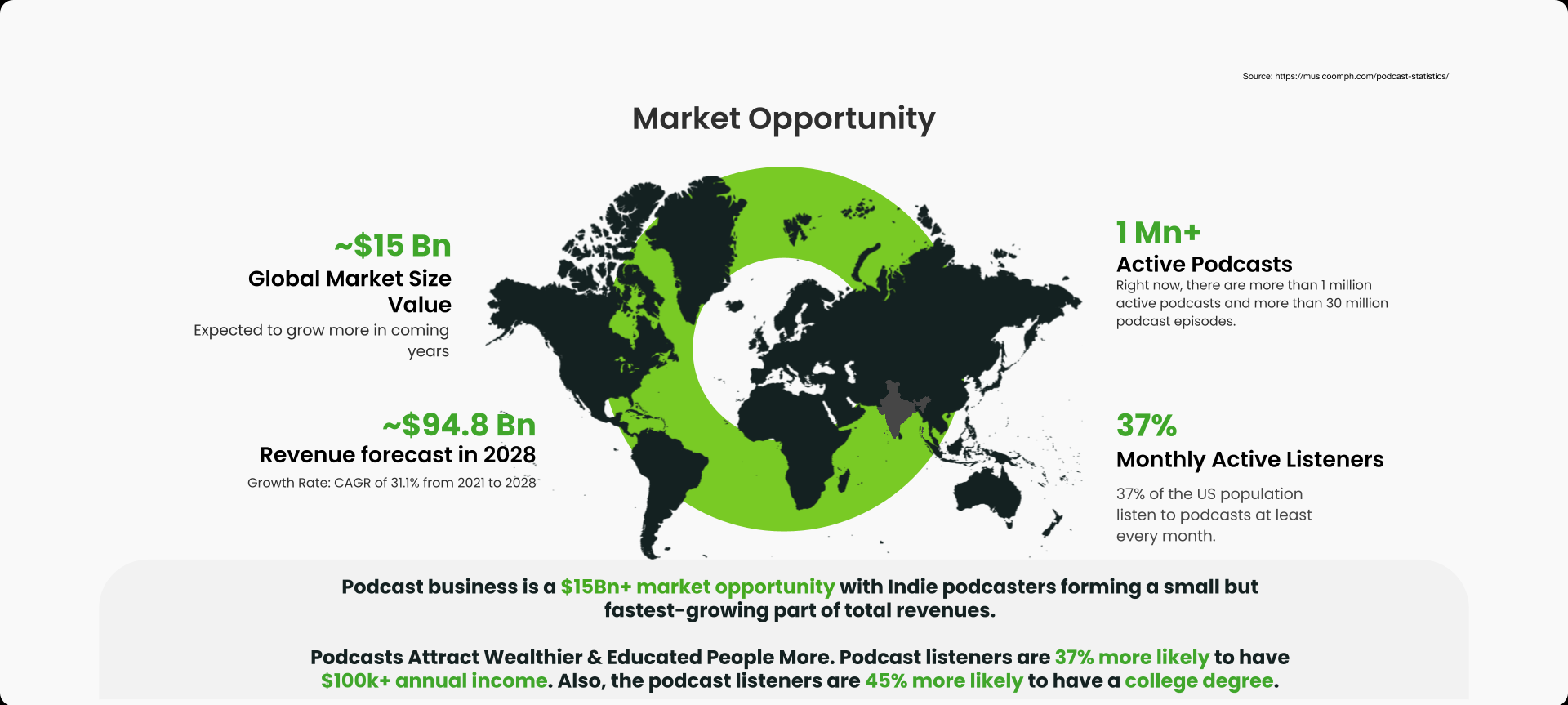
Let’s talk numbers (Market Opportunity)
What's next for Podmatic
We look forward to continuing building this product after that hackathon as we believe this product has potential and our team can make it big. We will also start building the community and get their feedback to further improve and expand the vision.
Built With
- amazon-web-services
- filecoin
- html5
- ipfs
- polygon
- streamchat
- vercel


Log in or sign up for Devpost to join the conversation.