-
-
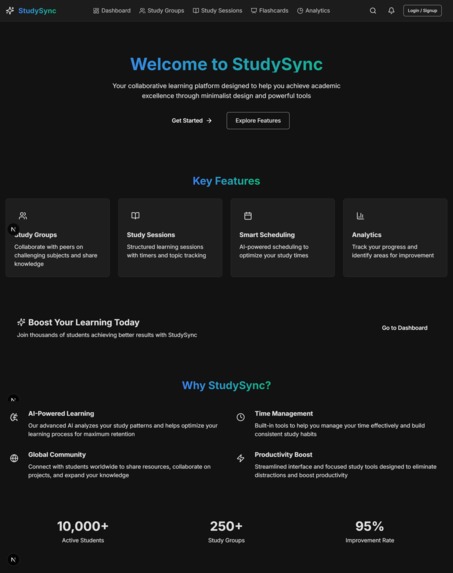
StudySync
-
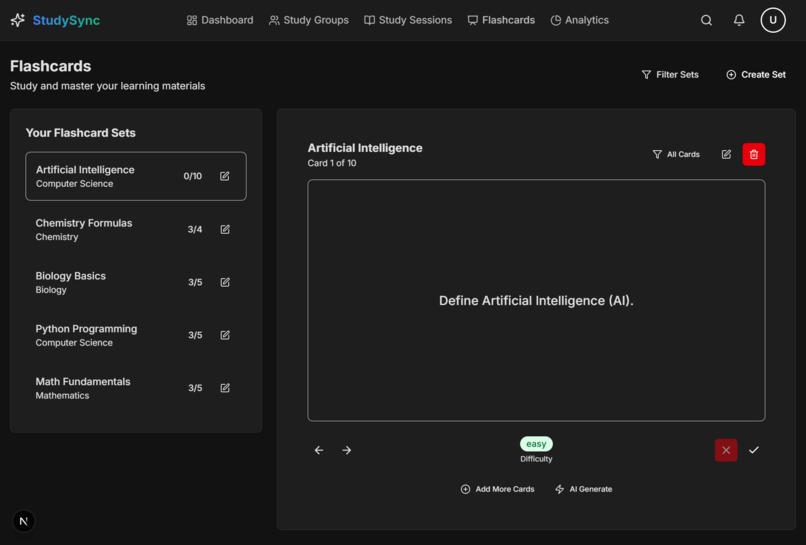
Flash Cards
-
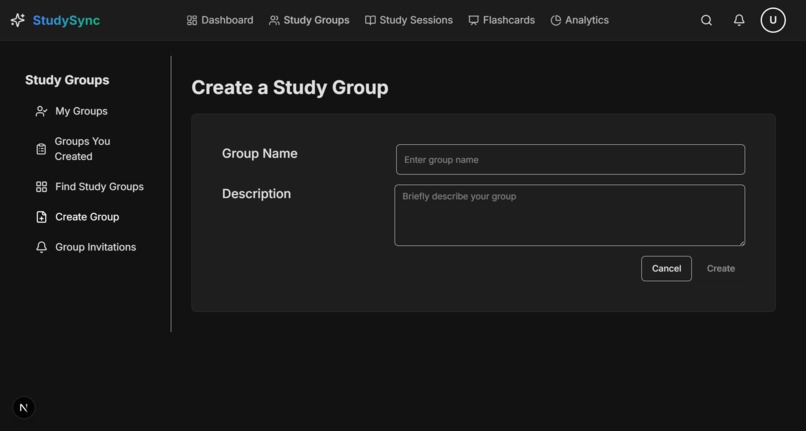
Create a Study Group
-
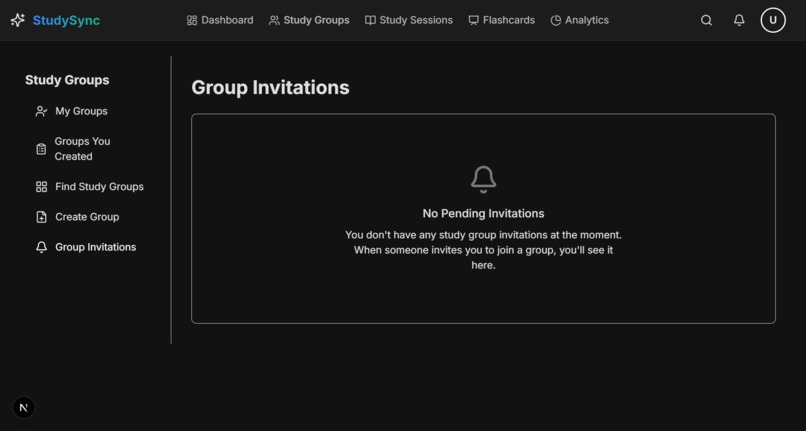
Group Invitations
-
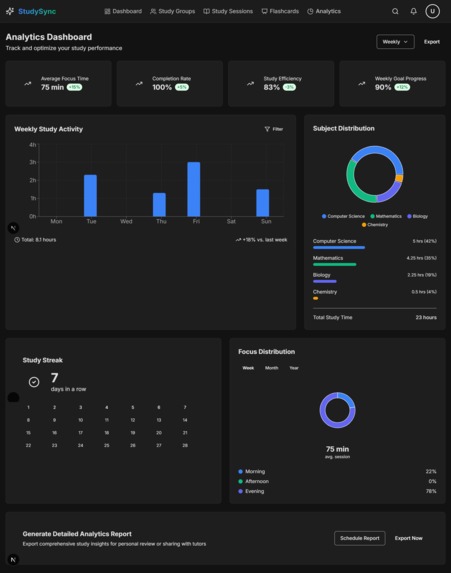
Analytics
-
-
-
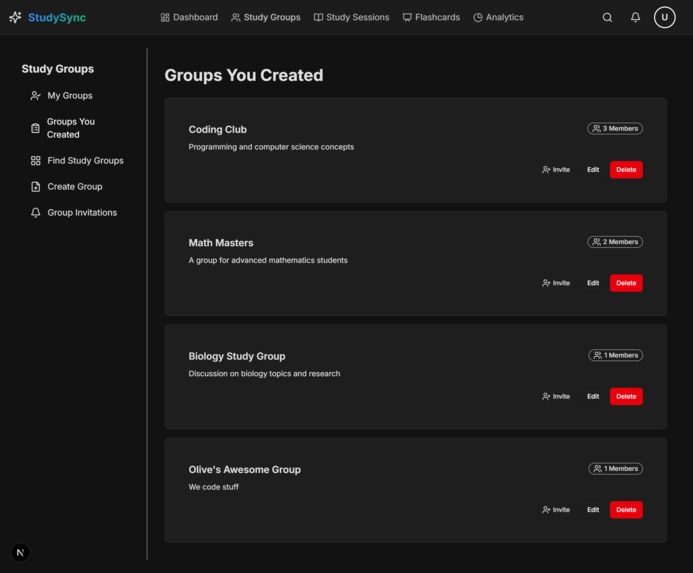
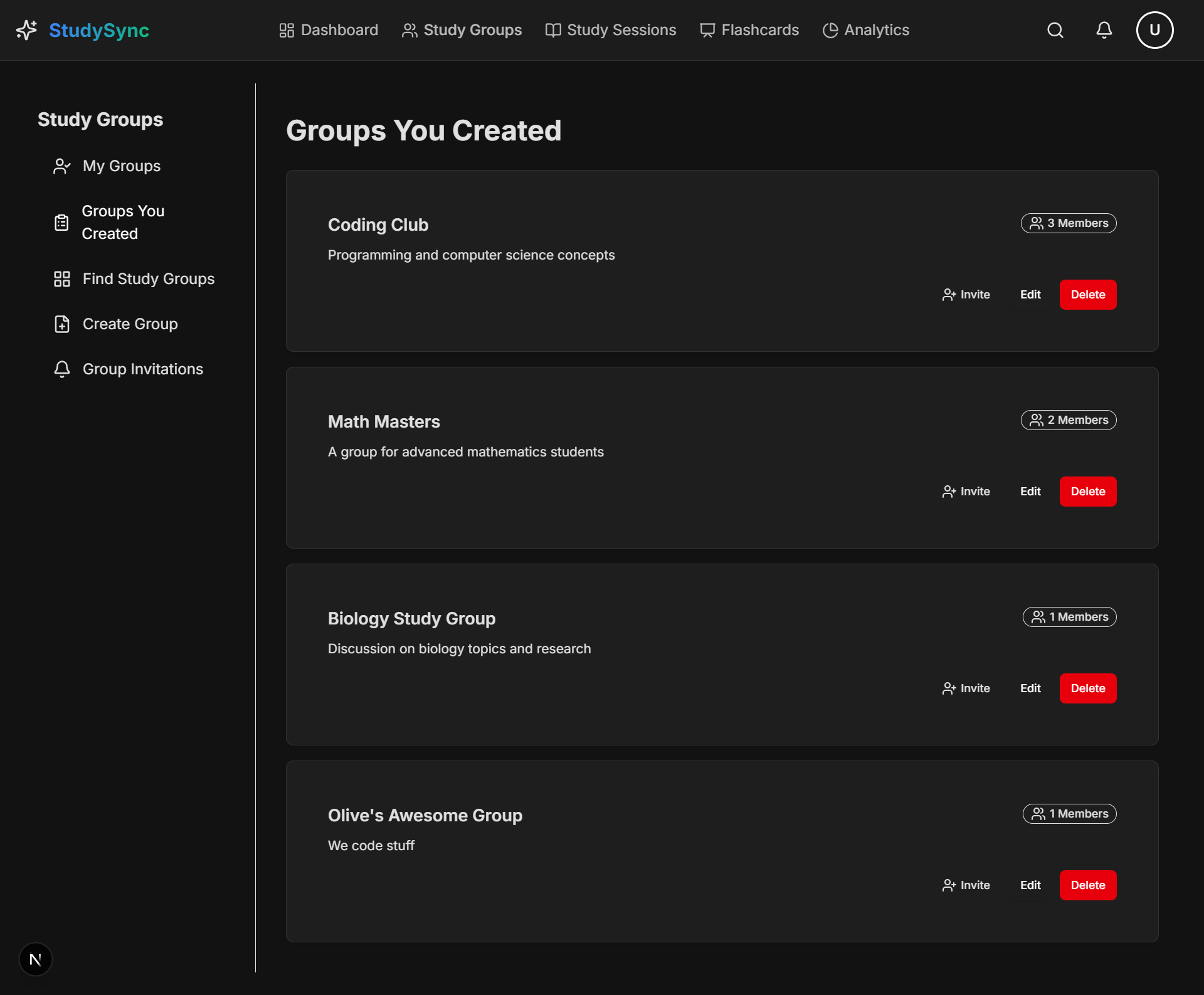
Groups You Created
-
-
-
StudySync Hackathon Project
Inspiration
Our inspiration for StudySync came from observing the fundamental challenges university students face when studying:
- Motivation barriers: Students often procrastinate without external accountability
- Ineffective study strategies: Many students don't know how to study efficiently
- Lack of feedback: Traditional studying provides minimal immediate feedback on effectiveness
- Isolation: Studying alone can be demotivating and less productive
We wanted to create a solution that transforms studying from a dreaded solitary task into an engaging, collaborative experience that leverages proven learning techniques and modern technology.
What it does
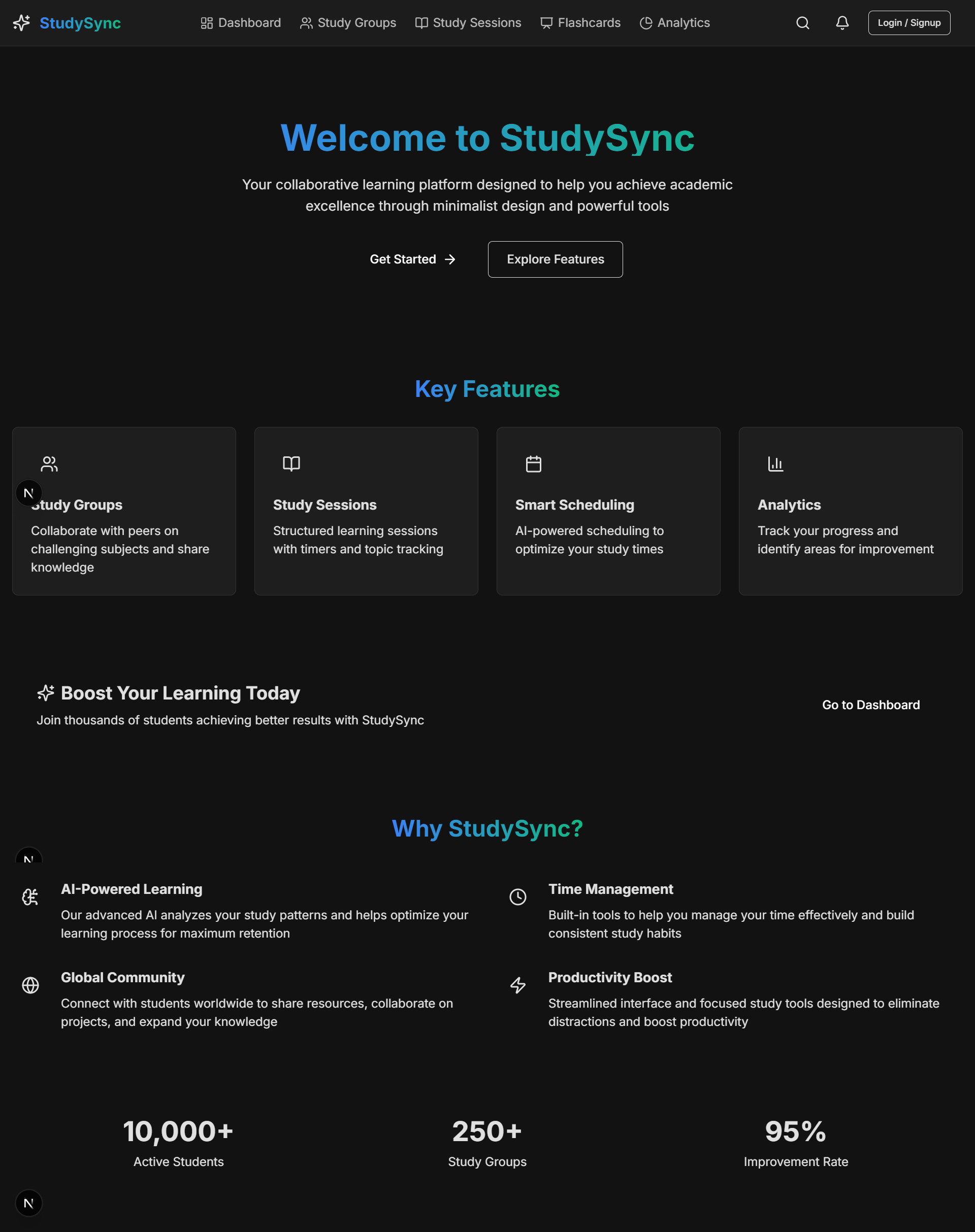
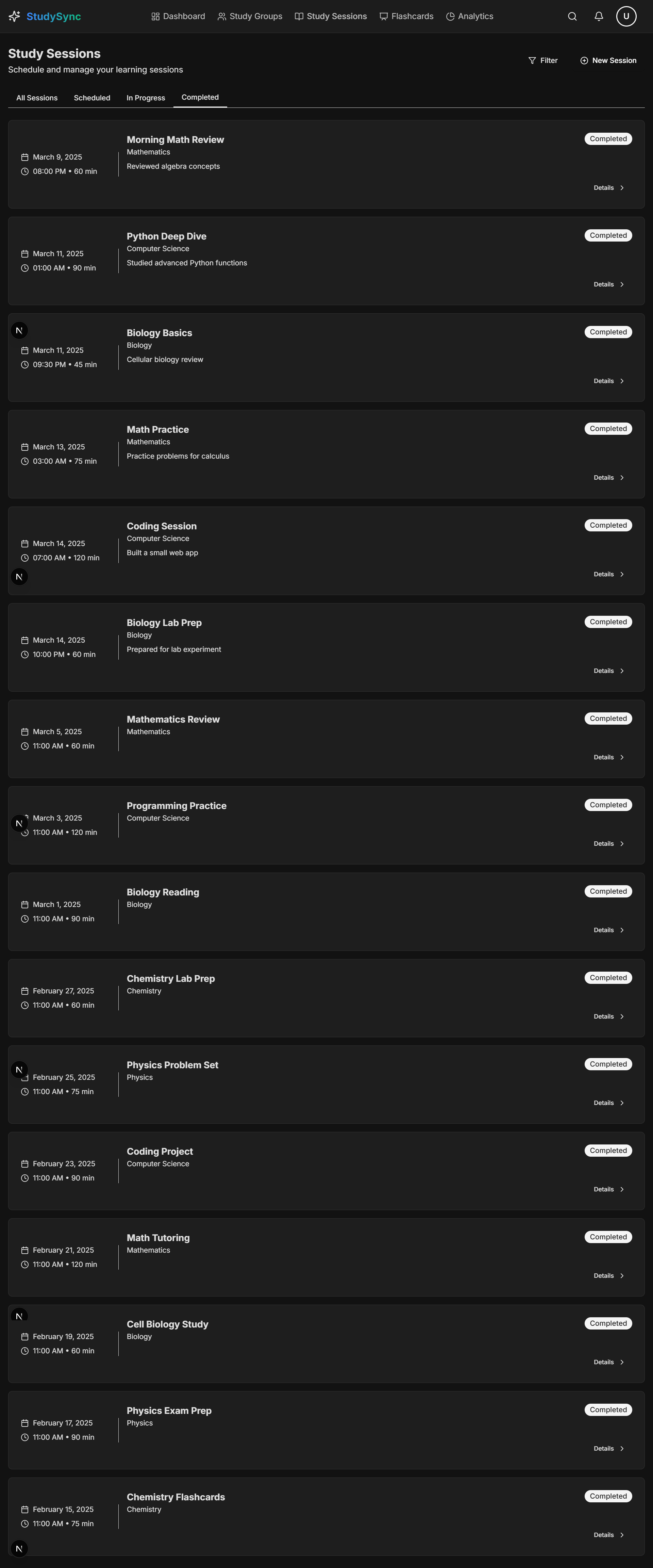
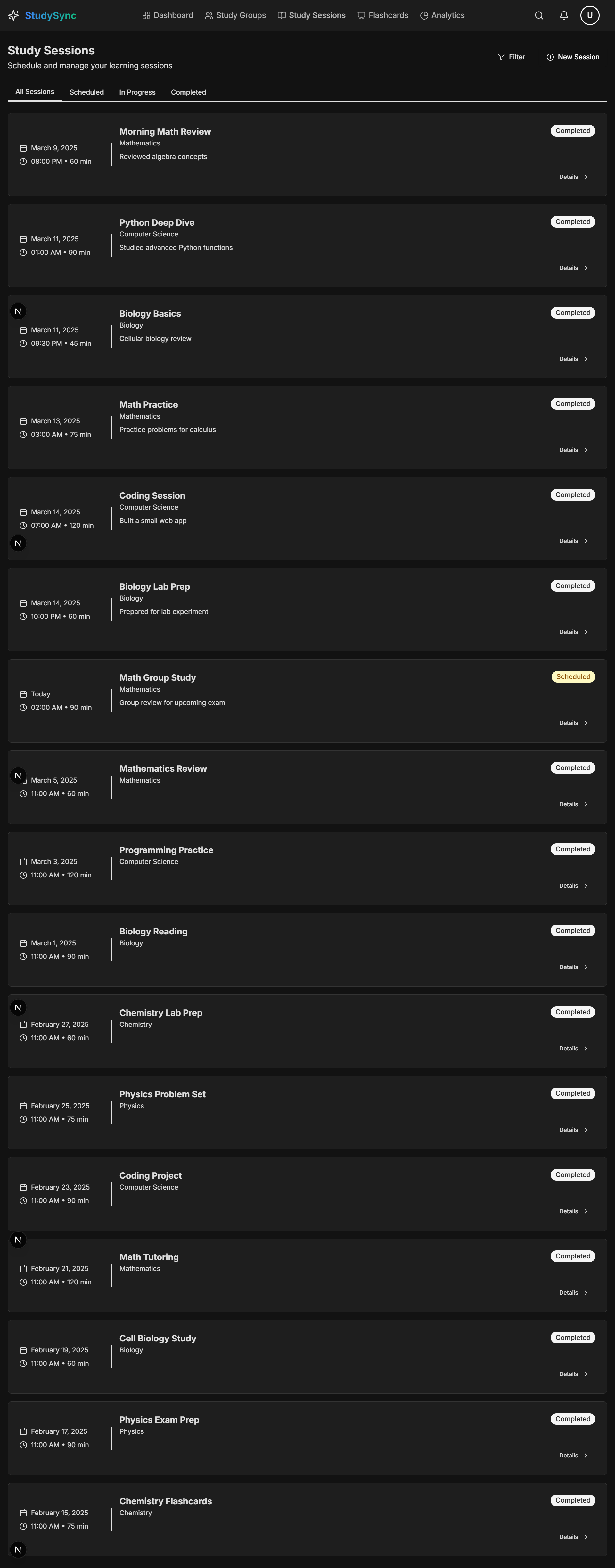
StudySync is an AI-powered collaborative learning platform with four core features:
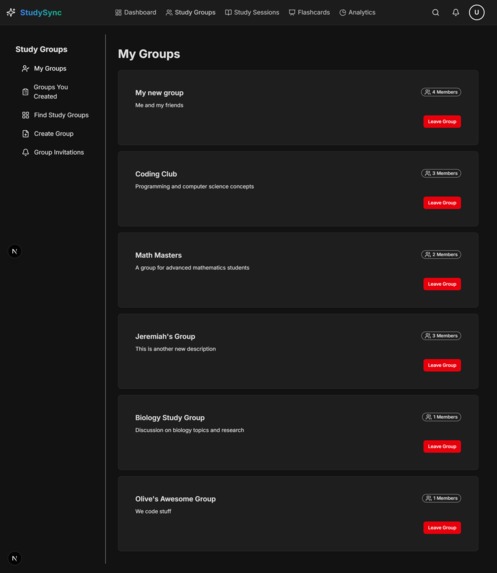
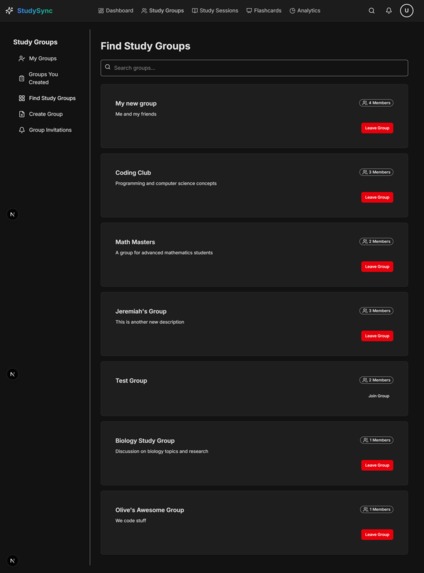
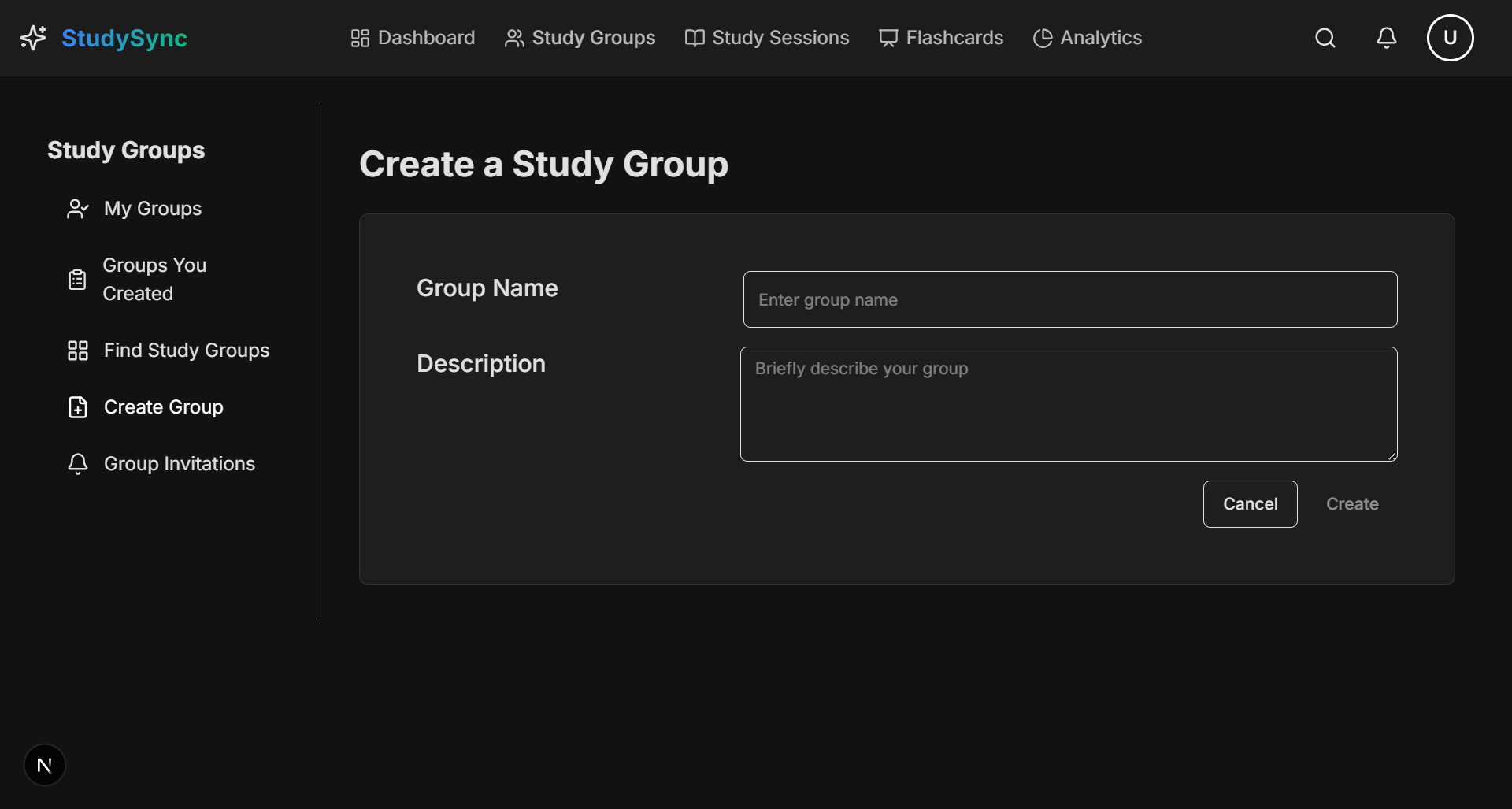
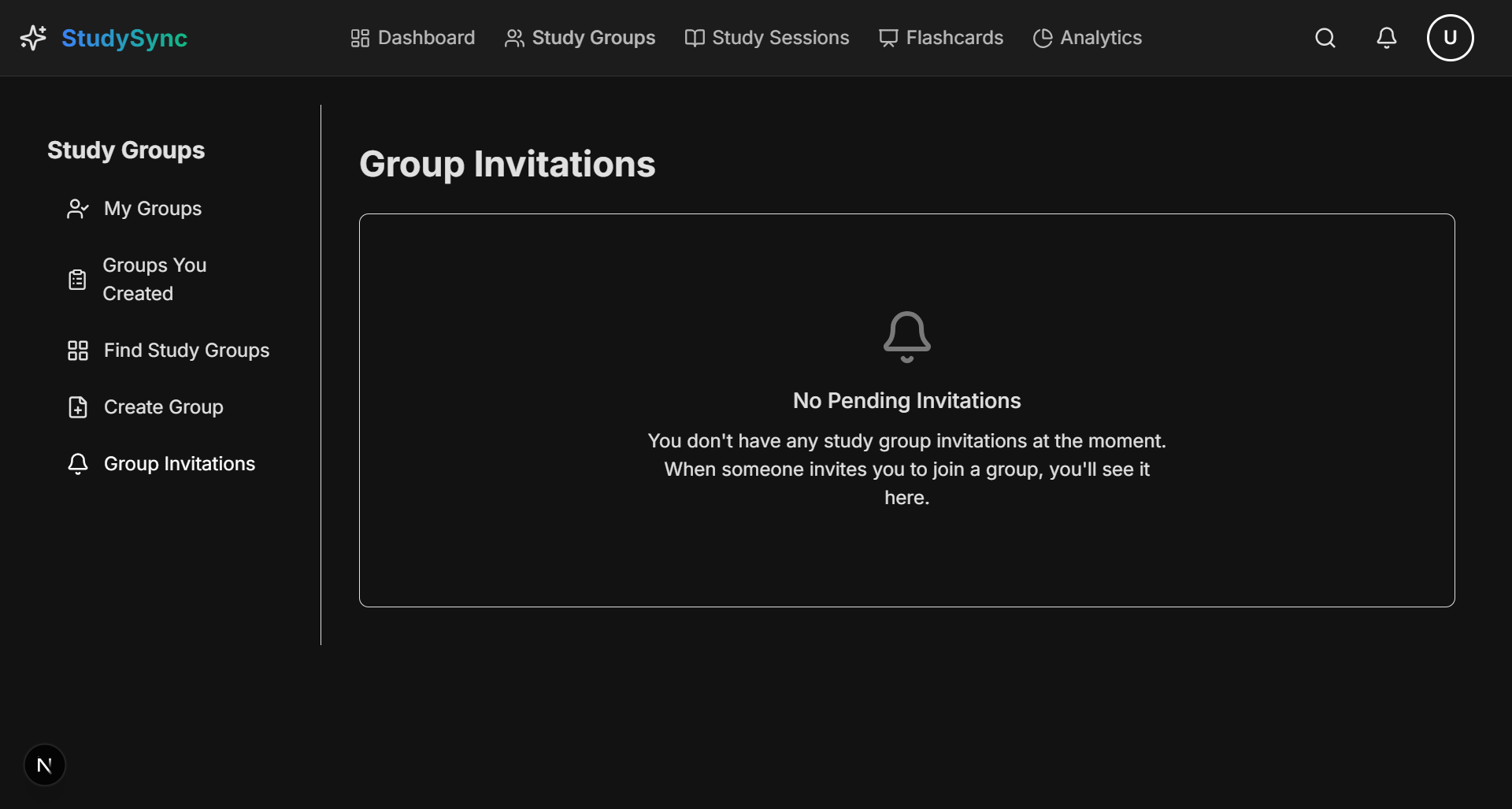
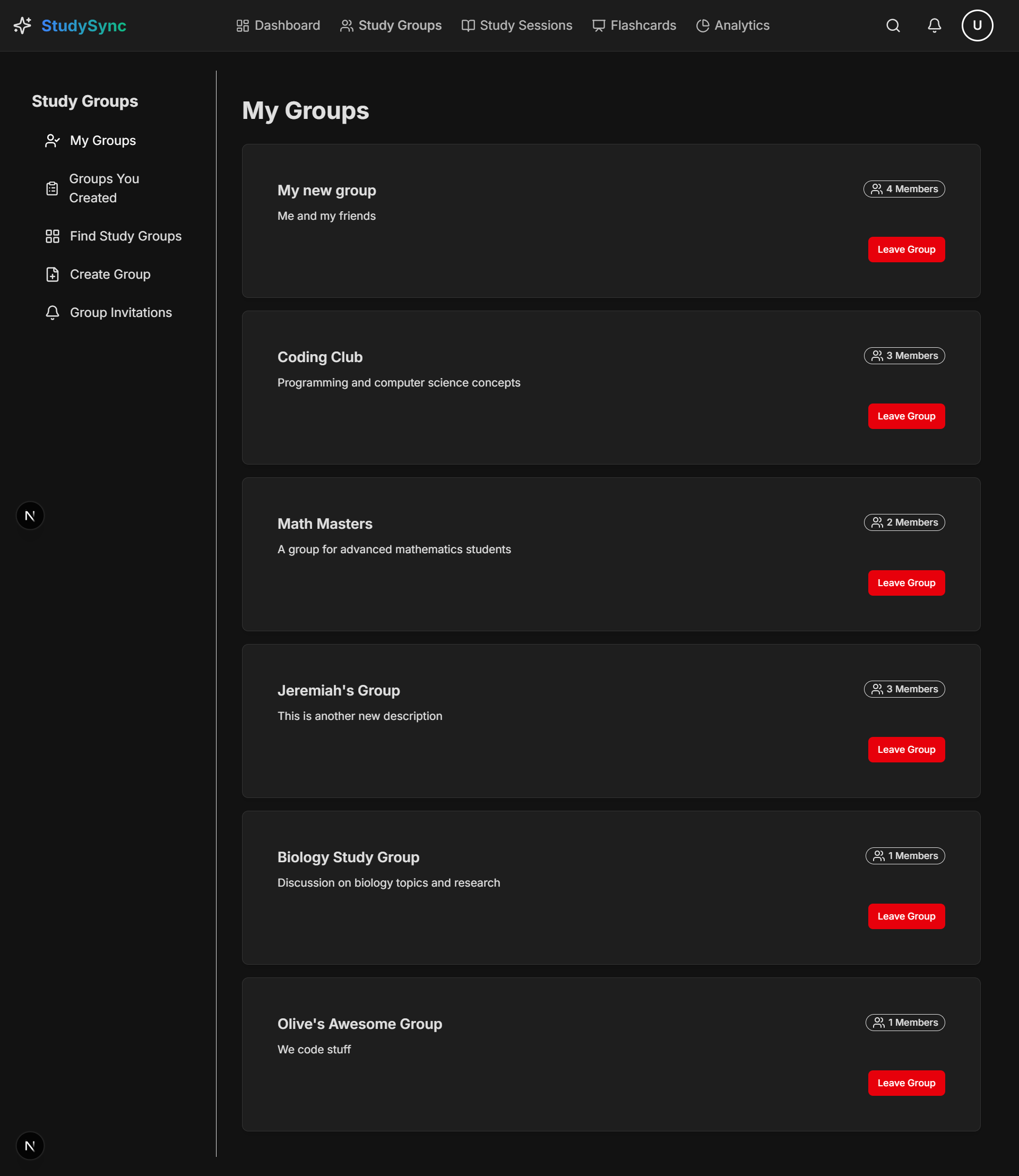
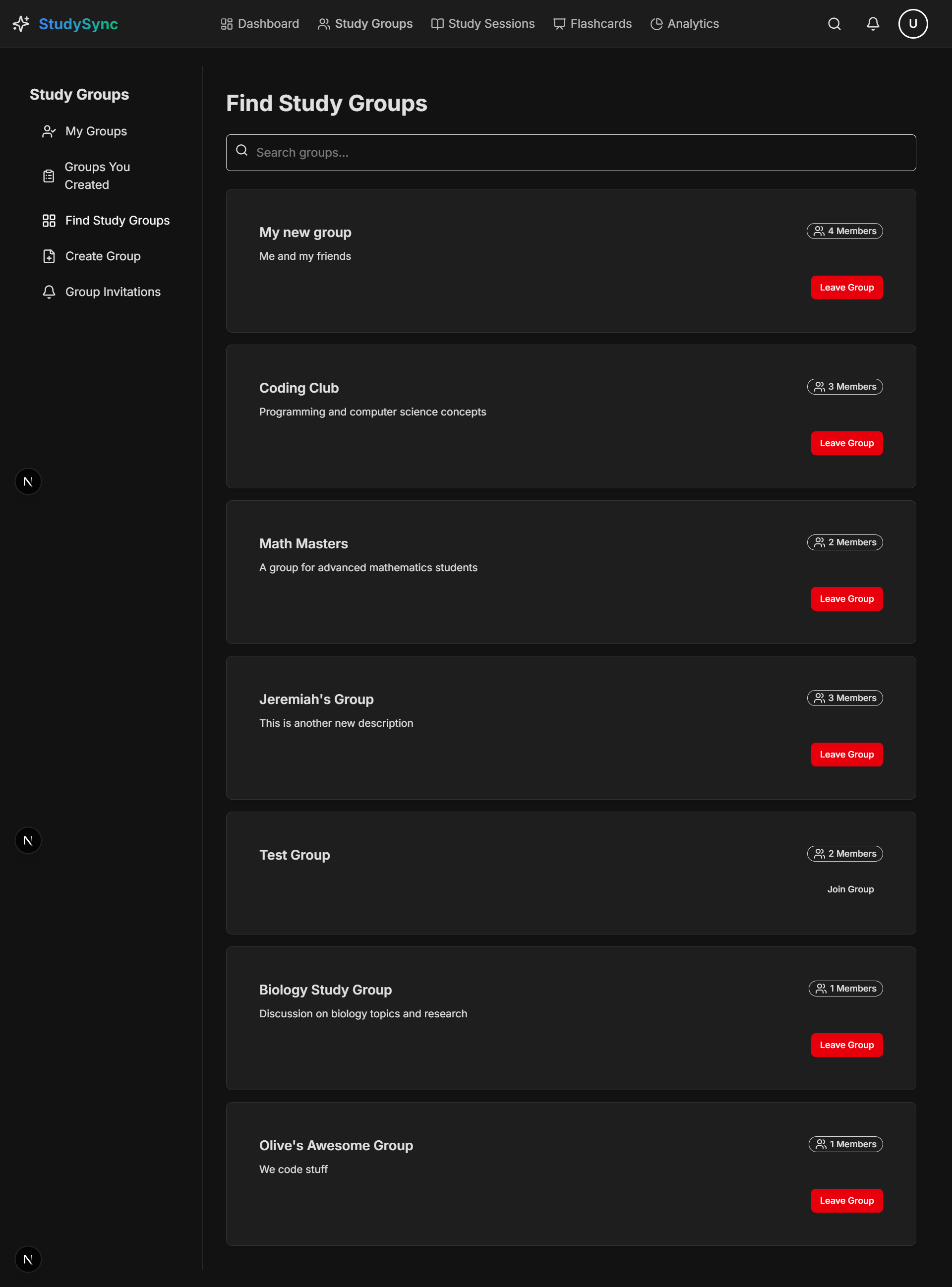
Study Groups: Creates virtual study communities where students can connect, share resources, and hold each other accountable
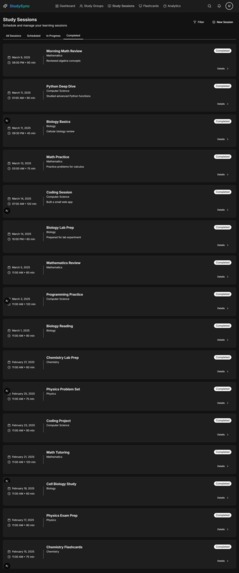
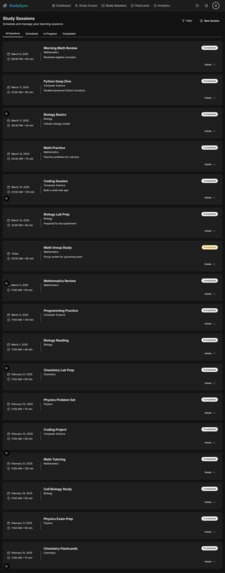
Study Sessions: Facilitates structured, goal-oriented study meetings with:
- Topic tracking
- Timed sessions
- Resource sharing
- Participant coordination
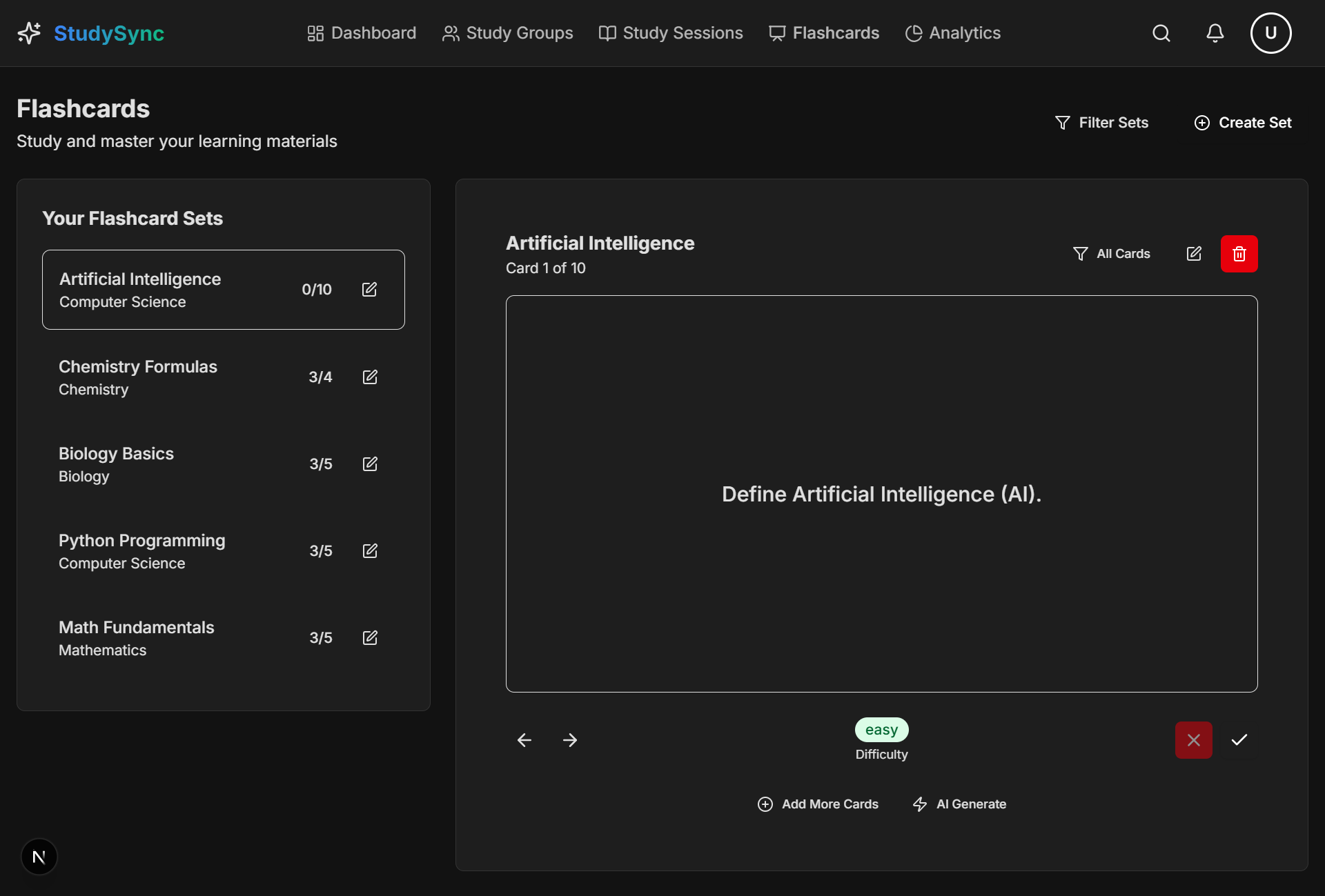
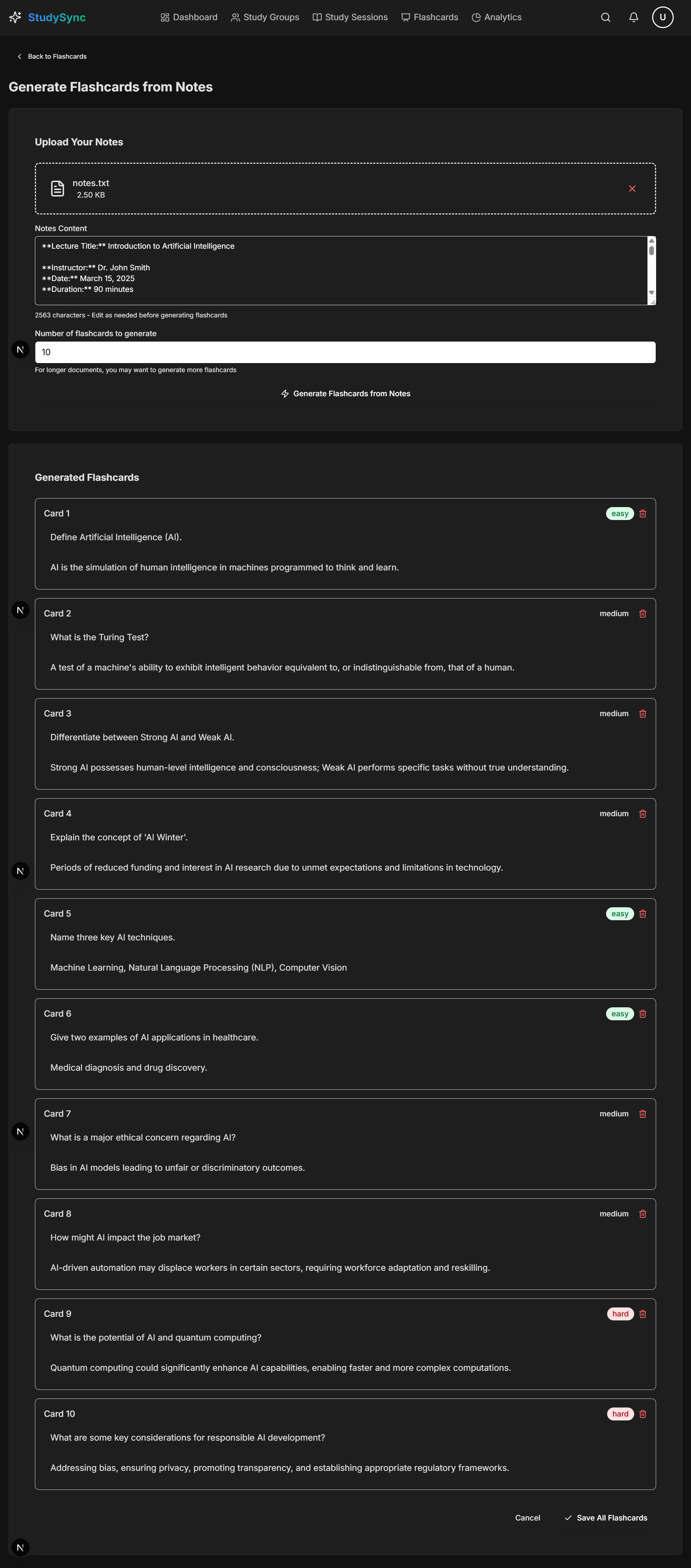
Smart Flashcards: Revolutionizes flashcard creation by:
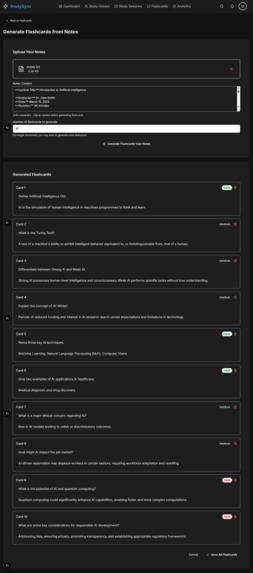
- Auto-generating flashcards from lecture notes
- Using AI to identify key concepts and create effective study materials
- Providing spaced repetition for optimal retention
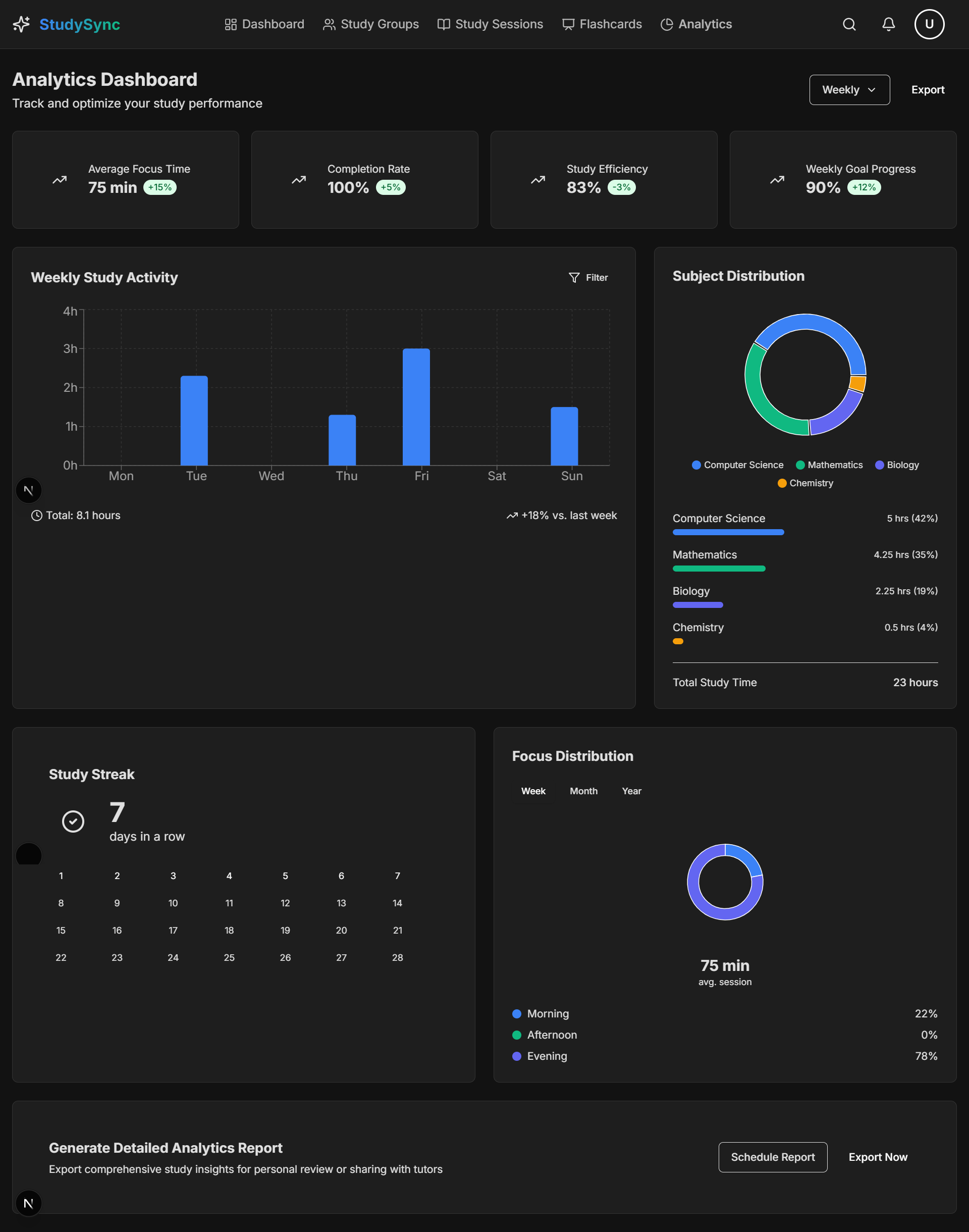
Analytics Dashboard: Delivers valuable insights on:
- Study patterns and productivity metrics
- Subject time distribution
- Progress tracking and improvement suggestions
- Accountability metrics and study streaks
How we built it
We built StudySync using a modern tech stack:
- Frontend: Next.js and React for a responsive, interactive UI
- Backend: Supabase for authentication, database, and serverless functions
- AI Integration: Integration with AI models for flashcard generation and study analytics
- Real-time Collaboration: WebSockets for live study session features
- Data Visualization: Recharts for intuitive analytics displays
We focused on creating a clean, intuitive user experience that minimizes friction and makes collaboration seamless.
Challenges we ran into
Our development journey faced several significant challenges:
AI Integration Complexity: Fine-tuning the AI to generate high-quality, relevant flashcards from unstructured notes required multiple iterations
Real-time Collaboration: Implementing synchronized study sessions where multiple users could interact simultaneously presented technical hurdles
Analytics Architecture: Creating meaningful analytics that provide actionable insights required careful data modeling and processing
User Experience: Balancing feature richness with simplicity to avoid overwhelming users was a constant consideration
Accomplishments that we're proud of
Despite the challenges, we achieved several key milestones:
Seamless AI Integration: Our flashcard generation system can process various note formats and extract the most relevant information
Intuitive Interface: We created a clean, engaging UI that makes group studying simple and accessible
Comprehensive Analytics: Our dashboard provides meaningful insights rather than just raw data, helping students optimize their study habits
Cross-platform Functionality: StudySync works seamlessly across devices, allowing students to study anywhere
What we learned
This project taught us valuable lessons about:
Educational Technology: The importance of addressing actual student pain points rather than adding technology for its own sake
AI Implementation: Practical approaches to integrating AI that enhances rather than replaces human learning
UX for Education: How to design interfaces that support rather than distract from the learning process
Data-Driven Learning: The power of analytics to transform study habits when presented in an accessible way
What's next for StudySync
We have ambitious plans for StudySync's future:
Enhanced AI Features: Expanding AI capabilities to provide personalized study recommendations based on performance
Integration with LMS Platforms: Connecting with Canvas, Moodle and other learning management systems to import course materials
Mobile App Development: Creating dedicated mobile apps for iOS and Android for better on-the-go studying
Community Features: Building a broader ecosystem where students can connect beyond their immediate study groups
Gamification Elements: Introducing more game-like features to further boost motivation and engagement
By continuing to focus on the real challenges students face, we aim to make StudySync an indispensable tool for modern, collaborative learning.
Login Details for Testing: oliviawensemius@gmail.com Password123


Log in or sign up for Devpost to join the conversation.