-
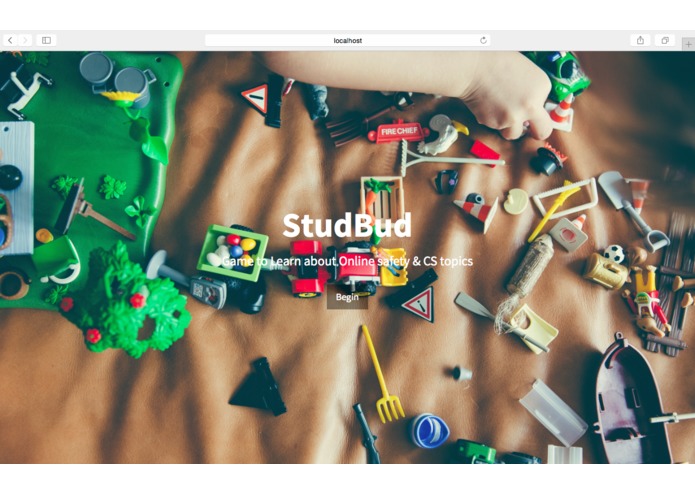
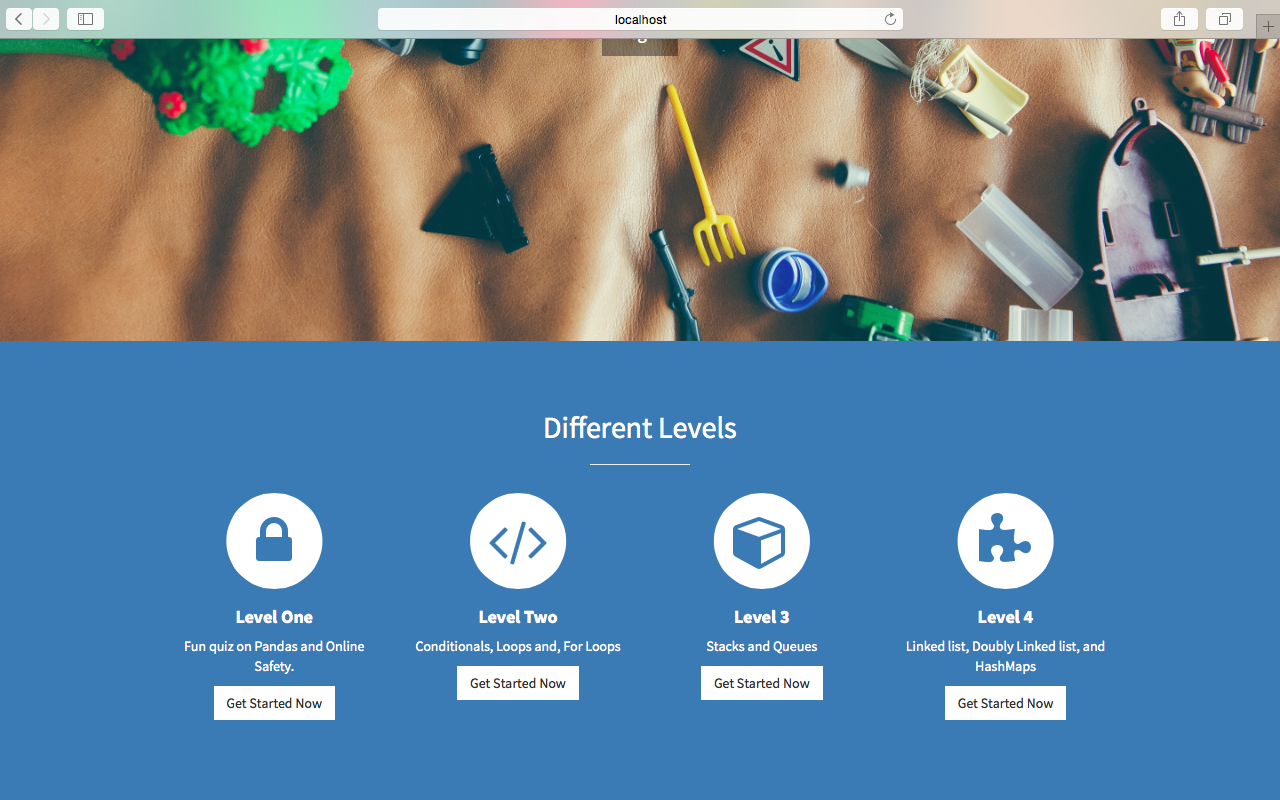
Home Page
-
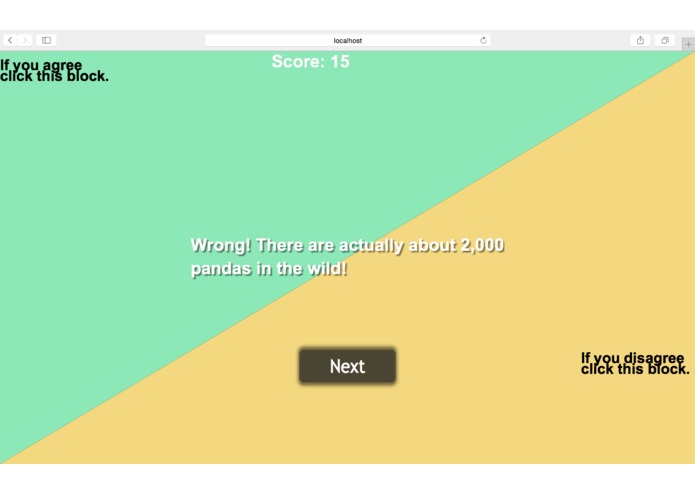
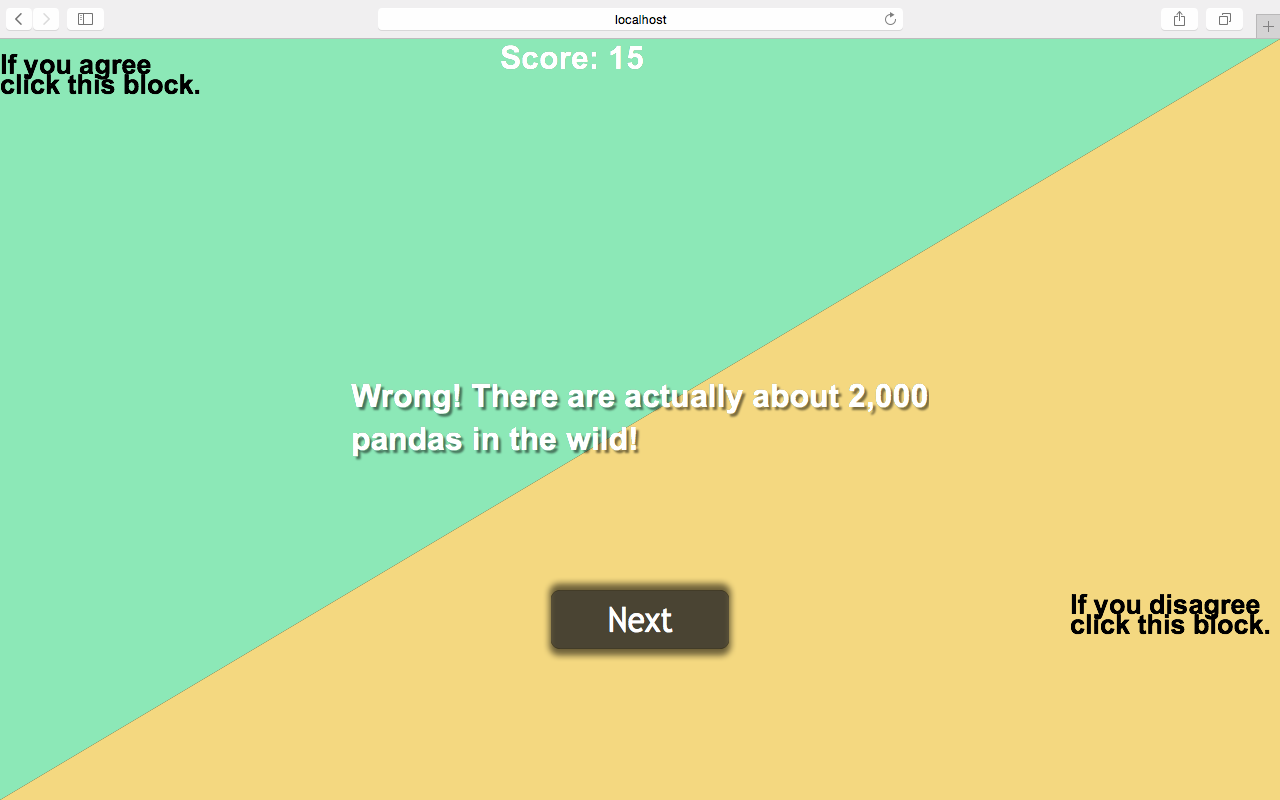
Next Question Window
-
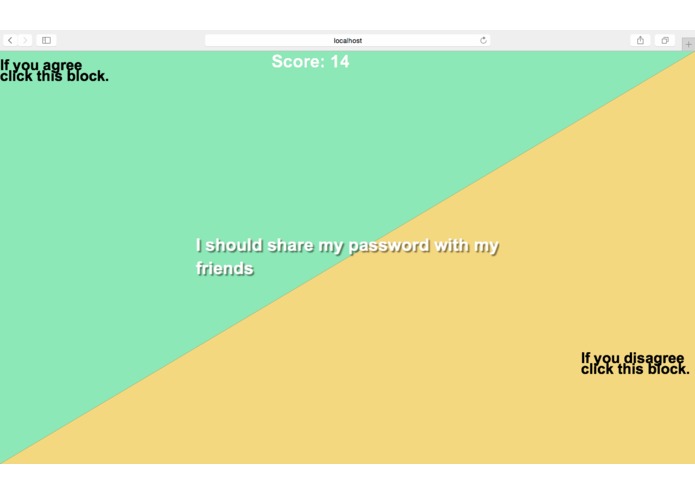
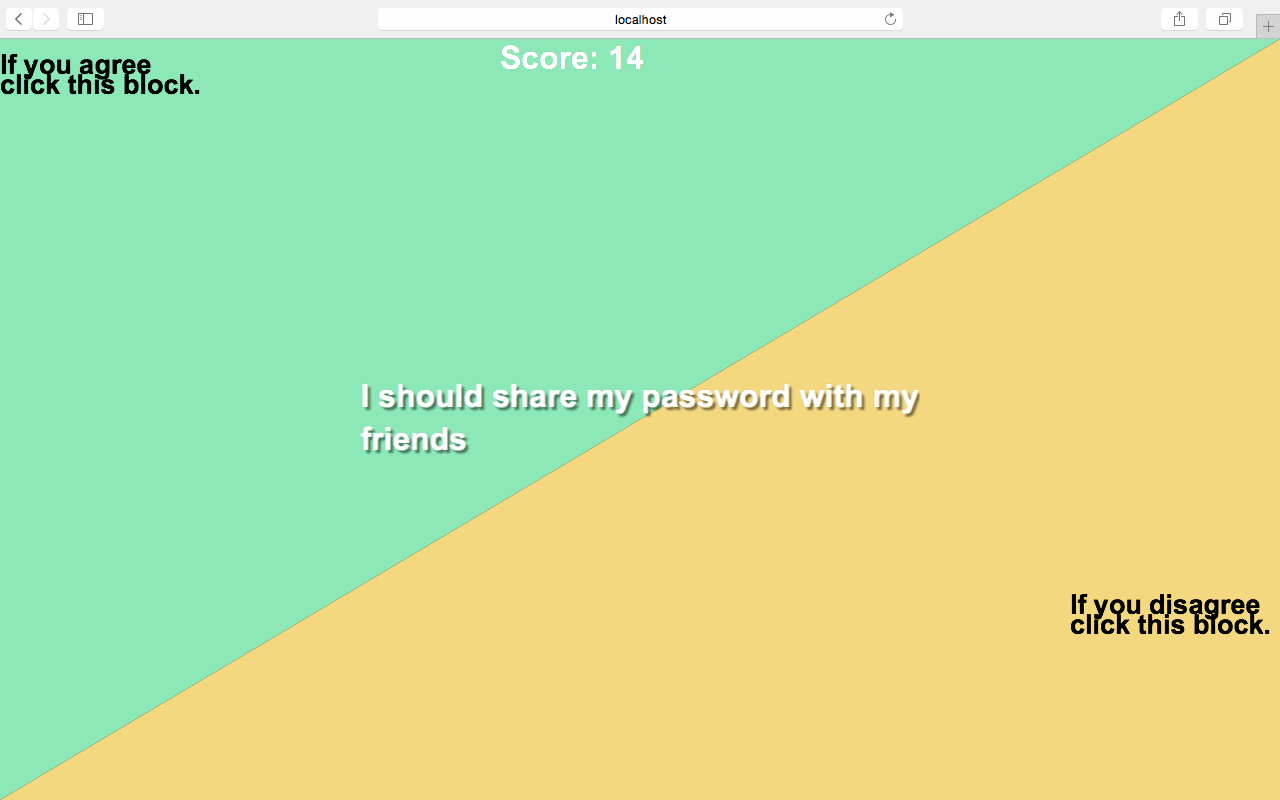
Question for Level 1
-
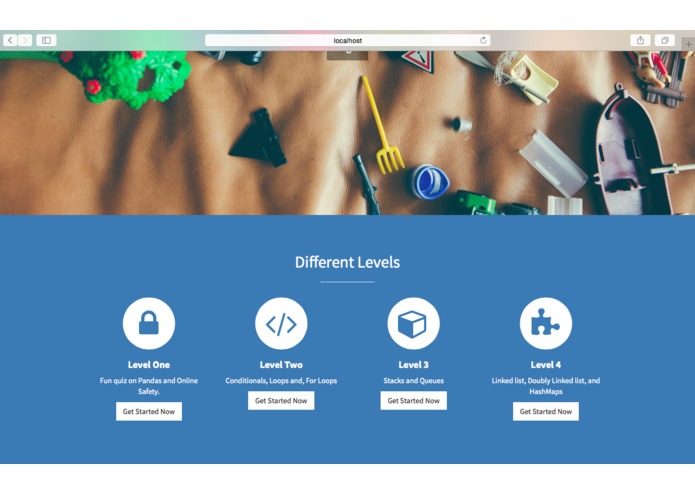
User chooses level
-
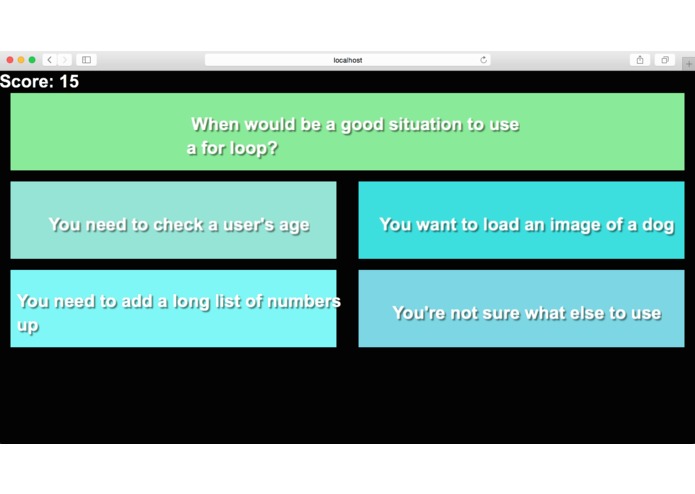
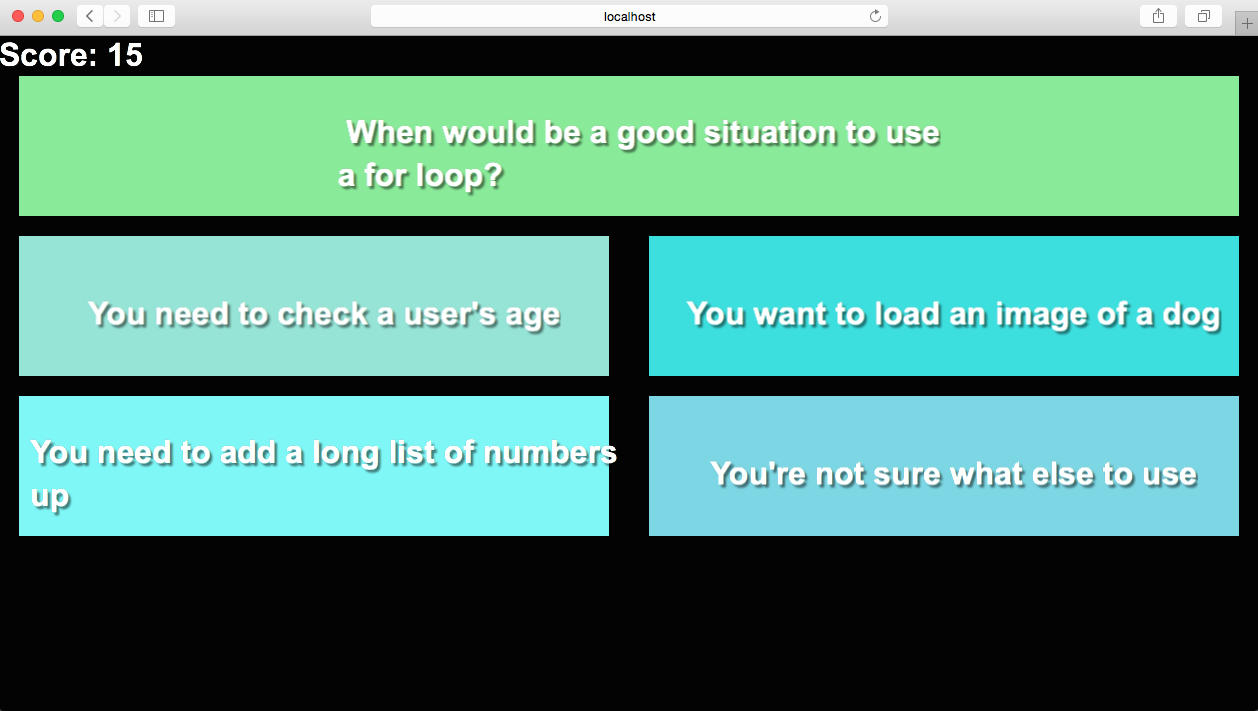
Level 2 Question
-
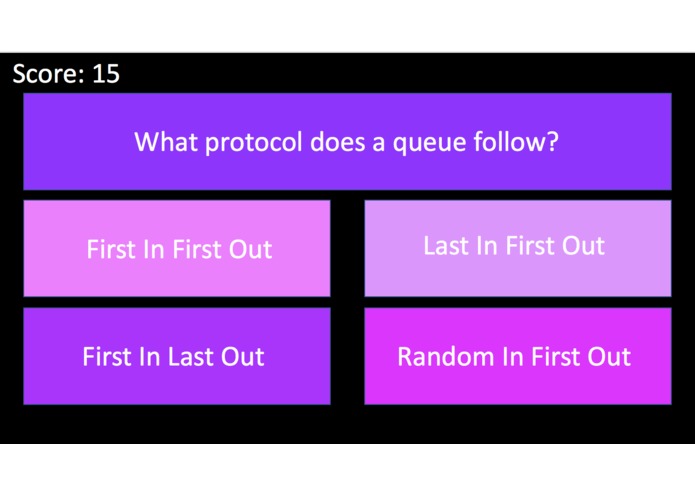
Level 3 Questions
-
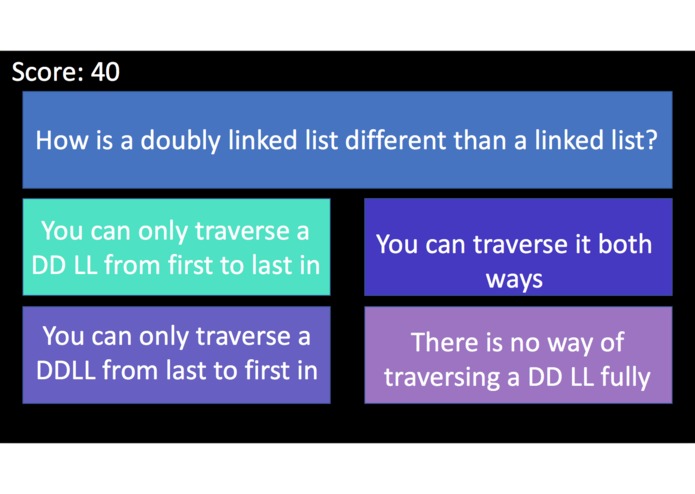
Level 4 Questions
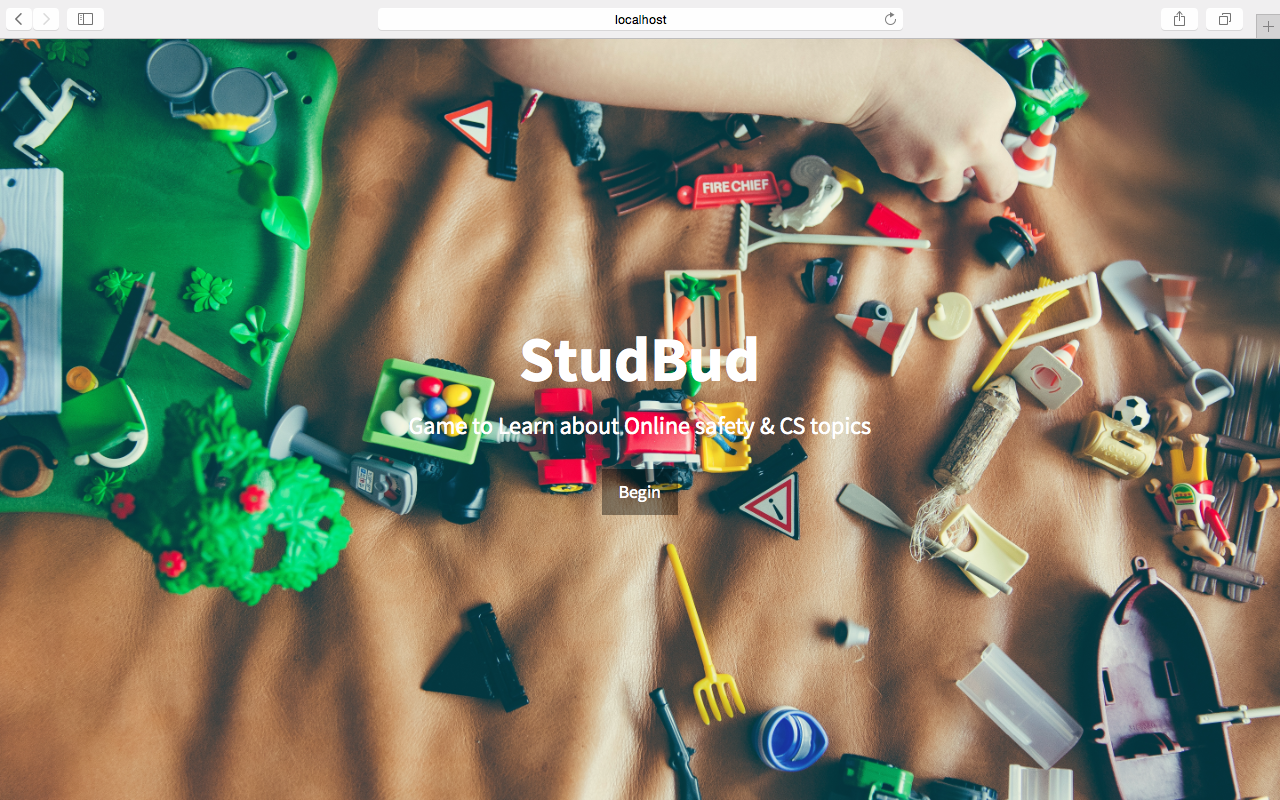
Inspiration
Online Safety is a real problem in today's world. Therefore, we decided to create a game that teaches children, aged 6-8 years, about online safety along with CS concepts.
What it does
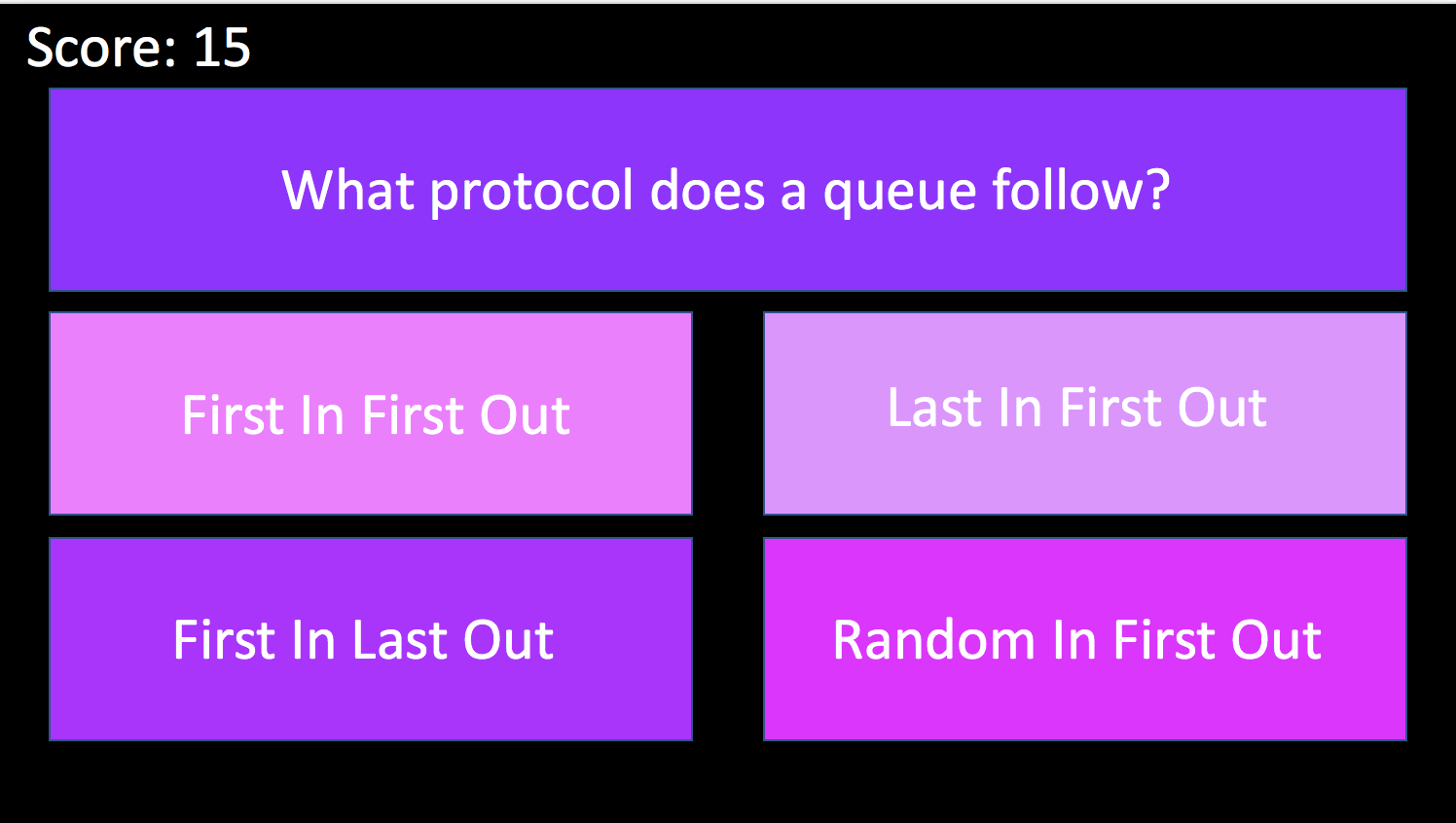
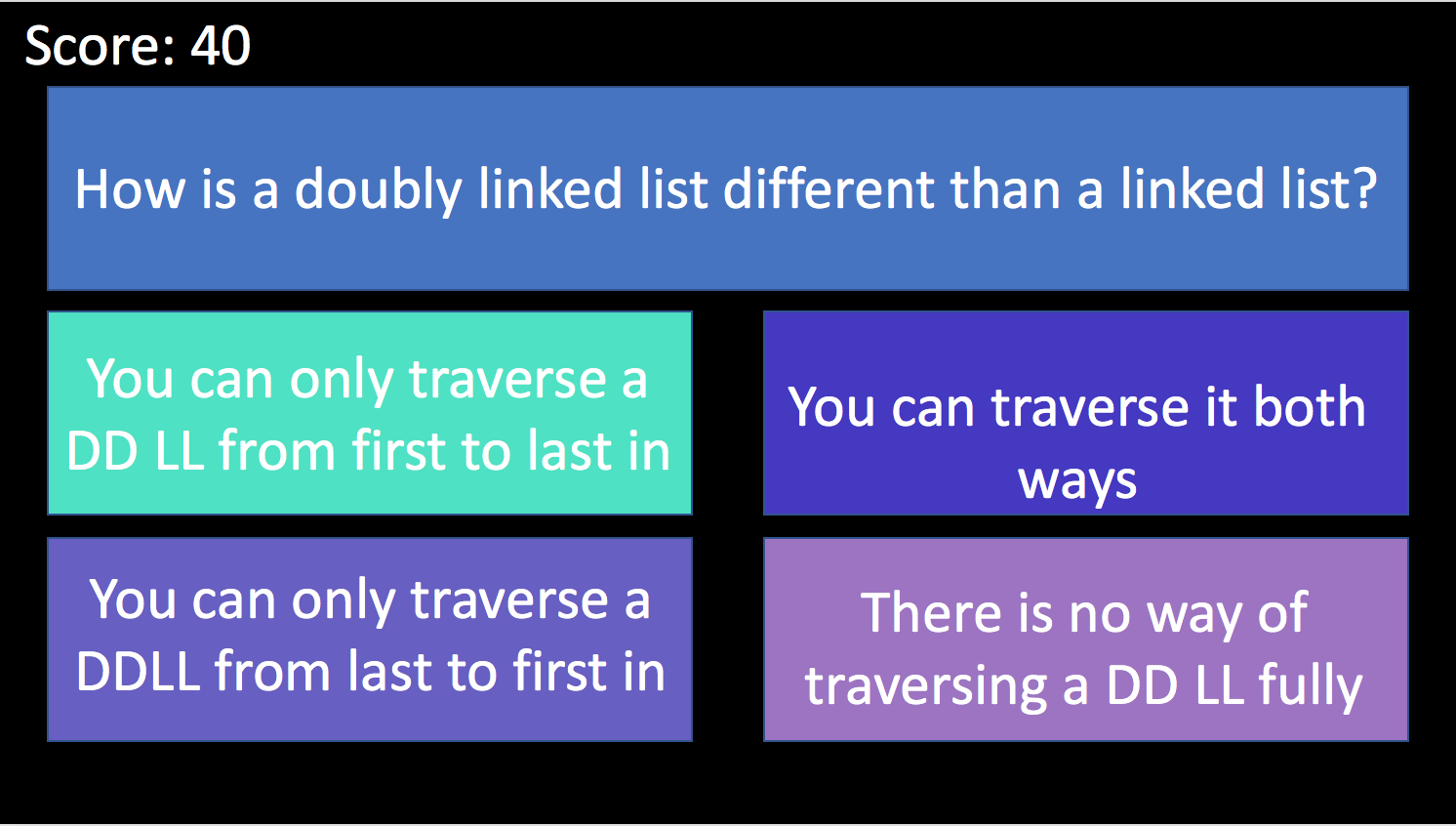
StudBud is a web browser game to teach children about online safety and CS concepts. Using a point system, it keeps a user hooked on to answering more and more problems. Having a reward system engages the user to participate more actively in the game. StudBud encourages children to learn, while they believe they are participating in a game.
How we built it
StudBud is powered by a Sinatra backend, AWS Elastic Beanstalk was used to host it, and it utilizes HTML, CSS, JavaScript across its front end. The game elements were developed using Phaser.js, it has been developed for a browser but can easily be used as a mobile application . All the questions are stored locally right now in a flat JSON file, eventually this would be traded out for a nosql database so users could modify and add their own questions.
Challenges we ran into
Having never created a game, built a full-stack website, nor worked with Phaser.js it was an interesting challenge to learn and create something using these tools. As with most website development it was a struggle to create good looking graphics that fit the feel of our app quickly during these 24 hours, but in the end we are proud of everything we accomplished.
Accomplishments that we're proud of
We're proud that the final application is in line with our initial vision for it. We are excited that we could learn new programming tools such as Phaser.js, to create a more exciting user experience.
What we learned
Creating the game, we learned how to create web games using phaser.js, manage multipage websites with Sinatra, and display persistent user data using cookies.
What's next for StudBud
We would love to add more levels and more exciting yet educational tools to teach children on computer science and protecting themselves from the internet.Additionally, we would like to incorporate a database and a user system, so that points scored and questions completed will be tied to the user rather than to the browser. One other stretch goal for the project is to add a teacher or class type interface so teachers/classes can create custom question decks.



Log in or sign up for Devpost to join the conversation.