-
-
Rover
-
Bounties
-
Etherscan NFT
-
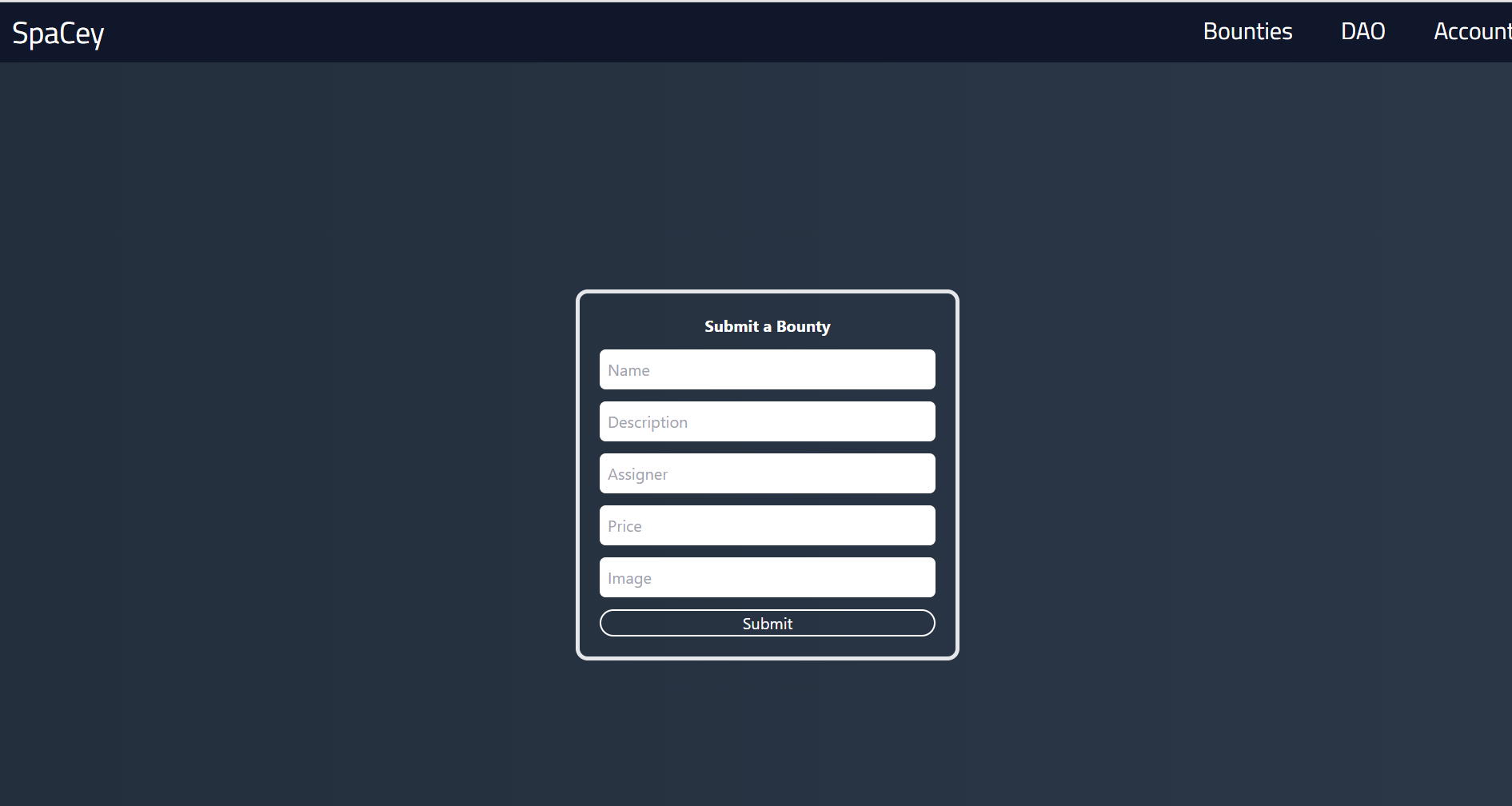
Bounty Form
-
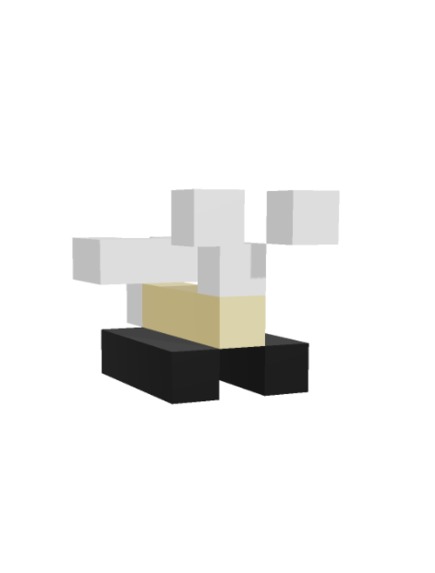
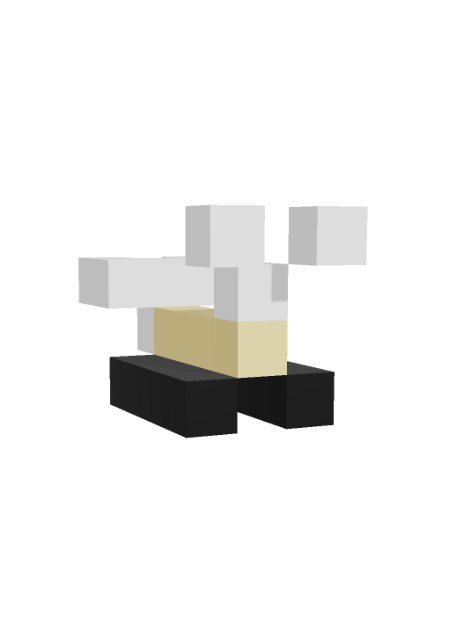
Rover NFT (Starknet)
Inspiration 🌌
The inspiration for spaCey came from a desire to democratize space exploration and problem-solving. Typically, challenges such as satellite refueling 🛰️ and colony construction on Mars 🪐 are managed by large contractors. We saw an opportunity to decentralize this power and enable anyone, anywhere, to contribute meaningfully to these pressing space problems. Our vision is to harness the collective intelligence and skills of a global community to accelerate the advancement of life on Mars and beyond.
What It Does 🚀
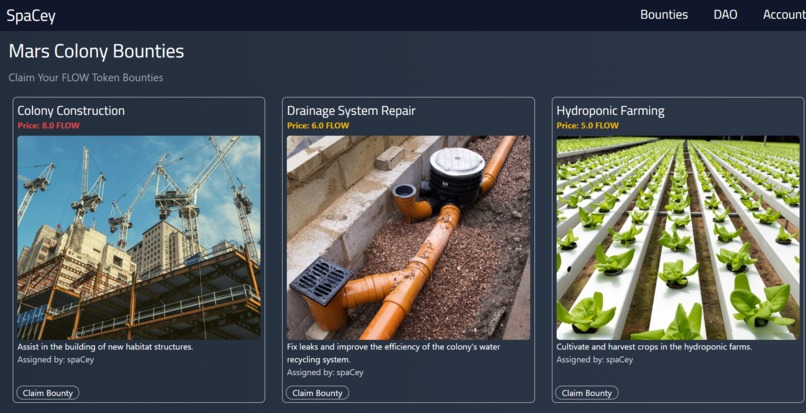
spaCey is an innovative solution that combines a gesture-controlled Mars rover 🤖 with a digital platform for submitting and claiming bounties. Users can contribute to various space-related tasks and earn FLOW tokens 💰 upon completion of these bounties. The platform is an integral part of a DAO, promoting a decentralized approach to decision-making and contribution. This system not only incentivizes participation in space advancement activities but also makes it accessible to a wider audience, democratizing the process of space exploration.
How We Built It ⚙️
The Rover
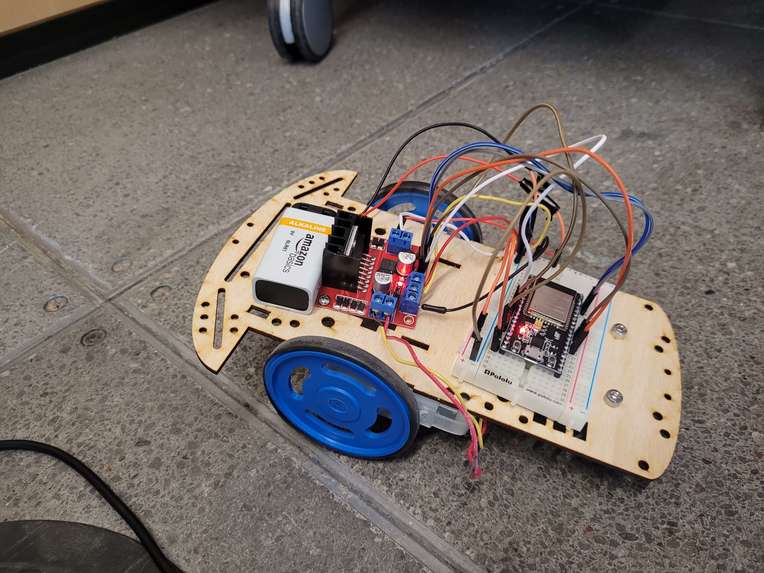
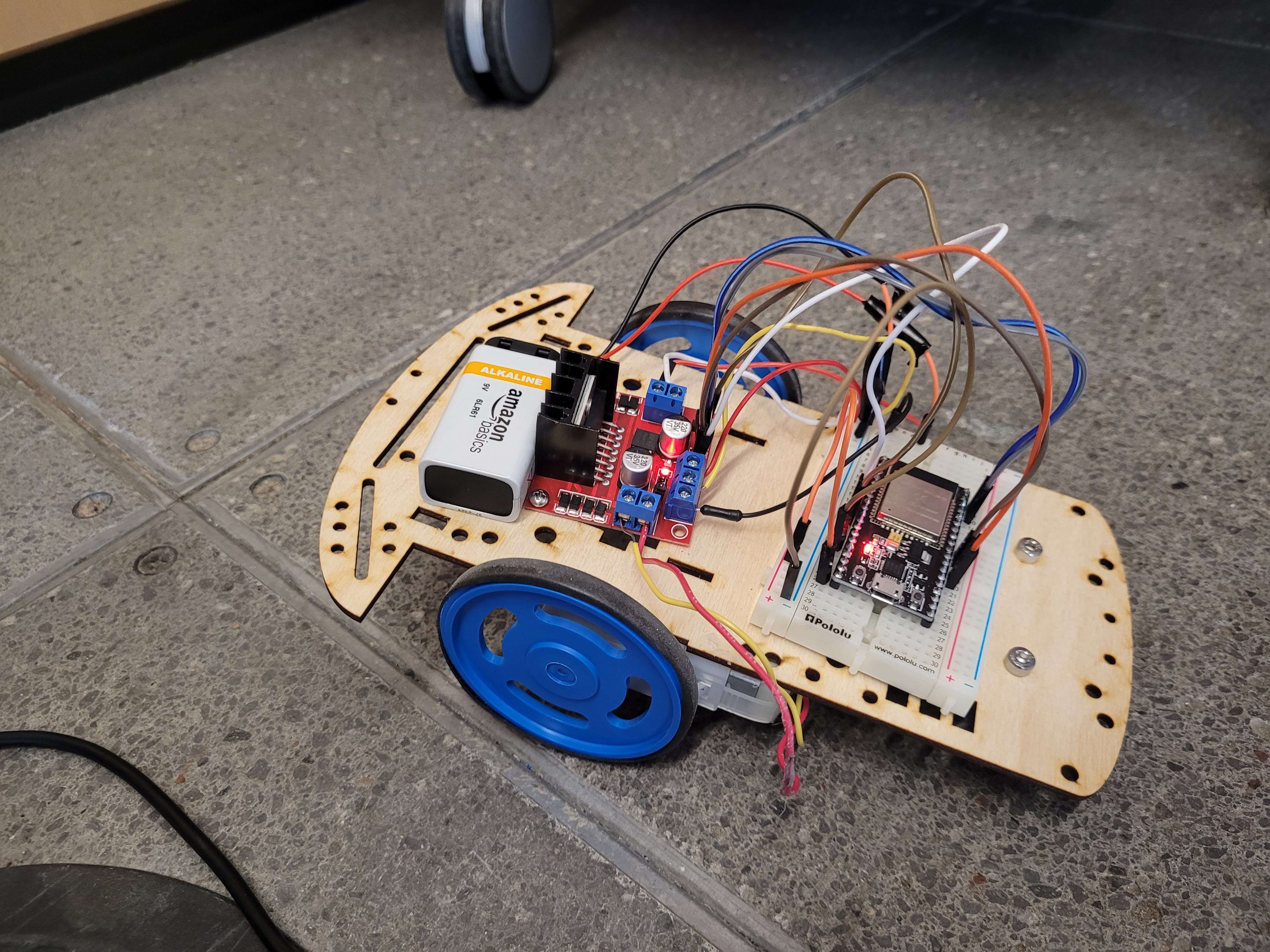
Our rover was constructed to demonstrate how anyone can use the platform. With our gesture-controlled rover, we are able to navigate our vehicle and simulate the completion of tasks, which ultimately allows us to demonstrate the possibilities of the spaCey platform. Here's what we used:
- Tensorflow: Used to train a gesture-controlled neural network
- ESP32: This was the driving force behind our rover - using bluetooth, we were able to send commands to the rover which the ESP32 received and then sent the necessary signals to the connected motors.
The Platform
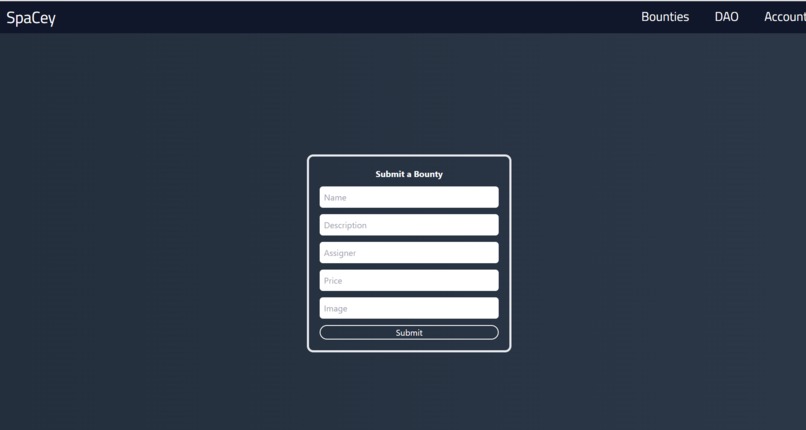
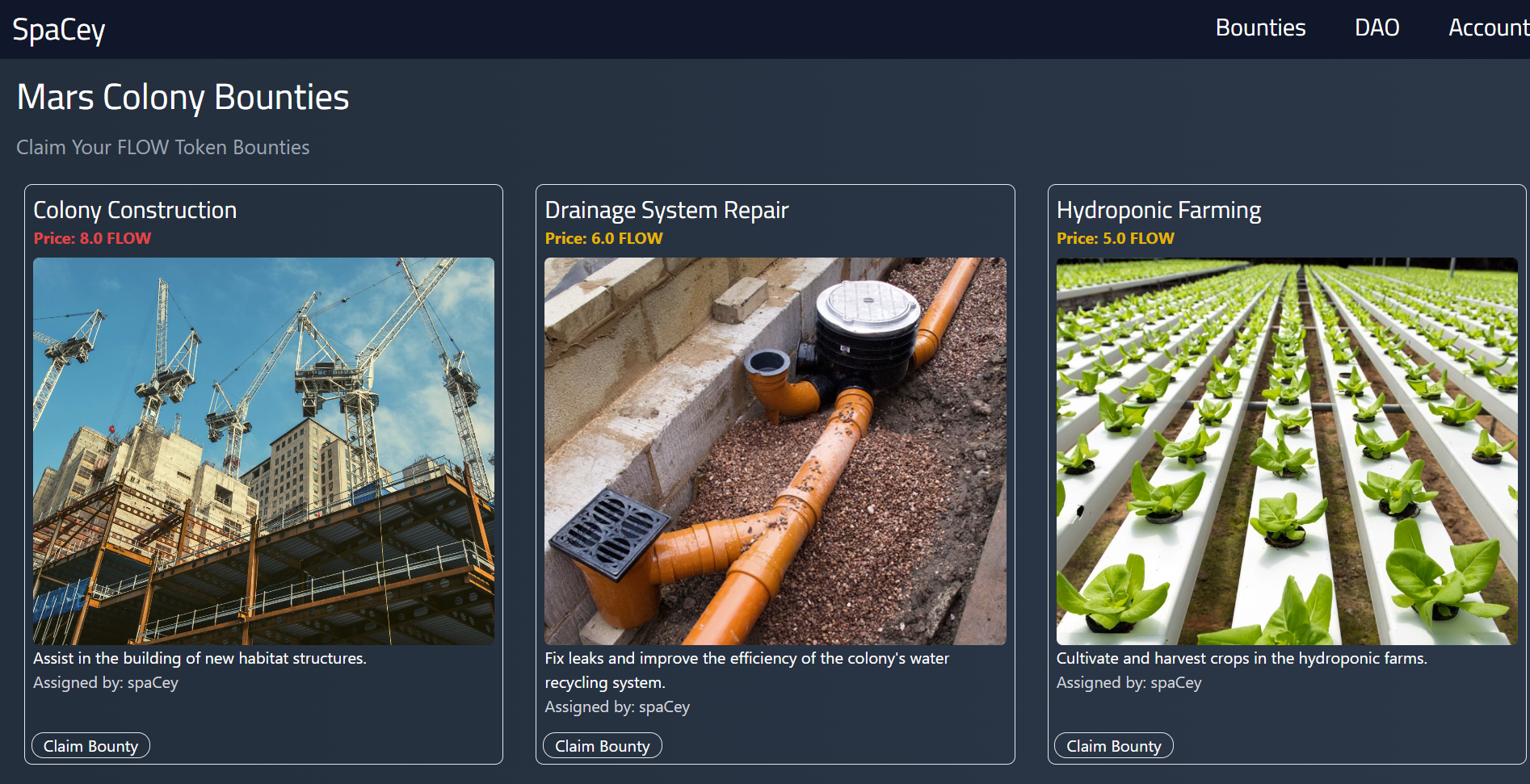
Our frontend allows for users to submit proposal for colony advancement and to claim the bounty once they have completed the task. We allow for everyone to contribute as part of our spaCey DAO (decentralized autonomous organization), meaning that colony advancement is in the hands of the people. Additionally, for every bounty you complete, you are rewarded with a unique NFT which commemorates your commitments! Here's the tech stack which made this possible:
- React: Leveraged to create our frontend for the displaying our bounties
- Node.js: Used to execute the logic of our application, such as calling NFTPort APIs and executing FLOW transactions
- FLOW: Used as the main currency for the transactions of our platform, given to users to reward them for bounty completion
- StarkNet: Created a unique NFT on StarkNet mainnet which represents the rover - were unable to mint due to server-side issues from StarkNet
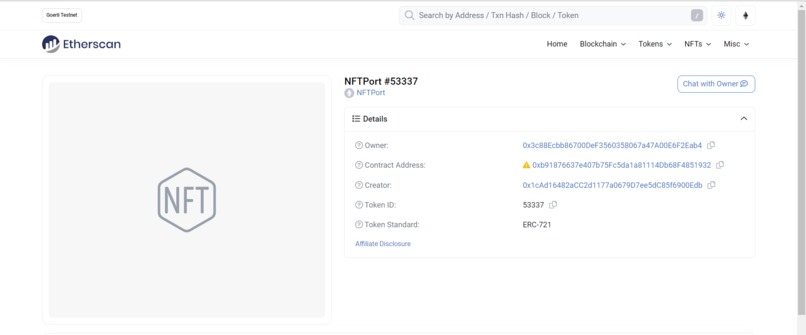
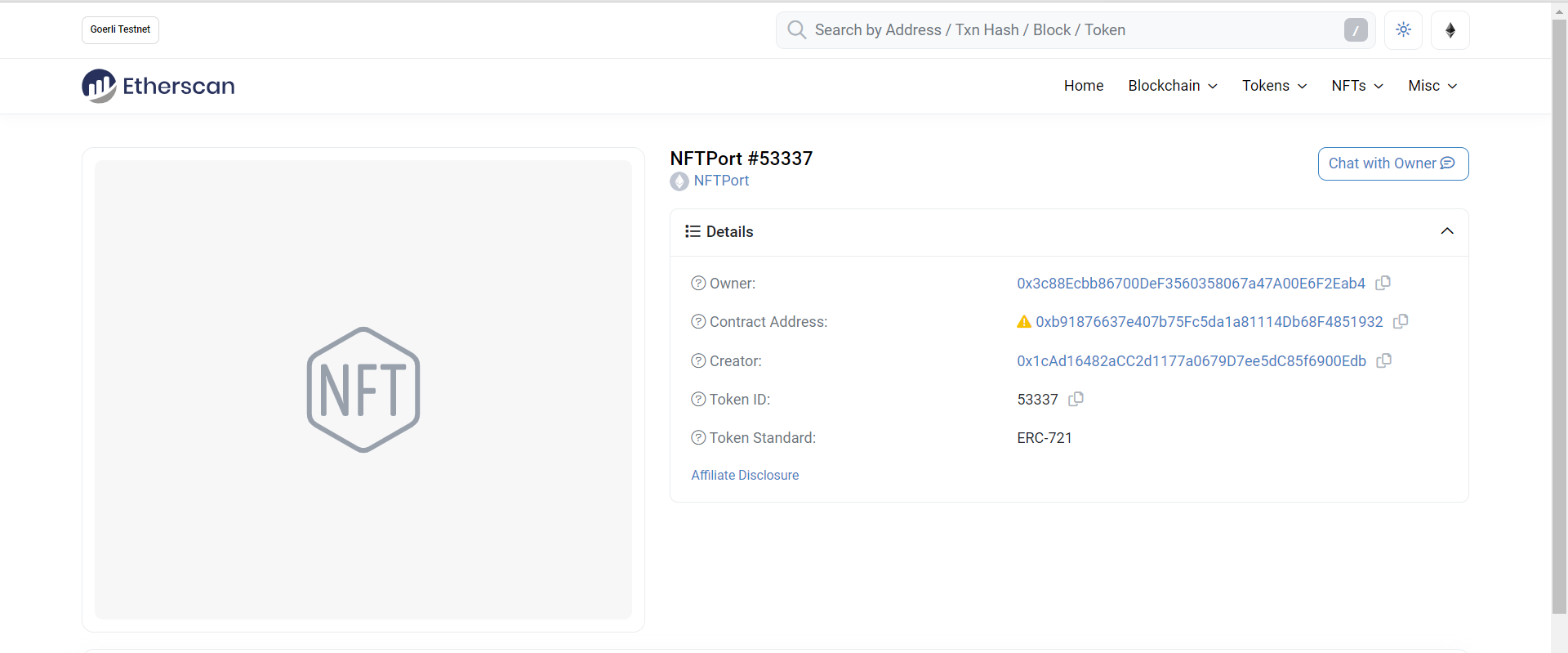
- NFTPort: Leveraged to create unique NFTs for each bounty and mint them on Goerli testnet
Challenges We Ran Into 🤔
- One of the significant challenges was connecting the gesture-control neural network to the ESP32 microcontroller. Ensuring reliable and responsive control required extensive testing and optimization.
- We encountered various technical issues while integrating StarkNet into our project, as some of their technologies were still in development or had limited documentation.
- Working with cryptocurrencies, particularly FLOW, was a new experience for us. We had to navigate through its ecosystem and understand the nuances of integrating it into our platform.
Accomplishments that We're Proud Of 😊
- Successfully integrating a gesture-controlled neural network model with our Mars rover, which was a significant technical feat.
- Overcoming the steep learning curve associated with web3 solutions and implementing them effectively in our project.
- The extensive time and effort invested in training the neural network paid off, as it became a cornerstone of our gesture control system.
What We Learned 👨🎓
- Our project provided us with hands-on experience in working with FLOW and StarkNet, expanding our knowledge in the domain of blockchain technology.
- We gained valuable insights into integrating hardware solutions, particularly in controlling the ESP32 and motor systems to enable movement in the rover.
- The project enhanced our understanding of blockchain's potential in decentralized systems and its application in real-world scenarios.
What's Next for spaCey 🌠
- Our future plans include expanding the gesture recognition features to cover a wider range of commands and interactions.
- We aim to integrate more advanced blockchain functionalities, such as zero-knowledge proofs (zk Proofs), to enhance security and efficiency.
- Continuous improvement in the mobility and maneuverability of the rover is also a priority, to ensure it can navigate the Martian terrain more effectively.


Log in or sign up for Devpost to join the conversation.