-
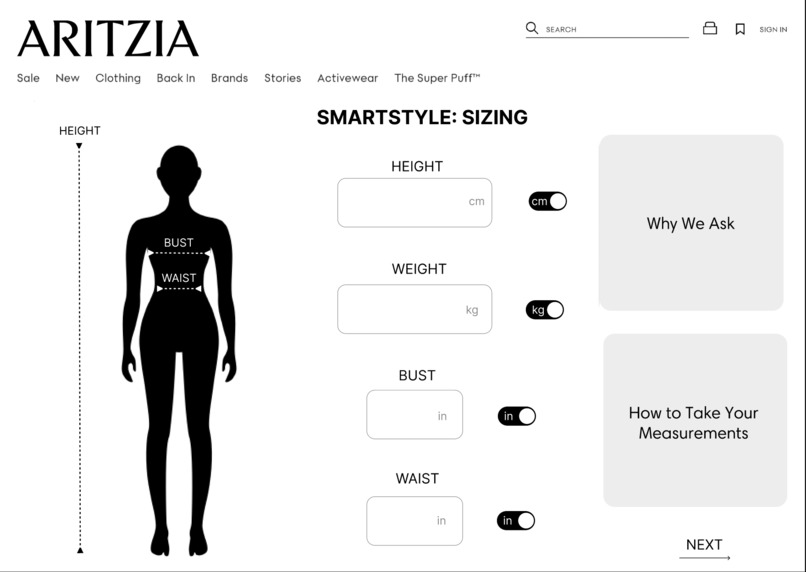
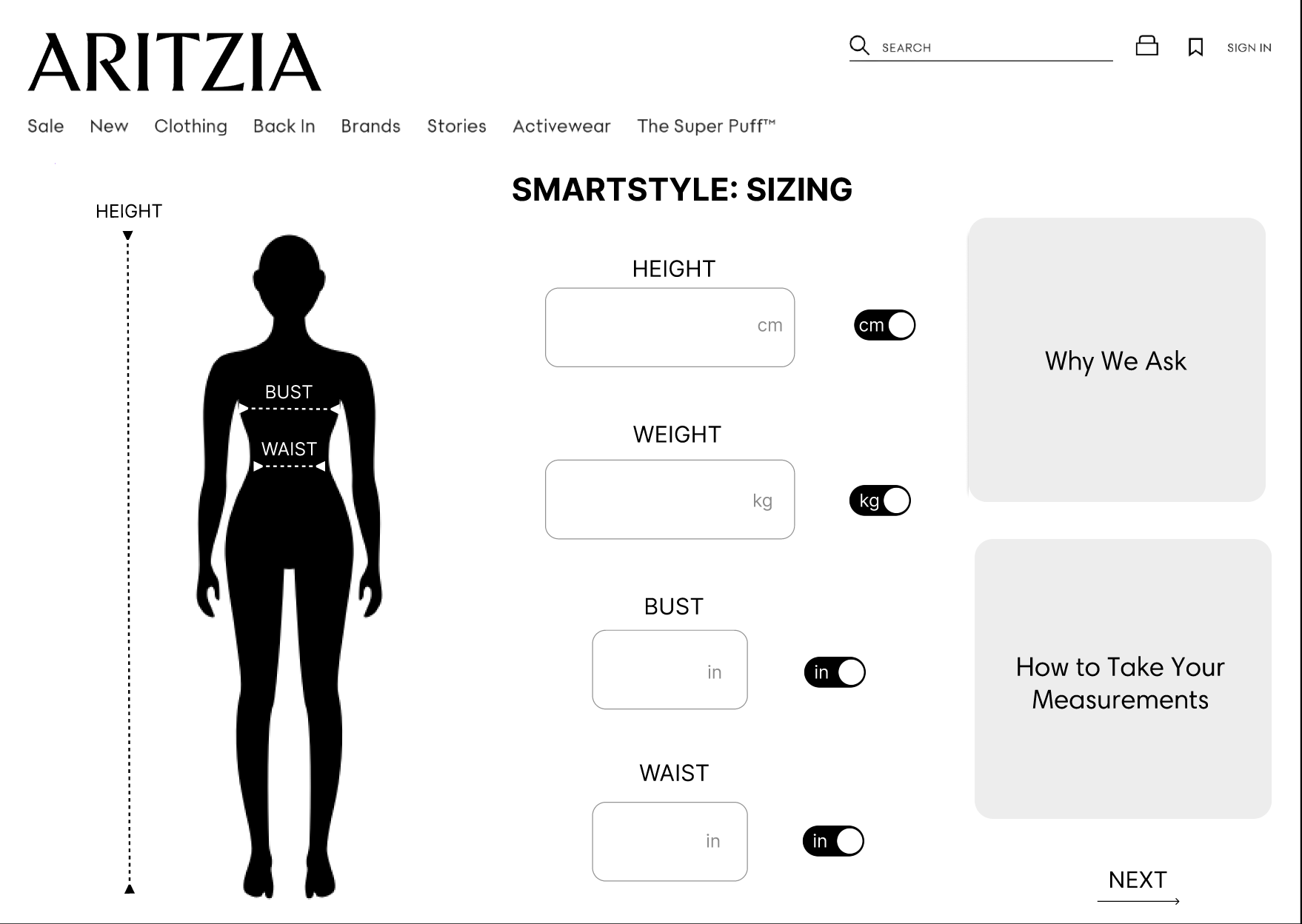
SmartStyle Sizing
-
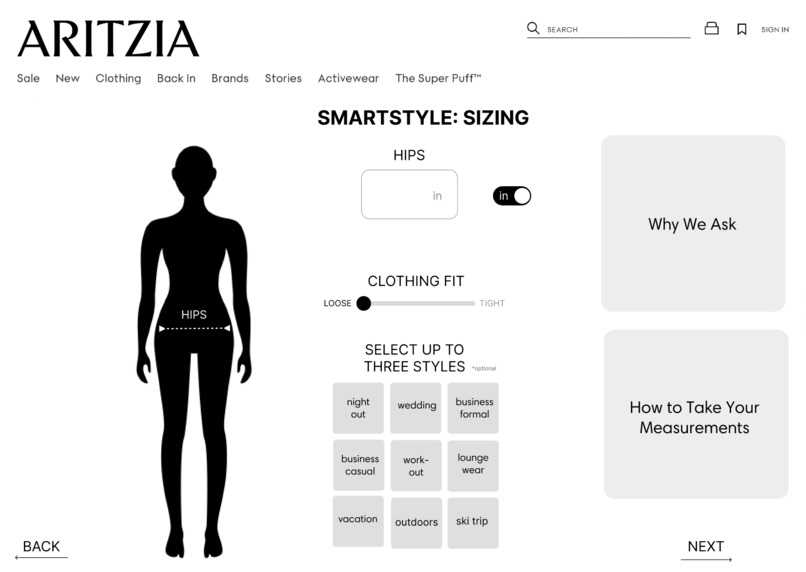
Smartstyle Sizing and Preferences
-
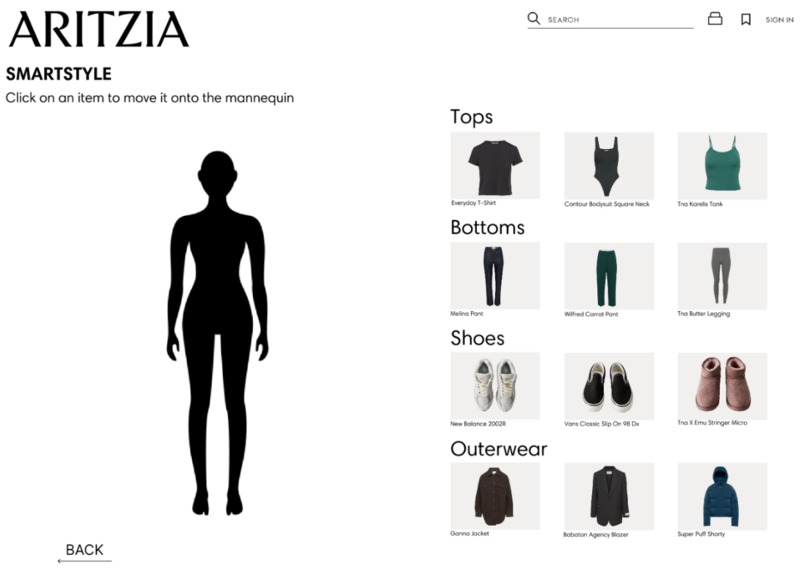
SmartStyle Mannequin Vizualization
-
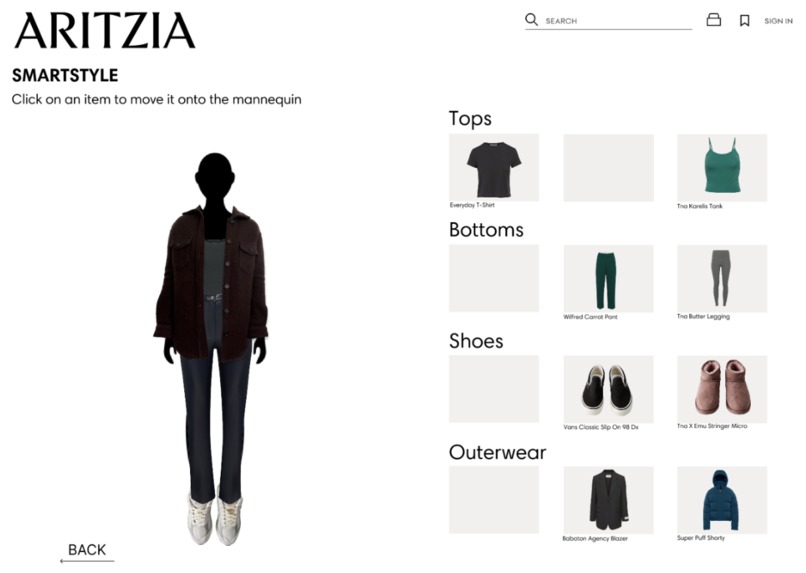
SmartStyle Mannequin Vizualization Full Outfit
-
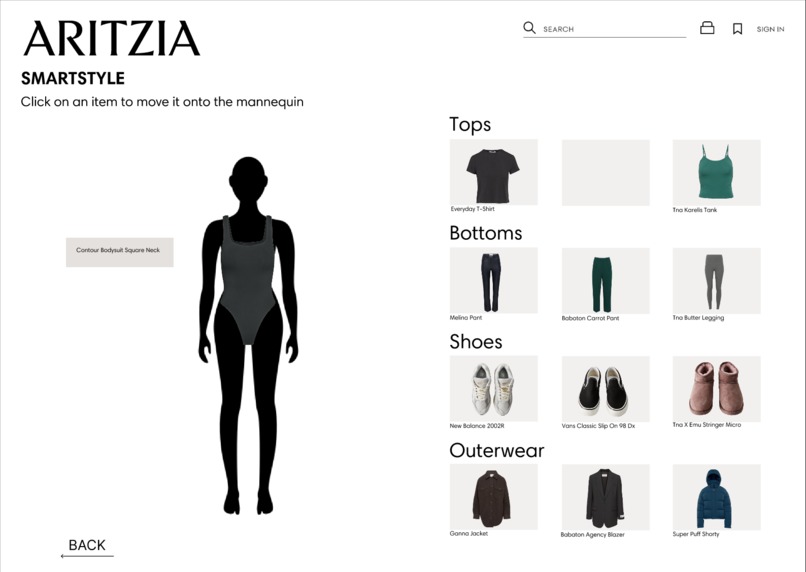
SmartStyle Mannequin Vizualization Name Hover
-
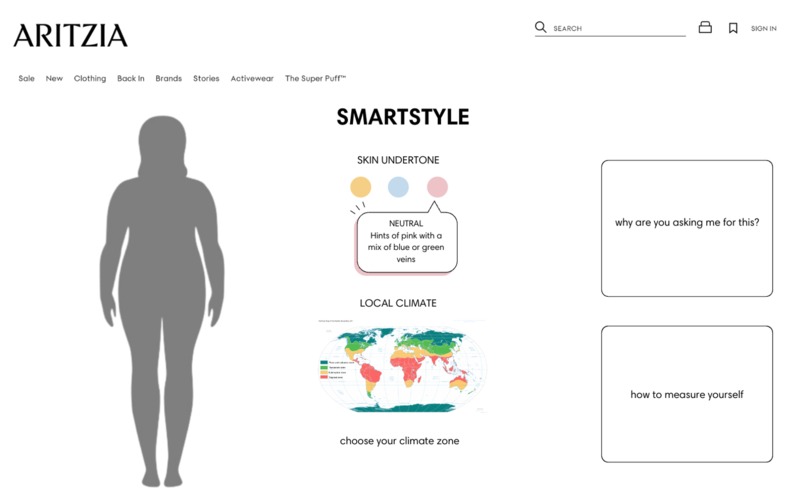
Future Mannequin Adjustments Design
-
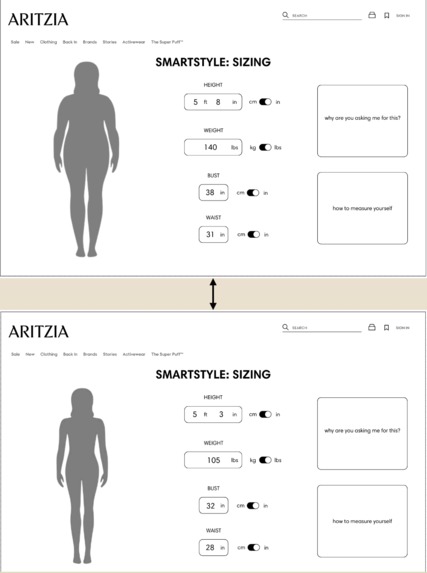
Future Mannequin Sizing Adjustments Design



INSPIRATION:
As you might already know, "the cart abandonment rate in fashion e-commerce is 68.3%” According to Ascendia Insights. That’s a large portion of missed sales. Therefore, our project has designed a solution to address this issue and minimize the points of friction during a customer's shopping experience.
MAIN IDEA:
SmartStyle is a new feature that allows clients to visualize pieces of clothing put together as a cohesive outfit on a virtual mannequin. Embedded in this feature will be a machine learning algorithm, the SmartStyle algorithm, that will make suggestions on how to complete an outfit. Additionally, with Aritzia's fit analytics, we hope to provide size recommendations in order to improve customer satisfaction and increase inventory turnover. This would provide Artizia with an innovative edge to drive revenues in the e-commerce platform and truly highlights their values of everyday luxury in their customer shopping experience. The products presented in this initial submission include a sample machine-learning algorithm that gives clothing pairing suggestions and a prototype of the user interface design.
METHODS: SMARTSTYLE ALGORITHM:
Our Smartstyle Algorithm is a KNN classifier that learns from the mock data we present to it and shows an 82% accuracy in predicting the "correct" item to complete the outfit. A "correct" item is the one most frequently paired with the remaining pieces in the outfit. For example, given the Ganna Jacket, the Melina Pant and The Contour Squareneck Bodysuit, the algorithm will predict that the New Balance 2002R Shoes sold at Aritzia would pair well with this combination of items. In the following code, the SmartStyle Algorithm is built from scratch using R. A mock dataset was created and imported into R, showing data that might be generated from TikTok videos styling multiple Aritzia pieces together, as well as from website analytics showing which items are commonly purchased together to form an outfit. Data taken from Tiktok can include pairings of items styled by the poster in the comments or description box of the video. This can also be applied to apps like Instagram and VSCO, so long as the items shown in the outfit are written out by the poster.
METHODS: SMARTSTYLE UI/UX FRONT-FACING INTERFACE:
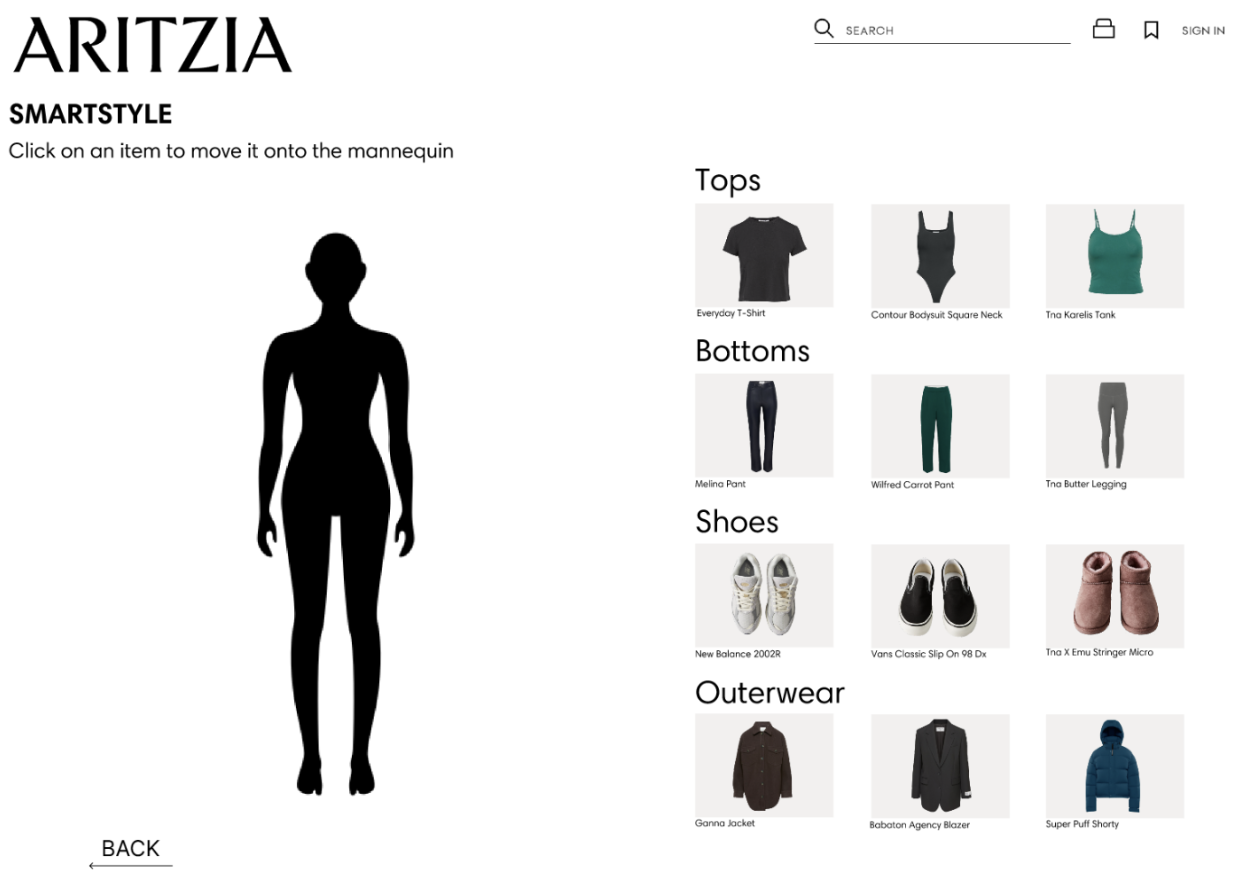
We then designed a mannequin visualization to allow shoppers to test outfits for any occasion and generate suggestions to complete their look in its final iteration. The Figma link submitted represents what the client-facing webpage will look like. Shoppers can click on items to add them to the mannequin. In the final product, the pieces that appear to the right of the mannequin will change so that pieces that complement the selected item will appear. These suggested pieces will be generated via the SmartStyle algorithm. Additionally, with Aritzia's fit analytics, we are hoping to use this data to provide size recommendations in the SmartStyle tool.
CHALLENGES:
Machine learning was a big hurdle to overcome in this project. We had never learned how to make a classifier using R that can predict categorical variables via a relationship between other categorical variables! Furthermore, trying to figure out the main consumer pain points also took a lot of research to figure out what customers are struggling with when shopping online!
WHAT WE ARE PROUD OF:
We generated a working algorithm to predict outfit pairings with an 82% accuracy!!!! We also worked with Figma to create beautiful interface mockups. We were also able to connect our product to the brand values of Aritzia quite well via our initial research, summarized by our lovely pegboard: link.
WHAT WE LEARNED:
In terms of actual coding, some of our team learned how to develop a machine-learning algorithm with categorical variables. We also learned how to represent our desired design for our user interface using Figma. Although we did not develop a usable code for the user interface, we were able to utilize connections to create a prototype that displays the design that would be created in a final product that could then be linked with the SmartStyle algorithm.
FUTURE STEPS:
In Figma, we have a mockup of the design rather than workable code. Our next steps would be to incorporate functionality into the design we have and tie the website feature to the SmartStyle algorithm we have created. In the future, it is possible that AI can recognize Aritzia items in pictures or videos to generate data, but this is not currently modelled by the SmartStyle algorithm, as it is quite complex. We can also include the SmartStyle feature within the mobile app in the future.
Built With
- figma
- r


Log in or sign up for Devpost to join the conversation.