Inspiration
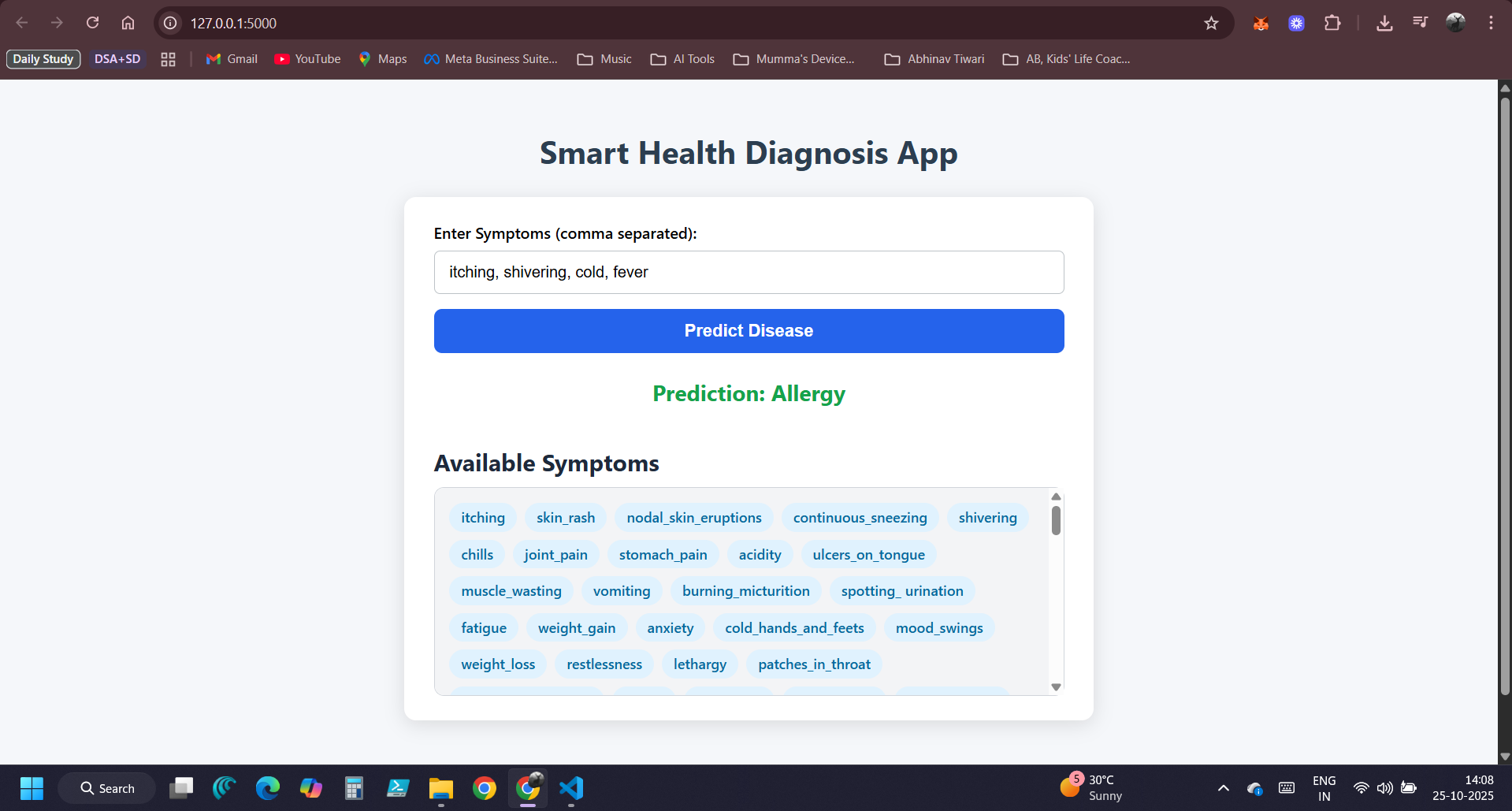
- Realizing that many people lack quick and accessible health diagnostic tools, especially in underserved areas, we wanted to create a user-friendly AI-powered app to provide instant disease predictions from symptom input.
What it does
- Users enter their symptoms, and the app analyzes them using a machine learning model to predict possible diseases, empowering early diagnosis without needing immediate doctor visits.
How we built it
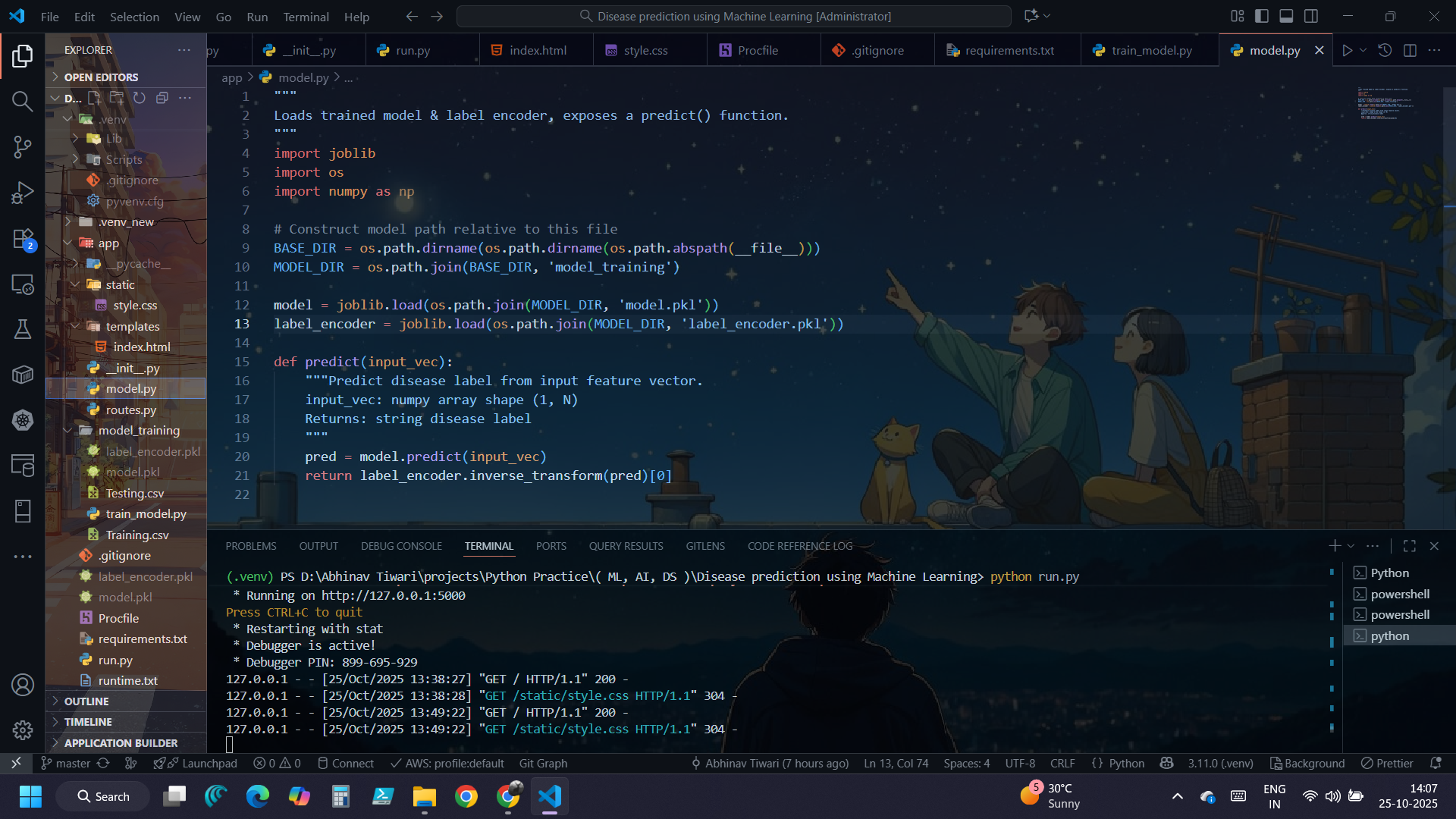
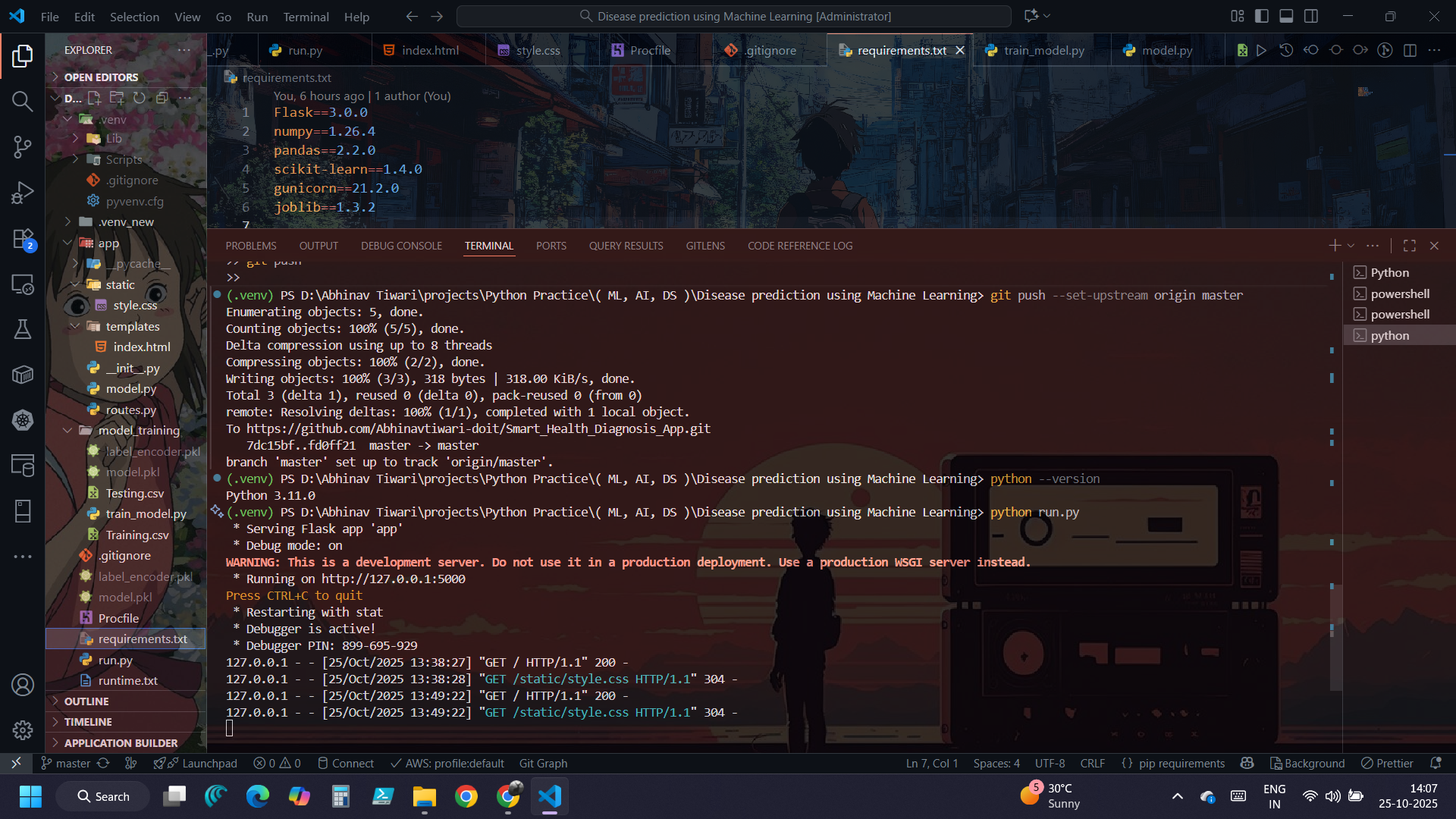
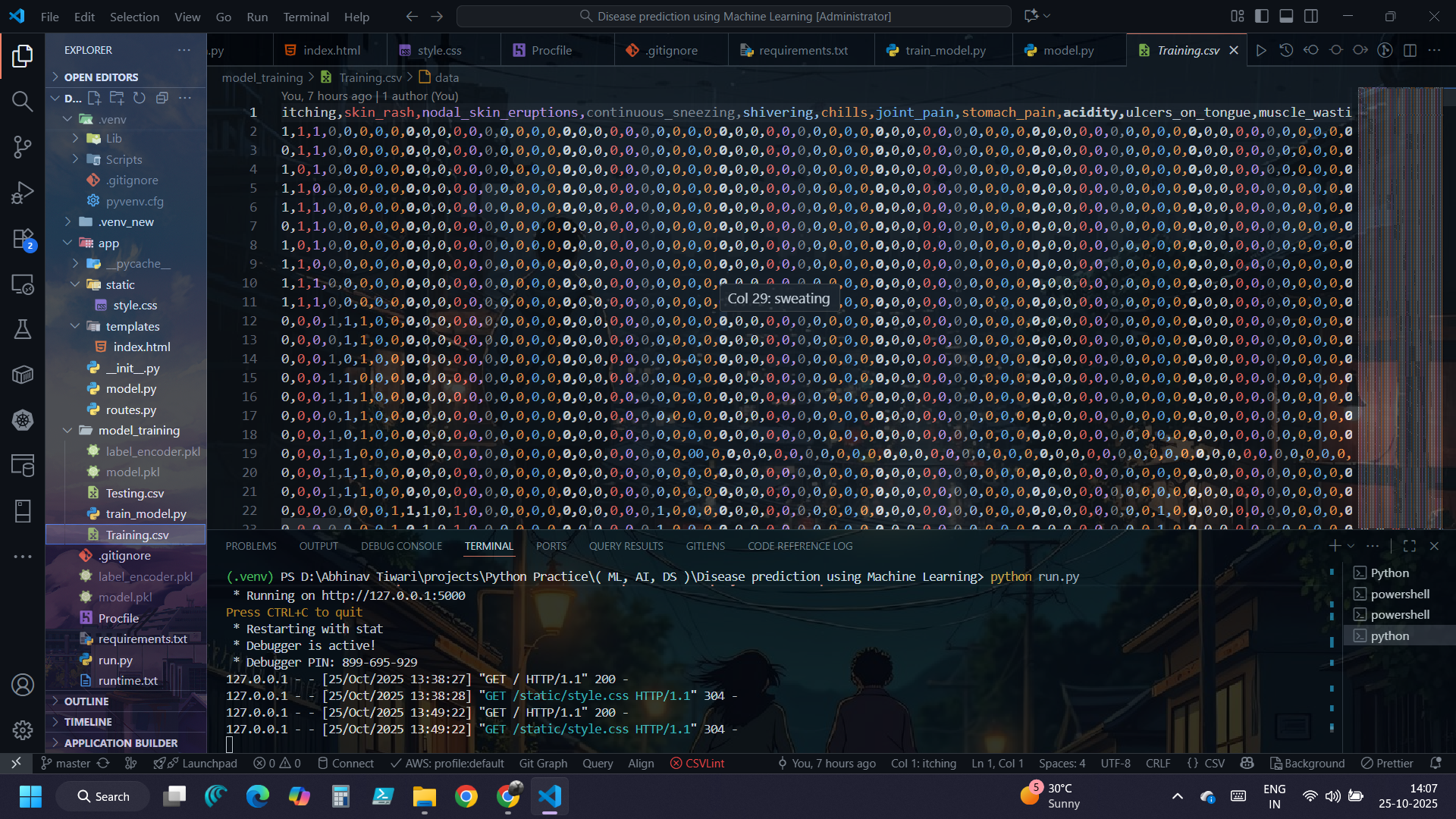
- We collected symptom-disease data, trained a Random Forest classifier after preprocessing, and built a Flask backend with an intuitive web frontend to communicate predictions. We focused on clean code, usability, and seamless model integration.
Challenges we ran into
- Challenges included handling missing or inconsistent data, avoiding model overfitting, and managing deployment dependencies across various Python versions and platforms.
Accomplishments that we're proud of
- Successfully delivering a working AI-powered health diagnosis app with clear symptom input and disease prediction, combined with an improved UI.
What we learned
- We learned the intricacies of preprocessing medical data, deploying machine learning models to production, and the importance of environment consistency between local and cloud setups.
What's next for Smart Health Diagnosis App
- Future work includes integrating NLP for symptom understanding, adding nearby hospital suggestions, and expanding the dataset for broader disease coverage.
Built With
- css
- css3
- fetch-api-(frontend-http-requests)-tools:-git
- flask
- git
- github
- gunicorn
- gunicorn-(wsgi-http-server)-apis-&-libraries:-joblib-(model-serialization)
- html
- html5
- javascript-frameworks:-flask-(python-web-framework)-machine-learning:-scikit-learn-(random-forest-classifier)-data-handling:-pandas
- joblib
- numpy
- numpy-deployment:-render-(cloud-hosting)
- pandas
- python
- render
- scikit-learn

Log in or sign up for Devpost to join the conversation.