It amazes us the way formally incarcerated people lift themselves up and keep the fire inside them going. The very fact that organizations like Banyan labs and CEO are helping these people develop new skills and get a job is inspiring. In spite of all this hard work, finding housing and maintaining sounds like a great challenge because of the way our world functions. Thus, we decided to put our skills to more human use and help resolve this issue.
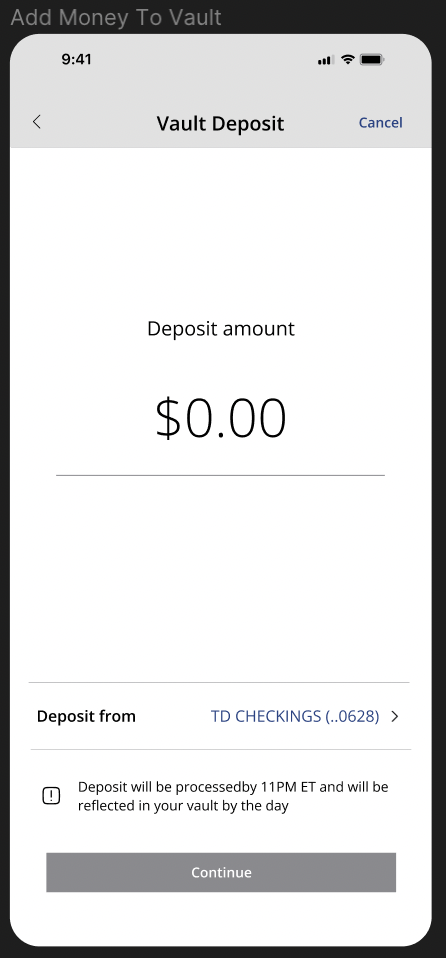
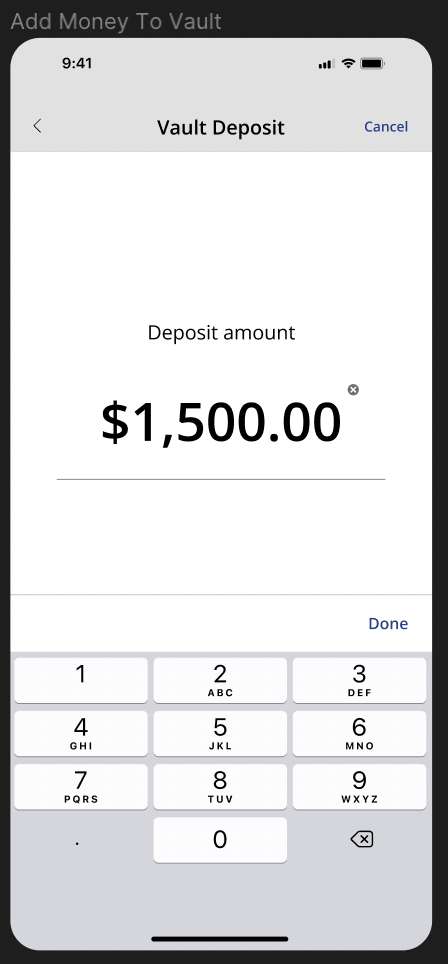
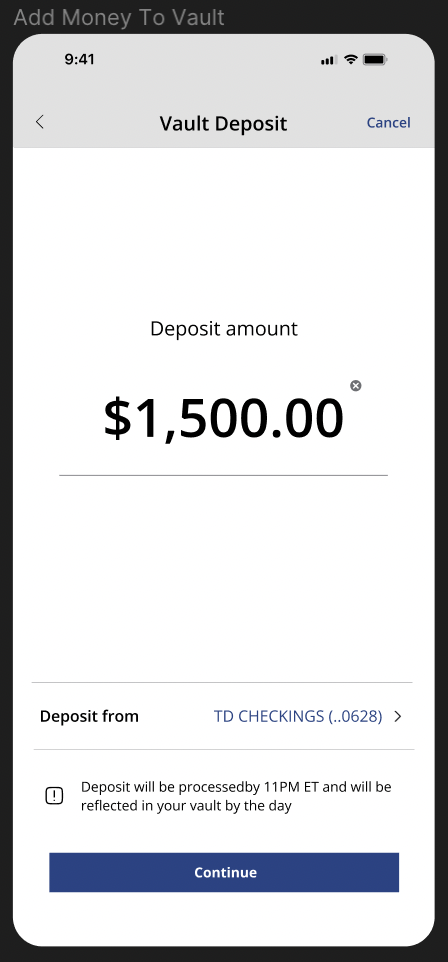
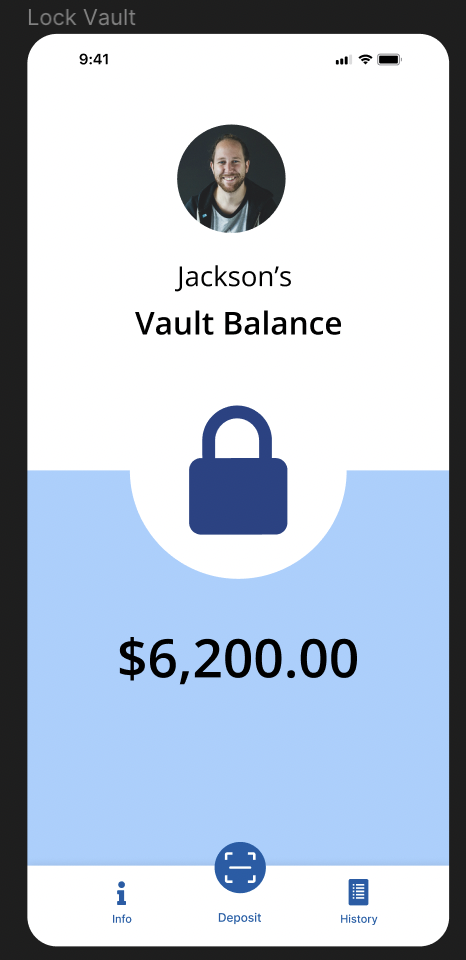
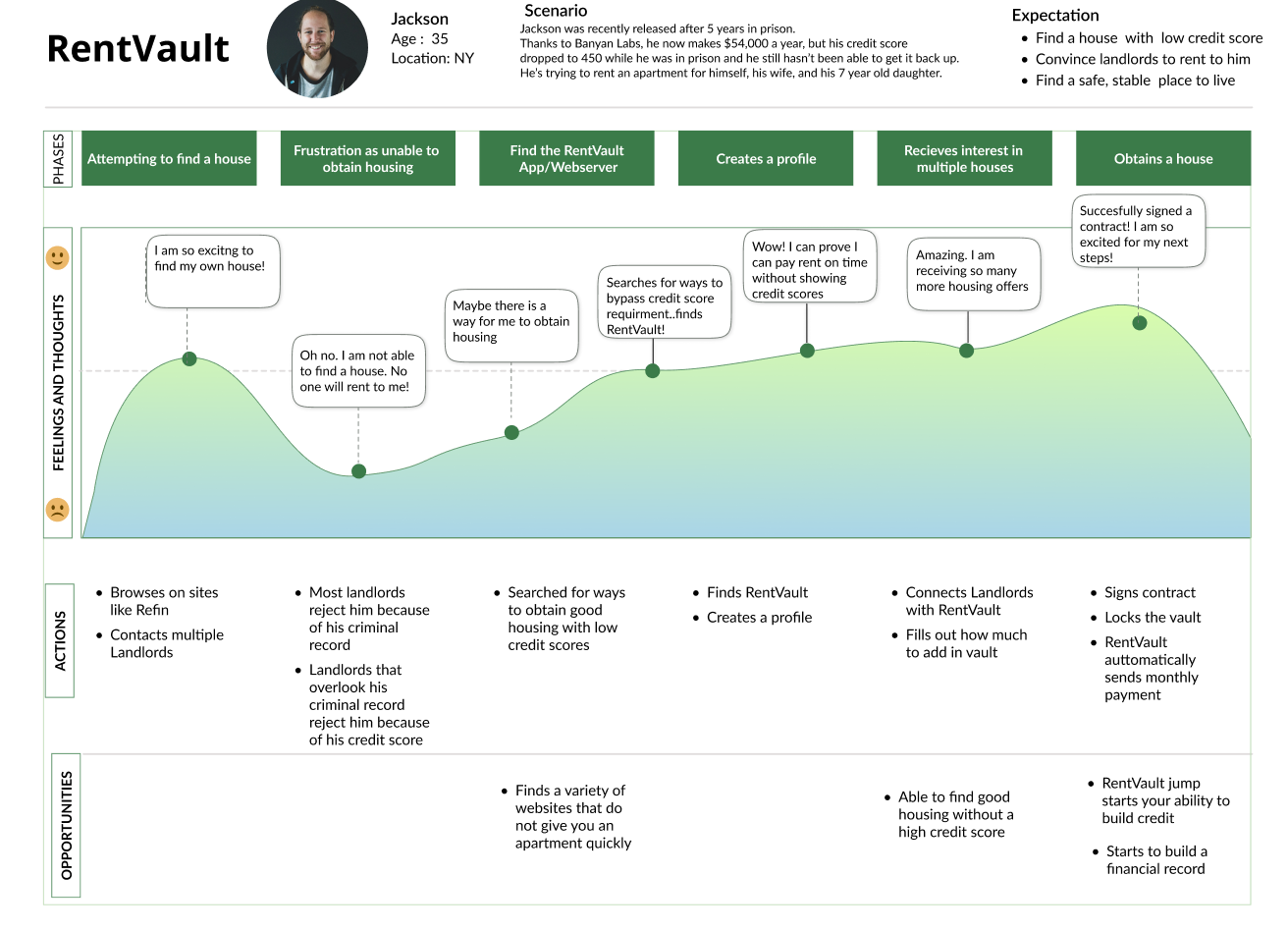
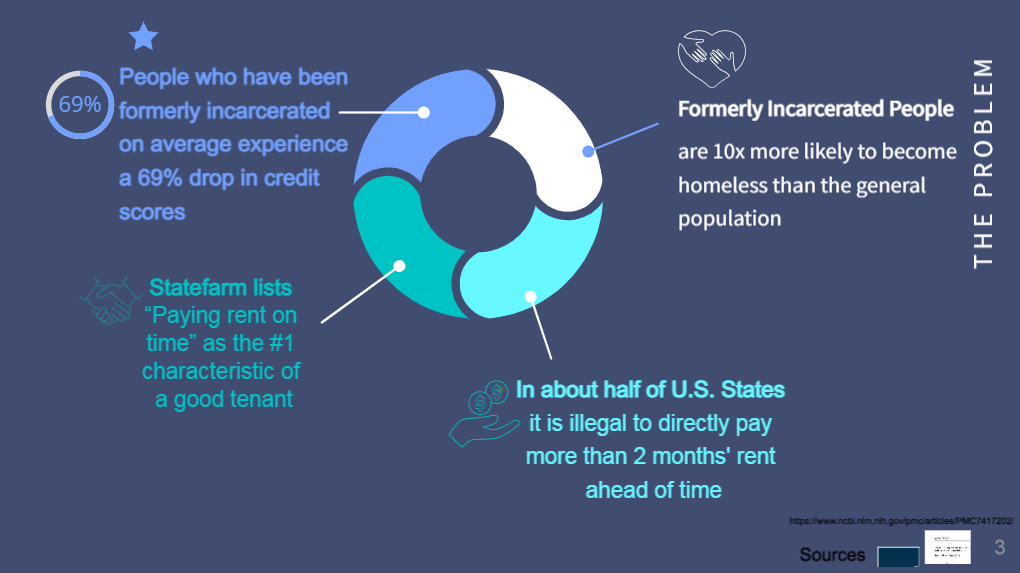
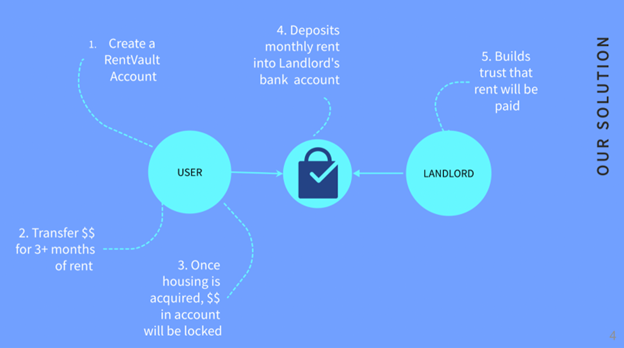
The main challenge in getting housing is the hampered credit history of incarcerated people. Rent Vault, will help them build the trust required to lease a house and maintain it by setting aside three or more months’ worth of rent. This will build trust between the landlord and tenant relationship by bypassing the need for credit history to prove timely rent payments. Over time, it helps people build their credit history. It serves as the stepping stone for individuals to begin building their credit after they obtain housing. From now on, they are able to start building a financial record without any setbacks to their living conditions.
We began our process of adding features to our service by interviewing a previously incarcerated person. We learned that one of the main challenges to obtaining housing was their low credit score. From there, we began to develop ideas for what is essential for the tenant/user to have. We concluded that we needed a way to build trust with landlords without depending only on credit scores. From our research, we also found that landlords value those who are able to pay rent on time over others. To give our clients a competitive advantage in the real estate landscape, we created a feature where the money deposited into RentVault cannot be taken out again to prevent fraud. This is available as both an application and web service. An application improves the user interface, while the web service allows different organizations, such as Banyan Labs, to communicate without sharing sensitive data.
We had trouble deciding on an idea that was simple, yet significantly impacted the lives of previously incarcerated people. We also did not know what features to exclude from our product. We eventually decided to create something simple and easy to use. We also struggled with scenarios where landlords would not necessarily unlock the tenant’s vault in the case of eviction. However, we came to a consensus to build a help-line desk for such issues. We also had a hard time creating both an application and web service within the 2 day period. However, we had experienced software developers and UX designers on our team that committed to building both.
We are proud of being able to work together across skill sets and backgrounds. We also came up with multiple ideas due to the brainstorming sessions that we set aside. We also took on the challenge to build both a web service and application. We were organized in setting deadlines and creating the project. Our team members were committed to finishing the project through the challenges we faced.
We learned the various challenges that previously incarcerated people have to go through to obtain housing, such as low credit scores, lack of renters insurance, and distrust. We also learned how to work as a team and give structured feedback to each other. We realized that we need to see the bigger picture of our product instead of focusing on unnecessary details. Asking for criticism from volunteers and mentors helped us fix what was not needed and added clarification to our pitch.
Our current model serves as the MVP for our target market of previously incarcerated people who were able to obtain a job through programs like Banyan Labs. In the future, we would like to expand RentVault to cater to other target individuals who necessarily do not have 3 or more months' worth of rent saved up.
Built With
- javascript
- react
- tailwind

Log in or sign up for Devpost to join the conversation.