-
-
AOB Playground
Inspiration
Traditional blockchain systems like Bitcoin suffer from poor scalability, questionable security assumptions, and false promises of decentralization due to mining pool concentration and validator centralization. We were inspired to create a revolutionary approach using "Atomic Ownership Blockchains" - where each blockchain represents an individual digital asset with clear ownership. This concept eliminates mining entirely while providing genuine decentralization and superior security through distributed ownership. Our vision was to demonstrate how P2P networks could support a truly decentralized currency system that surpasses Bitcoin in all three aspects: security, decentralization, and scalability through parallel processing of independent ownership chains.
What it does
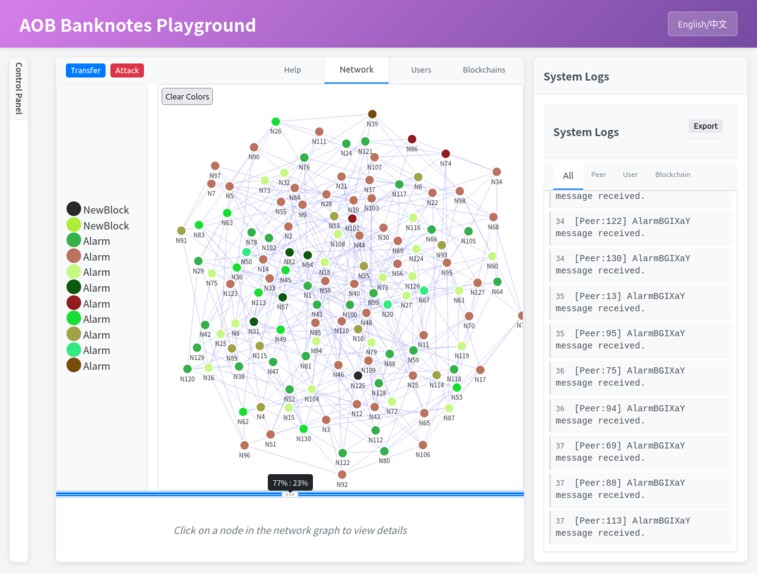
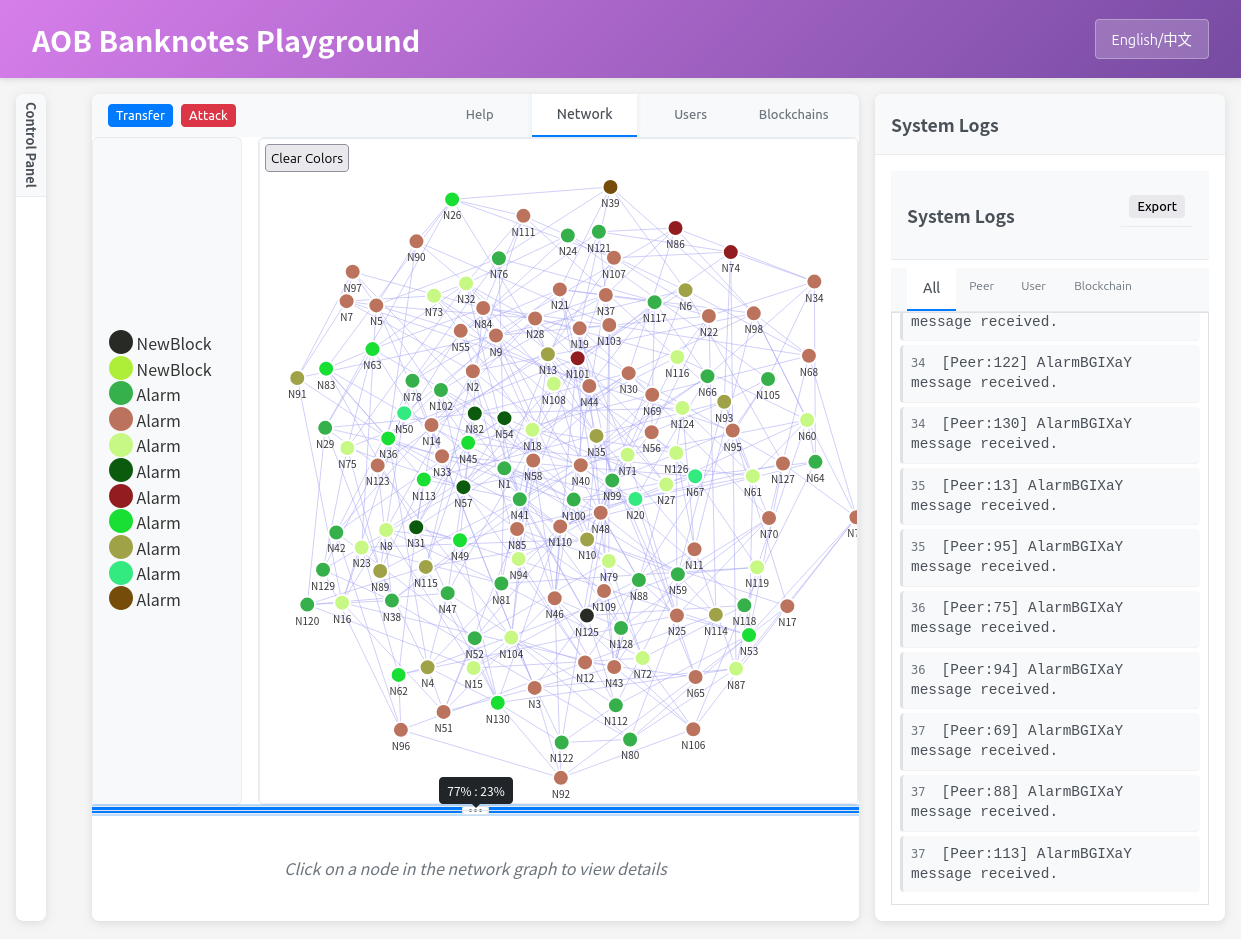
Our playground demonstrates a P2P network simulation with m nodes and n users, showcasing Atomic Ownership Blockchains where each blockchain represents a digital banknote. Users can create transactions by adding blocks to blockchains they own, transferring ownership to others. The system features real-time visualization of network topology, transaction broadcasting, double-spending attack prevention, and conflict resolution. Players can adjust network parameters, simulate fork attacks, and observe how the distributed system maintains security. The interface provides three panels: control settings, main asset visualization, and comprehensive logging of all network activities and cryptographic operations.
How we built it
We leveraged Kiro's spec-to-code capabilities extensively throughout development. First, we created detailed specifications for the user interface layout, interactive controls, and visual effects system. Kiro transformed these specs into working frontend code, generating dynamic animations, responsive panel layouts, and real-time data visualization components. We structured our conversations with Kiro to iteratively refine the user experience, control panel interactions, and visual feedback mechanisms. The most impressive code generation was the automatic creation of the three-panel interface system and the interactive blockchain visualization that dynamically updates as users explore different network states and transaction histories.
Challenges we ran into
The biggest challenge was Kiro's difficulty in correctly fixing bugs and implementing small functional adjustments - I had to complete these manually. Another major issue was Kiro's tendency to cut corners with data processing, frequently adding fake placeholder data instead of real implementations. Most problematically, it even created mock cryptographic algorithms rather than genuine SHA256 hashing and ECDSA signature verification. While Kiro excelled at generating initial UI code and visual effects, the iterative debugging process and ensuring data integrity required significant manual intervention.
Accomplishments that we're proud of
Accomplishments that we're proud of We successfully created a fully functional blockchain simulation that demonstrates theoretical concepts with practical implementation. The system accurately models P2P network behavior with configurable parameters, realistic message delays, and failure simulation. Our double-spending attack prevention mechanism works flawlessly, automatically detecting conflicts and maintaining network integrity. The user interface provides unprecedented visibility into blockchain operations through interactive exploration of users, assets, and transaction histories. Most importantly, we proved that Atomic Ownership Blockchains can achieve unlimited scalability while maintaining security - a significant theoretical contribution to blockchain architecture that could revolutionize cryptocurrency design.
What we learned
Working with Kiro taught us the power of spec-driven development for complex systems. By clearly defining network protocols and cryptographic requirements upfront, Kiro could generate sophisticated code that would have taken weeks to implement manually. We learned that AI-assisted development excels at translating well-defined specifications into working implementations, particularly for UI-complex components. The project deepened our understanding of P2P network dynamics, consensus mechanisms, and the intricate balance between security and performance in distributed systems. We also discovered the importance of interactive visualization in making complex blockchain concepts accessible to both technical and non-technical audiences.
What's next for Playground for Atomic Ownership Blockchains
We plan to extend the simulation by adding a block-tree based messaging system, enabling the network to propagate both currency and messages through the same P2P infrastructure. This would create a comprehensive decentralized world where communication and value transfer are unified under the atomic ownership model. We're developing message broadcasting capabilities that maintain the same security and ownership principles as financial transactions. Performance optimizations using Web Workers would enable larger network simulations with more complex interactions. We also aim to enhance the educational aspects with guided tutorials for blockchain concepts, making it a comprehensive learning tool. Finally, we envision creating a research platform where academics can test new consensus algorithms and explore the implications of unified currency-communication networks.

Log in or sign up for Devpost to join the conversation.