-
Cover
-
Pizza Builder Page
-
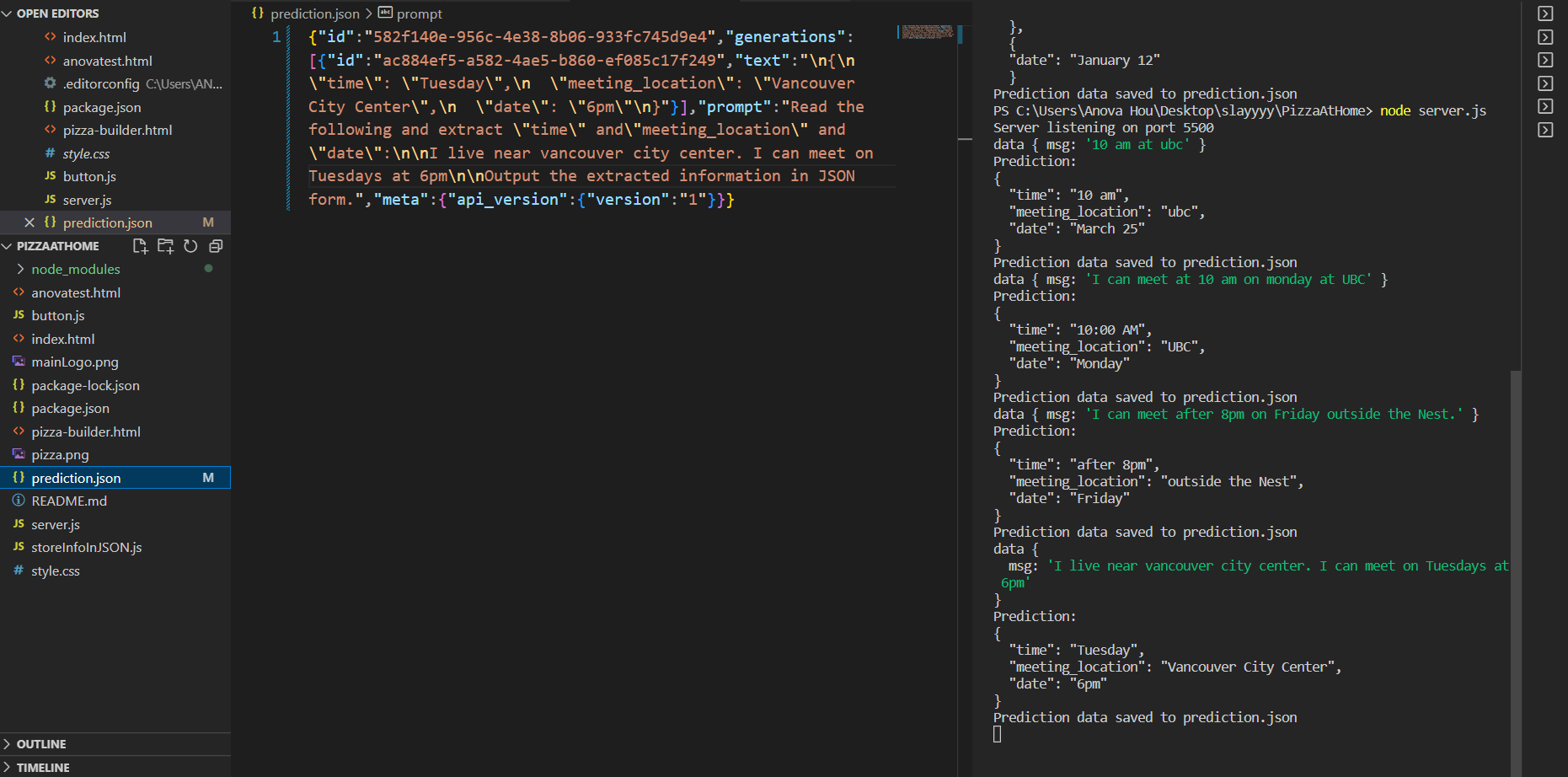
Backend Demo - Takes user text input, uses Co:here API, saves to backend

Inspiration
Pizza at Home was inspired by the 911 call to “order pizza,” in which a caller pretends to order a pizza to notify law enforcement about domestic abuse without the perpetrator noticing. However, officials previously warned that the strategy is not guaranteed to work, as dispatchers are not trained to recognise a pizza order as a genuine call for help. Often, the caller does not receive any help.
We believe this is an issue that can be solved using technology, automation, and ethical use of AI. 80% of domestic violence cases in BC are unreported and women are three times more likely to have been victimized by an intimate partner than men. Lack of information and the teleoperator being unable to quickly retrieve key data from the caller is a problem, and contributes to the overwhelming majority of unreported domestic violence incidents.
Our project centers on these themes:
- Technology helps create safer, smarter cities through the secure communication of information, allowing law enforcement to more efficiently help citizens.
- Technology can reduce sexual violence, domestic abuse, and violence against women.
- The Co:here API allows NLP to be used to generate data based on user text inputs. This allows for more integrity and detail in data that informs domestic violence reports.
What it does
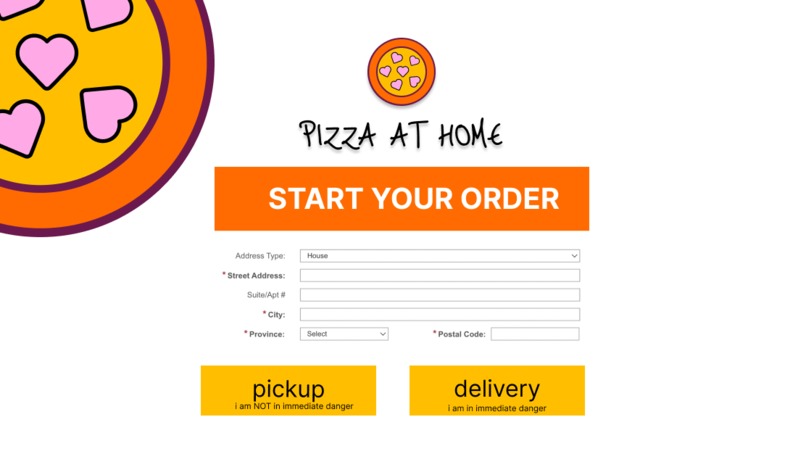
Pizza at Home lets users discretely report abuse to law and request for urgent help. The entire reporting process and user flow is disguised as a pizza ordering website. Key information is revealed on hover, so that if a perpetrator walks by the user’s screen, the website appears to be a normal pizza order website.
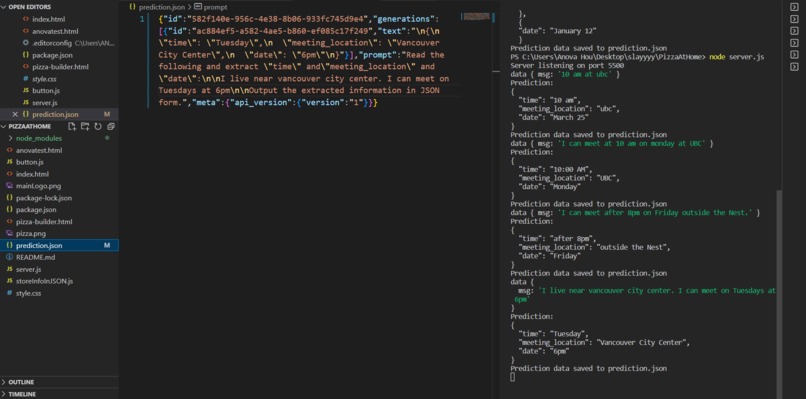
Users input information, and information is instantly sent to a server. The Co:here API is used to process natural language in our text box to generate a JSON object that is immediately sent and saved to a server, modeling the connection to a law enforcement organization server.
- Our platform uses ordering a pizza as a visual disguise for making a report
- The generic pizza ordering web app allows users to quickly exit a tab and the design allows the user stay confidential if someone walks past their screen
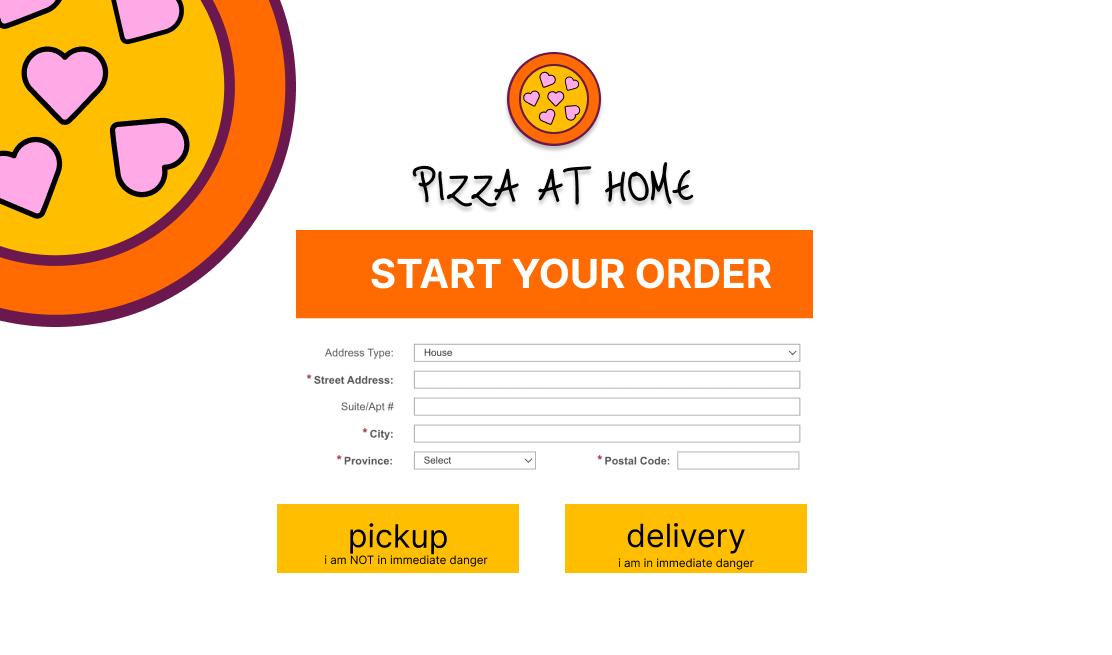
- Users start with delivery or pickup, where delivery is immediate danger and sends their address to 911
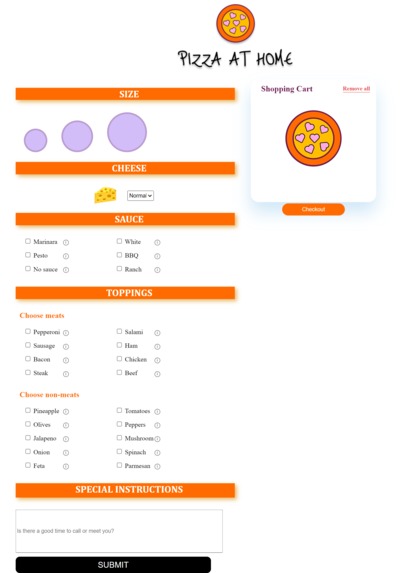
- Next, users can “build their pizza” using size, cheese, sauce, toppings, and special info
- Each option has a hover state that reveals the true meaning of the option. this hover state disappears when the mouse is moved away, returning back to a generic pizza ordering UI
- The special info box is a place where users can freely share their experience, ask questions, or denote the best time and place for a meeting.
- This text is passed to the Co:here generate API, which generates a JSON object of easily adjustable parameters. This is scalable and reproducible based on the needs of the user and the victim services, where parameters can be tweaked and changed.
- This data is all parsed into a JSON file that is sent to victim services instantly upon submission of the form
- The user receives a thank you for ordering message, and any applicable support and safety resources localized to their address
- The victim services organization receives an instant message including the user’s full address if alerted as a delivery.
- The victim services organization receives an instant message of the json object of all responses, and the parsed API json object upon submission of the form, which can be used as an incident report, if alerted as pickup.
How we built it
We build this using a HTML, CSS, JavaScript front end, and a Node.js server backend. We called the Co:here API in our server to post the request and generate an output based on parameters that are easily able to be changed.
Challenges we ran into
Challenges we ran into included learning how to connect the back end and the front end. The application also involved using CSS to hide questions on the page from the user unless hovered over. This was a challenge as we
Accomplishments that we're proud of
Using the Co:here API, creating a project from beginning to end, and understanding design, front-end, and backend. Using technology to solve an issue that we are passionate about.
What we learned
We learned about Node.js and using APIs. Using the Co:here API, we were able to get an insight into how natural language processing works and it’s different uses. Using CSS for the intricate details helped us learn how about many elements go into the different components of a web application.
What's next for Pizza at Home
Pizza at home can generate a map of the most reported and least reported areas. Patterns in language and writing of behavior between victims can help identify connections between locations or individuals. As well, we can use the data to generate localized resources for users. Another feature we would hope to implement in the future is using Pizza at Home as a way to connect victims in the area and create a support system for those interested. We believe this would help create more awareness, help people look for signs of abuse their friends and family may be facing and a stronger community.
Resources used:
Danger Assessment Tool: https://www.dangerassessment.org/DA.aspx Sexual Violence Information: http://www.ncdsv.org/images/dangerassessment.pdf Statistics: https://alpha.gov.bc.ca/gov/content/safety/public-safety/domestic-violence The National Center on Domestic and Sexual Violence (NCDSV)
Built With
- api
- co:here
- css
- figma
- html
- javascript
- node.js


Log in or sign up for Devpost to join the conversation.