-
PassItOn_PPT_1
-
PassItOn_PPT_2
-
PassItOn_PPT_3
-
PassItOn_PPT_4
-
PassItOn_PPT_5




Inspiration
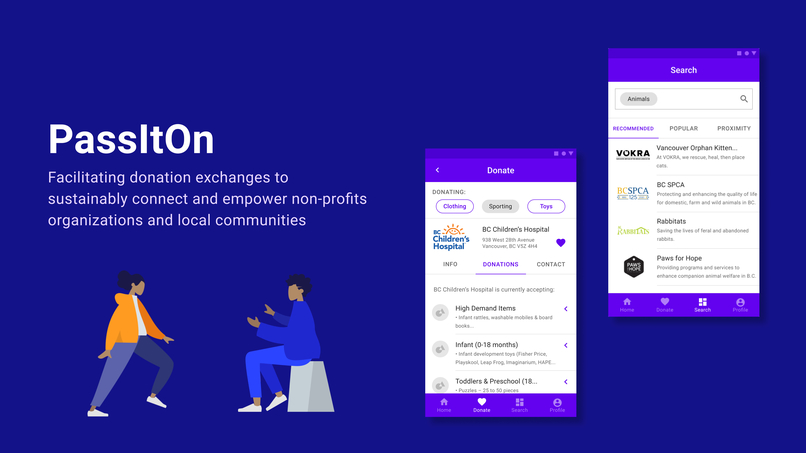
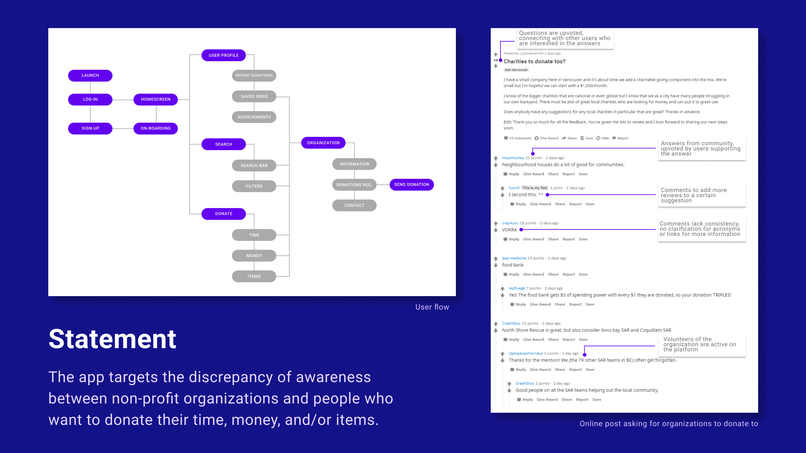
The inspiration for the project was generated through the communication discrepancy between non-profit organizations and people who would like to donate. As sustainability becomes increasingly crucial for the future, recycling, reusing, and repurposing goods is important to reducing carbon footprint impacts. Non-profit organizations can especially benefit from these donations to improve local communities. However, there is a lack of awareness between potential donators and the organizations, creating an opportunity to facilitate these exchanges. When people want to donate goods, it is a tedious process to research and contact organizations regarding their philosophies and donation policies.
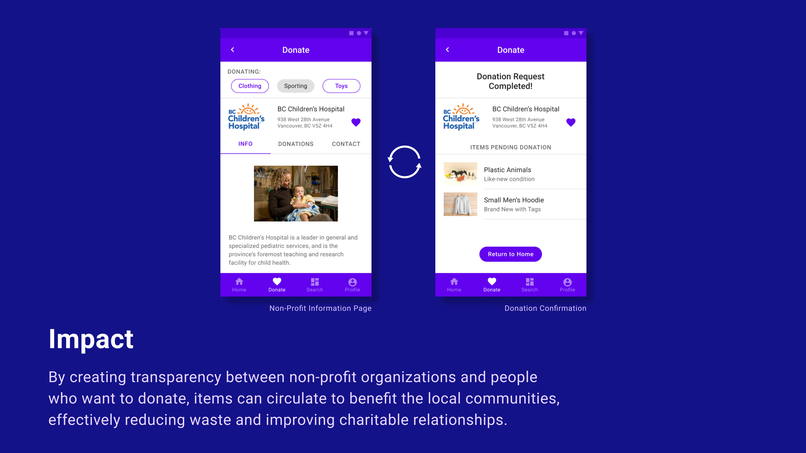
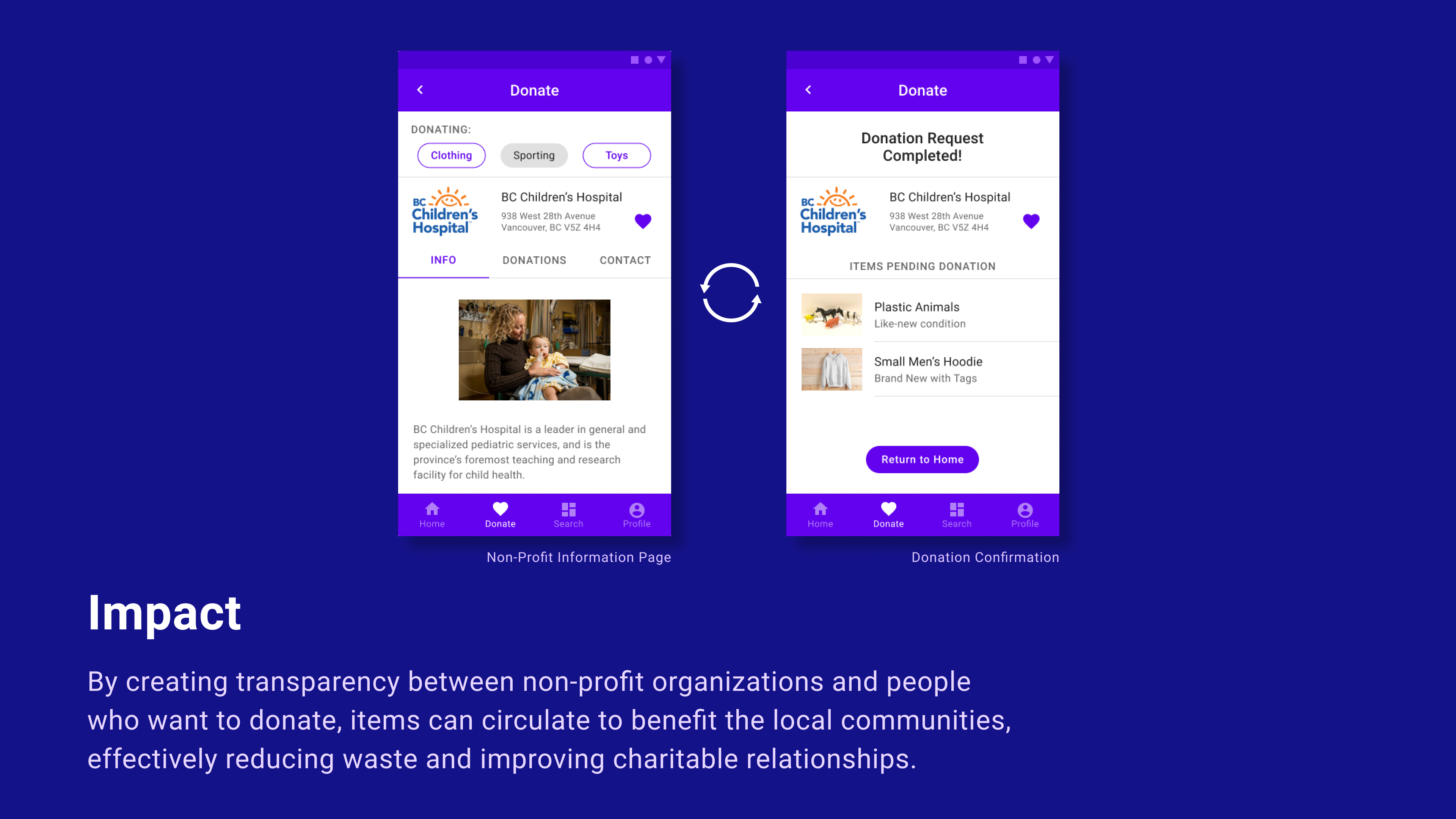
By creating transparency between non-profit organizations and people who want to donate, items can circulate to benefit the local communities, effectively reducing waste and improving charitable relationships.
What it does
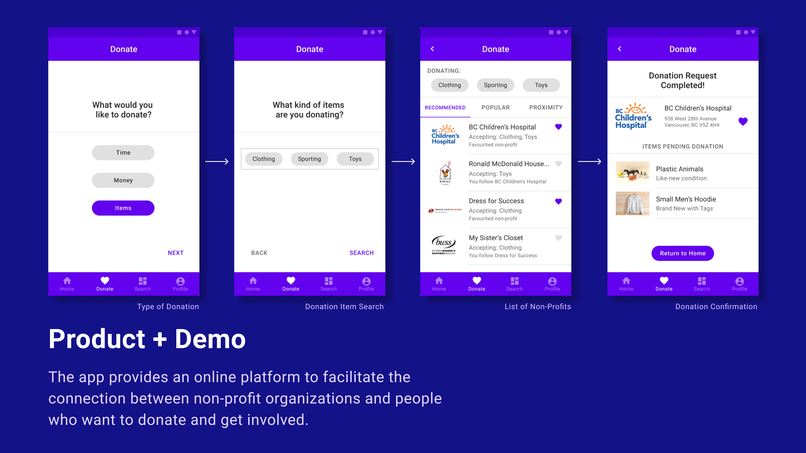
Our Android mobile application helps to connect potential donors to organizations that are requesting the type of donations being offered. Users can input the type of contribution they would like to make, whether it be monetary, time, or physical items. The application will then match the type of donation to local organizations, empowering users through connections to their communities and the sustainable reusable of items.
The service will also help to generate awareness and understanding of the philosophies and causes local non-profits organizations to support. Through the platform, organizations can reach out and connect to the members of the community.
How I built it
- Google Cloud
- React Native
- Figma
Challenges I ran into
For the user experience design, it was challenging to fit our expectations for the application within the time frame. The user flow illustrated the span of our program, while ideating within the team generated ideas we would love to implement, but would not have time to include. To overcome this, our team established a Minimal Viable Product to work towards during the event that encapsulated the experience for the user.
For most of us, this was the first time using React-Native as well as android studio, and in turn, it was a very difficult hurdle to understand the structure, compilation, and even syntax relating to the emulation of an application. This led to a lot of time being used to debug, rerun and reinstall instead of actually visualizing our plan. It left many of us frustrated and dejected but we know, due to what we were able to accomplish in the end, that it was a worthwhile learning experience.
Accomplishments that I'm proud of
The design system of the application is something we are proud of. Using Google's Material Design design system, the interface is consistent throughout thAn e pages to create a uniform and familiar appearance for users.
The ability to create an application was also extremely rewarding as it required skills and languages that some of us have never used before.
What I learned
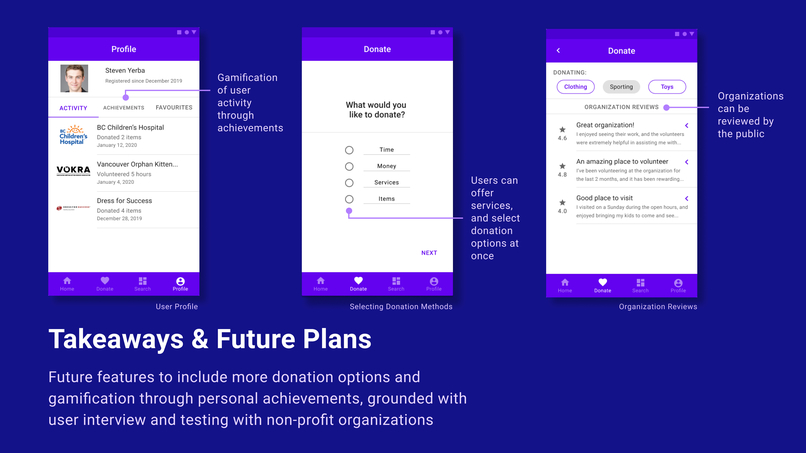
The project enforced the importance of designing and developing for all user groups of the application. While we focused on those donating for this iteration, considering what would be important for organizations was and will be imperative to the further development of the app.
What's next for PassItOn
It would be interesting to explore the ideas that we were discussed, but eliminated during the establishment of our MVP. Features such as a bartering system, service as a donation, and gamification through personal achievements were areas we would want to explore. Most importantly, it would be insightful to investigate how an organization would use the application. Through user testing and interviews, we could interview non-profit members to identify features they would enjoy for the management of an organization.
Built With
- android-studio
- csv
- figma
- java
- javascript
- json

Log in or sign up for Devpost to join the conversation.