-
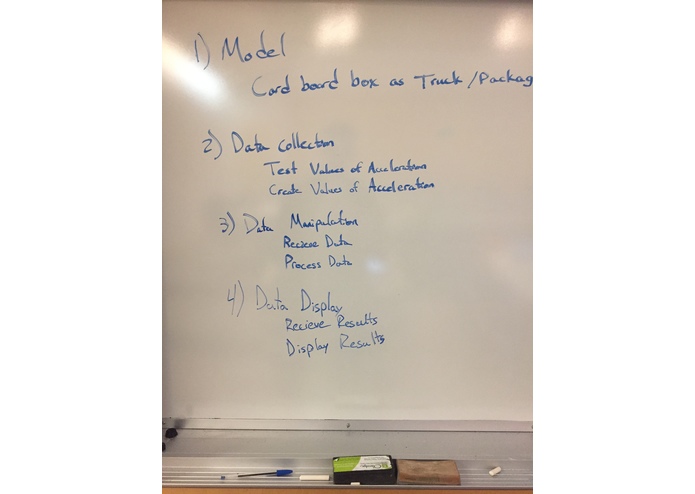
Our Checklist for the Project
-
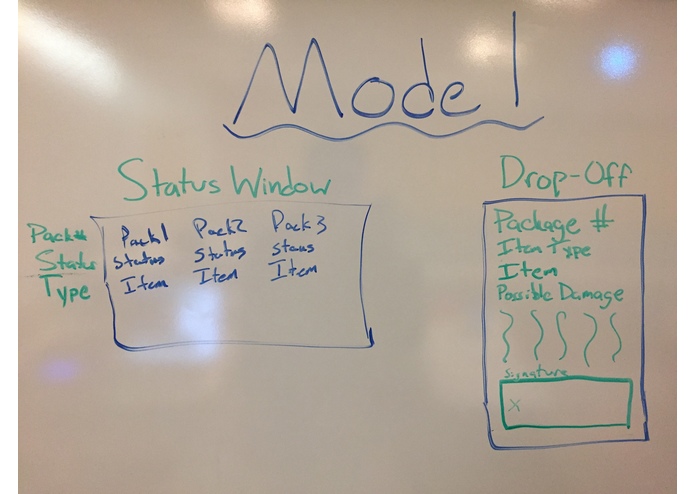
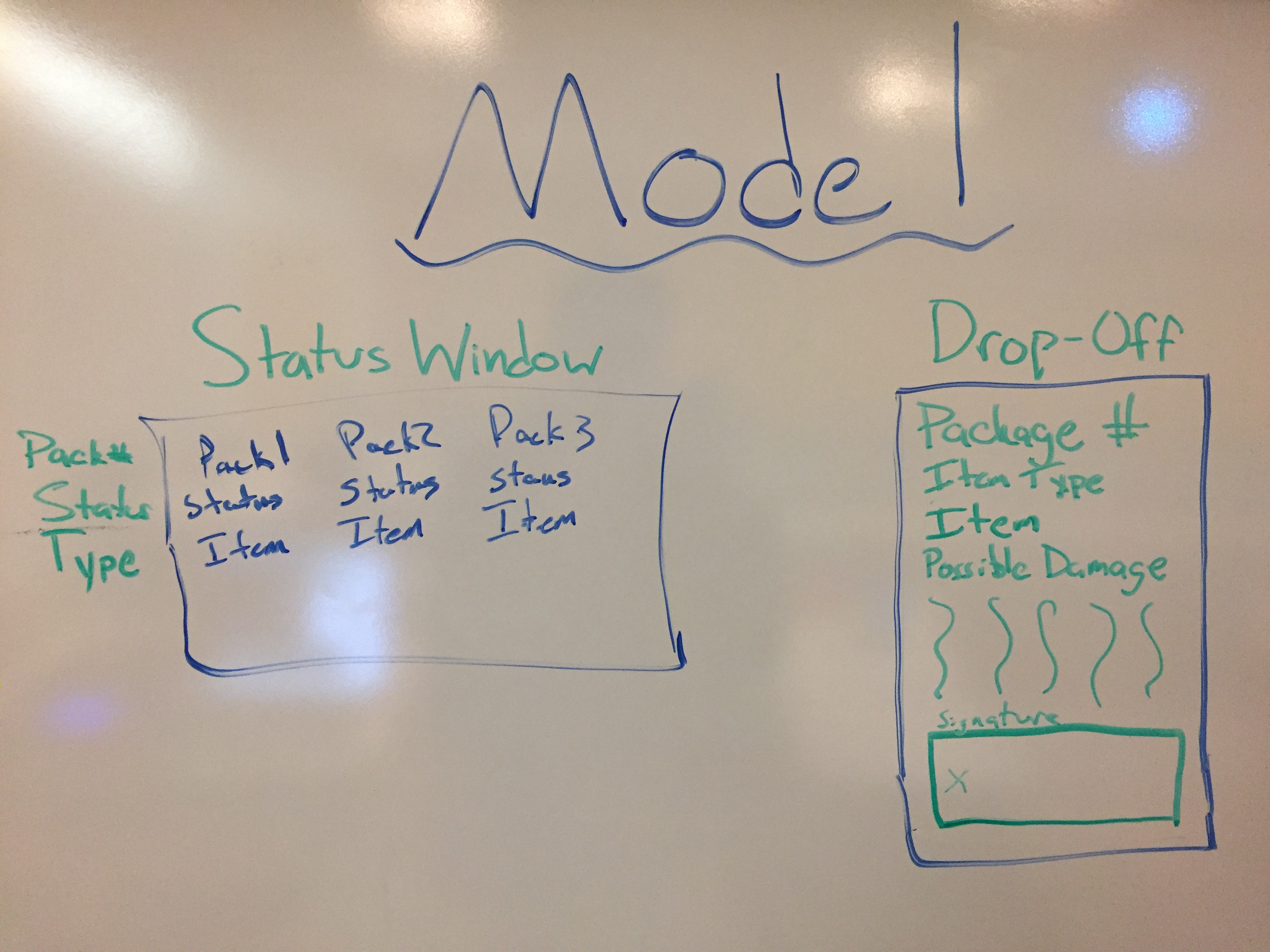
Our Model of the Finished Displays
-
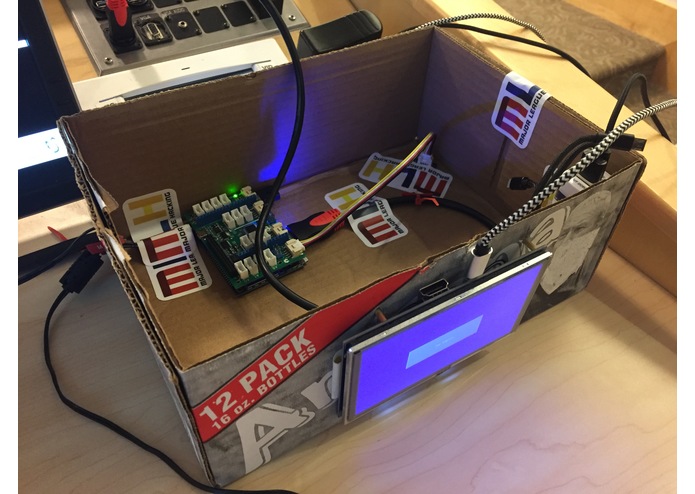
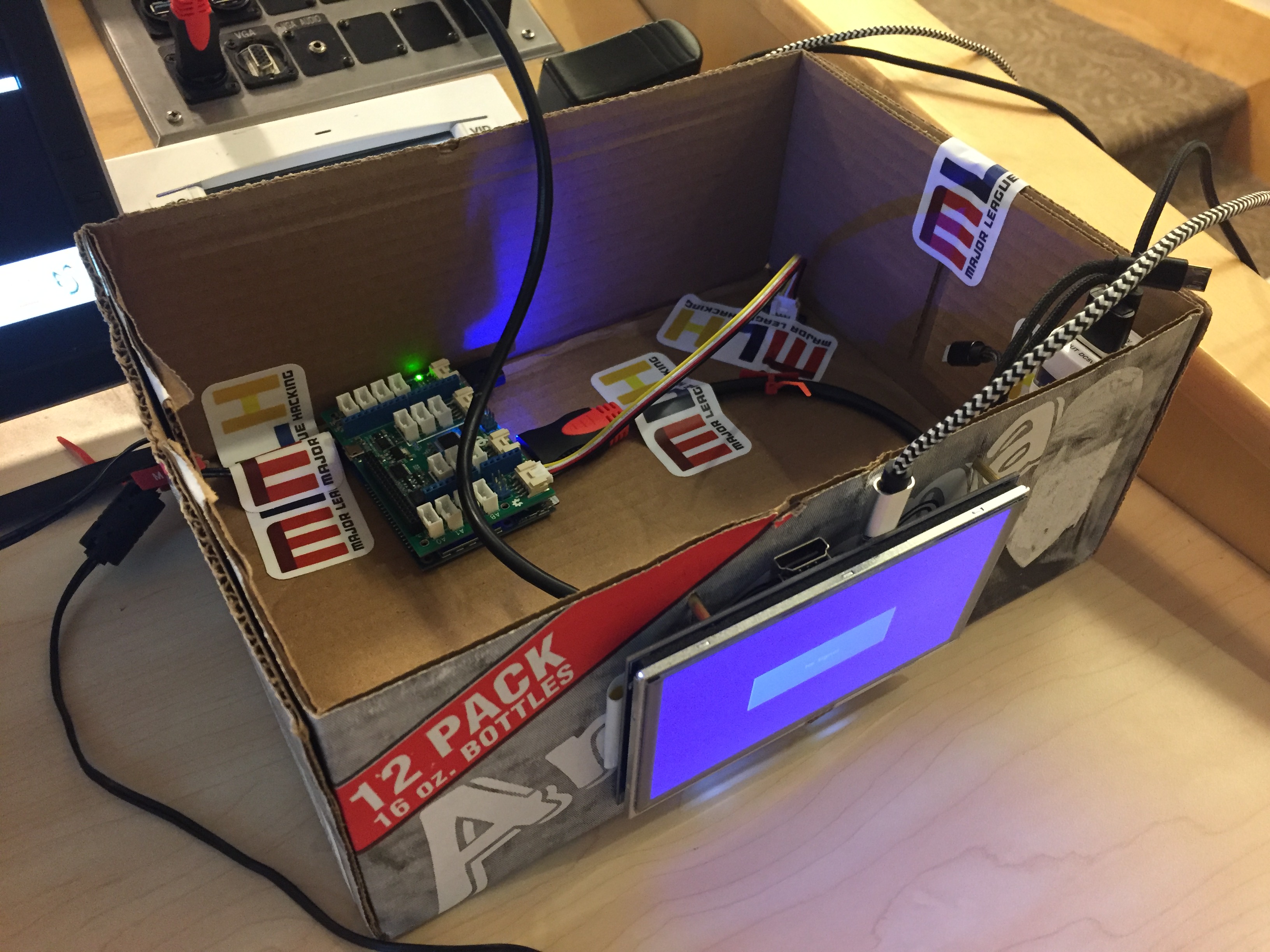
The Model that we Built
Inspiration
When we saw the challenge for an IoT build, we realized we had never done something like that and it sounded like there'd be some cool things to learn. We weren't sure what to do since a lot of things are becoming IoT but we thought something like packages in shipping would be an interesting thing to work on since we recently got a package in the mail, unboxed it, and realized it had been damaged in shipping. It seemed practical and interesting so we thought we'd make something for it.
What it does
Our product takes the functionality of the Dragonboard 410c to collect data on packages in transit. It checks for jostling of the package via an accelerometer, which looks for sudden changes in acceleration that could be large enough to damage different types of packages.
The Hardware We used the Dragonboard 410c as a mini computer, loaded with Unbuntu, to collect data through the arduino software. We used the GPIO pins on the 410c and an external board to link sensors that the arduino software would be able to use. We use an accelerometer to collect data through the arduino software and process the acceleration values to a scale that rates the danger of certain packages being damaged.
The Software We started the data collection through the arduino software, and after taking the acceleration values, we sent them to a text file via Python that works in tandem with the arduino software. Afterwards this text file is sent to an online database where we are able to retrieve remotely between devices. On top of this, we also use this information from the text file to create a GUI that is user friendly for the costumer and the producer.
How we built it
We made the physical model of the sensor box by strapping down the parts into a cardboard box and cutting holes to accommodate our wires and parts. The software side of it was designed as we went along the project in order to accommodate our need to collect and manipulate data.
Challenges We Faced
One of the biggest challenges we ran into was the extracting of the data from the arduino software. We were unsure of how to get the recorded values out of the software, so we can manipulate it and show it in a way that we wanted. We figured that we needed to extract the data into another platform in order to manipulate and present our data in an understandable way. Our greatest difficulty was trying to figure out a way to print the sensor's data into a text file. We tried to utilize many types of software programs in order to make this possible, and eventually we found a method that worked for what we needed it to do.
Accomplishments that we're proud of
One accomplishment we had was the first startup of our Dragonboard 410c loaded with Linux, which was also our first milestone in this project. We had tried to get the OS installed and we ran into some problems in hardware and software that we eventually found solutions to.
Another accomplishment was finally being able to write our data to a text file, since this was the most time consuming and frustrating part of the project. Afterwards, we were able to use the data we had and check the status of our package via the acceleration changes.
What we learned
We learned how to use microcomputers and get data from them to the internet via the arduino and processing software. We also learned how to make and use the IoT Integrated System.
What's next for Package Buddy
- Improve the Interfaces
- Add more functionality and interactive elements to website
- Improve and refine our method of data collection and extraction


Log in or sign up for Devpost to join the conversation.