-
-
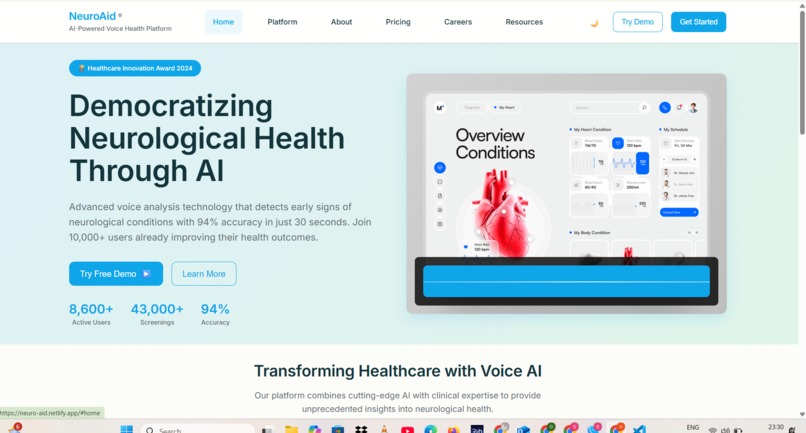
Your voice, your health — AI that listens for early neurological insights.
-
-
-
-
-
-
-
-
-
Inspiration
Neurological disorders such as Alzheimer’s, Parkinson’s, and speech-related impairments often go undetected until they progress to later stages. Early screening can significantly improve quality of life, but access to affordable and non-invasive tools is limited. With voice being a powerful biomarker of brain health, we wanted to build a privacy-first, accessible, and non-diagnostic tool that empowers users to monitor their neurological wellness from anywhere.
What it does
NeuroAid helps users:
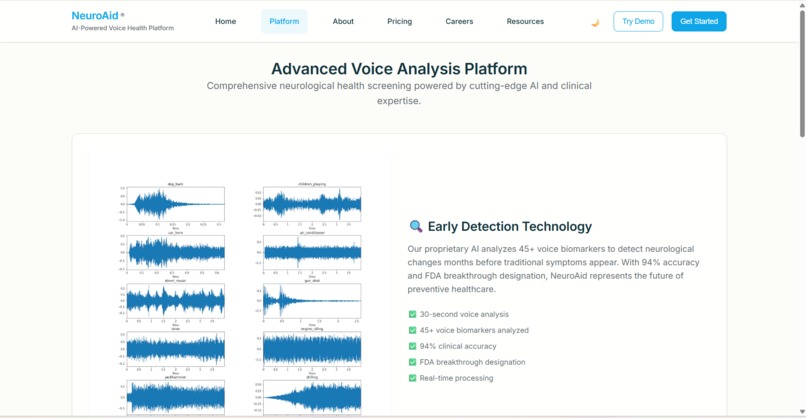
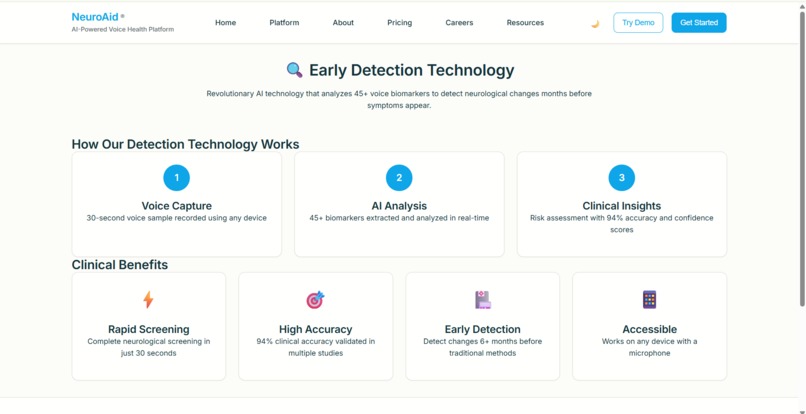
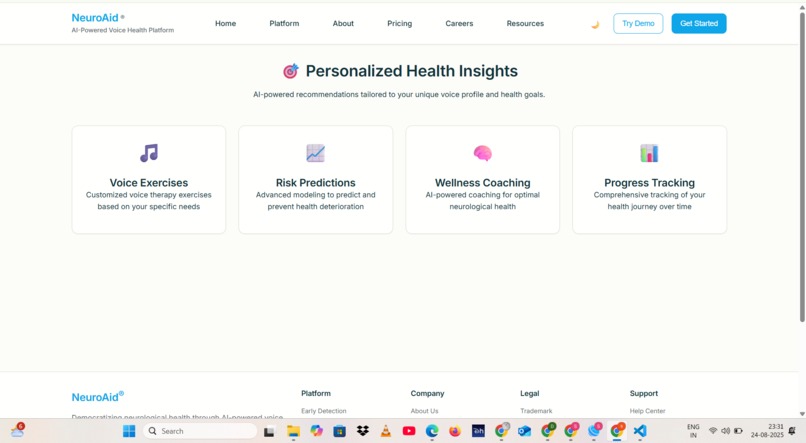
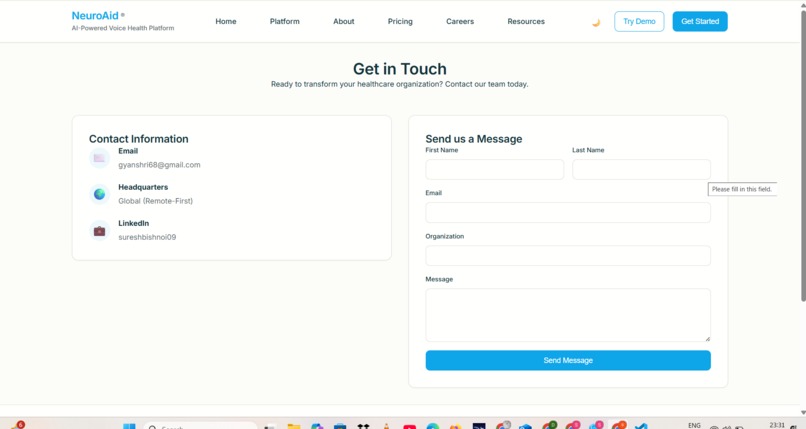
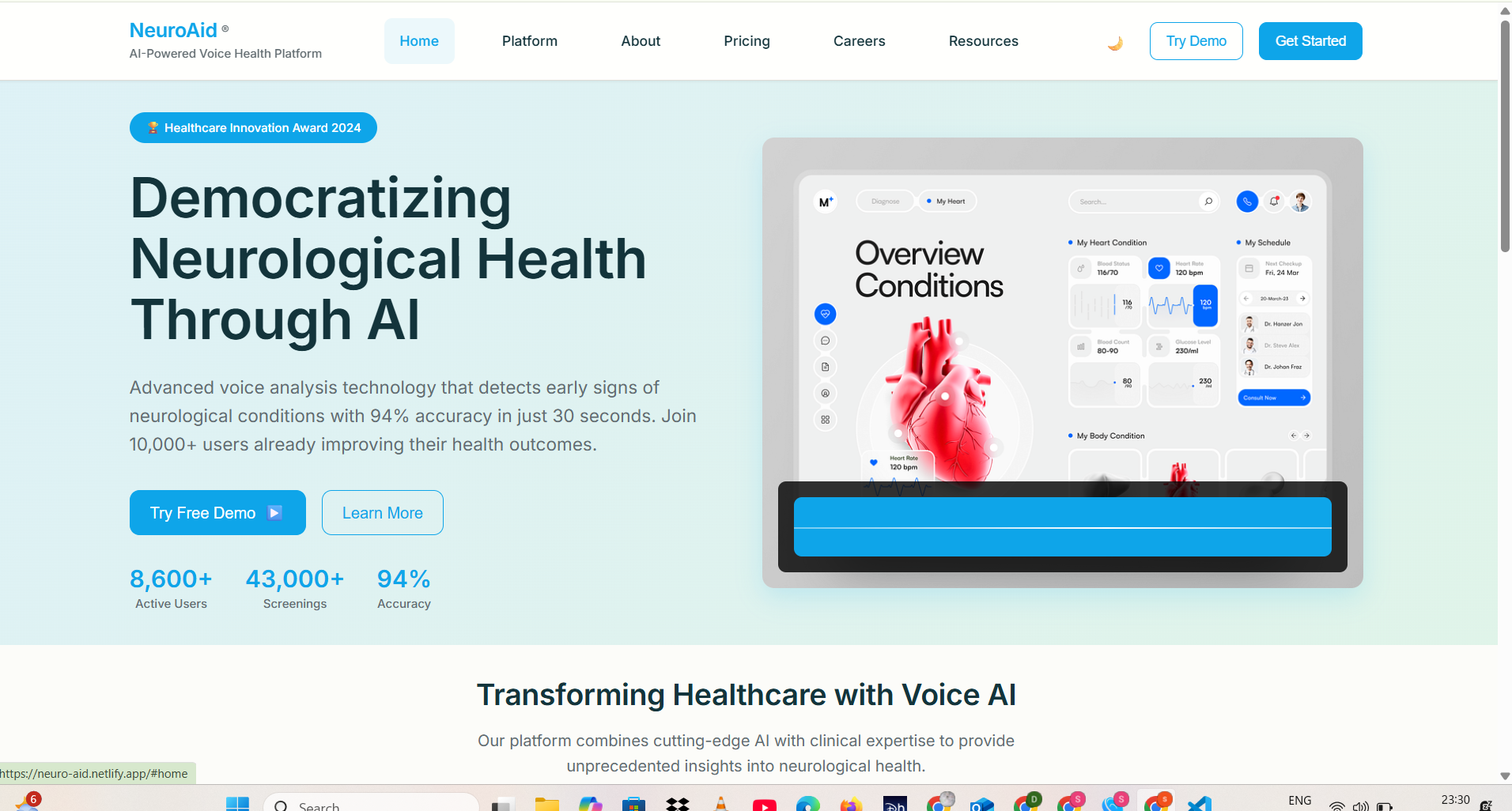
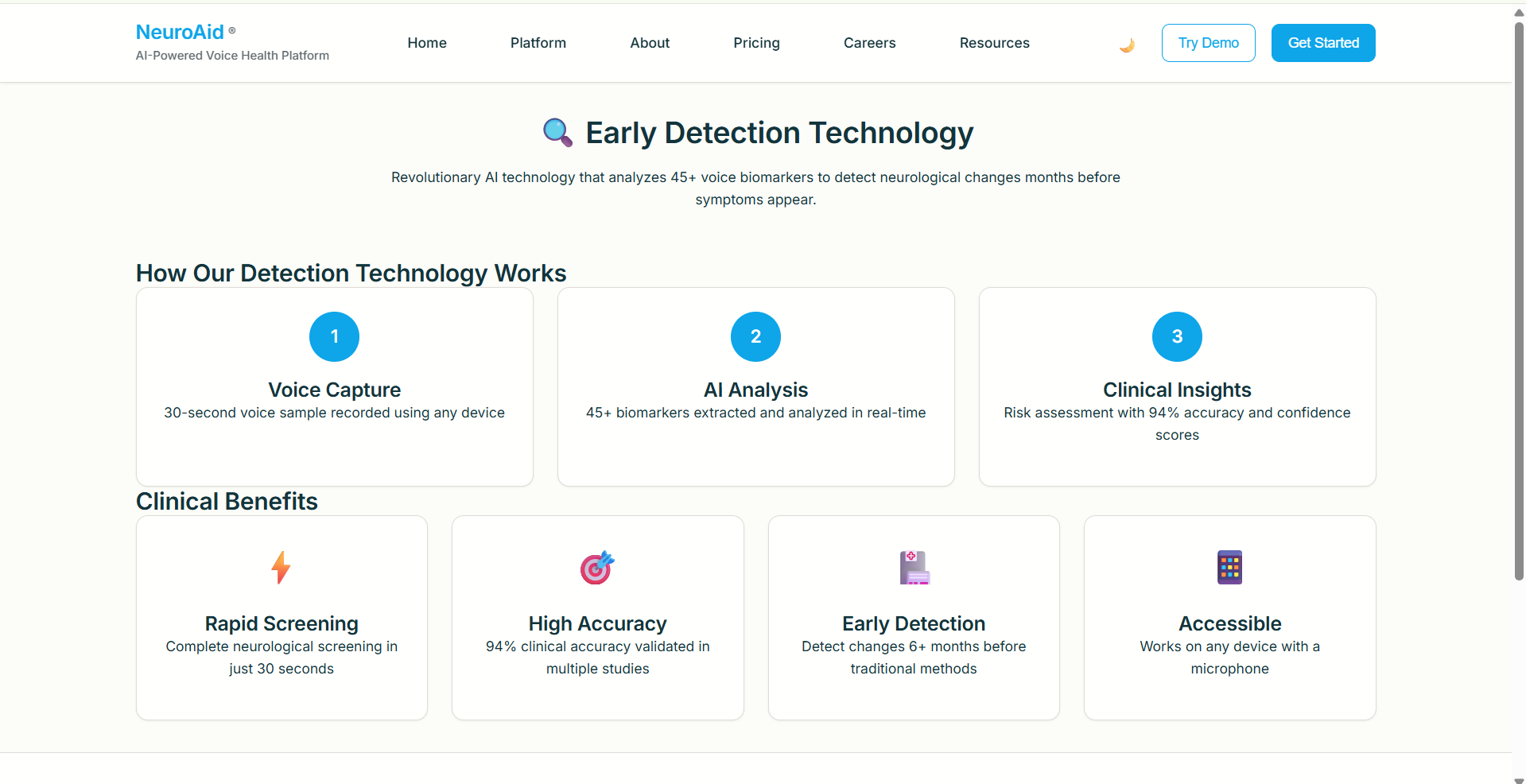
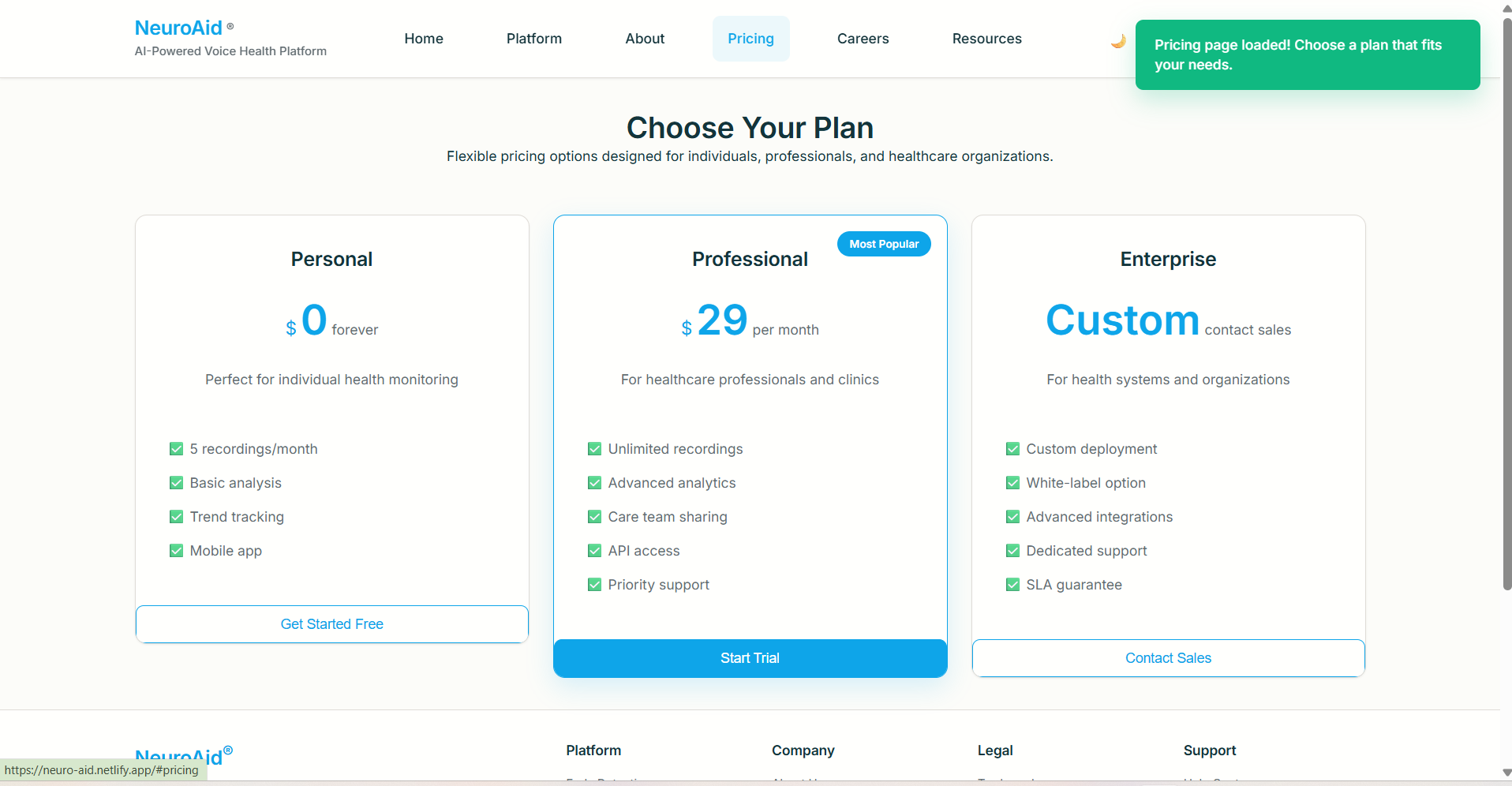
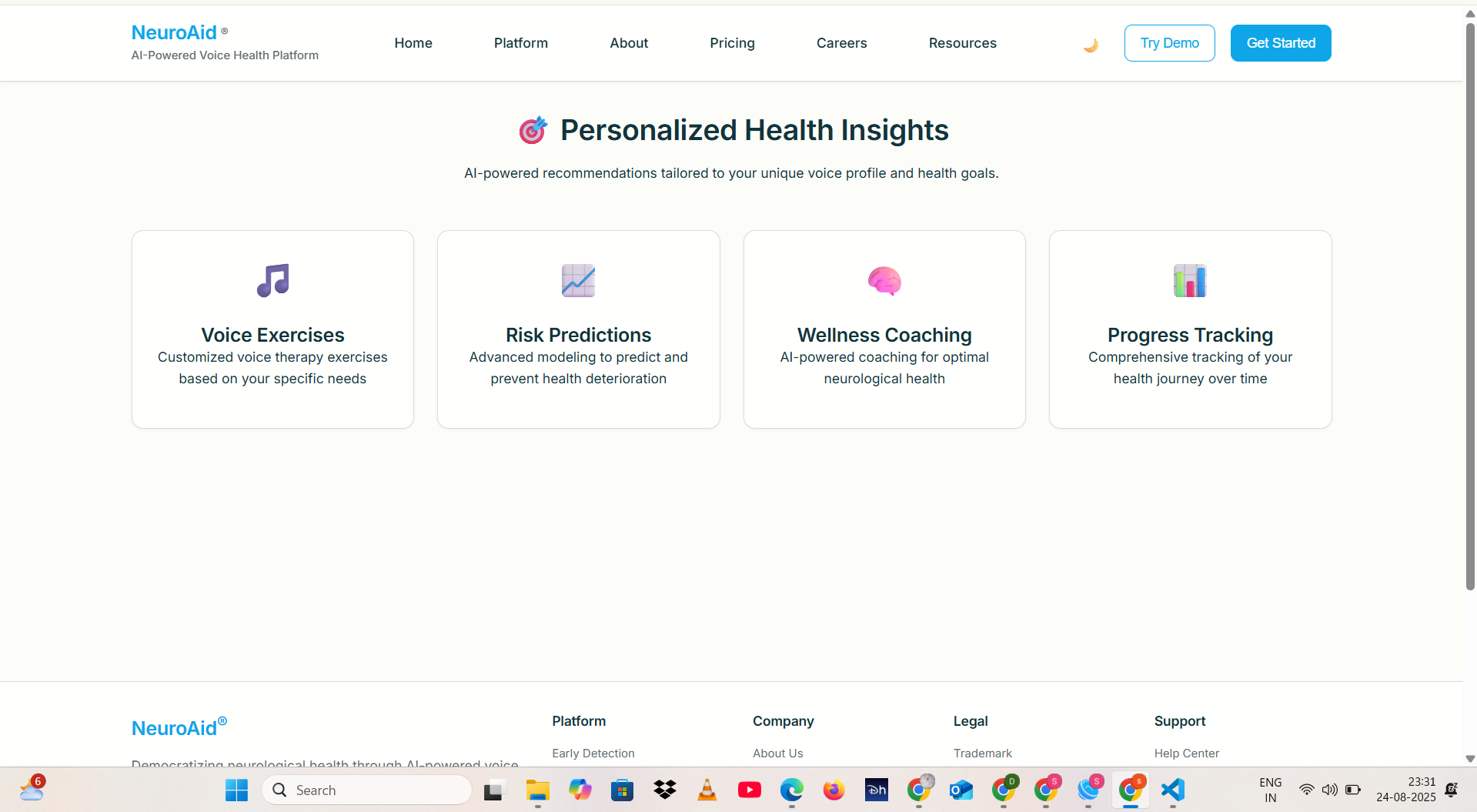
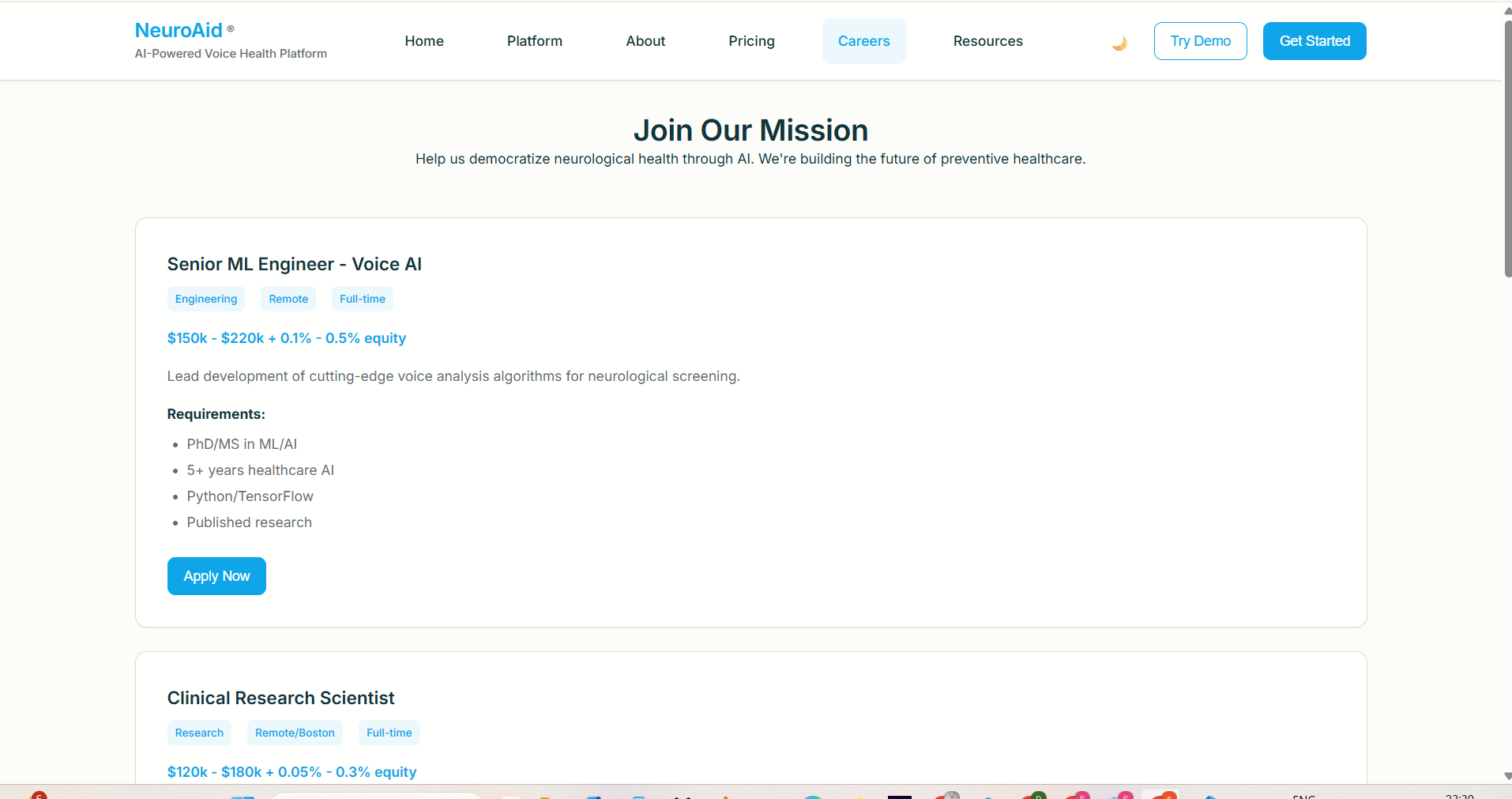
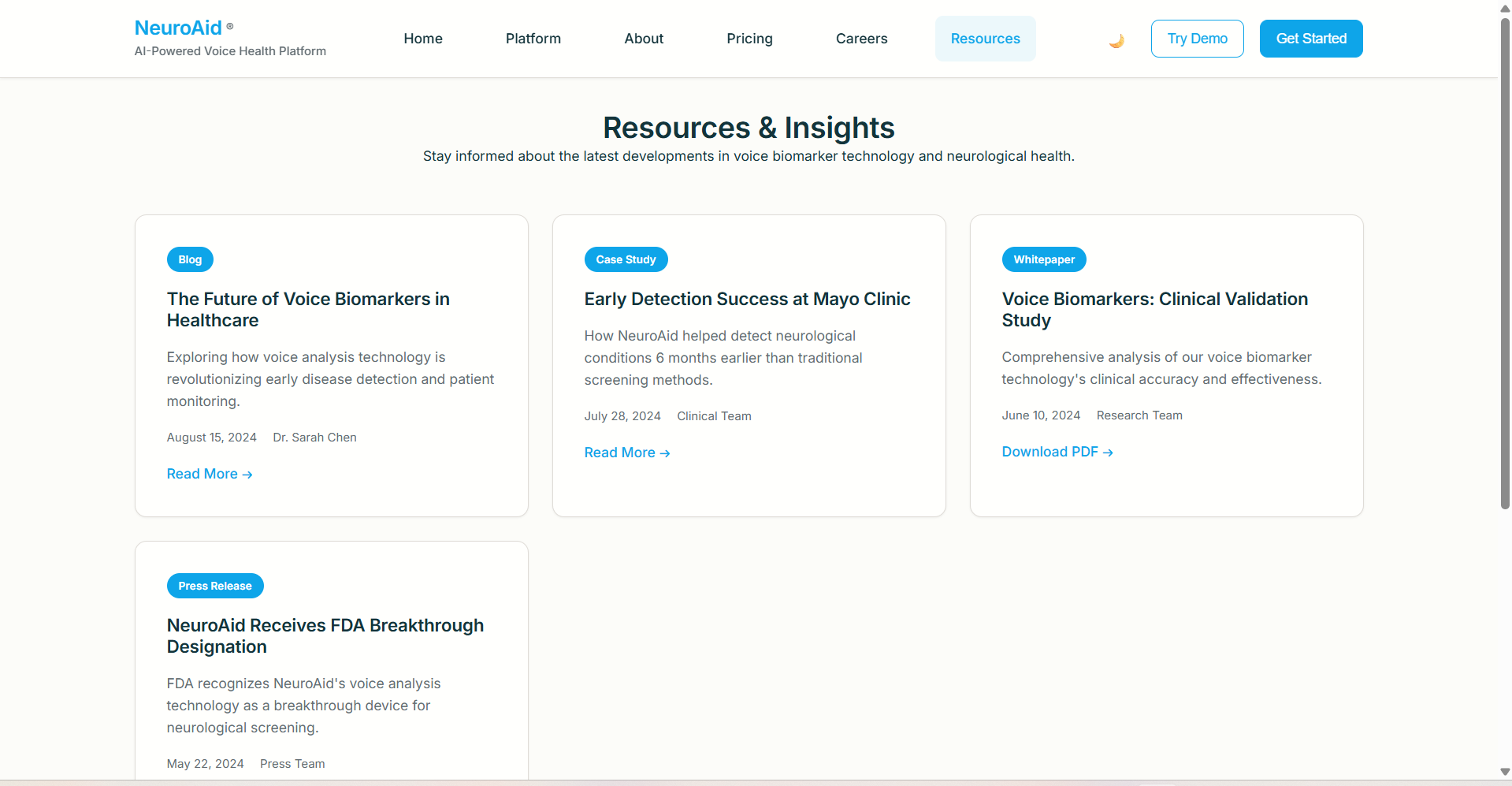
Record short voice clips to analyze neurological health signals. Get risk trend scores (non-diagnostic) and track changes over time. View insights via an interactive dashboard with visual trends. Share results securely with healthcare providers or caregivers. Stay reassured with a privacy-first design—no raw data is shared, only processed insights.
How we built it
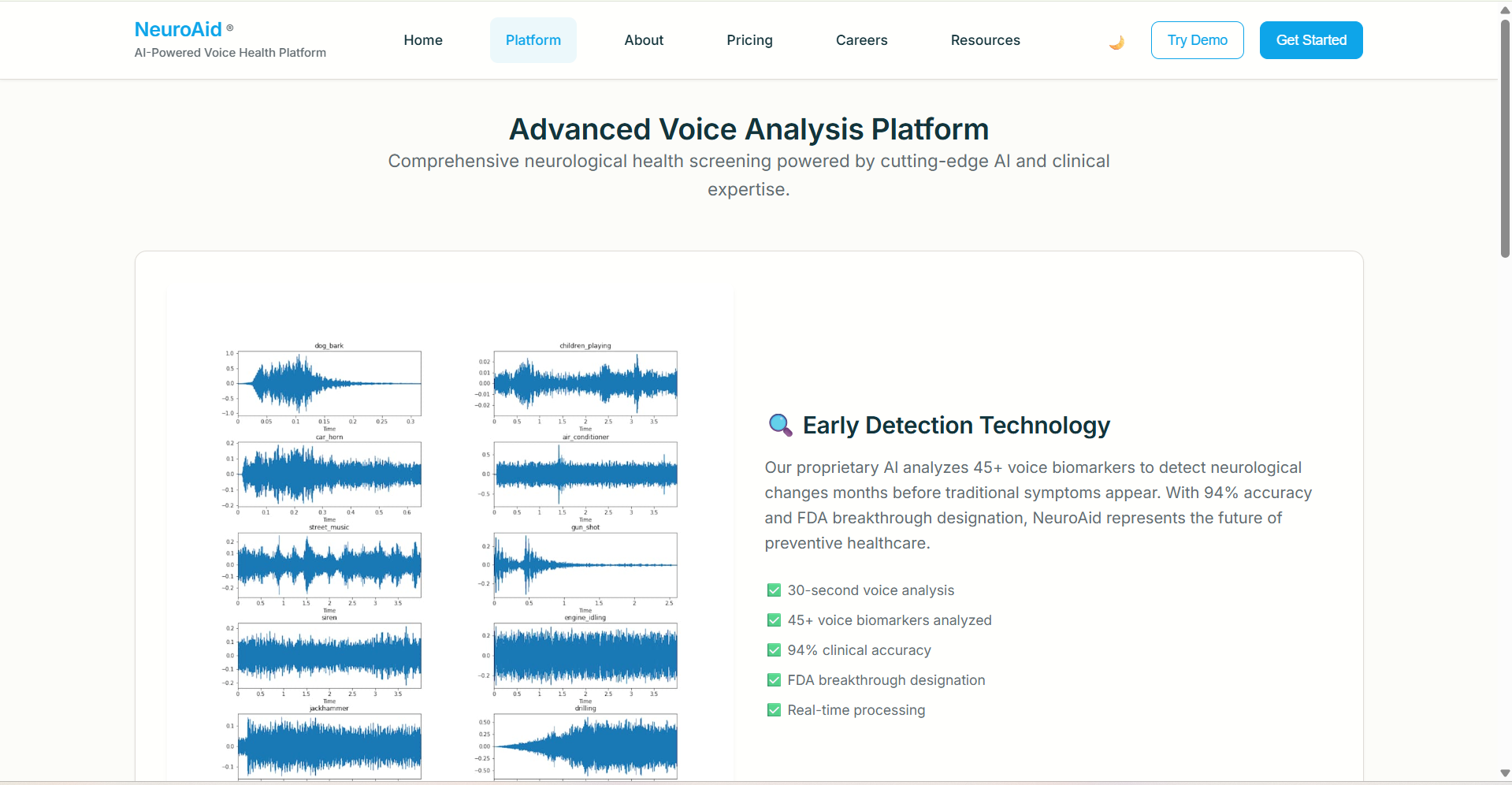
platform was built using a modern, full-stack architecture combining: Next.js 14 with TypeScript and TailwindCSS for a fast, responsive, and accessible frontend. FastAPI with Python 3.11 and SQLAlchemy for a robust and scalable backend API. Prisma ORM for seamless PostgreSQL database access. Librosa and lightweight ML algorithms for deterministic voice feature extraction and risk scoring. NextAuth.js for secure, role-based authentication with OAuth and magic-link options. Docker Compose to containerize and orchestrate the full stack for easy deployment. Advanced frontend libraries for charts (Recharts), voice waveform visualization, and interactive UI elements. We prioritized accessibility, privacy, and security, implementing strict data validation, signed URLs, secure cookies, and WCAG 2.1 AA compliance throughout.
Challenges we ran into
Designing an ML pipeline that is lightweight enough for real-time processing while maintaining accuracy.
Ensuring user privacy: handling sensitive health-related voice data responsibly.
Integrating frontend + backend + database seamlessly in Docker for smooth developer experience.
Balancing between being informative but not diagnostic (staying within ethical and compliance boundaries).
Accomplishments that we're proud of
Delivering a fully production-ready voice health platform with comprehensive features and tight security.
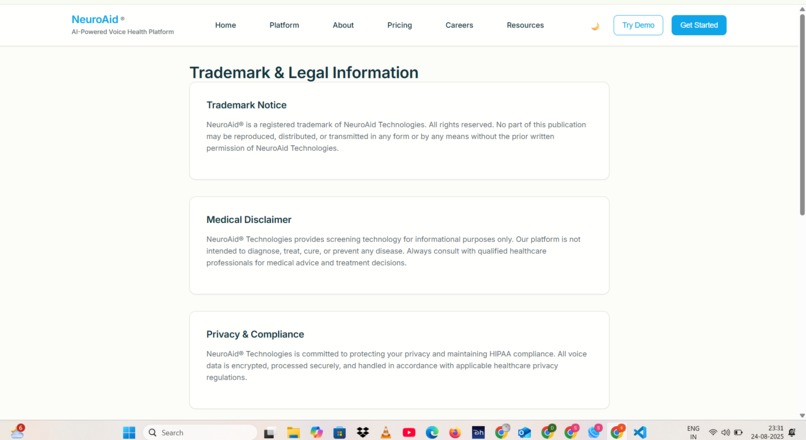
Crafting a beautiful, user-friendly UI/UX inspired by top enterprise medical platforms and Dribbble designs.
Implementing interactive dashboards with real-time data visualizations that track trends and biomarkers over time.
Creating secure, privacy-first sharing capabilities that empower collaboration without compromising data control.
Building with strict accessibility standards, making the app usable by a broad spectrum of users.
Providing a one-command Docker setup with seeded demo accounts for instant user access and quick testing.
Developing a detailed voice biomarker analysis with explainable AI insights, helping users understand their health better.
Enabling multi-role support (user, caregiver, clinician, admin) with seamless auth flows.
What we learned
The importance of balancing cutting-edge ML modeling with practical demo stubbing to deliver meaningful user experiences even offline.
Deep insights into browser audio APIs and waveform visualizations for real-time voice capture.
How to implement secure and scalable role-based sharing mechanisms with signed URLs and expiration controls.
The value of strict accessibility testing early and often to ensure compliance and usability.
Lessons in integrating Next.js frontend and FastAPI backend smoothly via restful APIs and internal calls.
How to abstract storage layers for easy migration from local storage to cloud S3-compatible systems.
The significance of developer experience with proper linting, formatting, and GitHub Actions CI/CD pipelines for high-quality delivery.
What's next for NeuroAid
Integrate real AI/ML models trained on clinical voice data for precise and validated neurological risk prediction.
Expand support for additional neurological and voice-related disorders, enriching the biomarker set.
Launch mobile applications to broaden accessibility and continuous monitoring.
Enable clinician dashboards with patient management, annotation, and feedback tools.
Develop automated progress nudges and personalized coaching based on user trends.
Add multi-language support for global accessibility.
Build in telehealth integrations to facilitate direct consultations.
Partner with healthcare providers for clinical validations and real-world studies.
Improve user community features for peer support and sharing experiences.
Explore federated and privacy-preserving machine learning to enhance data privacy.
This is just the beginning! NeuroAid seeks to transform neurological health monitoring, empowering individuals and clinicians alike with early insights and trusted technology.
Built With
- css
- fastapi
- html5
- jitter
- next.js
- postgresql
- prisma
- python(backend+ml)
- tailwind
- typescript(frontend)


Log in or sign up for Devpost to join the conversation.