-
-
-
-
Architecture and motivation
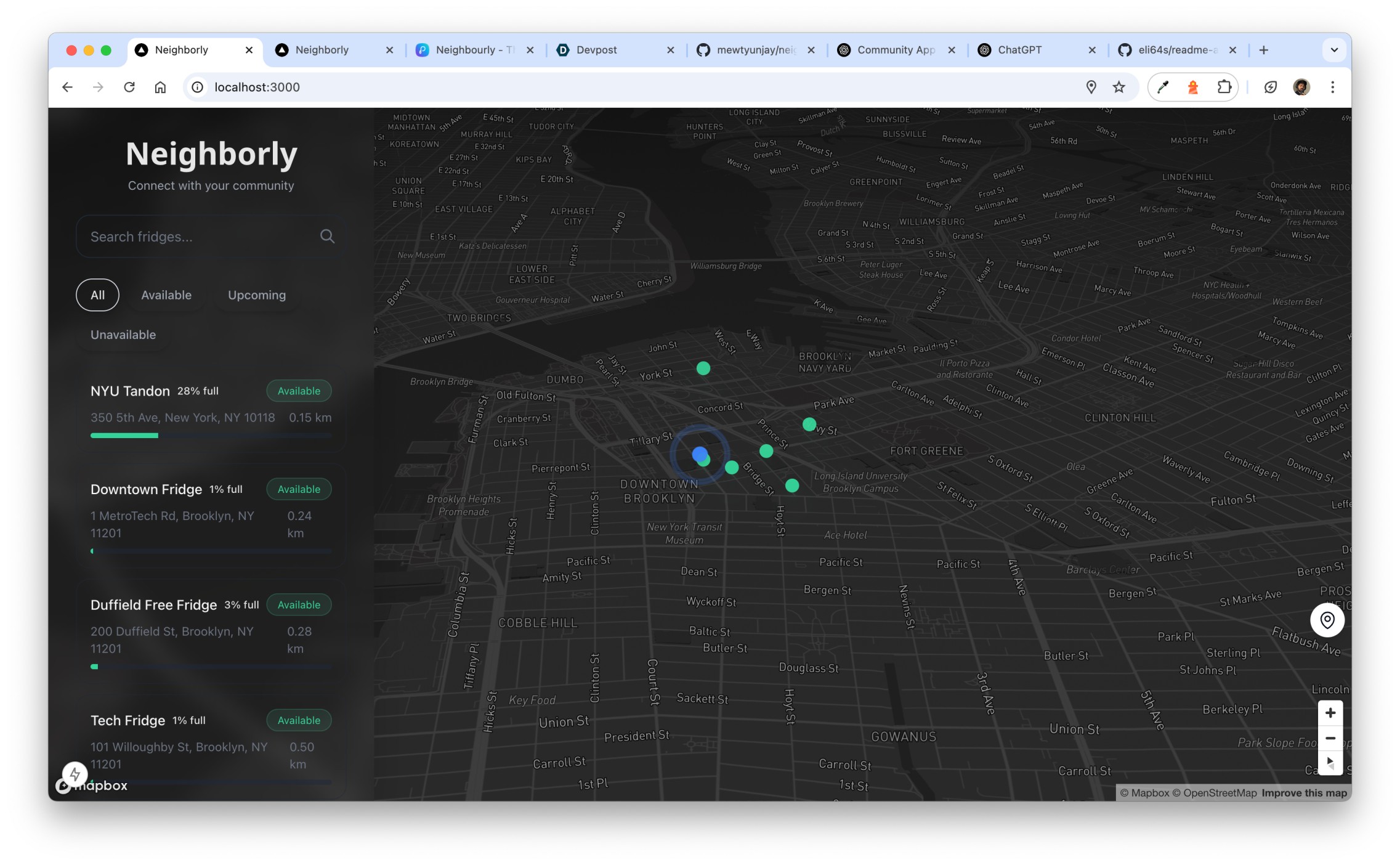
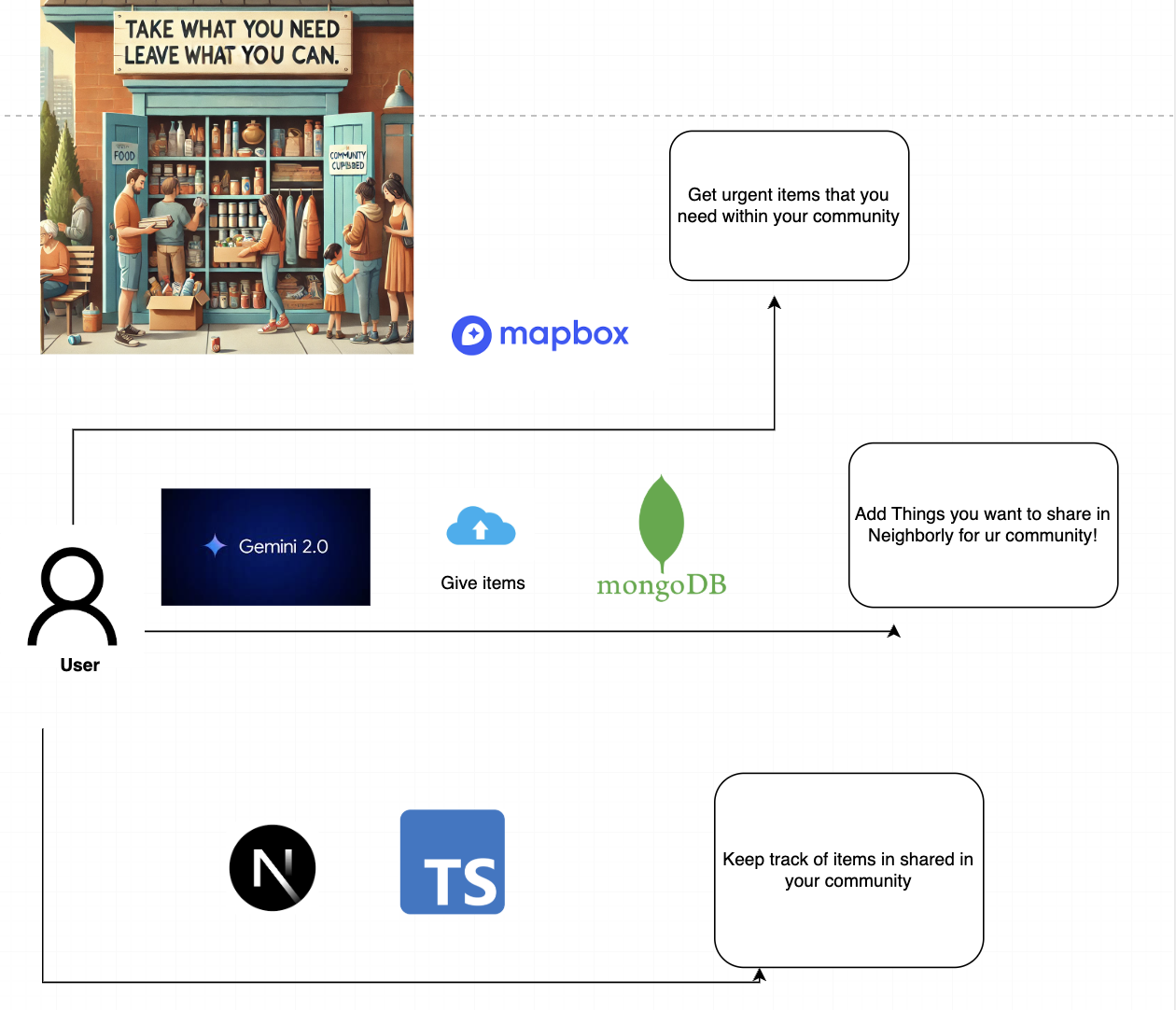
NEIGHBORLY - A HYPERLOCAL COMMUNITY SHARING APP
INSPIRATION
The idea for Neighborly was born from a simple but pressing issue: food waste and resource scarcity exist side by side in communities around the world. It was staggering to learn that 30% of food is wasted annually, while millions struggle with hunger and lack access to basic essentials like medicine and utilities.
The realization that existing donation and redistribution systems were inefficient and fragmented pushed us to think of a hyperlocal, tech-driven approach—one that connects individuals within communities directly, fostering a culture of sharing and sustainability.
We envisioned a platform that does more than just facilitate donations. It had to be seamless, trust-based, and community-powered, enabling people to donate, exchange, or sell at fair prices, ensuring that excess food, medicine, and essentials reach those who need them most.
WHAT WE LEARNED
Building Neighborly was an eye-opening experience that taught us:
- The power of hyperlocal solutions: Small, community-driven initiatives can create a massive impact.
- Trust is key: People are more likely to engage when a system verifies transactions and promotes accountability.
- User experience matters: A clunky interface discourages participation, so intuitive design and AI-driven recommendations are critical for success.
- AI can drive efficiency: Smart recommendations ensure that resources are allocated effectively, helping match supply with demand in real-time.
HOW WE BUILT NEIGHBORLY
To bring this vision to life, we structured Neighborly around a user-friendly and AI-powered system, ensuring efficiency, security, and accessibility.
1. TECH STACK & TOOLS
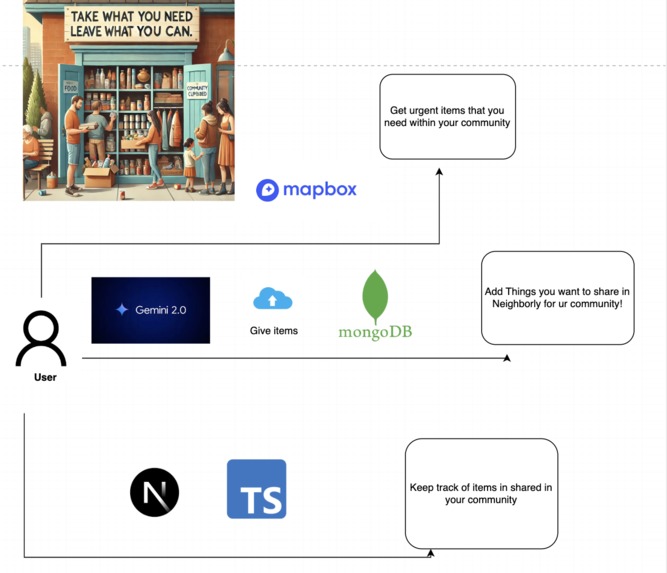
- Frontend: Next.js + Tailwind CSS (Minimalist, Linear.app-inspired UI)
- Backend: NextJs and NextAuth
- Database: MongoDB Atlas, MongoDB
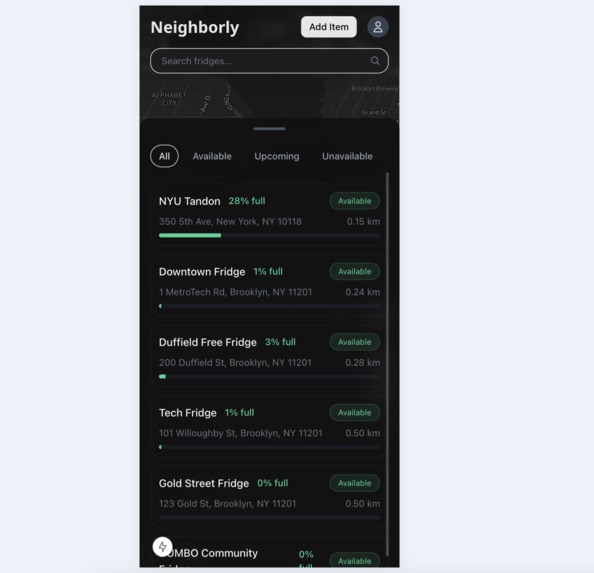
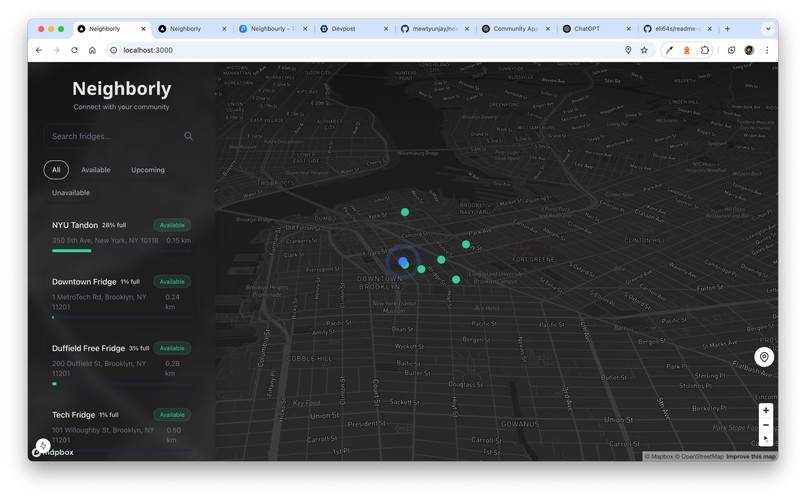
- Mapping & Locations: MapBox API for fridge locations and drop-off points
2. CORE FEATURES
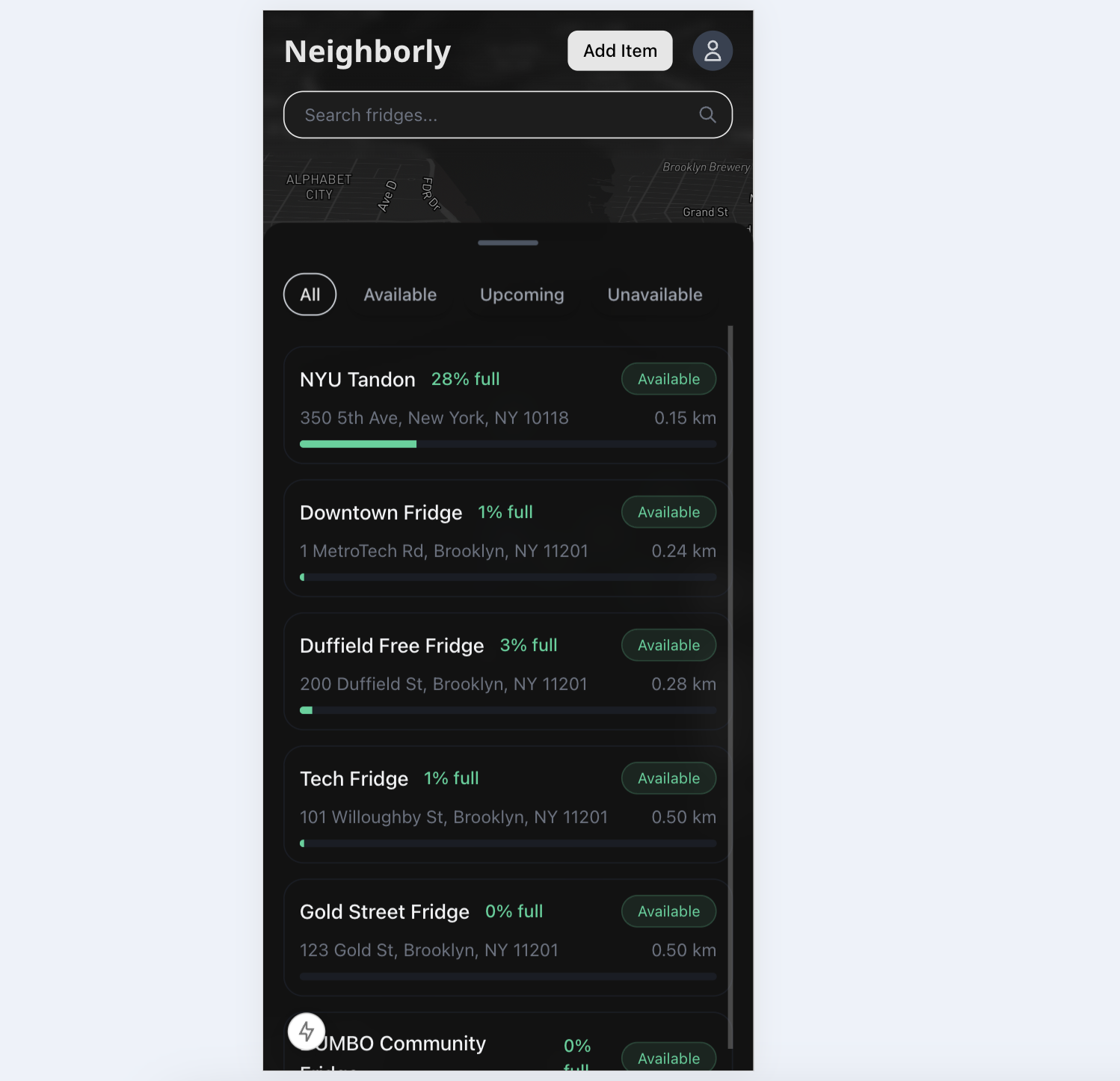
- Locate Nearby Fridges & Listings – A real-time map to browse available food, medicine, and essentials.
- Post & Share Items – Users can list donations, set prices, or offer items for free.
- Secure Transactions – Built-in coordinates and checkout exchanges safely.
- Reputation System – Verified exchanges to build trust within communities.
- AI-Powered Matching – Suggests relevant listings based on user needs and preferences.
CHALLENGES WE FACED
While developing Neighborly, we encountered several hurdles:
1. BUILDING A TRUST-BASED SYSTEM
One of the biggest challenges was ensuring trust and security. To prevent misuse, we implemented a reputation system where users gain credibility through verified exchanges and community engagement.
2. STREAMLINING USER EXPERIENCE
A major hurdle was designing a platform that is both feature-rich and easy to use. Inspired by Linear.app’s clean UI, we prioritized a minimalist, intuitive interface with pastel color palettes to encourage engagement and accessibility.
3. ENSURING SCALABILITY
To ensure that Neighborly can grow into new regions, we designed the backend with scalability in mind. Using serverless functions and real-time databases, the system can handle increasing numbers of users without performance drops.
THE FUTURE OF NEIGHBORLY
We believe that Neighborly is more than just an app—it’s a movement towards sustainable, community-driven resource sharing. Moving forward, we plan to:
- Expand to more cities and onboard local organizations.
- Partner with NGOs & businesses to integrate large-scale food and essential donations.
- Enhance AI capabilities to improve efficiency in resource allocation.
- Build an offline mode, allowing users to access listings even without stable internet.
CONCLUSION
Neighborly isn’t just about donating—it’s about creating a culture of care, reducing waste, and strengthening communities. By leveraging technology and fostering trust, we are making sustainable sharing a reality.
Join us in making Neighborly a movement that transforms the way we share and support each other.
Built With
- gemini
- mapbox
- mapboxgl
- mongodb
- nextjs
- node.js
- prisma
- shardcn
- tailwind
- typescript


Log in or sign up for Devpost to join the conversation.