-
-
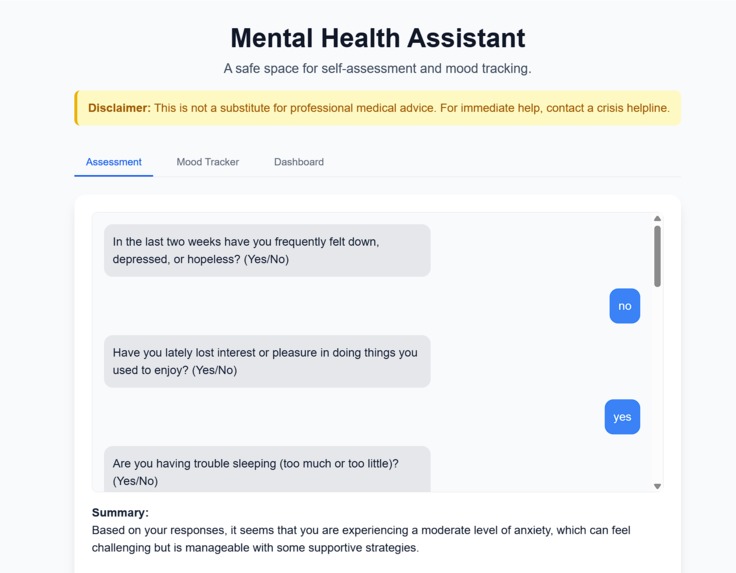
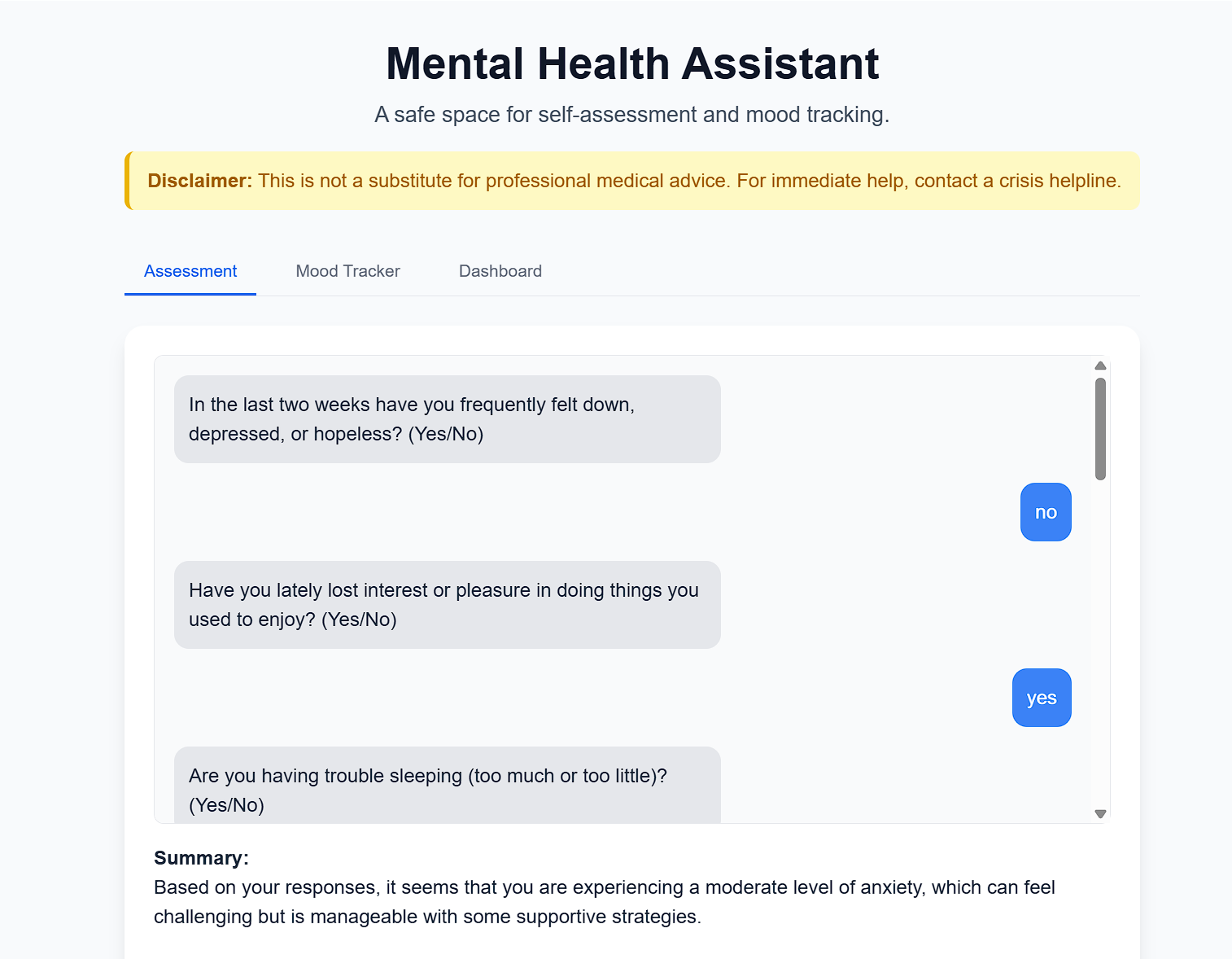
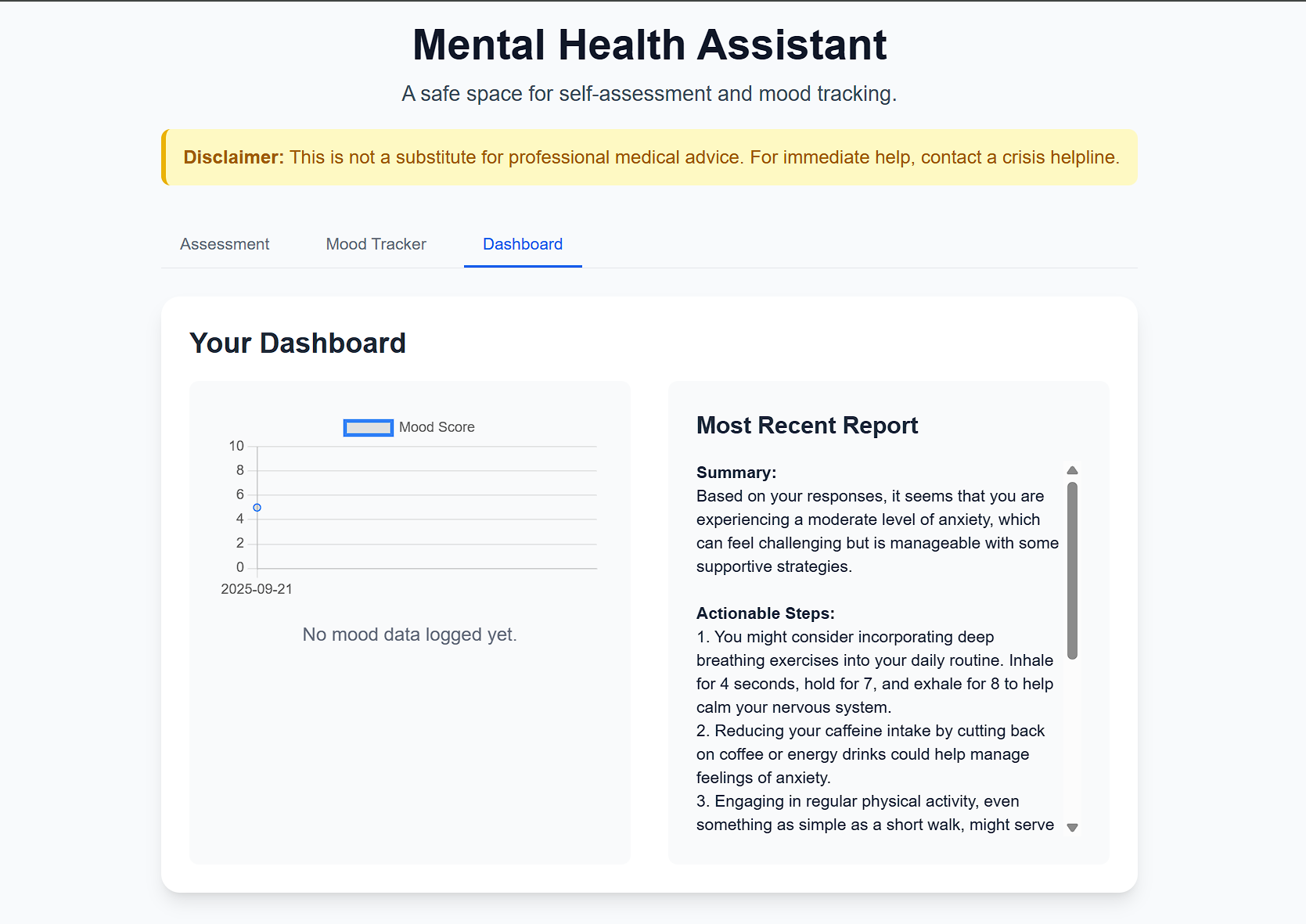
its ask 10 questions then generates the detailed summary
-
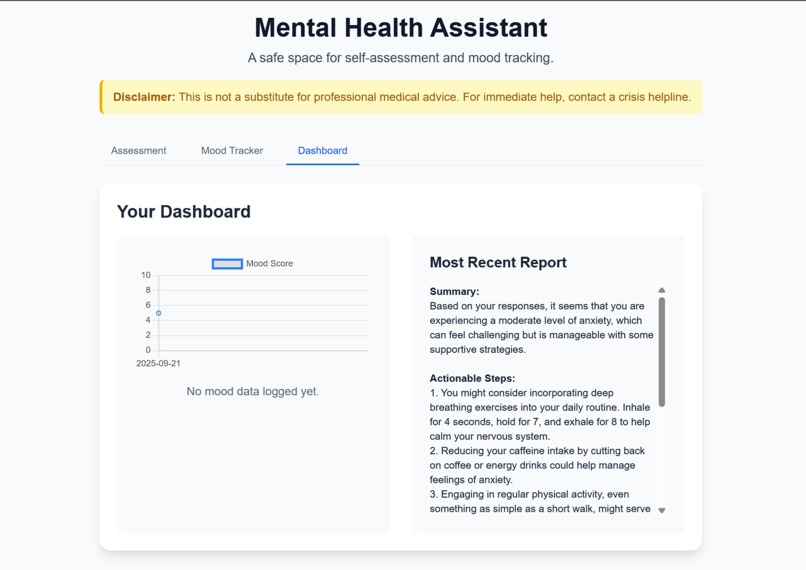
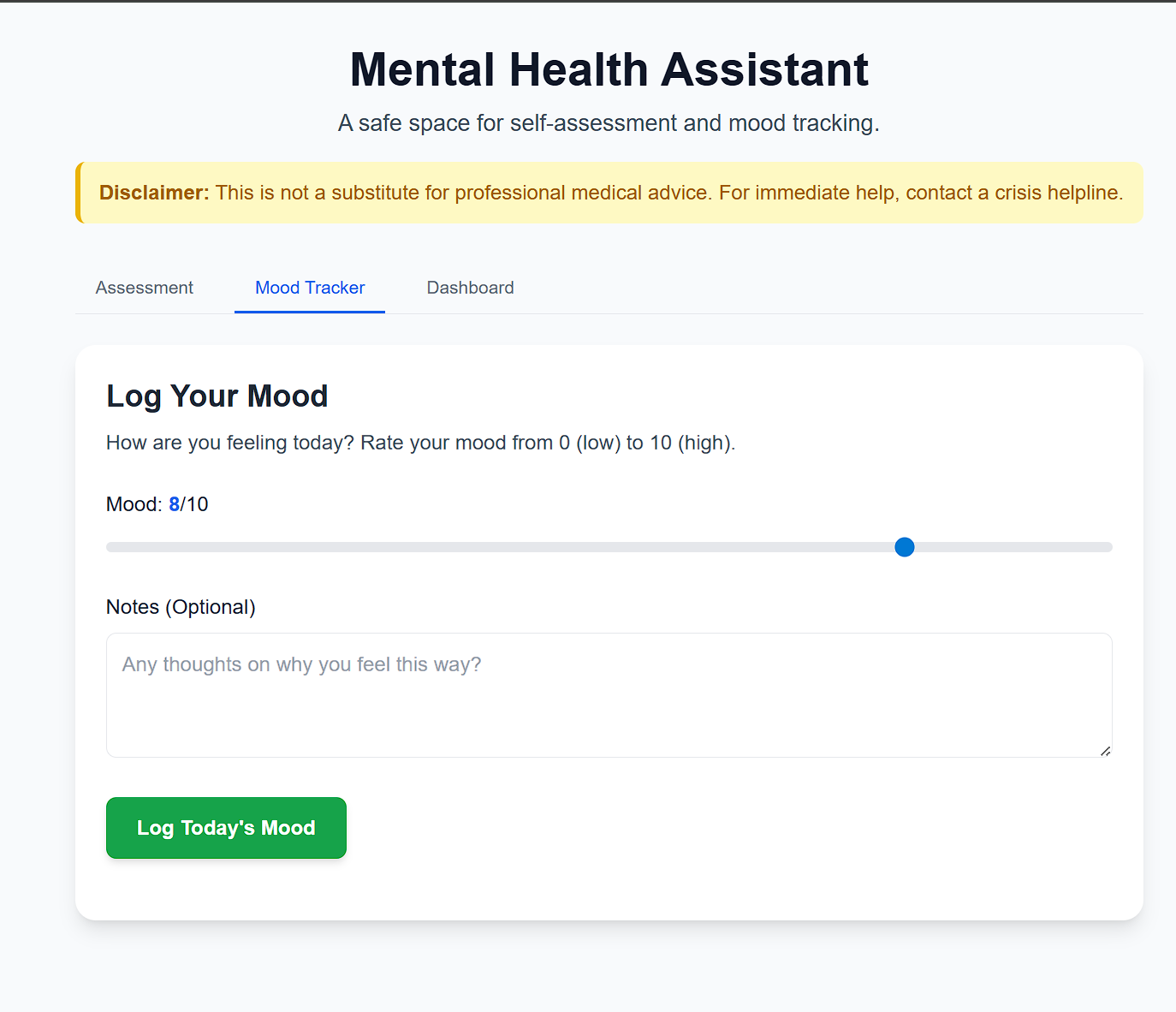
this is mood tracker
-
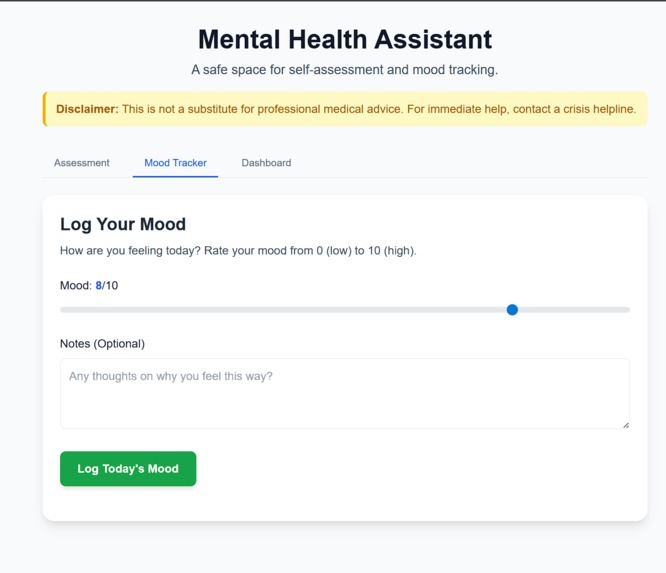
rate your mood 1 to 10 daily
Inspiration
The inspiration for this project came from my MBBS friends, who noticed that many people struggle with their mental health but often don’t have easy access to professional support. They suggested building a simple, AI-powered tool that could help individuals reflect on their emotional well-being, track their moods, and receive gentle guidance. The goal was not to replace professional care but to create a supportive first step toward self-awareness.
What it does
The Mental Health Assistant is a web application that:
- Guides users through a 10-question self-assessment about their mental health.
- Generates a personalized, AI-driven report with supportive feedback and actionable self-care tips.
- Allows users to log daily moods (0–10 scale) with optional notes.
- Displays a dashboard with mood trends and the most recent report, helping users identify patterns.
How we built it
- Backend: Built with FastAPI, managing API routes, sessions, and responses.
- Core logic: Implemented with LangGraph + LangChain, using GPT models for natural, supportive conversation.
- RAG system: Integrated with FAISS and a small document library (
mental_health_docs) for context-based suggestions. - Frontend: Developed with HTML, TailwindCSS, and Chart.js for an interactive and responsive UI.
- State management: In-memory sessions (with potential to extend to databases).
Challenges we ran into
- Designing safe and compassionate prompts for the AI, especially around sensitive topics.
- Managing sessions without a database while keeping the app scalable.
- Ensuring the AI-generated reports stayed supportive but non-diagnostic.
Accomplishments that we're proud of
- Successfully integrating LangGraph and RAG into a smooth conversational flow.
- Building a clean, user-friendly dashboard for mood tracking.
- Creating a tool that could genuinely help people reflect on their mental well-being.
What we learned
- How to combine LLMs, retrieval systems, and web frameworks into one cohesive app.
- The importance of responsible AI design, especially for sensitive health-related use cases.
- Practical experience with FastAPI, LangChain, and frontend integration.
What's next for Mental Health Assistant
- Expanding the knowledge base with more trusted wellness resources.
- Adding authentication and persistent databases for multi-user support.
- Exploring mobile-friendly deployment or even a dedicated app.
- Collaborating with mental health professionals for further improvements.

Log in or sign up for Devpost to join the conversation.