-
-
MedRiders Website with a Health Chatbot
Inspiration
To provide every common person with their personal health assistant.
What it does
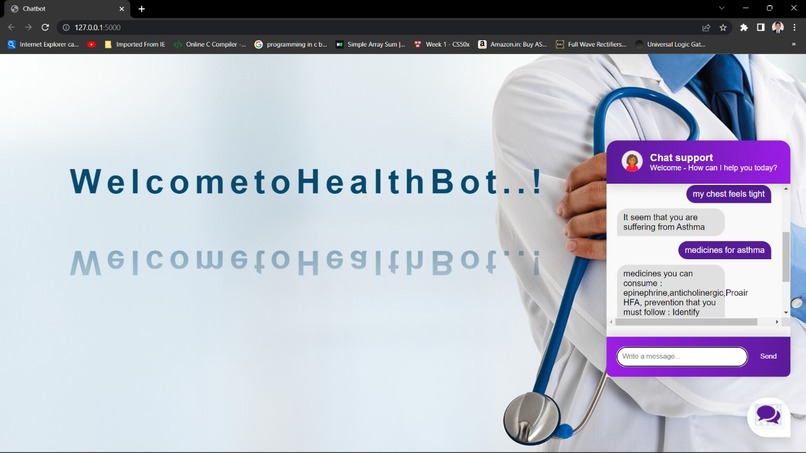
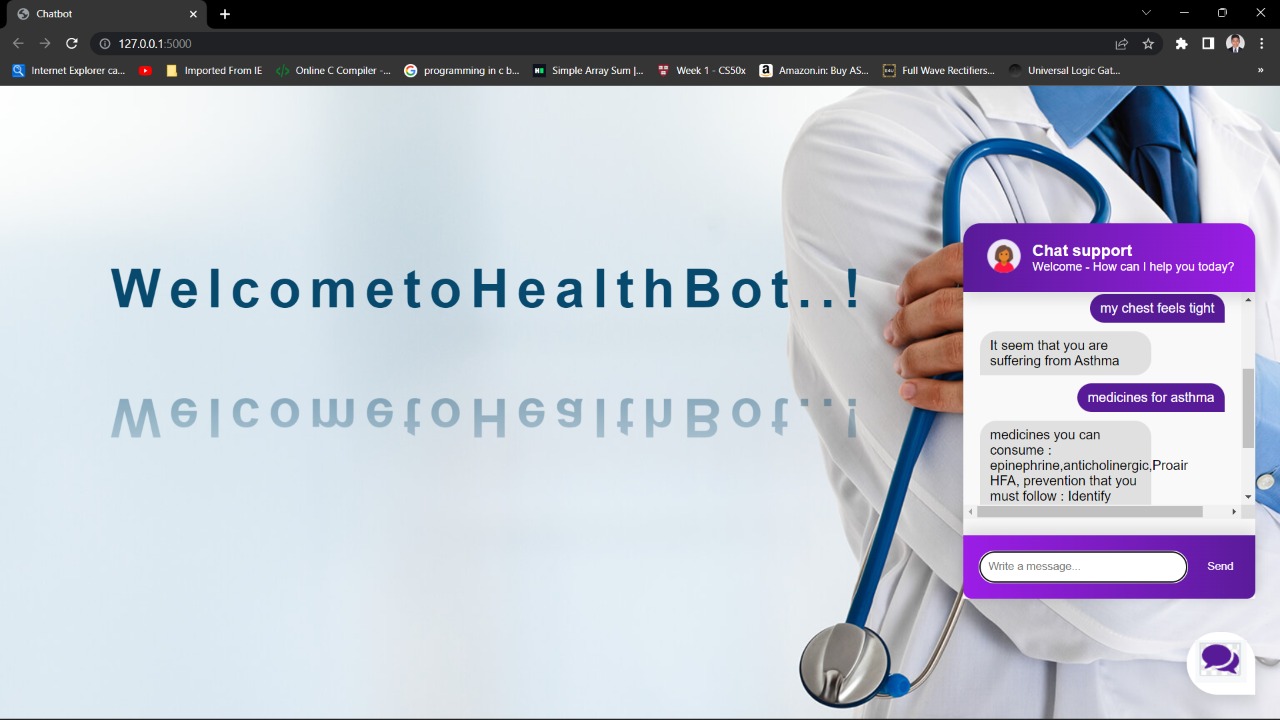
The website welcomes a person with a personalized health chatbot, that can help a person to consult a doctor, get medicine prescription, precautionary measures, treatments, link to various other websites.
How we built it
We used pytorch and nlp for building our chatbot model. We trained our chatbot using linear neural networks. For tokenization & stemming we used nlp. We used cross entropy loss to calculate loss & used optimizer to optimize our chatbot. We deployed our chatbot using flask on local server.
Challenges we ran into
While building our model, it was over-fitting, so we had to optimize it by experimenting it with different params. We initially used tkinter for gui platform, but for better UI we shifted to flask using HTML-CSS-JS. We faced issues while deploying model using flask and while fetching response from backend.
Accomplishments that we're proud of
After brainstorming for a whole day, we were able to build a solution that can change the future of many lives.
What we learned
We learned deploying a model on flask, Natural language processing, neural networks, pytorch, team work.
What's next for MedRider Chatbot
We can connect this chatbot with various apps like calender (to remind a person with their upcoming scheduled appointments), clocks (to remind them about their medicine time). We can also link the app to medical websites to make it more user-friendly.


Log in or sign up for Devpost to join the conversation.