Inspiration
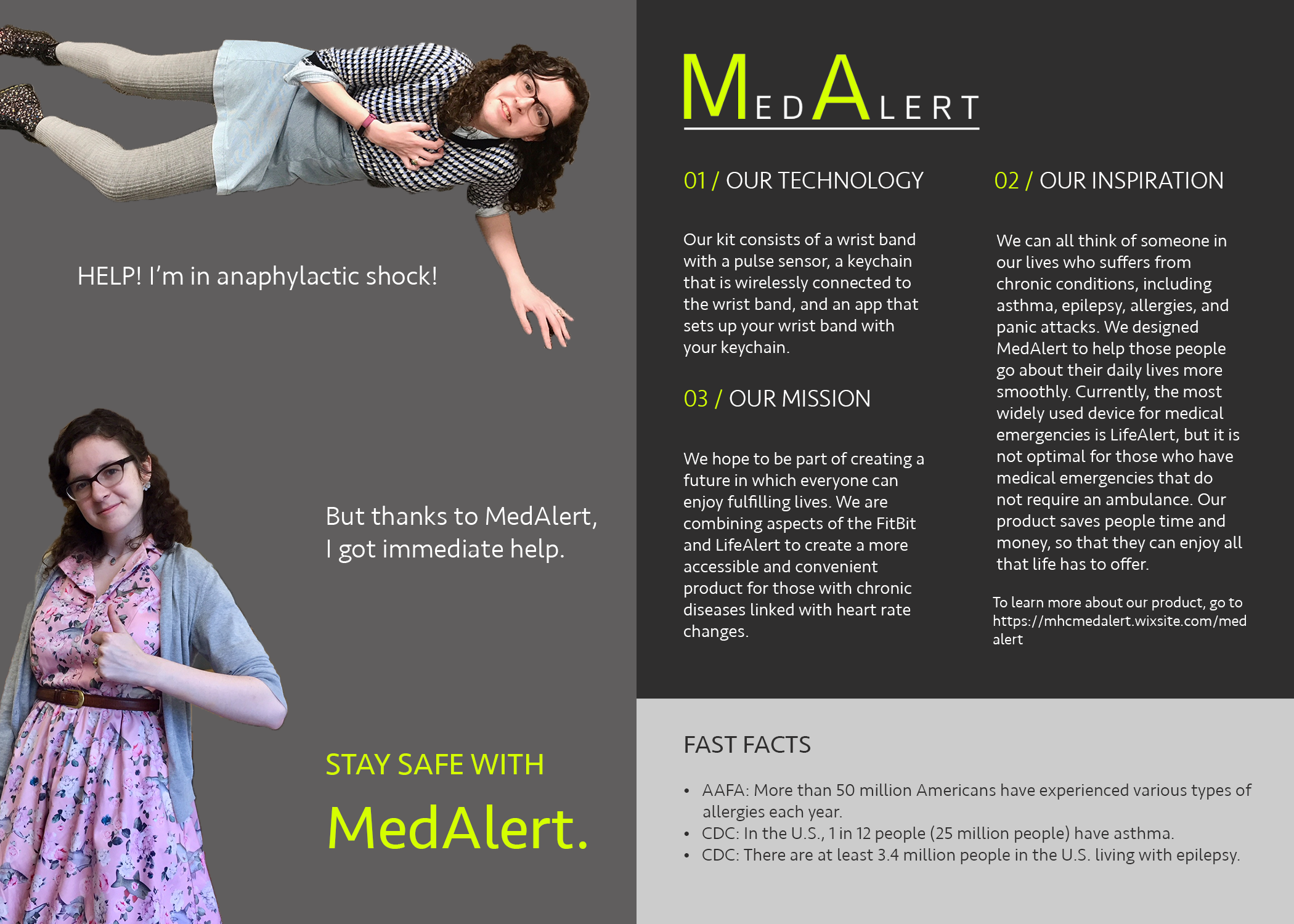
We can all think of someone in our lives who suffers from chronic conditions, including asthma, epilepsy, allergies, and panic attacks. We designed MedAlert to help those people go about their daily lives more smoothly. Currently, the most widely used device for medical emergencies is LifeAlert, but it is not optimal for those who have medical emergencies that do not require an ambulance. In fact there's a massive problem of ambulances being called by well meaning strangers for non-fatal incidents such as asthma attacks and seizures. Our device allows the same well meaning strangers access and information to help during these emergencies.
What it does
The device is a heart rate tracker that's linked via an app to an alarm key chain. The tracker is worn on the wrist and the key chain can be attached to an inhaler, an epi pen, or other emergency medical device. When the user has a spike in their heart rate, they can press a button and the alarm key chain will be triggered, alerting those around to the location of the medical device.
How we built it
The device has three major parts: the heart rate tracker, the alarm key chain, and the app that connects the two devices. The app is created using Blynk. This takes the information from the heart rate sensor and button on the wrist band and transfers it to the key chain. The wrist band works as a heart rate tracker using a pulse sensor that goes against the user's wrist. The wrist band hardware, an ESP8266 Squarewear, is inside a 3D printed case. If the user experiences an abnormally high heart rate and also presses the emergency button on the wrist band, the key chain will receive a notification. This causes the keychain to set off an alarm and flashing lights on a neo-pixel strip, signaling bystanders that the medical device on the keychain in necessary to help the person wearing the wrist band.
Challenges we ran into
With so many moving parts, there were many challenges we ran into. From the get go the neo-pixel ring we rented from the Maker Space was defective and a neo-pixel strip had to be acquired and switched out. Similarly the ESP8266 Squarewear Wifi lacks online documentation and it turned out that one of the wires for the button was soldered to an incorrect pin. On the software side the code provided for operating the heart rate sensor is incompatible with the blynk app development platform and therefore had to be altered leading to exciting bugs such as the sensor working fine save for when the value is zero at which point the tracking terminates for no discernable reason.
Accomplishments that we're proud of
We built a really cool device. Our prototype reaches out to a larger group of people. It has the potential to improve the quality of life of those who suffer from chronic conditions. LifeAlert only helps those who are in life threatening situations that require an ambulance; however, this product can help those who only need an epipen.
What we learned
We started as a group where only one person knew how to work arduino, and everyone got to participate in the construction of the device. We all gained valuable hardware experience that we wouldn't have been able to acquire in our normal computer science coursework.
What's next for MedAlert
There are two major areas for growth in our device, hardware and software. On the hardware side, our current device is large and clunky and uses cheap components. Our heart rate monitor cannot differentiate between arm movement and heart rate changes, however better heart rate monitors exist on the market, just not in the price range of components for a hackathon. Because our device uses an app to link the two components functionality of what's triggered can be greatly expanded for example the app could be programed to text an emergency contact or broadcast phone location when the wrist band is triggered.
Built With
- 3d-printer
- arduino
- blynk
- pulse-sensor


Log in or sign up for Devpost to join the conversation.