-
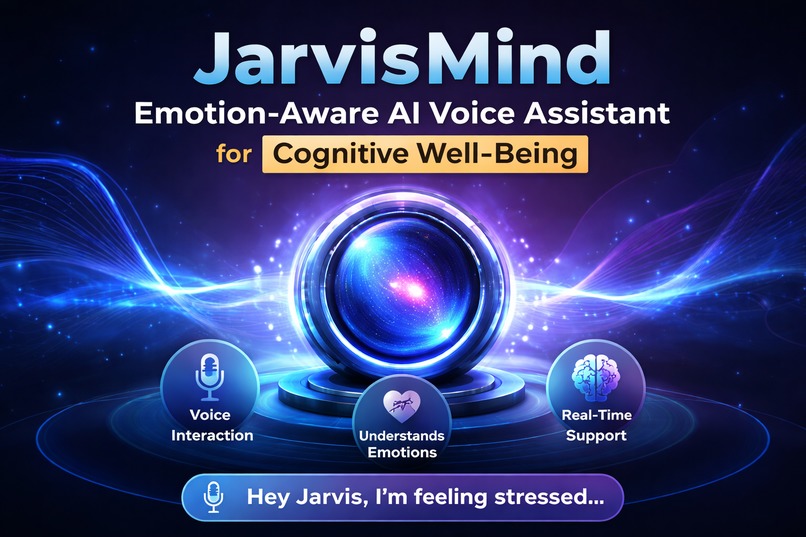
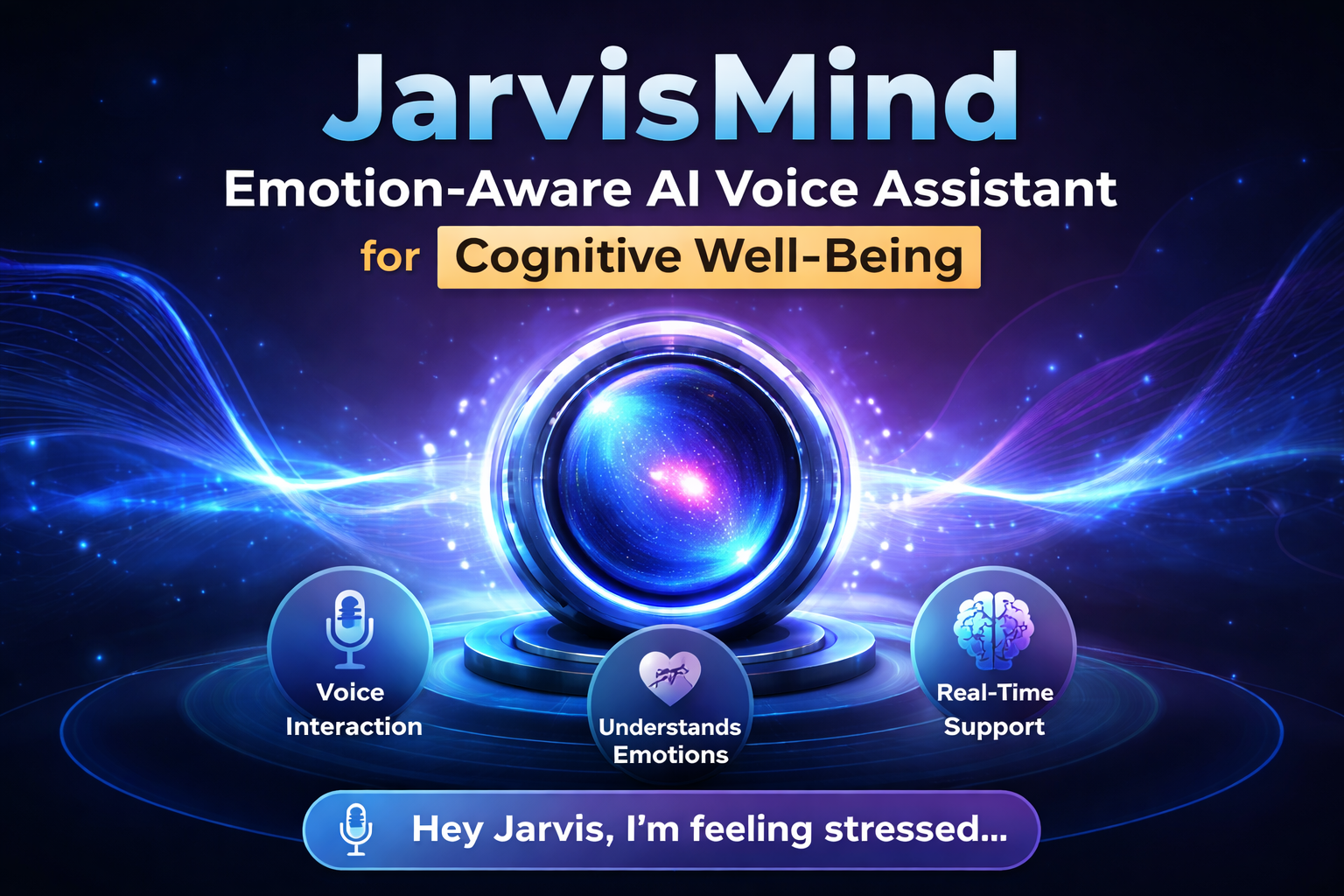
Jarvis personal assistant Emotion-Aware
-

Project ORB style animation

🧠 Inspiration
What if an AI could do more than just answer questions?
What if it could actually understand how you feel?
We were inspired by the growing mental health challenges faced by students and young professionals—stress, anxiety, and emotional overload. While many digital tools exist, most of them feel passive, robotic, or disconnected from real human experience.
We wanted to build something different.
JarvisMind was created as a human-like AI companion—one that listens, understands emotional context, and responds with empathy in real time. Instead of opening an app and typing, users can simply speak and feel heard.
This aligns with the idea of Neural Narratives—turning internal thoughts and emotions into meaningful conversations.
⚙️ How We Built It
We designed JarvisMind as a real-time voice interaction system with a simple but powerful architecture:
Voice → Understanding → Emotion → Response → Voice
- Frontend: JavaScript + Web Speech API (speech recognition)
- Backend: Node.js + Express server
- AI Brain: Local LLM using Ollama (LLaMA 3.1)
- Speech Output: Browser Text-to-Speech (for reliability and fallback)
- Communication: REST API between frontend and backend
The system continuously listens for a wake word (“Hey Jarvis”), processes the user's input, detects emotional cues, and generates a human-like response.
❤️ What Makes It Different
JarvisMind is not just an assistant—it is designed to feel like a companion.
- 🎙️ Wake-word activated interaction
- 🧠 Context-aware conversation
- ❤️ Emotion detection (stress, anxiety, sadness)
- 💬 Empathetic, human-like responses
- 🔁 Continuous listening with smart sleep cycle
Instead of giving cold answers, it responds like:
“Hey… I’m here for you.”
“That sounds heavy… take a breath.”
🚧 Challenges We Faced
Building a real-time voice assistant came with several challenges:
- Managing continuous speech recognition without interruptions
- Preventing the system from picking up its own voice (feedback loop)
- Designing emotionally appropriate responses without sounding robotic
- Handling asynchronous flow between voice input, AI processing, and voice output
- Ensuring system stability under real-time conditions
We also had to balance simplicity and performance, especially under time constraints.
🏆 What We Learned
This project taught us that:
- Voice-based AI is far more complex than text-based systems
- Emotional intelligence in AI is as much about design as it is about technology
- Real-time systems require careful state and event management
- Human-centered AI can create more meaningful user experiences
Most importantly, we learned that technology can be both functional and emotionally supportive.
🔮 What’s Next
JarvisMind is just the beginning. Future improvements include:
- Personalized memory (learning user behavior over time)
- Advanced emotion detection using voice tone analysis
- Integration with mental health resources
- Mobile and offline capabilities
- Smarter contextual awareness
💥 Final Thought
JarvisMind is our attempt to bridge the gap between intelligence and empathy in AI.
Because sometimes, what people need isn’t just an answer—
they need to feel heard.
Built With
- api
- express-server
- javascript
- llama
- llm
- localllm
- node.js
- ollama
- rest
- speech-recognition
- webspeech


Log in or sign up for Devpost to join the conversation.