-
-
Our title page and slogan
-
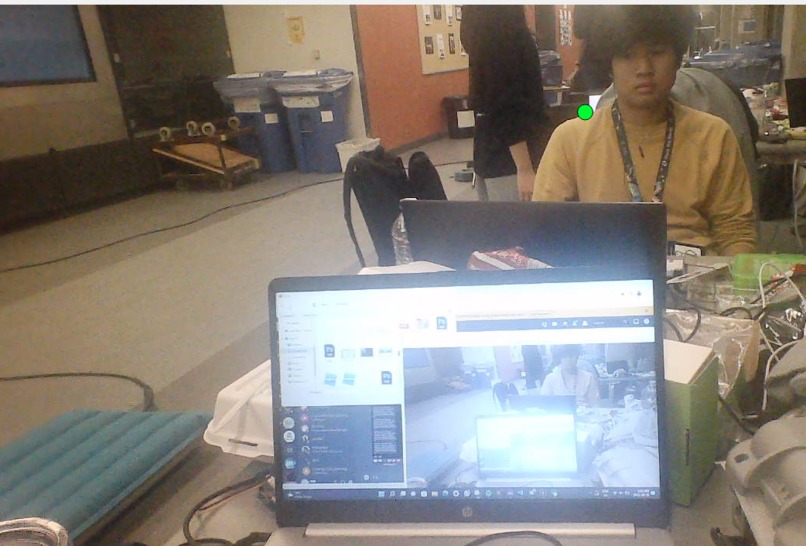
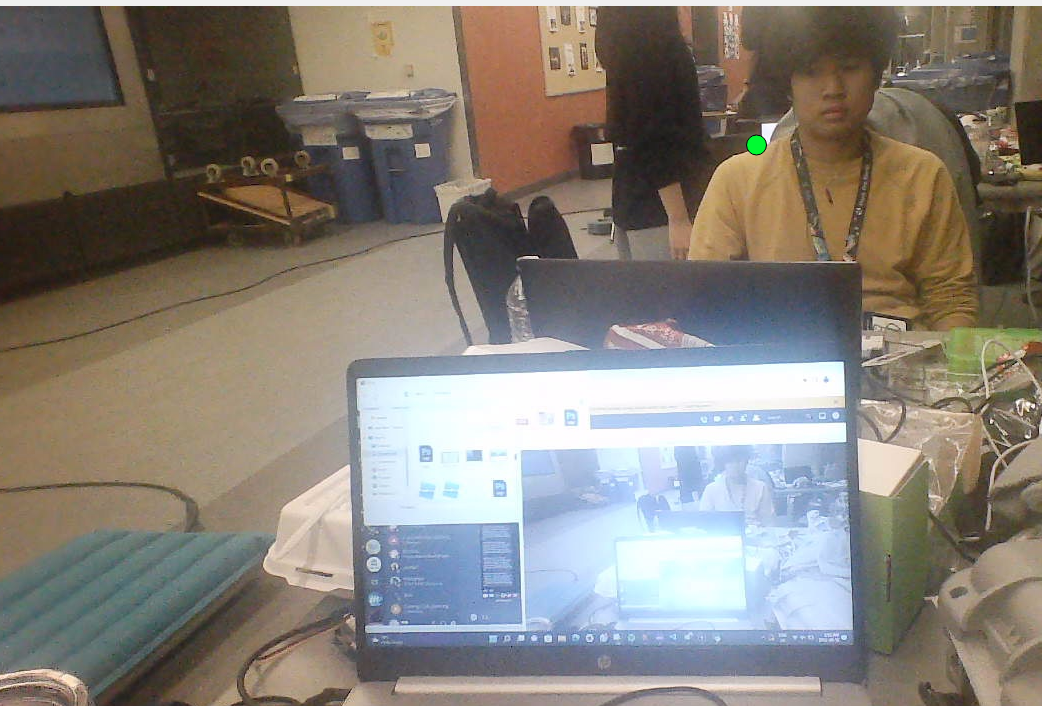
Picture taken from the camera of the MindLink. Green dot represents the point at which the user is looking at.
-
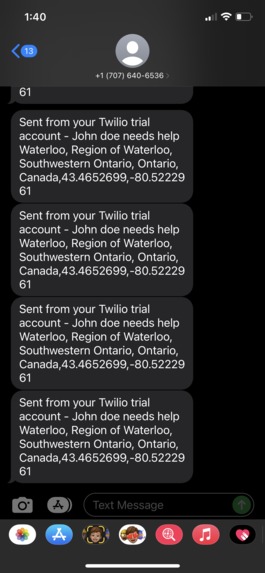
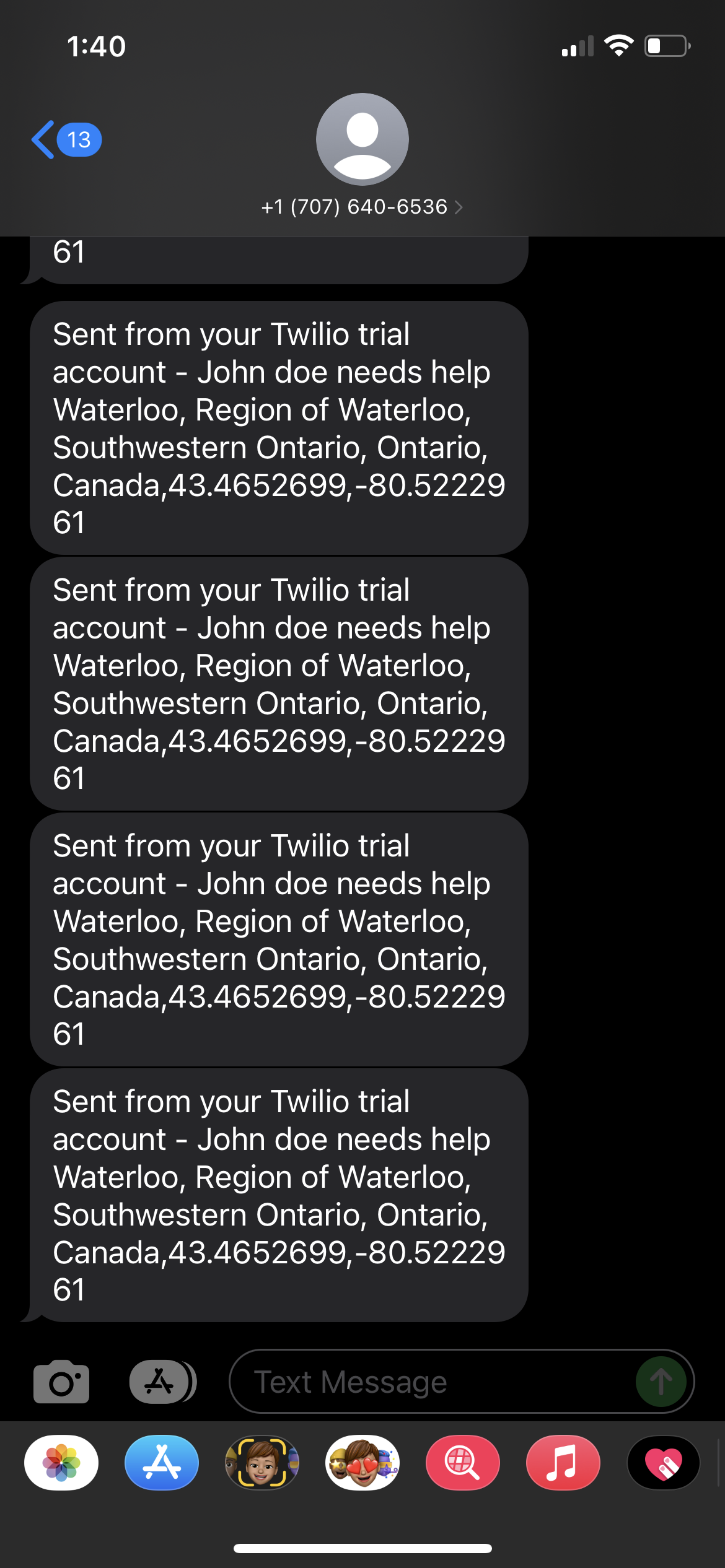
This is a sample text that would be sent out to emergency responders (includes accurate location data).
Inspiration
Our inspiration for this idea came as we are becoming of age to drive and as we recognize the importance of safety on the road. We decided to address the topic of driver safety, specifically, distractions while driving, and crash detection. We are bombarded with countless distractions while driving, and as cars are at their fastest, the roads are significantly more dangerous than ever before. With these thoughts in mind, our project aims to make the roads safer for everyone, cars and pedestrians alike. We created a project that would notify and assist drivers to be focused on the road and send emergency messages when a crash is detected. Our goal is to make sure everyone on or near the road is safe and that no unnecessary accidents occur.
What it does
The project is a live eye-tracking program that would increase overall driver safety on the road. Using the AdHawk MindLink, our program tracks the gaze of the driver and determines if the gaze has left the designated field of view, if so, causing auditory and visual notifications for the driver to re-focus on the road. The program also detects an open eye for 45 seconds or a closed eye for 45 seconds. If such conditions arise, the program recognizes it as a fatal crash by sending out a text message to emergency services. The eye tracking programming is made with python, an emergency text program with Twilio and the hardware is third-generation Arduino Uno integrated with a shield and equipped with a buzzer, LED, and programmed with C++.
How we built it
The base of our project was inspired by AdHawk’s Mindlink glasses. Using Mindlink, we were able to extract the horizontal and vertical coordinates of the gaze. In combination with those position values, and predetermined zones (10 degrees on each side of origin), we programmed the Arduino to a buzzer and LED. For crash detection, we used an event, “Blink”, which will detect whether a blink has been made. However, if a blink is not preceded by a second one in 45 seconds, the program will recognize it as a fatal injury, triggering Twilio to send text messages to emergency services with accurate location data of the victim.
Challenges we ran into
Throughout the hackathon, we had many minor speed bumps but our major issue was getting the accurate position values with AdHawk Mindlink. Mindlink returns vectors for indicating position which is really complicated to work with. We turned the vectors into angles (radians) and used those values to set the boundaries for what is considered distracting and considered focused.
Accomplishments that we're proud of
An accomplishment that our team is most proud of is that our idea started as a small thought, but as we worked on the project, we were able to think about a variety of helpful features to add to our product. We went from using AdHawk's eye-tracking technology for just tracking the driver's gaze to actual safety features such as notifying drivers to be focused on the road and sending emergency messages when a crash is detected.
What we learned
During Hack the North, we learned countless new things from how to use different programs and technologies to how to solve problems critically. We learned how to use AdHawk's eye-tracking technology by visiting their Hack the North help center website and asking questions at their venue. We learned how to use Twilio and program SMS text messages when the driver has closed/opened their eyes for more than 45 seconds. Throughout this progress, we went through a lot of trial and error, tackling one problem at a time and productively progressing through this project.
What's next for iTrack
Several exciting ideas are planned for iTrack. Starting with Free Detection mode, currently, the driver needs to wear glasses for iTrack to work. With more time, we would be able to program and put cameras around the interior of the car and track the eye from that instead, making it less invasive. Next, we are planning to add additional sensors (accelerometer, gyroscope etc …) to the glasses to further enhance the crash detection system, which will act as additional sources of triggers for the Twilio emergency texting. Other improvements include auto-calibration, which will drastically reduce the amount of time needed to set up AdHawk Mindlink for the most accurate responses.


Log in or sign up for Devpost to join the conversation.