-
-
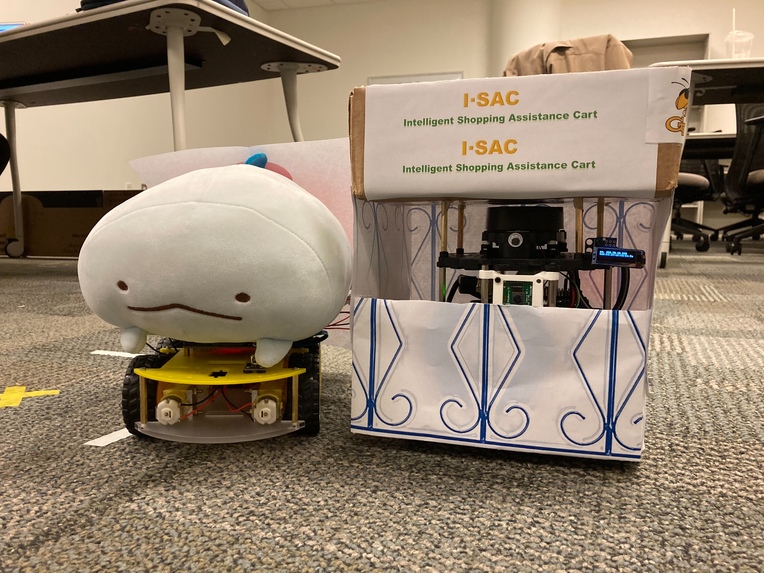
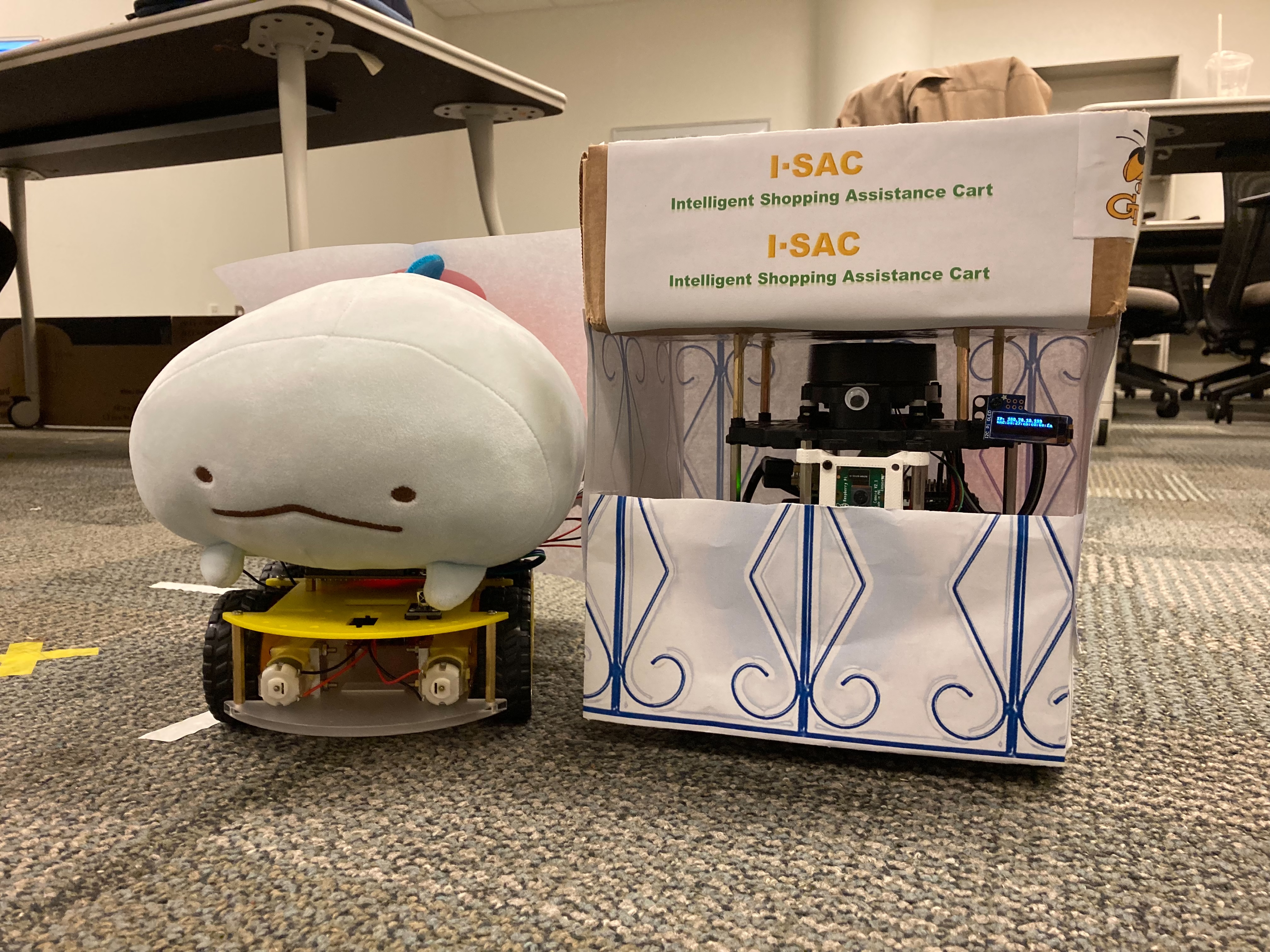
customer and ISAC
Inspiration
It is finally the weekend, and you finally have the time to head out for a long-awaited shopping trip. At the start of the shopping adventure, everything seems perfectly fine. However, as you put more and more goodies into the shopping cart, the cart becomes heavier and clumsier. At this moment, you hope that you no longer need to push the cart, but the cart of goodies will follow you automatically, you can then leave the burden of their behind and indulge in your shopping adventure!
What it does
I.SAC (Intelligent Shopping Assistance Cart) enables shoppers to shop with their hands off the shopping cart. I.SAC is a next generation shopping cart that allows shoppers to go around the store, putting all their goodies into a shopping that follows them around. With I.SAC’s automated tracking system, customers do not need to push their cart while shopping, but simply let the cart follow them. The integration of object tracking, detection and avoidance allows I.SAC to create a safer shopping environment for customers, avoiding accidents such as carts bumping into customers or the loss of control of carts. For parent shoppers, I.SAC will enable them to pay more attention to their child/children, as it alleviates their need to control and keep an eye on the shopping cart. With children nearby, parents can shop more easily and do not need to face the situation where that must leave their child and cart unattended in order to grab something, just because the cart with their children is not easy to push into the aisle. For elder or disable shoppers, I.SAC enables these customers to shop without needing to push the cart. Unlike traditional shopping carts, I.SAC will dynamically follow the customer, keeping a safety distance between itself and the customer, so that the shopping cart will never bump into any person or things. With this object detection feature, customers could rely on I.SAC and enjoy more in their shopping.
How we built it
As a prototype, we use two different robots to represent our customer and I.SAC shopping scenario. To mimic real customer behavior, we built a robot car with Arduino. The robot moves randomly around representing the customer, checking out different items and stopping here and there. As for I.SAC, we implemented Turtlebot3 with ROS (robot operating system) to realize object following and obstacle avoidance. For I.SAC (Turtlebot3), the shopping cart will first establish a connection between itself and the customer (IR remote car). The connection for our initial prototype is that I.SAC will recognize the customer and start following them. Before the customer finish shopping, the robot will consistently follow the customer wherever they go. If a pedestrian or obstacle appears in I.SAC’s way, I.SAC will stop immediately and go around the obstacle to avoid any collision.
Challenges we ran into
Some of the major challenges we faced include how to accurately detect different objects and to implement obstacle avoidance with the use of camera and Lidar. For object detection, when the environment condition changes (brightness, background surroundings), it is difficult for the robot to accurately track the desired object. As for object avoidance, the robot will need to go around the obstacle, but could not go out of bound from the original track.
Accomplishments that we're proud of
With I.SAC, we are able to realize the concept of shopping without needing to push a shopping cart by ourselves. I.SAC allows us to shop without our hands on the shopping cart and to enjoy shopping in a safer and more reliable environment.
What we learned
During implementation, we learned that sometimes an easy task for humans may be exceedingly difficult when it comes to robots. To solve this kind of problem, we will need to divide the problem into different sub-problems. After getting all the sub-problems to function correctly, we could then begin to combine all the parts together. This way, we could be able to break down a large and challenging task into smaller tasks, to divide and conquer, and eventually cumulate all of them together to solve the original problem.
What's next for I. SAC
For the next step of I.SAC, we are going to implement a full-scale prototype and to apply indoor positioning systems on to I.SAC. We will be able to use the indoor positioning system and the camera to track and follow the customer and to avoid obstacles. This will also allow us to take out the Lidar sensor and cut down the cost of each I.SAC.

Log in or sign up for Devpost to join the conversation.